
The practical takeaway
Deciding exactly where to stay in Osaka comes down to balancing transport connections, dining options and your budget. As a sprawling grid of neon-lit districts and quiet commercial zones, Osaka offers quite a different rhythm compared to Tokyo or Kyoto. If you…
Deciding exactly where to stay in Osaka comes down to balancing transport connections, dining options and your budget. As a sprawling grid of neon-lit districts and quiet commercial zones, Osaka offers quite a different rhythm compared to Tokyo or Kyoto. If you are a first-time visitor trying to make sense of the subway map, sticking to the main transport hubs is your safest bet.
In this guide, we break down the four most practical areas to base yourself in Osaka. Whether you are coming in from the airport late at night or planning daily excursions to neighbouring cities, picking the right neighbourhood saves you hours of transit time.
Some links in this guide are affiliate links. FlyFono may earn a commission if you book through them, at no extra cost to you. Recommendations are based on practical relevance, not commission.
For a complete picture, you can Compare Osaka accommodation by area to see current pricing across different neighbourhoods.
Quick Area Comparison
| Area | Best for | Transport | Dining | Price range |
|---|---|---|---|---|
| Namba & Dotonbori | First-timers, foodies, nightlife | Excellent (subway & Nankai lines) | Exceptional | Mid to High |
| Umeda (Osaka Station) | Day trips, shopping, business | Unbeatable (hub for all lines) | Very Good | High |
| Tennoji & Abeno | Budget travellers, local vibe | Very Good (subway & JR lines) | Good | Low to Mid |
| Honmachi | Quieter stays, walking distance to Namba | Good (central subway lines) | Average | Low to Mid |
Namba and Dotonbori
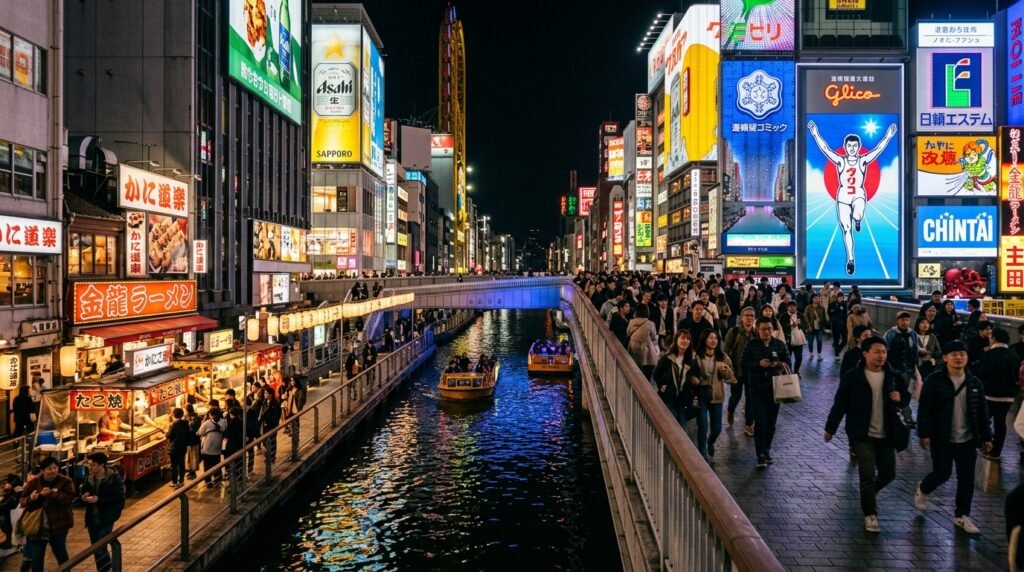
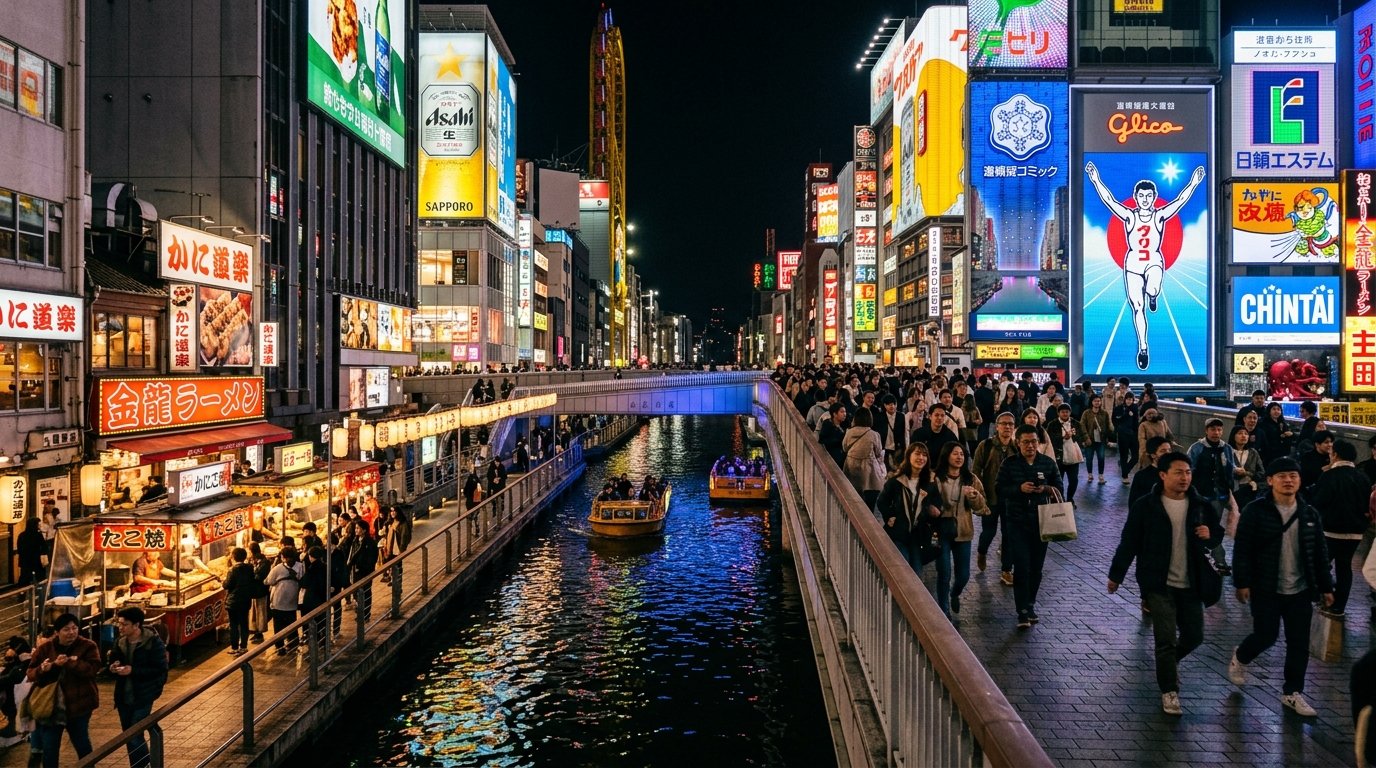
Namba is the pulsating heart of Osaka’s Minami (South) district. If you have seen photos of Osaka with bright neon lights, giant mechanical crabs and bustling crowds, you were looking at the Dotonbori canal area in Namba. This is the best area to stay in Osaka if you want step out of your hotel and immediately be surrounded by hundreds of restaurants, bars and street food stalls.
The transport connectivity here is excellent. Nankai Namba Station provides a direct train link to Kansai International Airport, meaning you do not have to navigate complicated transfers with heavy luggage. From a convenience standpoint, choosing Namba hotels Osaka gives you walking access to Kuromon Market, Shinsaibashi shopping street and the quirky Den Den Town.
The downside to Namba is the noise and the crowds. Dotonbori accommodation is right in the thick of it, so it can be overwhelming if you prefer a quiet retreat after a long day of sightseeing. Prices here also tend to reflect the high demand.
Umeda and Osaka Station
Umeda, located in the Kita (North) district, is the city’s major transportation and business hub. Anchored by the massive Osaka Station complex, this area is characterised by modern skyscrapers, underground shopping labyrinths and high-end department stores. Umeda hotels are generally sleeker and cater well to business travellers and those with a larger budget.
If your itinerary involves extensive travel outside the city, Osaka Station hotels are unmatched for convenience. You can easily catch direct trains to Kyoto, Kobe and further afield. It is worth noting the differences when considering Kyoto vs Osaka for your base; many travellers find Umeda offers better evening dining options than central Kyoto while keeping the commute short.
Navigating Umeda station itself can be challenging for new arrivals due to its sheer size and multiple underground levels. Dining is heavily concentrated inside department stores and office towers rather than street-level stalls, offering a cleaner but less gritty Osaka experience.
Tennoji and Abeno
Tennoji, situated in the southern part of the city, offers a more grounded and local atmosphere. Historically considered a bit rough around the edges, the area has seen significant redevelopment, highlighted by the towering Abeno Harukas building. Tennoji hotels often provide excellent value for money compared to Namba and Umeda.
This neighbourhood is highly practical. The JR loop line runs through Tennoji Station, and you have direct airport access via the Haruka express train. You are also within walking distance of Tennoji Park, the zoo and the retro Shinsekai district, which is famous for its kushikatsu (deep-fried skewers) and the Tsutenkaku tower.
Tennoji might lack the polished, high-end sheen of Umeda, but it makes up for it with affordable dining and a slightly slower pace. It is an excellent choice for budget-conscious travellers who still want straightforward transport links.
Honmachi — quieter central alternative
Sitting roughly halfway between Umeda and Namba, Honmachi is primarily a commercial and office district. Because it empties out after business hours, it offers a surprisingly quiet place to sleep right in the middle of the city.
Honmachi has seen a surge in new, moderately priced business hotels over the last few years. You can often find larger rooms here for the same price as a tiny room in Dotonbori. The Midosuji subway line runs straight through, making it simple to reach both northern and southern hubs in minutes. If you enjoy walking, you can stroll down the covered shopping arcades all the way to Namba.
The main trade-off is the lack of notable nightlife or destination dining right on your doorstep. You will likely find yourself taking the subway to Namba or Umeda for dinner most evenings.
Transport convenience from each area
When evaluating where to stay in Osaka, your transport needs should dictate your choice. The city is served by a dense network of JR lines, private railways and municipal subways.
- Umeda (Osaka Station): The undisputed king of connectivity. Best for Shinkansen connections (via Shin-Osaka) and day trips to Kyoto or Kobe.
- Namba: Excellent for the Nankai airport line, Kintetsu line for Nara, and the Midosuji subway line connecting the main city sights.
- Tennoji: Strong JR connectivity via the Loop Line and direct Haruka airport express access.
- Honmachi: Relies primarily on the subway network (Midosuji, Chuo and Yotsubashi lines), making it easy to get around the city centre.
If you are planning to use rail passes extensively, consider reading our guide on Japan Rail Pass vs individual tickets to determine if staying near a JR station (like Umeda or Tennoji) is necessary for your trip.
Airport access — Kansai and Itami
Getting from the airport to your hotel quickly after a long flight is a major priority. Most international flights land at Kansai International Airport (KIX), while domestic flights often use Itami Airport (ITM).
From Kansai Airport, Namba is arguably the easiest destination thanks to the direct Nankai Airport Express and the Rapi:t train. Tennoji is directly served by the JR Haruka limited express. Umeda requires either taking the JR Airport Rapid (which is slower) or a limousine bus. For detailed routes, refer to our breakdown of navigating Kansai Airport to Osaka or Kyoto.
If you prefer door-to-door service or have a lot of luggage, you can Check Kansai Airport private transfers ahead of your arrival.
Day trips to Kyoto and Nara
Osaka serves as a highly practical base for exploring the wider Kansai region. If day trips are a major component of your 7-day Japan itinerary, Umeda offers the fastest access to Kyoto via the JR Special Rapid Service or the private Hankyu line (around 30 minutes).
For Nara, Namba is slightly better positioned. The Kintetsu line runs directly from Osaka-Namba Station to Kintetsu-Nara Station in about 40 minutes, dropping you much closer to Nara Park than the JR station does. Tennoji also offers straightforward access to Nara via the JR Yamatoji line.
Before heading out, make sure you have reliable mobile data to check train schedules. We recommend reviewing the best eSIM for Japan so you can navigate the rail apps without hunting for Wi-Fi, or you can directly Check Japan eSIM options.
Dining and nightlife by area
Osaka is affectionately known as Japan’s kitchen. If evening dining and drinks are a priority, Namba and Dotonbori are unmatched. From takoyaki stands to narrow alleys filled with izakayas (Japanese pubs) in Hozenji Yokocho, the options are endless. Staying here means you do not have to worry about catching the last train back to your hotel.
Umeda offers excellent dining, but the vibe is different. Restaurants are often located on the upper floors of department stores or in the vast underground networks. It is more structured and less chaotic than Namba. Tennoji sits somewhere in between, with the Shinsekai area providing cheap, cheerful and deeply authentic Osaka dining experiences.
Best area for families
For families traveling with children, Umeda or Honmachi tend to be the most practical. Umeda offers easy access to trains without needing to navigate busy street-level crowds, and the indoor shopping centres have numerous family-friendly restaurants. Honmachi provides quiet nights and larger hotel rooms, which are a premium in Japan.
Namba can be loud and heavily congested in the evenings, which might make navigating with a stroller frustrating. If you are planning family outings to Universal Studios Japan or the aquarium, you can Compare Osaka attraction passes and activities to streamline your ticketing.
Best area for couples
Couples looking for convenience, good dining and a bit of atmosphere should look closely at the areas bordering Namba and Shinsaibashi. Being within walking distance of Dotonbori allows for late-night food crawls and easy strolls back to the room. Alternatively, the area around Kitahama (near Honmachi) offers stylish riverside cafes and boutique hotels that provide a more romantic setting away from the neon glare.
Best area for solo travellers and first-timers
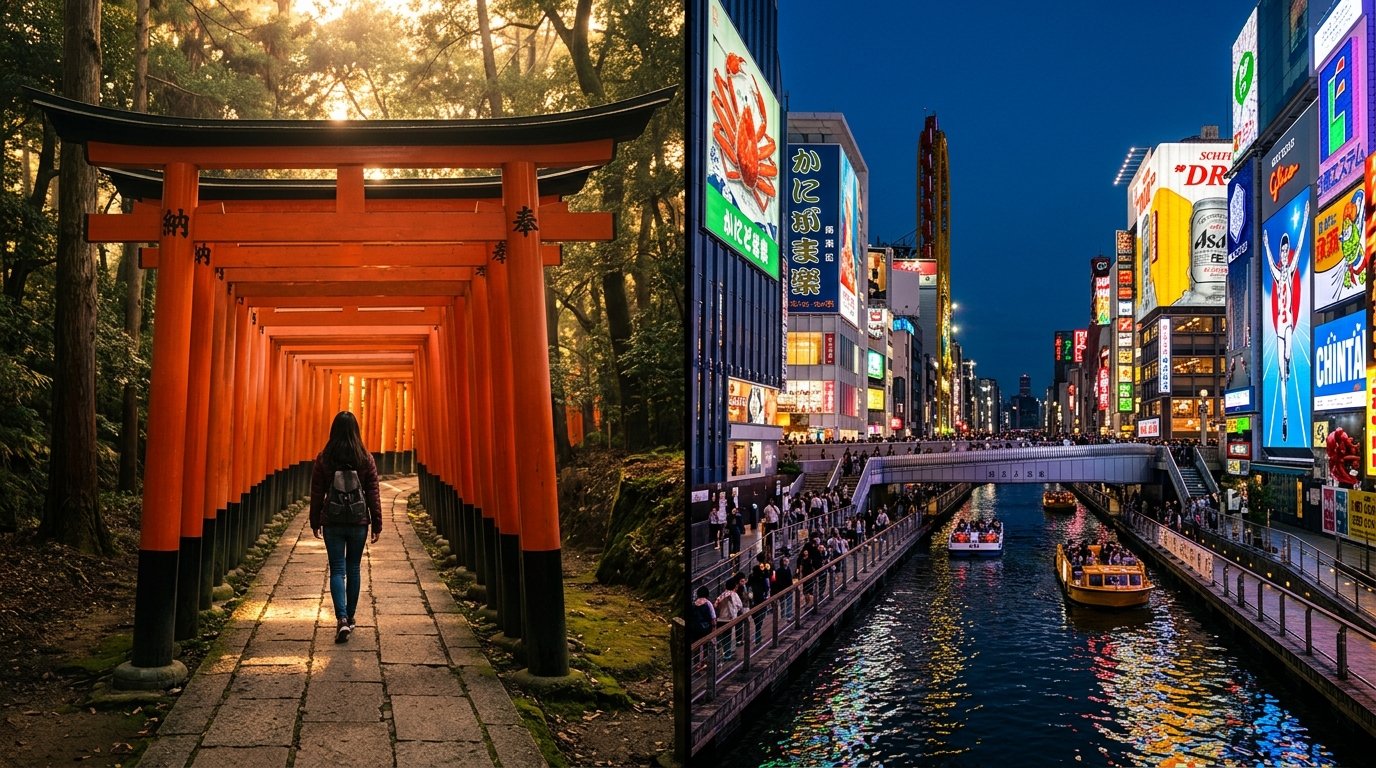
First-time visitors to Osaka often debate between Namba and Umeda. If you want the classic, energetic Osaka experience shown in travel documentaries, Namba is the best area to stay in Osaka. Solo travellers will find Namba incredibly easy for dining alone, as counter seating is ubiquitous.
If you are using Osaka primarily as a regional base and value transport efficiency over nightlife, Umeda is the logical choice. The contrast between the two areas is stark, and many Americans weighing Osaka vs Tokyo often find Namba more representative of the friendly, outgoing atmosphere Osaka is famous for.
Budget, mid-range and comfortable picks
Osaka caters to all price points. Budget travellers should focus their search around Tennoji and the adjacent Shin-Imamiya area. While historically working-class, this district now hosts modern hostels and budget business hotels offering significant savings over the city centre.
Mid-range travellers will find the most options in Honmachi and Shinsaibashi. Business hotel chains provide clean, predictable rooms with solid amenities at reasonable rates. If you are looking for comfort and high-end service, Umeda houses most of the city’s international five-star brands.
One night vs longer stays
If you only have one night in Osaka, stay in Namba. You want to maximise your time soaking up the atmosphere of Dotonbori and eating well without worrying about long transit times back to your hotel.
For stays of three nights or more, Honmachi or Umeda become more appealing. A longer stay usually means more day trips and a greater appreciation for a quieter neighbourhood to retreat to after a long day of sightseeing.
5 Common booking mistakes in Osaka
- Ignoring the specific station: Osaka has multiple stations with similar names (e.g., Osaka, Shin-Osaka, Osaka-Namba, JR Namba). Check exactly which station your hotel is near.
- Staying at Shin-Osaka unnecessarily: Unless you have early or late Shinkansen (bullet train) departures, Shin-Osaka is sterile and lacks evening dining options. Umeda or Namba are much better bases.
- Booking too far from a subway station: Osaka is vast. Ensure your hotel is within a 5-10 minute walk of a Midosuji (red) or Yotsubashi (blue) line subway station for maximum convenience.
- Underestimating Umeda’s size: Staying “near Umeda station” might still mean a 15-minute underground walk from your train platform to your hotel lobby.
- Assuming all areas have nightlife: Business districts like Honmachi roll up the sidewalks after 9 PM. If you like late dinners, stick to Namba or Tennoji.
FAQ
Is it better to stay in Namba or Umeda?
It depends on your itinerary. Namba is better for nightlife, street food and immediate airport access via the Nankai line. Umeda is superior for regional day trips to Kyoto and Kobe, and offers more upscale shopping and dining.
Is Osaka safe for tourists at night?
Yes, Osaka is generally very safe for tourists, even at night. Standard precautions apply, but walking back to your hotel in central areas like Namba or Honmachi after dinner is considered safe.
Should I stay near Shin-Osaka station?
Only if you are using the Shinkansen (bullet train) for early departures or late arrivals on multiple days. Otherwise, the area lacks the atmosphere and dining options found in Umeda or Namba.
How far in advance should I book Osaka accommodation?
Aim to book 3 to 4 months in advance, especially if you are travelling during cherry blossom season (late March/early April) or autumn foliage season (November). Popular hotels in Namba book out quickly.
Conclusion
Figuring out where to stay in Osaka does not need to be complicated. If you want the vibrant, food-obsessed atmosphere the city is famous for, book a room in Namba. If you are prioritising regional travel and sleek convenience, Umeda is your spot. For budget travellers, Tennoji offers great value, while Honmachi provides a quiet middle ground for those who prefer peaceful nights.
Disclaimer: Train schedules, airport transport options and neighbourhood characteristics can change. Always verify current routes and operating times via official sources like the Osaka Tourism website before booking. Last checked: September 2026.
Continue planning
Your most useful next steps
Move from reading to one clear travel decision.