
The practical takeaway
Kyoto vs Osaka honestly compared for first-time visitors. Hotel costs, evening atmosphere, day-trip convenience, one base vs split stay, and sample decisions for 3, 5 and 7-night trips.
Kyoto vs Osaka: 2 Cities Honestly Compared — Where to Stay on Your First Japan Trip (2026)
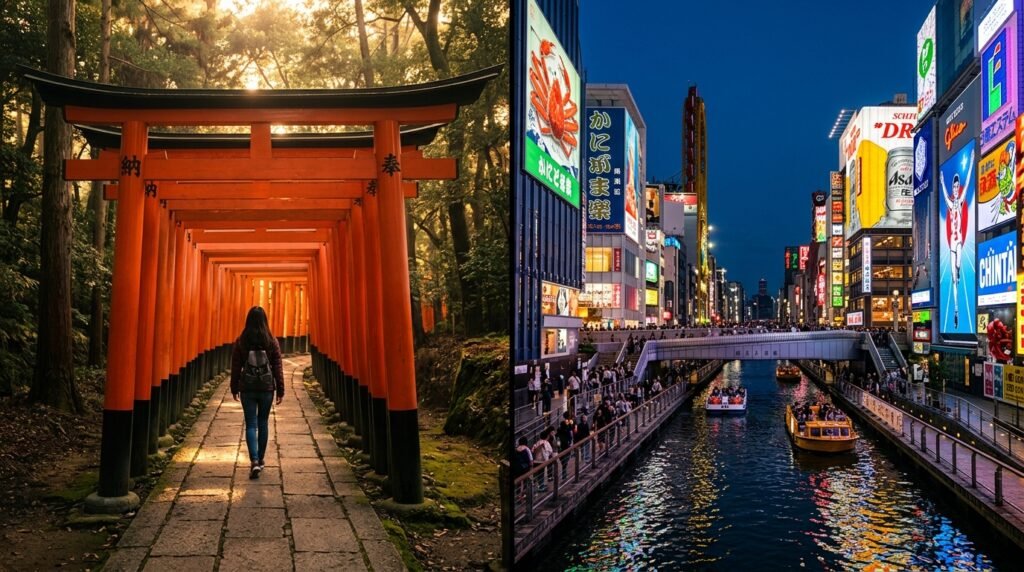
The Kyoto vs Osaka decision is the most debated accommodation question on every first Japan trip. Both cities sit in the Kansai region, just 15 minutes apart by Shinkansen and 30 minutes by local train — yet they feel like entirely different countries. Kyoto is ancient, temple-dense, serene after dark. Osaka is loud, neon-lit, and stays awake until the food stalls close at 3 AM.
Some links in this guide are affiliate links. FlyFono may earn a commission if you book through them, at no extra cost to you. Recommendations are based on practical relevance, not commission.
In the Kyoto vs Osaka debate, the right answer depends on your trip length, travel style, and what you actually want to feel when you close the hotel door at night. This guide covers all of it — with concrete decisions for 3-night, 5-night and 7-night trips.
Quick Verdict: Kyoto vs Osaka by Trip Type
- First time in Japan, 3 nights total: Base in Osaka. Cheaper hotels, better nightlife, easier day trip to Kyoto by local train (¥570, 30 min via Hankyu or JR).
- First time in Japan, 5–7 nights: Split stay — 3 nights Osaka, 2–3 nights Kyoto. Lets you experience both atmospheres without day-tripping everywhere.
- Temple-and-culture focused trip: Base in Kyoto. Walk to Arashiyama, Fushimi Inari, and Gion without morning crowds eating your best hours on trains.
- Food, nightlife and budget priority: Base in Osaka. More hotels at every price point, Dotonbori within walking distance, and day trips to Kyoto, Nara, and Kobe all under ¥1,000 one-way.
- Families with young children: Base in Osaka. Osaka Aquarium, Universal Studios Japan, wider hotel rooms, and lower average nightly rates.
- Couples and honeymooners: Base in Kyoto. Ryokan stays, bamboo grove sunrise walks, kimono experiences and quieter temple evenings are meaningfully more romantic.
Kyoto vs Osaka: Full Comparison Table
| Feature | Kyoto | Osaka |
|---|---|---|
| City Character | Ancient capital, temples, traditional culture, calm evenings | Modern commercial city, street food, neon, nightlife |
| Average Hotel Rate | ¥12,000–¥25,000/night (mid-range); ¥30,000+ (ryokan) | ¥8,000–¥18,000/night (mid-range); wider budget range |
| Budget Accommodation | Limited; hostels mainly near Kyoto Station | Excellent; Namba and Shinsaibashi have dense hostel options |
| Evening Atmosphere | Quiet after 21:00; Gion for night walks, limited late dining | Lively until 02:00+; Dotonbori, Shinsaibashi, Namba buzzing |
| Day-trip Access | Easy to Nara (45 min), Osaka (30 min), Hiroshima (80 min Shinkansen) | Easy to Kyoto (30 min), Nara (45 min), Kobe (30 min), Hiroshima (80 min) |
| Family Attractions | Temples, Toei Kyoto Studio Park, nature activities | Osaka Aquarium Kaiyukan, Universal Studios Japan (USJ), Osaka Castle |
| Solo Traveller Ease | Great for culture immersion; quieter solo evenings | More social; excellent for meeting people in hostels and food spots |
| Hotel Availability | Books out fast (especially cherry blossom and autumn) | Generally easier to find rooms; larger hotel supply |
Hotel availability in both cities fluctuates heavily during cherry blossom season (late March to early April) and autumn foliage (mid-November). Compare Kyoto and Osaka hotels on Trip.com — searching both cities together reveals where rooms are genuinely available at your dates and budget.
Hotel Costs: What to Realistically Expect in Each City
In the Kyoto vs Osaka hotel cost comparison, Osaka has a consistent price advantage outside peak seasons. Here is a realistic breakdown:
| Tier | Kyoto | Osaka |
|---|---|---|
| Budget (hostel dorm) | ¥3,000–¥5,000/night; limited options near central temples | ¥2,500–¥4,500/night; dense supply in Namba and Shinsaibashi |
| Mid-range (private room) | ¥12,000–¥22,000/night; modern business hotels near Kyoto Station | ¥8,000–¥16,000/night; excellent JR-affiliated and independent hotels |
| Ryokan/Traditional | ¥25,000–¥80,000+/night (includes dinner and breakfast); most concentrated near Gion and Arashiyama | Limited genuine ryokan; mainly boutique hotels in this tier |
| Luxury (5-star) | ¥40,000–¥100,000+/night; Aman Kyoto, Four Seasons, The Ritz-Carlton Kyoto | ¥30,000–¥80,000/night; Conrad, St Regis, InterContinental |
For budget travellers, Osaka’s Namba and Shinsaibashi neighbourhoods have the highest concentration of affordable private rooms and hostel dorms in Kansai. Compare budget accommodation in Osaka and Kyoto on Hostelworld — both cities are well-covered with rated reviews.
Evening Atmosphere: The Biggest Difference Between Kyoto and Osaka
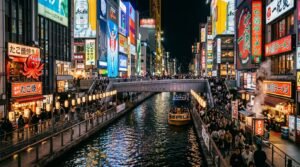
No section of the Kyoto vs Osaka comparison matters more than this one for travellers deciding where to sleep. The evening atmosphere gap is dramatic.
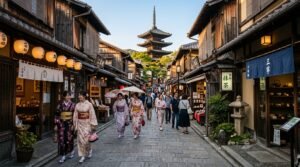
- Kyoto after dark: The historic Gion district has lantern-lit alleyways and occasional geisha sightings on Hanamikoji Street until around 21:00. Restaurants wind down by 22:00. Temple districts become genuinely quiet. The city rewards early risers — Fushimi Inari at 05:30 before the crowds is one of Japan’s finest travel experiences. The official guide to Kyoto’s historic districts is on the Kyoto City Tourism Official Site.
- Osaka after dark: Dotonbori and the Namba entertainment district are at their most spectacular after 20:00. Street food stalls serve takoyaki and ramen until 02:00. Shinsaibashi shopping arcade stays busy late. The city makes no apology for noise and energy. More context on Osaka’s districts: Osaka Visitor’s Guide Official Site.
Practical takeaway: If you are travelling solo or as a couple who enjoys late dinners and a lively street atmosphere, returning to an Osaka hotel feels natural. If you want quiet evenings after temple-heavy days, Kyoto hotels feel appropriately calm. Neither is wrong — they simply serve different travel personalities.
Day-Trip Convenience: Kyoto Station vs Osaka (Umeda, Namba)
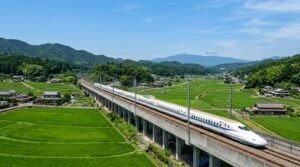
In the Kyoto vs Osaka comparison for day-trip flexibility, both cities score strongly — but their hubs serve slightly different route maps.
| Destination | From Kyoto Station | From Osaka (Namba/Umeda) |
|---|---|---|
| Osaka ↔ Kyoto | 30 min via JR Biwako Line (¥570) or Hankyu (¥410) | 30 min via Hankyu or JR; Shinkansen 15 min (¥1,430) |
| Nara | 45 min via JR Nara Line (¥720) | 45 min via Kintetsu from Namba (¥760) |
| Hiroshima | 80 min via Shinkansen Nozomi (¥10,740 unreserved) | 90 min via Shinkansen from Shin-Osaka (¥9,790) |
| Kobe | 50 min via JR Tokaido Line (¥1,100) | 30 min via Hankyu or JR from Osaka (¥410–¥540) |
| Arashiyama (Kyoto) | 15 min from Kyoto Station via JR Sagano Line | 60 min via Hankyu + transfer |
If Hiroshima and Miyajima are on your itinerary, an Osaka base near Shin-Osaka Station gives a 5-minute less Shinkansen journey — a minor but real convenience. For everything else in Kansai, both cities are roughly equal. For Kansai transport passes, day trip tickets and activity bookings, check Kansai transport and activities on Klook — Arashiyama bamboo groove tours, Nara deer park guides and Hiroshima day trip packages are all available.
For a complete picture of how rail passes interact with Kansai transport options, see our Japan Rail Pass vs Individual Tickets guide before buying.
Families, Couples and Solo Travellers: Who Belongs Where?
Families
In the Kyoto vs Osaka question for families, Osaka wins for practical reasons. Universal Studios Japan (USJ) is a full-day commitment that requires an Osaka base. Osaka Aquarium Kaiyukan is equally impressive. Hotel rooms in Osaka tend to be slightly larger per price point. Kyoto’s best attractions — temples, bamboo groves, Zen gardens — engage adults deeply but require patience from younger children.
That said, families with older children (10+) benefit from at least 2 nights in Kyoto for the cultural depth Osaka cannot replicate.
Couples and Honeymooners
Kyoto is Japan’s most romantic city for couples. An authentic ryokan stay in Gion or near Arashiyama — with multi-course kaiseki dinner included — is the kind of experience that defines a Japan trip. Sunrise at Fushimi Inari or Arashiyama bamboo groove before other visitors arrive requires staying the night nearby, which only Kyoto makes possible.
Osaka adds energy to a couple’s trip: late-night food crawls, rooftop views from Umeda Sky Building, and the social atmosphere of Dotonbori. A 3-night Kyoto / 2-night Osaka split works exceptionally well for couples on a 5-night Kansai stay.
Solo Travellers
Osaka is the friendlier base for solo travellers. Hostels in Namba and Shinsaibashi have strong social common areas and excellent staff. The food culture actively rewards solo dining — counter seats at ramen and kushikatsu bars are designed for it. Kyoto suits solo travellers who are comfortable with their own company and want deep, quiet cultural immersion without needing social energy in the evenings.
One Base Versus Split Stay: The Honest Answer
The Kyoto vs Osaka debate is frequently presented as binary — but a split stay is a genuinely different and often superior option. Here is the honest analysis:
- One base in Osaka (day trip to Kyoto): Works well for 3–4 nights. The 30-minute JR local train (¥570) makes Kyoto fully accessible as a day trip. Disadvantage: you miss Fushimi Inari at sunrise, evening Gion atmosphere and the quieter side of Kyoto that reveals itself when day-trippers leave.
- One base in Kyoto (day trip to Osaka): Works if your priority is temples and culture. Disadvantage: Kyoto’s hotel costs are higher, and Osaka’s authentic evening energy — Dotonbori after 21:00 — is genuinely difficult to experience from a day-trip perspective.
- Split stay: The strongest choice for 5+ nights. Moving luggage between cities is simple on the 30-minute train — though store your bags with Radical Storage if you want to sightsee on your city-change day without dragging luggage through temple districts. Radical Storage has locations in both Kyoto and Osaka.
Sample Decisions: 3, 5 and 7-Night Trips
| Trip Length | Recommended Base | Itinerary Logic |
|---|---|---|
| 3 Nights | Osaka (all 3) | Day 1: Osaka city (Dotonbori, Kuromon Market). Day 2: full Kyoto day trip (Fushimi Inari, Arashiyama, Gion). Day 3: Nara day trip or USJ. Return evening train ¥570 each way keeps transfers cheap. |
| 5 Nights | Osaka (3) + Kyoto (2) | Nights 1–3 Osaka. Move to Kyoto on Day 4 morning. Nights 4–5 Kyoto. Cover: Arashiyama bamboo groove early AM, Higashiyama district, Gion evening walk. Return to Osaka airport or continue to Tokyo. |
| 7 Nights | Osaka (3) + Kyoto (3) + Nara or Kobe (1) | Nights 1–3 Osaka. Nights 4–6 Kyoto. Night 7 Osaka or Kobe before flight. Add a full Hiroshima + Miyajima day trip from Kyoto (Day 5, Shinkansen). This is the standard Kansai first-timer itinerary. See our 14-Day Japan Itinerary for the full Tokyo-to-Osaka route. |
For total trip cost planning across hotels, transport, food and activities, use our Japan Budget Calculator and Trip Planner to estimate daily costs across both cities before booking.
If Tokyo is part of your itinerary, our Where to Stay in Tokyo guide covers the Shinjuku, Shibuya and Asakusa base question with the same detail as this Kansai comparison.
FlyFono Disclaimer: FlyFono provides data-backed travel logistics guidance. Hotel rates and transport fares are subject to change. Always confirm current prices with official tourism sources, including the Japan Rail Pass Official Site for inter-city transport planning.
Continue planning
Your most useful next steps
Move from reading to one clear travel decision.