
Affiliate disclosure: Some links in this article may earn us a commission at no extra cost to you. That does not mean every travel insurance policy is magical. Please read the policy wording before buying, because hope is not a claims strategy.

Travel insurance in 2026 is having a very public identity crisis. Travelers are buying policies because flights are expensive, routes are changing, airspace disruptions are making itineraries look like a toddler drew them with spaghetti, and geopolitical uncertainty has turned “simple vacation planning” into a mildly dramatic boardroom exercise.
But here is the uncomfortable truth: standard travel insurance is not a refund button. It is not a panic button. It is not a magical money printer that activates whenever the world becomes annoying. Most standard policies cover specific listed events, not every situation that makes you regret clicking “Book Now.”
If you are booking an international trip in 2026, especially one with expensive flights, prepaid hotels, or uncertain routes, it is smarter to compare travel insurance options soon after your first payment. Waiting until disruptions are already in the news is not strategy; it is financial wishful thinking wearing a boarding pass.
This is exactly why travel insurance war coverage 2026 has become such a high-interest topic. Travelers are not asking theoretical questions anymore. They are asking, “If conflict breaks out near my destination, do I get my money back?” “If my flight is cancelled due to closed airspace, will insurance pay?” “If I no longer feel safe going, does that count?”
The honest answer is: sometimes, rarely, partially, or absolutely not — depending on the policy wording. Yes, insurance. The industry where “covered” and “covered under specific conditions subject to exclusions, documentation, timing, and interpretation” are apparently cousins.
This guide explains what standard travel insurance usually covers, what it still does not cover in 2026, how Cancel For Any Reason compares with standard policies, and when flexible booking may be smarter than relying on a claim.
Quick takeaway: Buy travel insurance for medical emergencies, covered cancellations, baggage issues, and documented delays. Do not buy a basic policy expecting it to cover war, fear of travel, known events, government advisories, or your sudden realization that the trip was financially stupid.
What Standard Travel Insurance Usually Covers
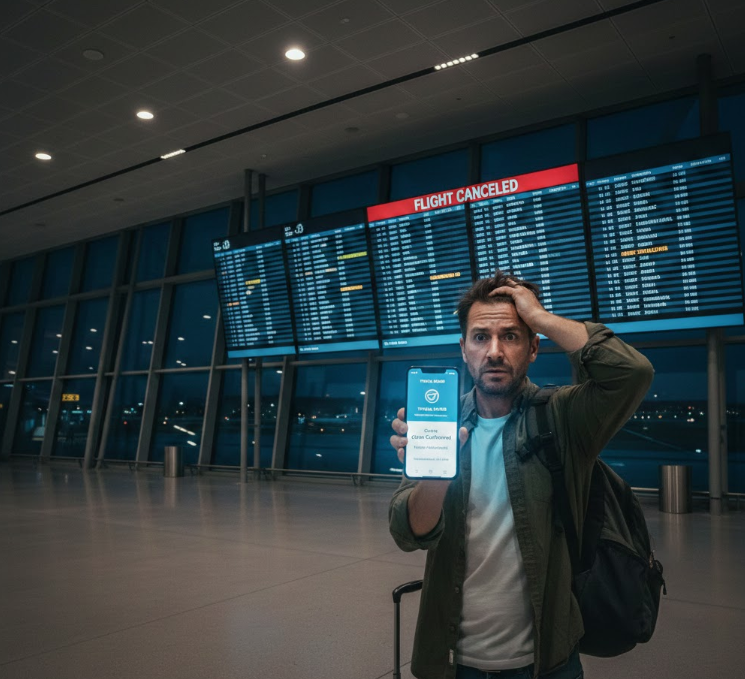
Standard travel insurance is useful. Let us not throw it into the bin just because it has exclusions. A decent policy can protect you from several expensive travel problems, especially medical emergencies abroad. That alone can justify buying coverage, because hospitals overseas do not accept “but I saw a cheap TikTok hack” as payment.
flight compensation eligibility
check if your delayed or cancelled flight qualifies for compensation
Most standard travel insurance policies usually include some combination of:
- Emergency medical expenses: Treatment if you become sick or injured while traveling.
- Emergency medical evacuation: Transport to a suitable medical facility when medically necessary.
- Trip cancellation: Reimbursement for prepaid, non-refundable costs if you cancel for a covered reason.
- Trip interruption: Reimbursement if your trip is cut short due to a covered event.
- Travel delay: Limited reimbursement for meals, accommodation, or transport after a qualifying delay.
- Baggage delay or loss: Compensation for delayed, damaged, stolen, or lost luggage, subject to limits.
- Missed connection: Sometimes covered, but only if the cause and timing match policy rules.
- Personal liability: Available in some policies if you accidentally cause injury or damage.
That sounds generous until you reach the fine print. And the fine print is where optimism goes to quietly suffer.
Trip cancellation coverage is usually based on named covered reasons. That means the policy lists the specific situations where you can cancel and claim. Common covered reasons may include serious illness, injury, death of a close family member, severe weather, jury duty, or your home becoming uninhabitable. But each insurer defines these differently.
For example, “illness” may require a doctor’s certificate. “Severe weather” may need to directly prevent travel. “Travel delay” may only activate after a specific number of hours. “Cancellation” may not apply if the airline is still technically operating the flight, even if the route now feels about as relaxing as a tax audit.
This is why travelers should compare coverage before buying. For international trips, especially expensive ones, look at policy wording before looking at price. A cheap policy with weak exclusions is like buying an umbrella made of tissue paper. Cute, but not useful when the storm arrives.
For basic travel protection, you can compare plans through providers such as Ekta Traveling. Just remember: the goal is not to buy the cheapest policy. The goal is to buy the policy that actually matches your risk.
Before filing a travel insurance claim, check whether the airline itself owes you compensation. For some delayed, cancelled, or disrupted flights, you may be able to check if your delayed or cancelled flight qualifies for compensation. This is separate from travel insurance, so do not mix the two unless you enjoy turning paperwork into a full-time personality.
Common Exclusions That Surprise Travelers

This is where things get spicy. Travelers often assume insurance covers “bad things that happen during travel.” Insurance companies usually think in a much colder way: “Is this exact bad thing listed as covered, and is it not excluded anywhere else?”
Those are not the same thing.
Here are the common exclusions that still surprise travelers in 2026.
1. War, Armed Conflict, and Military Action
This is the big one. Many standard travel insurance policies exclude claims caused directly or indirectly by war, armed conflict, invasion, military action, rebellion, insurrection, or similar events. Some policies also exclude civil unrest, riots, political violence, and government intervention.
That matters because modern travel disruption is messy. A traveler may not be going into a war zone. They may simply have a flight rerouted because airspace closed somewhere along the route. They may be stuck in transit because a connection was cancelled. They may have hotel bookings in a destination that is technically open but feels unstable.
Unfortunately, “I am uncomfortable going now” usually does not equal a covered cancellation under a standard policy. That sentence may be emotionally valid, but insurance companies do not reimburse vibes. Rude? Yes. Surprising? Not if you read the policy wording.
This is why travel insurance war coverage 2026 needs to be understood before booking expensive trips. If conflict is already in the news before you buy the policy, it may also be treated as a known or foreseeable event. More on that delightful little trap shortly.
Smart move: If your trip involves a politically unstable region, transit through sensitive airspace, or a destination under advisory, do not assume standard insurance will save you. Check government travel advisories and policy exclusions before paying large non-refundable deposits.
2. Fear of Travel or “I No Longer Feel Safe”
This is one of the most misunderstood areas. Standard insurance does not usually cover cancellation because you are nervous, anxious, or uncomfortable traveling. It may sound harsh, but insurance works on defined events, not personal risk tolerance.
For example, if there are protests in a city and you decide not to travel because you feel unsafe, a standard policy may reject the claim unless the unrest meets the policy’s definition of a covered event and directly affects your trip. If your airline is still flying and your hotel is still open, you may have a hard time proving a covered loss.
This is where travelers get angry online, and honestly, the anger is understandable. People assume “unsafe” means “covered.” But the policy may require official evacuation orders, cancellation by a supplier, airport closure, or a specific government advisory level. Translation: your gut feeling may be smart, but it may not be reimbursable.
For travelers who want more freedom to cancel, Cancel For Any Reason coverage may be worth considering. It usually costs more and reimburses only part of the prepaid non-refundable amount, but it can cover situations standard policies reject. Think of CFAR as the expensive friend who shows up late but at least brings some money.
3. Known or Foreseeable Events
Insurance is designed for unexpected events. Once something becomes known, public, or foreseeable, buying insurance after the fact usually does not help.
Example: A major conflict starts on March 1. You buy travel insurance on March 5 and then try to cancel because of that conflict. The insurer may say the event was already known when you bought the policy. In other words, you cannot buy fire insurance after the kitchen is already on fire and then act shocked when the insurer raises an eyebrow.
This applies beyond conflict. It can include named storms, airline strikes, volcanic eruptions, pandemics, airport shutdowns, or major route disruptions that were already publicly known before policy purchase.
So, when should you buy travel insurance? Usually, shortly after making your first trip deposit. Waiting until the world looks unstable and then buying coverage is not strategy. It is financial astrology.
For trips with multiple moving parts, also consider protecting the practical pieces of travel. For example, use an eSIM provider such as Airalo or Saily so you can contact airlines, hotels, insurers, and family immediately during disruptions. No data connection during a travel crisis is not “digital detox.” It is self-sabotage in airplane mode.
4. Government Travel Advisories
Government travel advisories matter, but they do not automatically guarantee a payout. Many travelers assume that if a government says “avoid travel,” insurance will automatically refund everything. Not necessarily.
Some policies exclude travel to places under a certain advisory level. Others may deny claims if you travel despite an advisory. Some may cover cancellation only if the advisory was issued after you bought the policy and after you booked the trip. Others may require the advisory to specifically affect your destination, not just the general region.
This is why checking only the advisory is not enough. You need to check the policy wording too. The government may say “do not travel,” but your insurer may say, “Interesting, please see exclusion 14.2.” Charming little industry.
Before booking, check sources such as your country’s government travel advisory page, the insurer’s certificate wording, and official airline notices. Do not rely on screenshots from social media comments. Reddit can be useful for seeing real traveler problems, but it is not your policy document.
5. Airline Cancellations Do Not Automatically Cover Hotels
This one catches independent travelers all the time. If your airline cancels your flight, you may be entitled to a refund or rebooking from the airline, depending on the route, airline rules, and applicable passenger rights. But that does not automatically mean your separately booked hotel, tour, airport transfer, or rental car becomes refundable.
This is the danger of DIY travel packaging. Booking everything separately can save money, but it also spreads your risk across different suppliers. The airline may refund your flight while the hotel says, “Sorry, non-refundable means non-refundable.” The tour operator may offer credit. The airport transfer company may charge a cancellation fee. Everyone points at someone else, and you are left collecting PDFs like a depressed accountant.
To reduce this risk, book flexible rates where the cancellation exposure is high. For airport transfers, use services with clear cancellation rules such as GetTransfer or HolidayTaxis. For tours and activities, check cancellation windows carefully on platforms such as Klook.
The boring but profitable habit is simple: before paying, ask, “What happens if my flight changes?” If the answer is “nothing, you lose the money,” then either accept the risk or choose a flexible option. Adult travel planning is mostly reading rules before they become expensive.
CFAR vs Standard Travel Insurance

Cancel For Any Reason, often shortened to CFAR, is one of the most searched travel insurance upgrades in 2026. And for good reason. Standard insurance only covers listed reasons. CFAR gives you more flexibility to cancel for reasons that are not covered by standard trip cancellation benefits.
But CFAR is not a full refund machine either. Let us kill that fantasy early before it starts wearing sunglasses.
CFAR usually has conditions such as:
- You must buy it within a limited time after your first trip payment.
- You may need to insure 100% of prepaid, non-refundable trip costs.
- You usually must cancel at least 48 hours before departure.
- It often reimburses only 50% to 75% of eligible prepaid non-refundable costs.
- It may not be available in every country, state, or policy type.
That means CFAR can be useful if you are booking an expensive trip during uncertain times, but it is not cheap and it will not make you whole. If your trip costs $4,000 and CFAR reimburses 75%, you may still lose $1,000 plus the higher policy premium. Still better than losing $4,000, but not exactly a financial group hug.
Standard travel insurance is better for clearly defined risks: illness, injury, medical emergencies, baggage problems, and covered trip disruption. CFAR is better when your biggest risk is uncertainty itself: conflict concerns, family uncertainty, work unpredictability, or simply wanting the option to cancel without arguing about whether your reason is “covered enough.”
When Flexible Booking Beats Insurance
When your destination, flight route, or travel dates are uncertain, paying slightly more for flexibility can be smarter than gambling on a claim. Before locking yourself into a non-refundable rate, compare refundable hotel options. A flexible hotel booking may look boring at checkout, but boring is beautiful when your flight gets cancelled and your money does not vanish into the hospitality underworld.
Here is the part many travelers ignore: sometimes the smarter move is not buying more insurance. Sometimes it is booking better.
A refundable hotel rate may cost $20 more per night. A flexible flight may cost $80 more. A cancellable airport transfer may cost slightly more than the cheapest non-refundable one. Travelers often reject these options because they look expensive at checkout. Then disruption hits, and suddenly that “expensive” flexible rate looks like the only adult in the room.
Insurance is for unpredictable losses. Flexibility is for predictable uncertainty. In 2026, if you are booking during route instability, conflict risk, airline schedule changes, visa uncertainty, or family unpredictability, flexible booking may beat insurance because you do not need to prove anything to a claims department.
That is the beauty of flexible rates. No claim forms. No waiting. No arguing with someone named Kevin from claims who keeps asking for “additional documentation.” Just cancel, rebook, and move on with your life.
This does not mean flexible booking always wins. If you are traveling to a country with expensive healthcare, you still need medical insurance. If you are taking a long-haul international trip, travel insurance remains smart. But for cancellation risk, compare the cost of flexibility against the cost and limitations of insurance.
For road trips or multi-city travel, car rental flexibility also matters. Platforms such as Auto Europe, QEEQ, and EconomyBookings can help compare rental options, but always check cancellation rules, excess deposits, cross-border restrictions, and insurance exclusions before booking.
For flights, do not only chase the lowest fare like it owes you money. Compare baggage rules, change fees, refund rules, and connection risk before paying. You can compare flights and flexible travel options before booking, because the cheapest ticket is not always cheap once the airline starts charging you for every small change like it invented capitalism.
Annual Plans vs Single-Trip Plans
Annual travel insurance sounds sophisticated. It gives “I travel so much, airports recognize my emotional damage” energy. But annual plans are not always better.
An annual plan can make sense if you take multiple trips per year and want ongoing medical, baggage, and disruption coverage. It may be cheaper than buying separate policies for every trip. However, annual plans often have per-trip duration limits, lower cancellation limits, and exclusions that still apply to war, civil unrest, known events, and high-risk destinations.
Single-trip plans can be better for expensive holidays because you can insure the exact trip cost and choose upgrades based on that itinerary. If you are taking one major family vacation, honeymoon, cruise, safari, or long-haul trip, a single-trip policy may give more relevant cancellation coverage than a generic annual plan.
The mistake is assuming “annual” means “stronger.” It does not. It just means it covers multiple trips during a year, subject to limits. A weak annual policy is still weak. It just disappoints you repeatedly.
Before choosing annual or single-trip insurance, compare:
- Maximum trip length per journey
- Medical coverage limits
- Emergency evacuation coverage
- Trip cancellation limits
- War, unrest, and advisory exclusions
- Coverage for pre-existing medical conditions
- Adventure activity exclusions
- Whether CFAR or similar upgrades are available
The right answer depends on your travel pattern. Frequent short trips? Annual may work. One expensive trip with big prepaid deposits? Single-trip may be smarter. Multiple complex trips to uncertain regions? You need proper comparison, not wishful clicking.
Focus Keyword: travel insurance war coverage 2026
SEO Title: Essential Travel Insurance War Coverage 2026 Guide
Permalink: travel-insurance-war-coverage-2026-gaps
Meta Description: Travel insurance war coverage 2026 explained: learn what standard policies exclude, how CFAR works, and when flexible bookings protect you better.
When to Buy Travel Insurance in 2026
Timing matters. Actually, timing matters so much that buying travel insurance late is one of the easiest ways to make your policy look useful while secretly being about as helpful as a chocolate teapot in Bangkok traffic.
The best time to buy travel insurance is usually soon after making your first trip payment. That could be your flight booking, hotel deposit, cruise payment, tour deposit, or any prepaid non-refundable travel cost. Why? Because travel insurance is designed for unexpected problems, not disasters that are already trending on every news app.
This is especially important for travel insurance war coverage 2026. If conflict, civil unrest, airspace disruption, airline strikes, or government warnings are already public before you buy the policy, the insurer may treat the situation as a known or foreseeable event. Translation: you bought protection after the problem was already visible. Insurers are many things, but they are not usually that generous.
For example, if a region becomes unstable on Monday, flights start rerouting on Tuesday, and you buy insurance on Wednesday, do not act surprised if your cancellation claim gets declined on Friday. That is not insurance. That is trying to buy an umbrella after the rain has already destroyed your shoes, your suitcase, and your will to travel.
For expensive trips, buy coverage early. For complex trips, buy coverage early. For trips involving multiple flights, prepaid tours, non-refundable hotels, car rentals, ferries, trains, or cruise connections, buy coverage early. Basically, if losing the money would make you angry enough to write a 900-word airport Facebook post, insure it properly.
You should also check whether early purchase unlocks extra benefits. Some policies offer better pre-existing medical condition coverage, financial default coverage, or CFAR eligibility only when the policy is purchased within a certain number of days after the first trip payment. Miss that window and the benefit may disappear faster than airport lounge pastries at 7 a.m.
Before buying, compare the real value of the policy against flexible bookings. You may also want to read our flexible booking guide before finalizing flights and hotels. Flexible bookings are not glamorous, but neither is crying over a non-refundable hotel charge because the airline changed your connection.
Claim Documentation Checklist
Travel insurance claims are not won by emotional storytelling. They are won by documentation. Your insurer does not want a dramatic WhatsApp voice note about how stressful the airport was. They want proof, receipts, dates, policy numbers, cancellation records, and supplier confirmations.
This is where many travelers fail. They buy decent coverage, face a real disruption, and then submit a claim with half the paperwork missing. Then they get angry when the insurer asks for more documents. Annoying? Yes. Predictable? Also yes.
For travel insurance war coverage 2026 or any disruption-related claim, documentation becomes even more important because insurers will look closely at the cause of cancellation, the timing of the event, and whether the situation was covered or excluded.
Keep this checklist ready:
- Policy certificate: Full policy wording, coverage schedule, and confirmation of purchase date.
- Booking confirmations: Flights, hotels, tours, transfers, rental cars, cruises, trains, and any prepaid services.
- Payment receipts: Credit card statements or invoices showing what you paid.
- Cancellation proof: Written confirmation from airlines, hotels, tour operators, or booking platforms.
- Refund proof: Evidence showing what was refunded and what remained non-refundable.
- Delay proof: Airline delay certificates, airport notices, or official disruption messages.
- Medical proof: Doctor certificates, hospital reports, prescriptions, and invoices if claiming medical-related cancellation or treatment.
- Government advisory screenshots: Dated official advisories if relevant to the claim.
- Communication records: Emails and chat transcripts with airlines, hotels, insurers, and travel agents.
Do not delete emails. Do not rely only on app notifications. Do not assume the airline will magically provide documents later. When disruption happens, screenshot everything. Save PDFs. Download receipts. Collect evidence while the information is still easy to access.
A claim without documents is just a sad story with luggage.
What Travel Insurance Still Does Not Cover in 2026
Let us be brutally practical. Standard travel insurance in 2026 still does not cover everything travelers think it covers. That gap between expectation and reality is where money gets burned.
Here are the common situations where standard policies may still reject claims.
War and Conflict-Related Disruption
This is the core issue behind travel insurance war coverage 2026. Many standard policies exclude war, invasion, armed conflict, military action, rebellion, terrorism under certain conditions, riots, or civil unrest. Some policies may include limited terrorism coverage, but that does not mean broader war or political instability is covered.
The wording matters. One insurer may define terrorism differently from another. One policy may cover cancellation due to a terrorist incident within a certain distance of your destination. Another may exclude anything connected to war or military action. Some may cover medical emergencies in limited circumstances but not cancellation. Others may exclude both.
This is why copying advice from someone on Reddit is risky. Their policy, country, insurer, timing, destination, and claim reason may be totally different from yours. Travel insurance is not universal. It is a contract. Boring, yes. Important, also yes.
Changing Your Mind
Standard insurance usually does not cover “I changed my mind.” It does not matter whether your reason feels sensible. If it is not a covered reason, it may not qualify.
Examples include:
- You found a cheaper flight after booking.
- You decided the destination feels unsafe but there is no covered event.
- Your friend cancelled and now you do not want to go alone.
- Your work schedule changed but your policy does not include work-related cancellation.
- You simply cannot afford the trip anymore.
This is where CFAR becomes relevant. With Cancel For Any Reason, you may be able to cancel for reasons standard insurance rejects. But again, CFAR usually reimburses only a percentage of eligible prepaid non-refundable costs and requires cancellation before a deadline.
For travelers worried about uncertain plans, compare CFAR against flexible bookings. Read our CFAR vs standard travel insurance guide before assuming the more expensive policy is automatically better.
Pre-Existing Medical Conditions
Pre-existing medical condition rules are another classic trap. Some travelers assume medical coverage means all medical issues are covered. Not quite. Policies often define pre-existing conditions based on symptoms, diagnosis, treatment, medication changes, or medical advice during a specific lookback period.
If you have a known medical condition and it causes you to cancel or seek treatment abroad, your claim may be denied unless the policy includes coverage for pre-existing conditions or you qualified for a waiver.
This matters for older travelers, family trips, long-haul vacations, cruises, and anyone traveling with parents. Do not buy the cheapest policy and assume everything is fine. That is not budgeting. That is gambling with nicer fonts.
Adventure Activities and “Small” Risky Decisions
Many standard policies exclude certain activities unless you buy an add-on. That may include scuba diving, skiing, trekking above a certain altitude, motorbike riding, quad biking, climbing, or other adventure sports.
Even something as normal as renting a scooter can become complicated. Some policies require you to hold a valid motorcycle license, wear a helmet, follow local laws, and avoid alcohol. If you crash a rented scooter in flip-flops after two beach cocktails, the insurer may not exactly roll out the red carpet.
For motorcycle or scooter rentals, compare options carefully through platforms like BikesBooking, but check local license rules and insurance exclusions before riding. “Everyone does it” is not a legal defense. It is just how bad travel decisions become group activities.
Visa Problems and Passport Issues
Standard travel insurance may not cover visa refusal, passport delays, incorrect documents, or denied boarding because your passport does not meet validity rules. Some policies may offer limited coverage for lost or stolen passports during travel, but that is different from failing to check entry requirements before departure.
This is why a passport and visa checklist should be part of your booking routine. Check passport validity, blank page requirements, visa rules, transit visa requirements, and entry documents before paying for non-refundable travel.
Airlines are not sentimental at check-in. If your passport is short by one month of required validity, they may deny boarding. Your insurance may not save you. Your sad airport face will also not help. Airport counters have seen everything.
Airport Disruptions: What to Do Before Filing a Claim
Flight disruption is one of the biggest reasons travelers look at insurance in 2026. Between route changes, airspace restrictions, strikes, weather, aircraft delays, and operational chaos, travel plans can collapse quickly.
But before filing an insurance claim, you need to understand who owes you what.
First, check the airline’s responsibility. If the airline cancels your flight, it may owe you a refund, rebooking, meal vouchers, accommodation, or compensation depending on the route and applicable rules. If you are flying from, to, or within regions with passenger rights regulations, you may have additional options.
For eligible flight disruption claims, platforms such as Compensair and AirHelp can help assess compensation eligibility. This is separate from travel insurance. Do not confuse airline compensation with insurance reimbursement. They are different systems, because apparently travel needed more paperwork.
Second, contact your hotel, tour operator, transfer provider, and car rental company immediately. Ask for written confirmation of cancellation terms, possible credits, date changes, or partial refunds. Insurers usually want proof that you tried to recover costs from suppliers first.
Third, keep all receipts during delays. Meals, airport hotels, taxis, and essentials may be reimbursable only up to daily limits and only after a qualifying delay period. Do not book a luxury suite and assume insurance will applaud your taste.
For long disruptions, luggage storage can also help if you are stuck between hotel checkout and a delayed flight. Services such as Radical Storage can be useful during awkward layovers or city delays. Also read our layover disruption guide for practical steps before you start spending money you hope to claim later.
How to Choose the Right Policy in 2026
Choosing travel insurance in 2026 should not start with price. That is the lazy approach. Start with risk.
Ask yourself:
- Is the trip expensive?
- Are flights refundable or flexible?
- Are hotels prepaid and non-refundable?
- Are you traveling near a region with conflict or unrest?
- Are you worried about government advisories changing?
- Are you traveling with children, elderly parents, or someone with medical conditions?
- Are you taking a cruise, safari, ski trip, or adventure holiday?
- Would losing the prepaid cost hurt financially?
If the answer is yes to several of these, buy stronger coverage. If your main worry is conflict-related cancellation, read the war and civil unrest exclusions carefully. Again, travel insurance war coverage 2026 is not something you should assume. It is something you verify line by line.
Look for these features:
- High emergency medical limits
- Emergency evacuation coverage
- Clear trip cancellation and interruption wording
- Coverage for travel delays and missed connections
- Transparent exclusions for war, unrest, terrorism, and advisories
- Optional CFAR coverage if available
- Pre-existing condition waiver if needed
- Clear baggage and personal belongings limits
For family trips, do not only check the adult coverage. Review child coverage, family cancellation rules, medical limits, and documentation requirements. For cruises, check missed port, cabin confinement, medical evacuation, and itinerary change benefits. For road trips, check rental car excess and liability rules. For long stays, check maximum trip duration.
A good policy is not the one with the prettiest comparison table. It is the one that matches the expensive things that can realistically go wrong on your specific trip.
Practical Booking Strategy: Insurance Plus Flexibility
The best 2026 travel strategy is not insurance or flexibility. It is insurance plus flexibility.
Use insurance for large unpredictable losses: medical emergencies, evacuation, covered cancellation, baggage problems, and serious disruption. Use flexible booking for situations where you may simply need to change plans without begging a claims department for mercy.
Here is a sensible approach:
- Buy travel insurance soon after your first trip payment.
- Choose flexible hotels when destination risk is high.
- Avoid non-refundable rates when flights are unstable.
- Use refundable or changeable tours for weather-sensitive activities.
- Keep airport transfers cancellable where possible.
- Check government advisories before final payment deadlines.
- Save all booking confirmations and supplier terms.
For tours, activities, and local experiences, platforms like Klook, WeGoTrip, and Eatwith can be useful, but always read cancellation terms before booking. A food tour may look adorable until your flight delay turns it into an expensive plate of imaginary pasta.
For accommodation alternatives, vacation rentals through Vrbo may offer different cancellation options depending on the property. Again, read the rules. The host’s cancellation policy matters more than the platform logo.
For bus or regional travel, Busbud can help compare routes, but check whether tickets are refundable or changeable. Cheap transport is lovely until one delay collapses the next three bookings like travel dominoes.
Final Verdict: What Standard Policies Still Do Not Cover
Standard travel insurance in 2026 is useful, but it is not unlimited. It usually does not cover every conflict-related cancellation, every government advisory situation, every fear-based decision, every known event, every visa problem, every adventure activity, or every separately booked non-refundable travel loss.
The biggest mistake travelers make is assuming travel insurance is a general safety net. It is not. It is a contract with covered reasons, exclusions, limits, deadlines, and documentation requirements. Romantic? No. Financially important? Absolutely.
If your main concern is travel insurance war coverage 2026, read the policy wording before buying. Look specifically for war, armed conflict, terrorism, civil unrest, riots, military action, government advisory, and known event exclusions. If those exclusions are broad, standard coverage may not protect you from the exact risk you are worried about.
If you want more cancellation freedom, compare CFAR. If you want cleaner control, book flexible rates. If you want protection against medical emergencies abroad, buy proper travel insurance. If you want all three, then congratulations, you are finally planning like an adult and not like someone who treats airline confirmation emails as destiny.
Travel insurance is not about fear. It is about financial damage control. In 2026, with route disruption, conflict uncertainty, expensive airfares, and tighter supplier terms, travelers need to stop asking, “Do I have insurance?” and start asking, “What exactly does this policy cover, and what does it very clearly refuse to cover?”
That one question can save you from denied claims, wasted money, and the special kind of airport rage that only happens when your suitcase, flight, hotel, and patience all disappear on the same day.
Bottom line: Standard travel insurance is worth buying, but only if you understand the gaps. For 2026, the smartest travelers combine early insurance purchase, flexible bookings, proper documentation, and realistic expectations. Because “I thought it was covered” is not a claim strategy. It is how money quietly leaves your life.
Frequently Asked Questions
Does standard travel insurance cover war or conflict cancellations in 2026?
Usually, no. Many standard policies exclude war, armed conflict, military action, civil unrest, riots, or similar events. This is why <strong>travel insurance war coverage 2026</strong> must be checked carefully in the policy wording before buying.
What does travel insurance usually not cover?
Standard travel insurance often does not cover fear of travel, changing your mind, known events, war-related disruption, visa mistakes, passport validity issues, some adventure activities, and losses from non-refundable bookings that are not linked to a covered reason.
Does travel insurance cover cancellation if I feel unsafe traveling?
Not usually. Feeling unsafe, nervous, or uncomfortable is generally not enough for a standard cancellation claim. Unless your reason matches a covered event in the policy, the insurer may reject the claim. Brutal, but that is how policy wording works.
What is Cancel For Any Reason travel insurance?
Cancel For Any Reason, or CFAR, is an optional upgrade that lets you cancel for reasons not normally covered by standard travel insurance. However, it usually costs more, must be purchased early, and may only reimburse 50% to 75% of eligible prepaid non-refundable costs.
Is CFAR better than standard travel insurance?
CFAR is better if you want more cancellation flexibility. Standard travel insurance is better for defined risks like medical emergencies, covered trip cancellation, baggage problems, and documented delays. The smart move is not blindly choosing one. Match the coverage to your actual trip risk.
When should I buy travel insurance?
You should usually buy travel insurance soon after making your first trip payment. Buying early may help you qualify for time-sensitive benefits such as CFAR, pre-existing condition waivers, or better cancellation protection. Buying after a problem becomes public may be too late.
Does travel insurance cover known or foreseeable events?
Usually, no. If a conflict, storm, strike, airline disruption, or government advisory was already known before you bought the policy, the insurer may treat it as a foreseeable event and deny related claims.
Does travel insurance cover flight cancellations?
Sometimes. Travel insurance may cover additional costs or non-refundable losses if the flight cancellation matches a covered reason. But if the airline cancels your flight, your first refund or rebooking rights usually come from the airline, not the insurer.
Are government travel advisories automatically covered by insurance?
No. A government travel advisory does not automatically mean your claim will be approved. Some policies may cover cancellations linked to new advisories, while others exclude travel to advisory-listed destinations. Always check the wording.
Does travel insurance cover hotel bookings if my flight is cancelled?
Not automatically. If your hotel was booked separately and is non-refundable, insurance may only reimburse it if the flight cancellation and hotel loss meet the policy’s covered reasons. Otherwise, the hotel may keep your money while everyone politely blames the terms and conditions.