
One Bag Packing List 2026: Smart Carry-On Guide
Disclosure: This article contains affiliate links. If you buy through these links, we may earn a commission at no extra cost to you. Basically, your suitcase gets lighter and we may get coffee money. Fair trade.
One bag packing list 2026 is not just another cute travel checklist telling you to pack three shirts, one toothbrush, and “good vibes.” Good vibes do not help when your power bank gets questioned, your backpack does not fit the airline sizer, and your “just in case” second jacket has colonized half your bag like it pays rent.
Travel in 2026 has changed. The big one? Power-bank rules are tighter. ICAO announced new lithium battery-powered power bank specifications effective from 27 March 2026, limiting passengers to two power banks and prohibiting passengers from recharging them during flights. That means your tech pouch now needs actual planning, not the usual chaos buffet of cables, mystery adapters, and one power bank with 7% battery that you swear was full yesterday.
At the same time, airlines are still strict about cabin baggage, low-cost carriers are still measuring bags like airport detectives, and travelers are still overpacking like they are evacuating their entire personality. So this one bag packing list 2026 gives you a practical, realistic carry-on system for flights, city trips, work travel, family holidays, and those “I will pack light this time” promises that usually die near the shoe rack.
What Changed in Carry-On Tech Rules for 2026?
The biggest travel-packing mistake in 2026 is treating your tech pouch like a junk drawer with a passport. The updated power-bank rules matter because they affect almost every traveler. Phones, tablets, laptops, e-readers, headphones, cameras, smartwatches, and portable chargers are now normal travel items. Unfortunately, lithium batteries are also aviation safety items, not cute accessories.
Under the new ICAO specifications, passengers are limited to two power banks, and passengers are not allowed to recharge power banks during flights. IATA guidance also says lithium-powered devices and spare batteries should be carried in hand baggage, not checked baggage. Translation: your power bank belongs in your carry-on, not buried inside checked luggage next to your emergency jeans and emotional-support snacks.
This does not mean you need to panic. It means you need to pack smarter. Choose one reliable, airline-compliant power bank and, if needed, a second smaller backup. Check the watt-hour rating printed on the device. Up to 100Wh is generally allowed in carry-on baggage, while 100–160Wh may need airline approval. Over 160Wh is usually not permitted on passenger aircraft. That tiny label matters. Yes, the boring label. The one nobody reads until security becomes a personality test.
Useful travel tech pick: For your 2026 carry-on setup, choose a 100Wh-compliant travel power bank and check the Wh rating before flying. Do not just buy the biggest battery online because “more mAh” sounds powerful. That is how you turn your tech pouch into a conversation with airport staff.
Power Bank Limits: The Simple Version
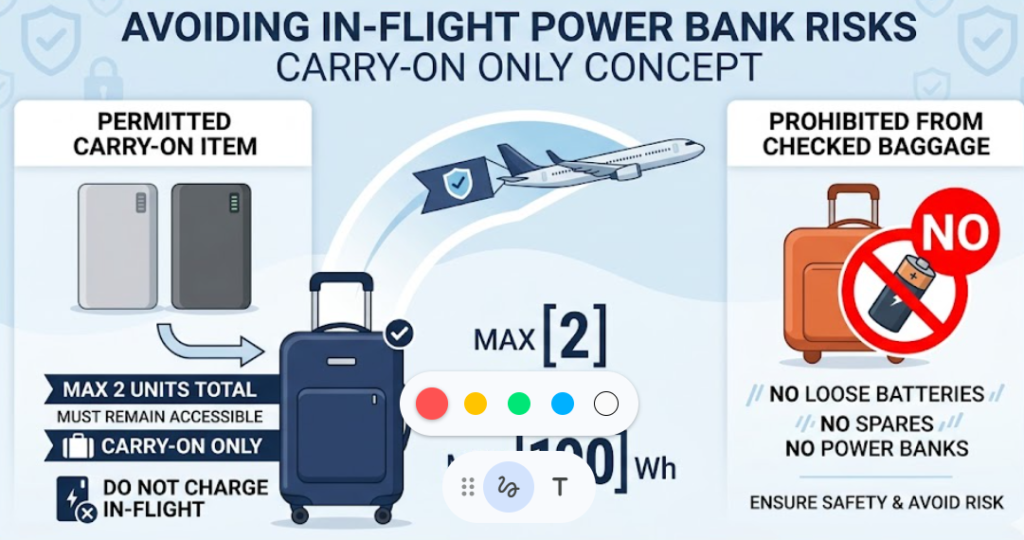
- Carry no more than two power banks per passenger.
- Keep power banks in your hand baggage, not checked luggage.
- Do not recharge your power bank during the flight.
- Check the Wh rating printed on the device.
- Protect terminals or keep power banks in a pouch to avoid short circuits.
- Always check your airline’s page before flying, because airlines may apply stricter rules.
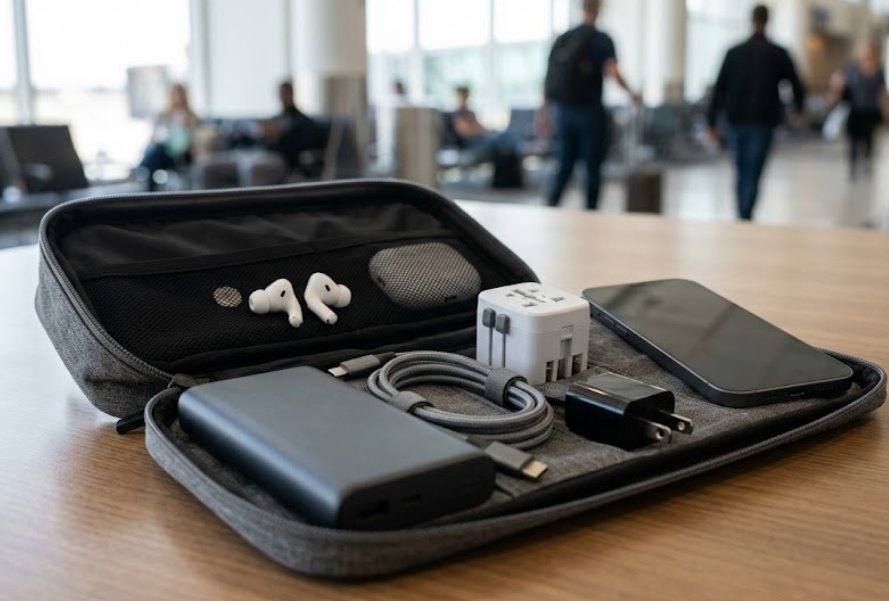
This is where a proper tech pouch becomes useful. Not fancy. Useful. There is a difference. A useful tech pouch keeps your cable, adapter, charger, power bank, earbuds, and SIM tools in one place. A fancy tech pouch makes you feel organized until you realize it has 37 compartments and you need a treasure map to find your USB-C cable.
Recommended tech addition: Add a universal travel adapter with USB-C so you are not the person crawling behind hotel furniture looking for the one socket that works.
Also, before your trip, install an eSIM if your destination supports it. You can compare options through your Airalo eSIM option or Saily eSIM option. A one-bag traveler should not land in a new country and immediately begin the ancient ritual of hunting for airport SIM counters while half-asleep.
The One-Bag Rule Nobody Likes: The Bag Comes Last
Most people buy the bag first. That is the mistake. They see a 45L backpack online, call it minimalist, and then fill it with enough clothing to open a small laundry business. The smarter method is this: build your packing list first, then choose the smallest bag that fits it comfortably.
For most travelers, the sweet spot is a 30L to 40L carry-on backpack. Under 30L can work for short trips, warm climates, and disciplined humans. Over 40L starts becoming suspicious. It may still pass on some airlines, but it also invites overpacking. And overpacking is like buffet dining: it feels clever at the start and regrettable by the end.
If you are still buying your main bag, look for a backpack that opens suitcase-style, has internal compression, includes a laptop sleeve, and clearly lists dimensions. Vague product listings are not your friend. “Cabin approved” means nothing unless the dimensions are actually stated. Airlines do not care about marketing language. They care about centimeters, kilograms, and making you pay at the gate.
Carry-on pick: Start with a structured carry-on travel backpack in the 35L–40L range. Make sure the size matches the airlines you fly most often.
The Core Clothing Formula for One-Bag Travel
The core of this one bag packing list 2026 is simple: pack for four to five days, then do laundry. Not glamorous, but neither is dragging a bloated suitcase through cobblestones while pretending you are “living your best life.”
The basic clothing formula works for most trips from five days to three weeks:
- 4 tops
- 2 bottoms
- 1 lightweight outer layer
- 4 sets of underwear
- 4 pairs of socks
- 1 sleepwear set
- 1 dressier outfit if truly needed
- 1 pair of shoes worn during travel
- 1 optional lightweight backup footwear
That is it. No, you do not need seven “options.” Options are how bags get fat. Build outfits around neutral colors, quick-dry fabrics, and pieces that can mix and match. If one shirt only works with one pair of pants and one specific mood, it is not travel clothing. It is luggage drama.
The best one-bag clothing is boring in the best possible way. Black, navy, grey, beige, olive, white, and denim tones mix easily. Nobody at your destination is maintaining a spreadsheet of your outfits. And if they are, they need a hobby.
Laundry-Based Packing Math
Here is the packing math that stops overpacking:
Trip length does not equal clothing quantity.
A 12-day trip does not require 12 outfits. It requires 4–5 days of clothing and one laundry plan. That plan can be hotel laundry, laundromat, sink wash, Airbnb machine, or travel laundry sheets. Once you accept this, your bag becomes lighter immediately.
Laundry pick: Add compact travel laundry detergent sheets to your one-bag kit. They weigh almost nothing and save you from packing clothes for every possible version of yourself.
For clothing, quick-dry fabrics are helpful because they let you wash at night and wear again faster. Merino wool is also popular for travel because it resists odor better than regular cotton, but let us be honest: merino is not cheap. It is useful, not mandatory. Do not bankrupt yourself for a T-shirt because a minimalist blogger told you cotton is a moral failure.
Optional clothing upgrade: If budget allows, consider a merino wool travel shirt for longer trips where repeat wear matters.
Compression Packing Cubes: Useful, Not Magical
Packing cubes are worth using, especially for one-bag travel. But they are not magic portals. They do not create unlimited space. They organize space and compress clothing so your bag does not become a fabric crime scene by day two.
Use one cube for tops, one for bottoms, one for underwear and socks, and one small pouch for laundry. That is enough. Do not buy a 12-piece cube set unless you enjoy organizing tiny bags inside bigger bags like some kind of luggage accountant.
Packing cube pick: Use compression packing cubes to keep your carry-on organized and reduce clothing bulk.
The trick is to roll softer items and fold structured pieces. Heavy clothing should sit closer to your back if you are using a backpack. Small gaps can hold socks, underwear, or a packable tote. Your laptop should stay in a protected sleeve. Liquids should be easy to remove. Your passport should never be buried under clothing unless you enjoy panic as a travel aesthetic.
The Toiletry Kit That Clears Security
The perfect one-bag toiletry kit is boring, small, and leak-proof. That is the dream. Not a luxury skincare cabinet. Not a “maybe I will need this” pharmacy. You need the basics: toothbrush, toothpaste, deodorant, small moisturizer, sunscreen, razor if needed, basic medication, and travel-size liquids.
For flights, stick to airline liquid rules. Use containers of 100ml or less where required and keep them in a clear pouch. Hotels often provide shampoo and shower gel. If you are picky, bring your own. But do not pack full-size bottles unless your true travel goal is upper-body training.
Toiletry pick: Use a leak-proof TSA-friendly toiletry bottle set for liquids, creams, and products you actually use.
Here is the ruthless toiletry test: if you do not use it at home every week, do not pack it for a seven-day trip. Travel is not the time to test six skincare experiments unless you want your face and your carry-on to both file complaints.
Packing for Mixed Weather Without Packing Your Entire Closet
Mixed weather is where one-bag packing gets tricky. Hot days, cold nights, rain, wind, over-air-conditioned airports, and random “why is this bus colder than a freezer?” moments can make travelers panic-pack.
The answer is layering, not bulk. One lightweight base layer, one normal top, and one packable outer layer will beat one giant jacket in most city-travel situations. If rain is likely, bring a lightweight packable rain jacket. If cold is expected, add a thin thermal or fleece. Avoid bulky coats unless your destination actually requires winter gear.
Rain layer pick: A lightweight packable rain jacket is better than carrying a bulky jacket “just in case.” The phrase “just in case” has ruined more packing lists than bad advice on travel forums.
For weather planning, check your destination forecast before packing and read a proper weather-packing guide if you have one on your site. This also gives you a clean internal link, which your SEO plugin will appreciate because apparently even plugins need emotional support.
Shoes and Jackets People Regret Bringing
Shoes are the enemy of one-bag travel. They are bulky, heavy, awkward, and somehow always dirtier than expected. Most travelers need one comfortable pair worn on the plane and one optional lightweight pair, such as sandals, flats, or packable casual shoes.
Do not pack “maybe shoes.” Maybe formal shoes. Maybe hiking shoes. Maybe beach shoes. Maybe workout shoes. Maybe, maybe, maybe. That is not packing. That is footwear anxiety.
Use this rule: if the shoe does not match at least three outfits or one confirmed activity, it stays home.
Jackets follow the same logic. A heavy jacket for one chilly evening is bad packing math. A packable layer is smarter. A hoodie can work, but it takes space. A thin fleece or rain shell usually packs better. If your trip includes real winter, then yes, pack proper winter gear. This guide is practical, not delusional.
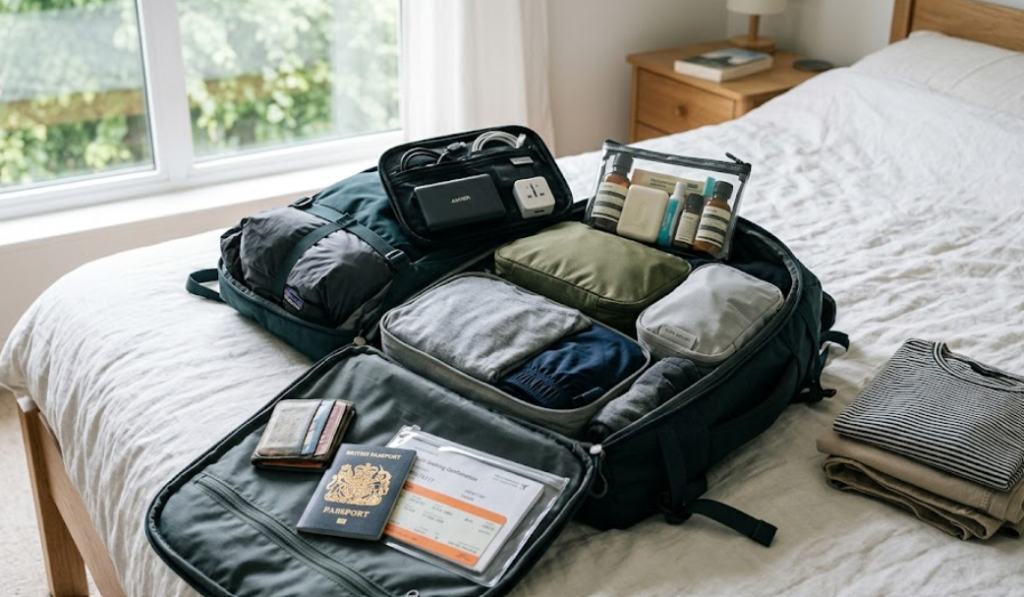
The 2026 One-Bag Packing Checklist
Here is the starter checklist for your one bag packing list 2026:
- Carry-on backpack, ideally 30L–40L
- Compression packing cubes
- 4 tops
- 2 bottoms
- 1 lightweight jacket or rain shell
- 4 underwear
- 4 socks
- 1 sleepwear set
- 1 main pair of shoes worn during travel
- 1 optional lightweight backup footwear
- Toiletry pouch with travel-size liquids
- Passport, wallet, cards, and travel documents
- Phone, charger, earbuds, and cable
- Maximum two power banks, carried in hand baggage
- Universal travel adapter
- Travel laundry sheets
- Compact day bag or packable tote
- Medication and basic first-aid items
- Reusable water bottle, empty before security
Extra useful item: A compact digital luggage scale helps avoid gate drama, especially on low-cost airlines that treat 800 extra grams like an international incident.
For activities and airport transfers, keep planning light too. You can book destination experiences through Klook, airport rides through HolidayTaxis, and luggage storage through Radical Storage if your one-bag fantasy collapses before hotel check-in. It happens. We judge silently, but we provide solutions.
What to Cut First From Your One-Bag Packing List
The fastest way to improve your one bag packing list 2026 is not buying more travel gear. It is removing the nonsense. Brutal truth: most people do not have a packing problem. They have a “what if I magically become a different person on vacation?” problem.
You pack gym clothes even though you avoid the gym at home like it owes you money. You pack formal shoes for a trip with no formal event. You pack three jackets because weather apps apparently stopped existing. Then you act shocked when the bag refuses to close. The bag is not the problem. The fantasy version of you is the problem.
Start cutting in this order:
- Extra shoes: Shoes are the biggest space thieves. One main pair and one lightweight backup are usually enough.
- Bulky jeans: One pair is fine. Three pairs are denim arrogance.
- Full-size toiletries: Unless you are moving abroad, leave the bathroom shelf at home.
- Heavy jackets: Use layers instead of one giant coat unless you are going somewhere properly cold.
- Backup outfits: Pack clothes that mix and match. Do not pack for imaginary emergencies.
- Duplicate gadgets: One good charger beats five random cables and a dead power bank.
- Books you will not read: Your Kindle exists for a reason. Your shoulder will thank you.
A practical one-bag rule is simple: if you would not use it at least twice, do not pack it once. This rule will annoy you at first because it attacks your emotional support clutter. Good. That clutter is why your carry-on currently looks pregnant.
For travelers who still want a little backup space, add a small foldable tote or day bag. It helps for groceries, beach visits, shopping, or separating essentials during flights. But do not use it as permission to create a second secret suitcase. That is not one-bag travel. That is lying with accessories.
The Smart 2026 Tech Pouch Setup
Your tech pouch should be compact, compliant, and boringly reliable. In 2026, this matters more because the power bank flight rules 2026 are stricter. You do not need six chargers, three mystery adapters, and a cable collection that looks like a drawer from 2014.
Here is the tech pouch setup that makes sense:
- Phone charging cable
- USB-C cable
- Wall charger
- Universal travel adapter
- One airline-compliant power bank
- Optional second small power bank, only if genuinely needed
- Earbuds or headphones
- SIM ejector pin
- Small cable organizer or pouch
Do not pack a power bank without checking the watt-hour rating. Many 20,000mAh power banks are usually under 100Wh, but “usually” is not a travel rule. Check the label. The watt-hour rating should be printed on the device or listed clearly in the product details.
For smoother travel, pair your tech pouch with a reliable eSIM before departure. You can check options like Airalo or Saily. Landing in a new country and immediately hunting for Wi-Fi like a lost raccoon is not the elite travel experience people pretend it is.
Smart travel tech reminder: Keep your power bank in your carry-on, not your checked bag. Carry no more than two, avoid charging them during the flight, and check your airline’s latest policy before flying.
How to Pack for 7 Days, 10 Days, or 2 Weeks With One Bag
A strong carry on packing list 2026 does not change much based on trip length. That sounds wrong until you understand the system. You are not packing one outfit per day. You are packing a rotation.
For a 3–5 Day Trip
- 3 tops
- 2 bottoms
- 3 underwear
- 3 socks
- 1 sleepwear set
- 1 jacket or outer layer
- 1 pair of shoes worn during travel
This is the easy mode. No laundry needed unless you spill something dramatic on yourself. Keep toiletries tiny and tech minimal.
For a 7-Day Trip
- 4 tops
- 2 bottoms
- 4 underwear
- 4 socks
- 1 sleepwear set
- 1 lightweight jacket
- 1 optional second pair of footwear
- Travel laundry sheets
Do laundry once. That is the entire magic trick. Not glamorous. Not influencer-worthy. Just practical. And practical is what keeps you from paying airline baggage fees for clothes you barely wear.
For a 10–14 Day Trip
- 4–5 tops
- 2–3 bottoms
- 5 underwear
- 5 socks
- 1 sleepwear set
- 1 lightweight jacket or rain shell
- 1 nicer outfit if needed
- 1 laundry plan
For two weeks, the answer is still laundry. Not fourteen outfits. Not seven pairs of socks “just in case.” Not enough clothing to confuse hotel housekeeping. Pack smart, wash once or twice, and move on with your life.
Weather-Based Packing: Hot, Cold, Rainy, and Confusing
Weather is the excuse people use to overpack. The real solution is layers. One bag travel works best when every clothing item has a job and preferably more than one job. A shirt should work for walking, dinner, and travel day. A jacket should handle wind, light rain, and cold airport lounges. Pants should work for sightseeing and casual dinners.
For Hot Weather Trips
- Quick-dry shirts
- Lightweight trousers or shorts
- Breathable underwear
- Sandals or lightweight backup footwear
- Compact sunscreen
- Cap or sunglasses
Hot weather is where cotton can betray you. It gets sweaty, dries slowly, and starts acting like a damp towel with sleeves. Quick-dry fabrics are better for travel, especially if you plan to wash clothes in the sink.
For Cold Weather Trips
- Thermal base layer
- Mid-layer fleece or sweater
- Packable outer jacket
- Warm socks
- Beanie or gloves if needed
Cold-weather one-bag packing is harder, but not impossible. Wear your bulkiest items on the plane. Pack thinner layers. Avoid carrying a second heavy coat unless your itinerary truly demands it.
For Rainy Trips
- Packable rain jacket
- Quick-dry clothing
- Water-resistant pouch for electronics
- Backup socks
- Small foldable umbrella if useful
A rain jacket usually beats an umbrella for one-bag travel because it keeps your hands free and packs smaller. Umbrellas are fine for city trips, but they are also excellent at breaking during the exact moment you need them. Very dramatic. Very annoying.
For more detail, internally link to your weather-packing guide. This supports topical SEO and gives readers a useful next step instead of dumping them at the end of the article like a bad airport layover.
The Airport Security-Friendly Packing Method
A one-bag setup should not just fit inside the bag. It should move smoothly through airport security. The goal is to avoid becoming the person unpacking their entire life at the scanner while everyone behind them silently ages.
Pack your bag in zones:
- Top zone: Passport, liquids, headphones, charger, and flight essentials.
- Middle zone: Packing cubes with clothing.
- Back zone: Laptop or tablet in a protected sleeve.
- Bottom zone: Shoes, jacket, or heavier items.
- Side pocket: Empty water bottle or small umbrella.
Your liquids should be easy to remove. Your laptop should be easy to access. Your power bank should not be buried under underwear like it is hiding from the law. Keep security-sensitive items visible and organized.
This is also a natural place to internally link to your airport-security guide. It helps readers understand liquids, electronics, batteries, and document checks without turning this packing article into a security manual with jokes.
One-Bag Packing Checklist
Use this checklist before every flight. Copy it, print it, save it, or screenshot it like a normal person who does not want to repack from memory at midnight.
Documents
- Passport
- Visa or entry approval if needed
- Boarding pass
- Travel insurance details
- Hotel booking confirmation
- Emergency contact information
- Credit card and backup card
Clothing
- 4 tops
- 2 bottoms
- 4 underwear
- 4 socks
- 1 sleepwear set
- 1 lightweight jacket or rain shell
- 1 optional dressier outfit
- 1 main pair of shoes
- 1 optional lightweight backup footwear
Toiletries
- Toothbrush
- Travel-size toothpaste
- Deodorant
- Sunscreen
- Moisturizer
- Razor if needed
- Basic medication
- Travel-size shampoo or personal products if needed
Tech
- Phone
- Charger
- Charging cable
- Universal adapter
- Power bank, maximum two
- Earbuds or headphones
- Laptop or tablet if needed
- eSIM or local SIM plan
Extras
- Travel laundry sheets
- Reusable water bottle
- Compact tote bag
- Small lock if needed
- Microfiber towel if needed
- Snacks
- Pen
Keep this checklist lean. The point is not to add every possible item. The point is to stop packing like your suitcase has unlimited emotional bandwidth.
Best Travel Products to Add to Your One-Bag Setup – My recommendations (High Ratings)
You do not need to buy everything to travel carry-on only. But a few smart items can make your one bag packing list 2026 easier, lighter, and less chaotic.
1. Carry-On Travel Backpack
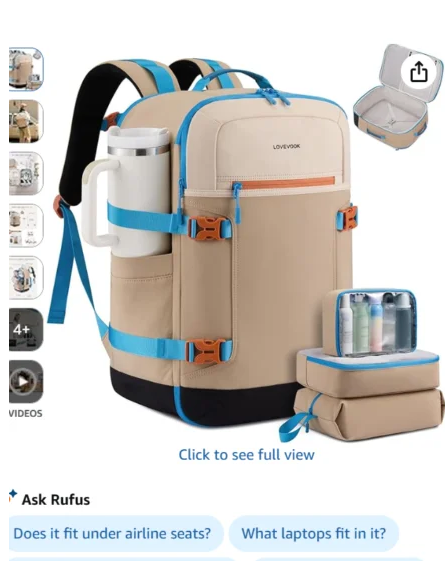
A good carry-on backpack should open like a suitcase, fit airline cabin rules, protect your laptop, and not look like you are climbing Everest to visit Barcelona.
Check carry-on travel backpack on Amazon
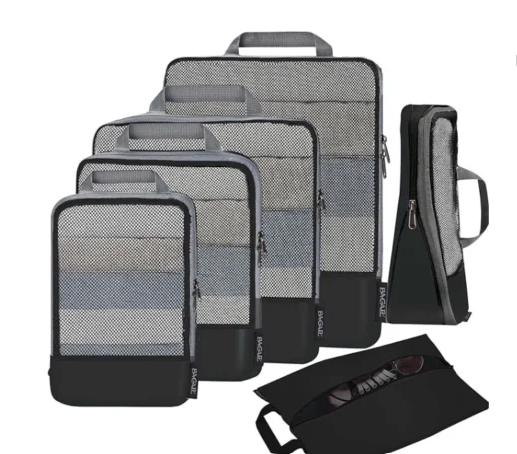
2. Compression Packing Cubes
Compression cubes keep clothing organized and reduce bulk. They will not perform miracles, but they will stop your bag from becoming a laundry-themed disaster zone.
Check compression packing cubes on Amazon
3. TSA-Friendly Toiletry Bottles
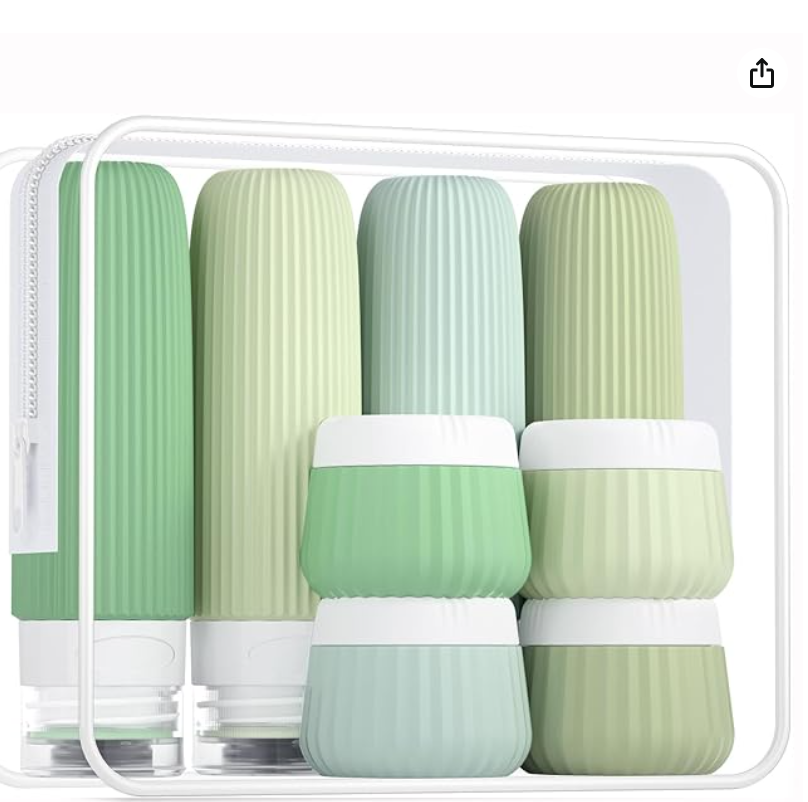
Leak-proof travel bottles are boring until one cheap bottle explodes inside your bag. Then suddenly boring looks very attractive.
Check TSA-friendly toiletry bottles on Amazon
4. Travel Power Bank
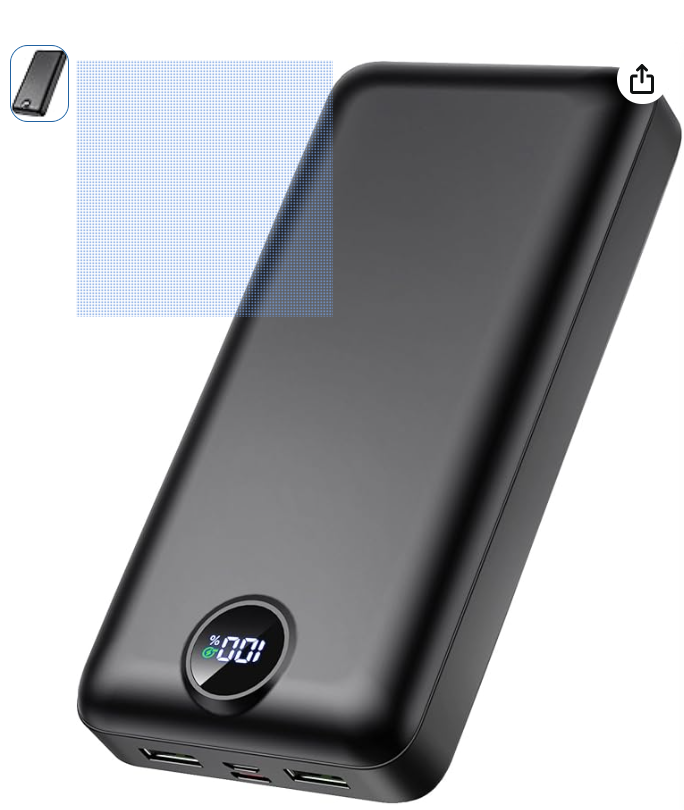
Choose a power bank that clearly shows its Wh rating and fits airline limits. Keep it in your carry-on and do not recharge it during the flight.
Check travel power bank on Amazon
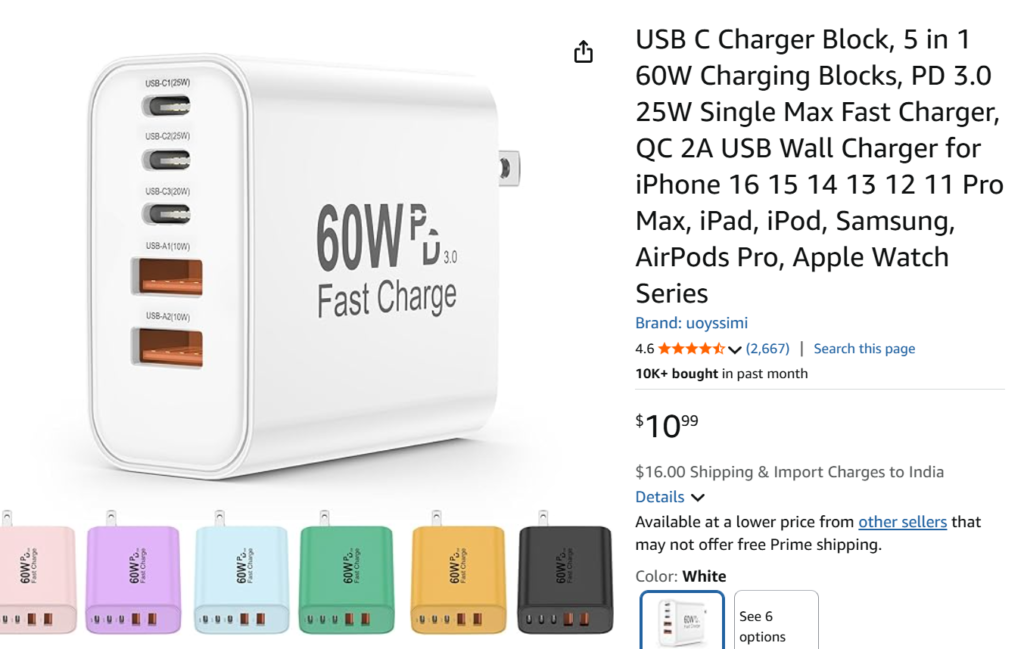
5. Universal Travel Adapter
A universal adapter with USB-C support keeps your charging setup clean. It also prevents the classic hotel-room socket panic.
Check universal travel adapter on Amazon
6. Travel Laundry Sheets
Laundry sheets are tiny, light, and practical. They are the reason you can pack for five days and travel for two weeks without smelling like regret.

Check travel laundry sheets on Amazon
7. Merino Wool Travel Shirt

Merino is not cheap, but it is useful for repeat wear and longer trips. Buy it if it fits your budget. Do not buy it because the internet bullied cotton.
Check merino wool travel shirt on Amazon
8. Packable Rain Jacket
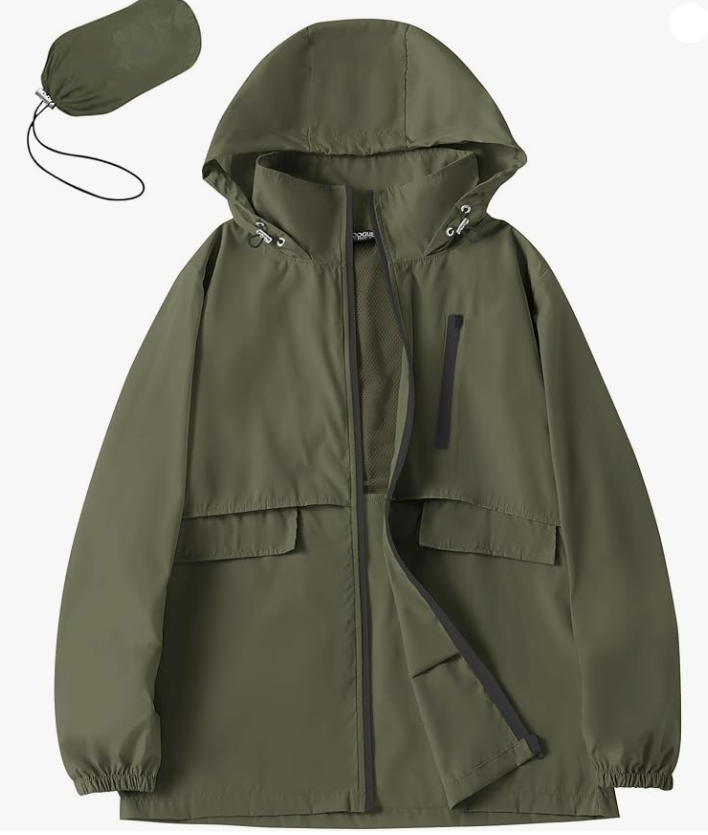
A packable rain jacket is one of the smartest mixed-weather items. It handles rain, wind, and chilly airports without eating your whole bag.
Check packable rain jacket on Amazon
9. Quick-Dry Travel Towel
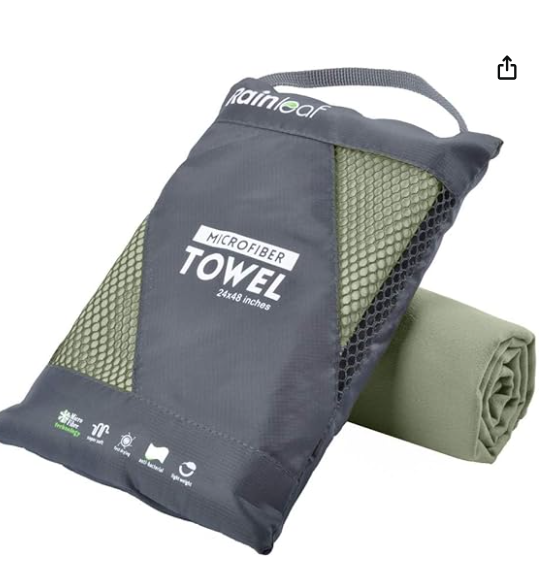
A compact quick-dry towel is useful for hostels, beach trips, gym sessions, and hotels where the towel situation looks suspicious.
Check quick-dry travel towel on Amazon
10. Digital Luggage Scale
A luggage scale helps you avoid surprise baggage fees. Because apparently 1 extra kilogram is enough for airlines to start acting like you committed a financial crime.
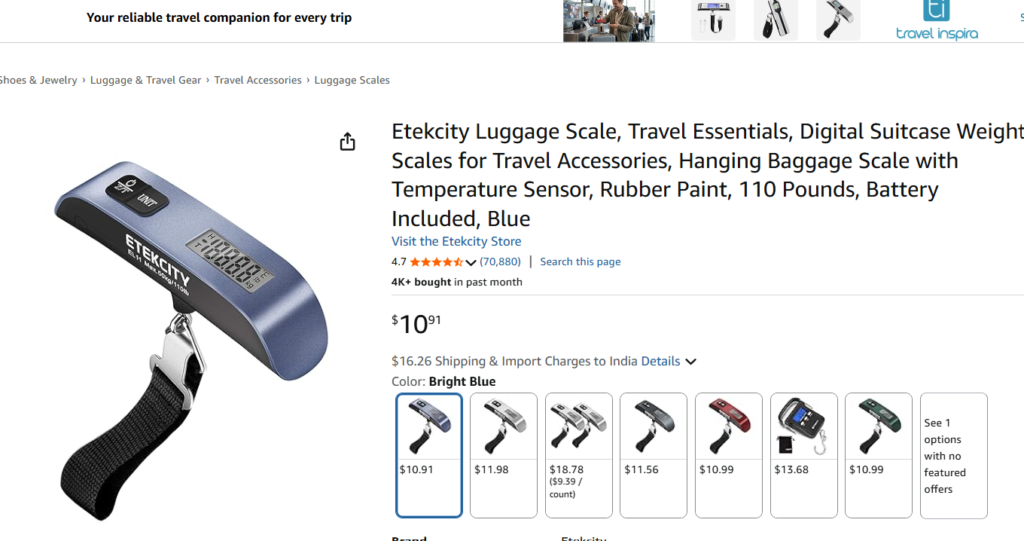
Check digital luggage scale on Amazon
Travel Services That Pair Well With One-Bag Travel
One-bag travel is not just about packing. It is about reducing friction. That means booking smarter, staying connected, and having backup plans when flights or luggage situations go sideways.
- eSIM: Use Airalo or Saily to stay connected without chasing airport SIM counters.
- Travel insurance: Check Ekta Traveling before your trip, especially if you are carrying expensive tech.
- Airport transfers: Compare airport rides with HolidayTaxis or GetTransfer.
- Luggage storage: Use Radical Storage if you arrive early or check out before your flight.
- Activities: Book tours and attractions through Klook.
- Flight disruption help: Check AirHelp or Compensair if your flight is delayed or cancelled and you may be eligible for compensation.
Common One-Bag Packing Mistakes
The one bag packing list 2026 system works only if you avoid the usual mistakes. And no, the biggest mistake is not forgetting socks. It is packing like rules do not apply to you because you watched three travel videos and now feel spiritually cabin-approved.
Mistake 1: Buying the Bag Before Making the List
This is how people end up with a backpack large enough to house a small intern. Make the list first. Then buy the smallest practical bag that fits the list.
Mistake 2: Packing Too Many Shoes
Shoes destroy space. Wear your bulkiest pair on the plane and pack only one lightweight backup if needed.
Mistake 3: Ignoring Battery Rules
Your power bank is not just another gadget. It is a regulated lithium battery item. Keep it in carry-on baggage, check the Wh rating, carry no more than two, and avoid charging it during the flight.
Mistake 4: Packing Clothes That Do Not Match
Every top should work with every bottom. If your clothing needs a committee meeting to create outfits, simplify the colors.
Mistake 5: No Laundry Plan
One-bag travel without laundry is just slow-motion overpacking. Pack for four to five days and wash. That is the system.
Mistake 6: Packing for Every Possible Situation
You are not packing for every possible situation. You are packing for your actual itinerary. Big difference. Your bag should serve the trip you booked, not the imaginary adventure your anxiety invented at 11:30 p.m.
Final One-Bag Packing Strategy for 2026 Flights
The best one bag packing list 2026 is not about being extreme. You do not need to travel with one shirt, half a toothbrush, and the personality of a spreadsheet. The goal is to pack enough, not everything.
Start with the rules. Power banks and spare lithium batteries belong in carry-on baggage, not checked luggage. For 2026 flights, keep your power-bank count to two, check the watt-hour rating, and do not recharge power banks during the flight. Then build the rest of your packing system around clothing rotation, laundry math, and one realistic bag.
Use a 30L–40L carry-on backpack. Pack four to five days of clothing. Choose quick-dry, mix-and-match outfits. Use compression cubes. Keep toiletries small. Carry one reliable tech pouch. Cut the “just in case” items first. And for the love of overhead bins, stop packing shoes for a version of yourself who apparently attends weddings, hikes mountains, goes clubbing, and runs marathons on the same weekend.
One-bag travel works because it forces decisions. Good decisions. Annoying decisions. The kind that save you from baggage fees, long waits at the carousel, and the dramatic airport moment where you realize your suitcase has gone to a different country to find itself.
Pack lighter. Move faster. Follow the rules. And remember: the best bag is not the one that fits everything. It is the one that stops you from bringing everything.
FAQs About One-Bag Packing for 2026 Flights
What is the best one-bag packing list for 2026 flights?
The best one-bag packing list for 2026 flights includes 4 tops, 2 bottoms, 4 sets of underwear, 4 pairs of socks, one lightweight jacket, one pair of main shoes, travel-size toiletries, a compact tech pouch, and no more than two airline-compliant power banks. The goal is to pack enough for the trip without dragging your entire bedroom through airport security.
Can I bring a power bank on a flight in 2026?
Yes, you can bring a power bank on a flight in 2026, but passengers should follow the updated rules. Carry no more than two power banks, keep them in hand baggage, check the Wh rating, and do not recharge power banks during the flight. Always check your airline’s latest policy before travel.
Can I put a power bank in checked luggage?
No. Power banks and spare lithium batteries should be carried in hand baggage, not checked luggage. This is because cabin crew can respond more quickly if a lithium battery overheats or creates a safety concern.
What size backpack is best for one-bag travel?
For most travelers, a 30L to 40L backpack is the best range for one-bag travel. Under 30L can feel too tight for mixed-weather trips, while over 40L usually encourages overpacking and may not fit some airline cabin-baggage limits.
How do I stop overpacking for travel?
Use laundry math. Pack for 4 to 5 days, not for the full trip. Choose clothes that mix and match, dry quickly, and can be worn more than once. If an item does not work with at least two outfits or one confirmed activity, leave it at home.
Are packing cubes worth it for carry-on travel?
Yes, packing cubes are worth it for carry-on travel because they keep clothing organized and reduce bulk. Compression packing cubes are especially useful for one-bag travel, although they do not magically create unlimited space.
How many shoes should I pack for one-bag travel?
Most travelers should wear one comfortable pair of shoes and pack one lightweight backup pair if needed. Extra shoes are usually the first thing to cut because they take up too much space and rarely justify their weight.
How do I stop overpacking for travel?
Use laundry math. Pack for 4 to 5 days, not for the full trip. Choose clothes that mix and match, dry quickly, and can be worn more than once. If an item does not work with at least two outfits or one confirmed activity, leave it at home.
Are packing cubes worth it for carry-on travel?
Yes, packing cubes are worth it for carry-on travel because they keep clothing organized and reduce bulk. Compression packing cubes are especially useful for one-bag travel, although they do not magically create unlimited space.
How many shoes should I pack for one-bag travel?
Most travelers should wear one comfortable pair of shoes and pack one lightweight backup pair if needed. Extra shoes are usually the first thing to cut because they take up too much space and rarely justify their weight.
What should I cut first from my carry-on bag?
Cut extra shoes, bulky jeans, full-size toiletries, heavy jackets, duplicate gadgets, backup outfits, and anything packed only for a vague “just in case” reason. If you would not use it at least twice, do not pack it once.