
The practical takeaway
europe ees layover 2026 Europe has officially entered its “please look into the camera and place your fingers here” era. Romantic? No. Efficient? Eventually, maybe. Stressful for short layovers? Absolutely. Since the European Union’s Entry/Exit System, better known as EES, became fully…
europe ees layover 2026
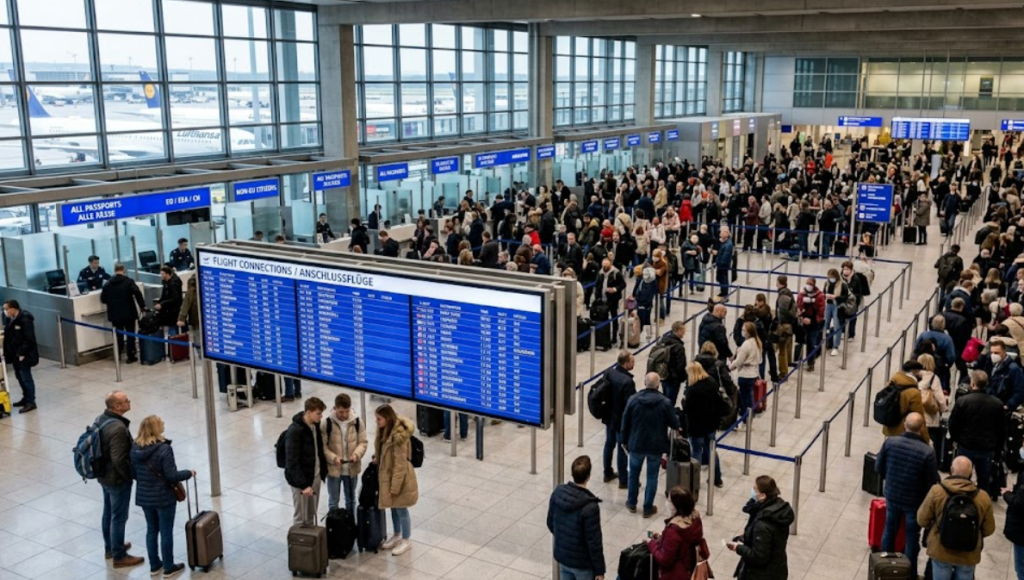
Europe has officially entered its “please look into the camera and place your fingers here” era. Romantic? No. Efficient? Eventually, maybe. Stressful for short layovers? Absolutely.
Since the European Union’s Entry/Exit System, better known as EES, became fully operational on 10 April 2026, travelers entering the Schengen Area from outside the EU now face a different kind of border process. The old passport stamp is being replaced by digital entry and exit records, including biometric capture such as facial images and fingerprints for eligible non-EU travelers. In simple English: your first airport into the Schengen Area now matters more than ever.
And this is where layovers get spicy. Not fun spicy. More like “why is my next flight boarding while I am still in a border-control queue?” spicy.
This guide explains how much time you should really allow for a Europe layover in 2026, who EES affects, why your first Schengen airport is the critical point, and when a cheap short connection is actually just a missed flight wearing a discount sticker.
In This Guide
- What changed with EES in 2026?
- Who does EES affect?
- Why your first Schengen airport matters
- How much layover time do you need?
- Through-ticket vs self-transfer layovers
- What happens if EES delays make you miss a flight?
What Changed with Europe’s EES in 2026?
The Entry/Exit System is a digital border-control system for non-EU nationals traveling for short stays in the Schengen Area. Instead of simply stamping passports, border authorities now digitally record entries, exits, refusals of entry, and biometric information.
In practice, this may include:
- Passport or travel document scanning
- Facial image capture
- Fingerprint collection
- Entry and exit date recording
- Automated tracking of short-stay limits
That sounds neat on a government PowerPoint. For travelers, it means the first border interaction may take longer than it used to, especially if it is your first time entering under EES. Machines need to work. Queues need to move. People need to understand instructions. And someone, somewhere, will absolutely stand at a kiosk like it is a haunted ATM.
The important part: EES is not a visa. It is not the same as ETIAS. EES records your border crossing. ETIAS, expected separately, is a travel authorization system for eligible visa-exempt travelers. Mixing them up is common, but it is also how travel forums become chaos soup.
Official information is available from the European Union’s EES traveler page here: EU Entry/Exit System traveler information.
Who Does EES Affect?
EES generally applies to non-EU nationals traveling for short stays to countries using the system. This includes many travelers from countries that do not need a Schengen visa for short visits, as well as travelers who do need a short-stay visa.
For example, depending on nationality and travel status, EES may affect travelers from places such as:
- The United Kingdom
- The United States
- Canada
- Australia
- India
- Thailand
- Many other non-EU countries
The exact requirement depends on your passport, residence status, visa status, and route. So no, “my cousin went last year and nothing happened” is not a policy source. That was last year. Last year also had fewer airport kiosks trying to harvest fingerprints before your cappuccino.
You should check official information before travel, especially if your trip involves complex routing, multiple passports, residence permits, or visa requirements.
Why Your First Schengen Airport Matters Most
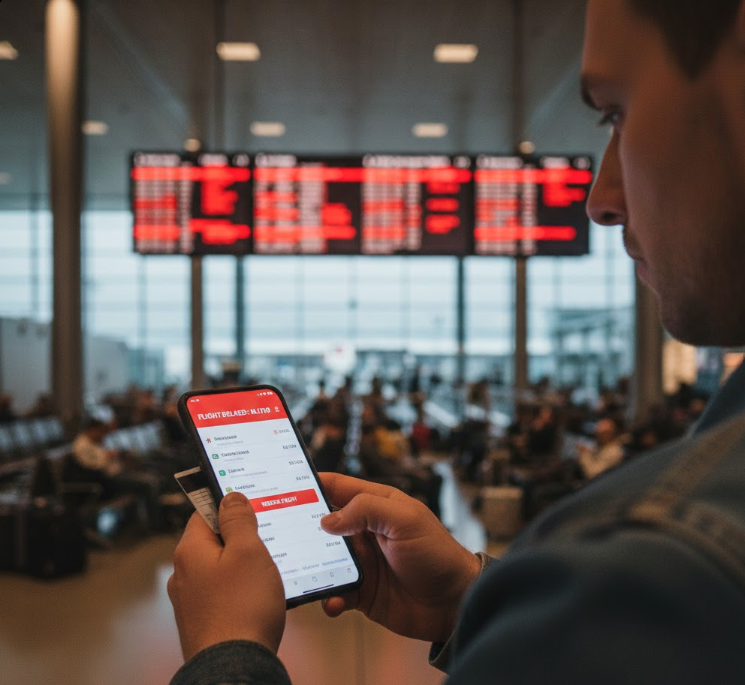
This is the part many travelers still get wrong.
If you fly from Bangkok to Paris, then Paris to Rome, your Schengen immigration process usually happens in Paris, not Rome. Paris is your first Schengen entry point. After that, Paris-to-Rome is generally treated like an internal Schengen flight.
So if your itinerary looks like this:
- Delhi → Frankfurt → Barcelona
- Bangkok → Amsterdam → Prague
- New York → Paris → Milan
- London → Madrid → Lisbon
Your risk point is usually Frankfurt, Amsterdam, Paris, or Madrid — not the final city printed in large letters on your vacation mood board.
This matters because EES processing, passport control, terminal changes, security checks, and walking distance all hit you at the first Schengen airport. If you booked a 55-minute connection because the airline website allowed it, congratulations: you have discovered that “allowed” and “smart” are not the same thing.
Airlines publish minimum connection times, but those are technical minimums. They are not personal comfort recommendations. They do not know if your incoming flight will park at a remote stand. They do not know if your toddler will choose that exact moment to become a tiny airport philosopher. They do not know if EES kiosks are moving smoothly that morning.
Minimum connection time is the legal floor. Your sanity needs a higher ceiling.
Quick Travel Setup Before Landing
Do not land in Europe with no data, no airport map, and no idea where your next gate is. That is not adventurous. That is just self-inflicted airport theatre.
Set up an eSIM before you fly so you can check gate changes, airline messages, airport maps, and rebooking options immediately after landing.
So, How Much Layover Time Do You Need in Europe in 2026?
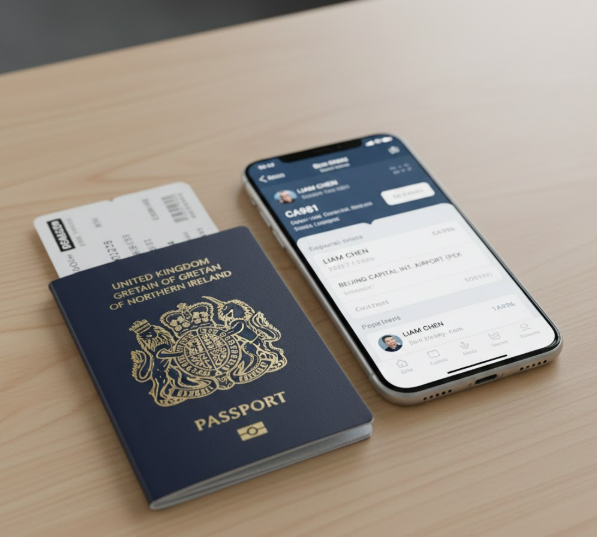
Here is the blunt answer: if your itinerary enters the Schengen Area and you are a non-EU traveler affected by EES, you should be more conservative than you were before April 2026.
For a smooth, same-ticket connection through a major European hub, I would not personally choose anything under two hours in 2026 unless I had no realistic alternative. For bigger airports, unfamiliar terminals, peak-season arrivals, checked baggage complications, or travelers who move slower, three hours is the smarter minimum.
For self-transfer connections, the answer is much harsher: three hours is often still too tight, and four to six hours may be more realistic depending on airport, baggage, terminal changes, and airline risk.
Yes, that sounds dramatic. But missing a flight because you wanted to save 45 minutes is not efficient. It is the travel version of buying cheap shoes and then paying a doctor.
Rule-of-Thumb Layover Timing for Europe EES in 2026
| Scenario | Suggested Minimum | Risk Level |
|---|---|---|
| Same-ticket Schengen connection at a smaller airport | 2 hours | Moderate |
| Same-ticket Schengen connection at a major hub | 2.5 to 3 hours | Safer |
| Same-ticket connection with terminal change | 3 hours | Moderate to high |
| Self-transfer with no checked bag | 4 hours | High |
| Self-transfer with checked baggage | 5 to 6 hours | Very high |
| Separate tickets plus budget airline | 6+ hours or overnight | Expensive chaos potential |
These are not official airport rules. They are practical planning buffers for travelers who prefer boarding planes instead of arguing at transfer desks.
Why Short Layovers Are Riskier Under EES
Short layovers were always risky at big European hubs. EES simply removes some of the fantasy. Before EES, passport control could still be slow, but many travelers were used to a stamp-and-go rhythm. Now, first-entry processing may include additional biometric steps, and those steps are only as fast as the system, staffing, airport layout, and passenger behavior allow.
The risk gets worse when several factors stack together:
- Your first Schengen entry is at a large hub like Paris, Frankfurt, Amsterdam, Madrid, or Rome
- You arrive during morning long-haul banks
- You need to change terminals
- Your next flight is on a different airline
- You booked separate tickets
- You need to collect and recheck baggage
- You are traveling during summer, Christmas, school holidays, or major events
- You are traveling with children, elderly family members, or mobility limitations
One delay is manageable. Five small delays become a missed connection casserole. Nobody ordered it, but here it is.
Protect the Trip, Not Just the Ticket
If your route includes tight connections, separate tickets, or expensive onward bookings, check whether your travel insurance actually covers missed connections and delays. Do not assume. Insurance policies love fine print. Fine print loves ruining vacations.
Through-Ticket vs Self-Transfer: The Difference Is Hug

This is where travelers make costly mistakes.
A through-ticket means your flights are booked under one itinerary, usually with baggage checked through to the final destination. If your incoming flight is delayed and you miss the connection, the airline is generally responsible for rebooking you, assuming the delay is within the conditions of carriage and the connection was legally valid.
A self-transfer means you booked separate tickets. Maybe Bangkok to Vienna on one airline, then Vienna to Dubrovnik on another low-cost carrier. You may need to pass immigration, collect baggage, exit arrivals, check in again, clear security again, and reach the next gate before check-in closes.
In 2026, self-transfer through a Schengen entry airport deserves extra caution. EES processing can add uncertainty at the exact point where self-transfer travelers have the least protection.
Put simply:
- Through-ticket: Annoying delay, but usually recoverable.
- Self-transfer: Your problem, your wallet, your emotional support croissant.
Budget airlines can be excellent value, but separate-ticket connections are not magic. They are risk transfers. The airline saves responsibility. You inherit the headache.
Is Two Hours Enough for a Europe Layover in 2026?
Sometimes, yes. Often, barely. Occasionally, absolutely not.
Two hours may be enough if all of these are true:
- Your flights are on one ticket
- Your bags are checked through
- You are entering through an efficient airport
- You do not need to change terminals
- Your incoming flight is usually punctual
- You are traveling outside peak periods
- You are comfortable moving quickly
But two hours is not generous. It is a calculated gamble. If you are traveling for a cruise, wedding, business meeting, prepaid tour, or once-a-year family holiday, stop acting like the airport owes you miracles. Add time.
The better question is not “Can I make it?” The better question is “What happens if I do not?”
If the answer is “I lose money, miss a hotel night, ruin a tour, or strand my family,” then book the longer layover. Being early in an airport is boring. Missing a flight is expensive boring with paperwork.
Long Layover? Turn It Into a Useful Stop
If you choose a safer long layover, you do not have to spend six hours guarding your suitcase like a dragon with cabin baggage. Use luggage storage if you leave the airport or have a long city connection.
Which European Airports Need Extra Buffer?
Any first-entry Schengen airport can create delays, but large hubs deserve more respect because they combine long-haul arrivals, immigration queues, terminal complexity, security screening, and massive walking distances.
Be especially cautious with short first-entry layovers through:
- Paris Charles de Gaulle
- Amsterdam Schiphol
- Frankfurt Airport
- Madrid Barajas
- Rome Fiumicino
- Munich Airport
- Zurich Airport
- Vienna Airport
This does not mean these airports are bad. It means they are large, busy, and not designed around your fantasy that 65 minutes is “plenty.” Some airports are smooth on good days and brutal on bad days. EES adds another moving part.
For first-time visitors, families, elderly travelers, or anyone who dislikes sprinting with a backpack while questioning their life choices, three hours at a major hub is a more adult decision.
Read next: Travel Insurance That Actually Works: 9 Critical Rules
Related guide: EU Entry Exit System: 9 Critical Border Changes That Could Seriously Disrupt Your Trip
What Happens If EES Delays Make You Miss a Connection?
This is where your booking type becomes the main character. Not your passport. Not your backpack. Not your beautifully laminated itinerary. Your booking type.
If your flights are on one ticket and your connection was legal, the airline usually has responsibility to rebook you if a delay causes you to miss the next flight. That does not mean the process will be elegant. It may involve queues, app notifications, tired staff, and a level of airport patience that nobody naturally possesses. But at least you are not starting from zero.
If your flights are on separate tickets, the situation is very different. Your second airline may treat you as a no-show if you miss check-in or boarding. They do not care that immigration was slow. They do not care that EES kiosks had a queue. They do not care that your first aircraft parked somewhere near another postal code. Separate tickets mean separate responsibility.
So before booking, ask yourself one ugly but useful question:
“If I miss this onward flight, who pays?”
If the answer is “probably me,” then your cheap connection is not cheap. It is a small financial trap wearing a boarding pass.
Delayed, Rebooked, or Stuck Overnight?
If your connection collapses and you need a ride from the airport to a hotel, do not wait until midnight to start negotiating with taxi chaos. Pre-booking an airport transfer can save time, stress, and the traditional airport hobby of wondering whether you are being overcharged.
What To Do If Your First Flight Is Delayed
If your first flight is delayed and you have a tight European connection, do not wait until landing to panic. Panic early, but productively. Airport drama is much more manageable when you still have Wi-Fi and oxygen.
1. Check Your Airline App Immediately
Most major airlines will update connection details inside the app. Look for gate changes, revised arrival times, rebooking alerts, and transfer instructions. If the app already shows you will miss the connection, check whether the airline has automatically moved you to another flight.
2. Tell Cabin Crew You Have a Tight Connection
Do not expect miracles, but crew may provide information before landing. Sometimes they know connection gates, transfer desks, or whether ground staff will assist connecting passengers. Sometimes they will simply smile politely because the aircraft is full of people with “urgent” connections. Still, ask.
3. Move Fast, But Do Not Make Stupid Mistakes
Running in the wrong direction is not efficiency. It is cardio with consequences. Follow airport signs carefully: arrivals, transfers, passport control, connecting flights, baggage reclaim, and terminal transfer signs may lead to very different outcomes.
4. Use Transfer Desks Before Exiting Security
If you are on a through-ticket, use the airline transfer desk or connection support counter before fully exiting into arrivals, where possible. Once you exit the controlled area, you may create extra steps for yourself. Airports love steps. Travelers do not.
5. Keep Proof of Delay
Take screenshots of delay notifications, boarding passes, app alerts, and new flight details. If you later need to file a claim with the airline, insurance company, or compensation service, documentation matters. “Trust me, bro, it was chaos” is not a claim strategy.
Flight Delay Compensation Check
If your trip involves flights to, from, or within Europe, you may be eligible for compensation in some delay or cancellation situations. Rules depend on route, airline, cause of disruption, and delay length, so check before assuming you get nothing.
Should You Leave the Airport During a Long Europe Layover?
Maybe. But only if the math is honest.
A six-hour layover sounds huge until you subtract taxiing, deplaning, EES border control, baggage storage, train time, return transport, security, boarding time, and the emotional cost of realizing the “quick city visit” was actually a €40 sandwich near a train station.
For most first-entry Schengen layovers, I would not leave the airport unless you have at least six to eight hours, the airport has easy city access, you do not need to drag luggage around, and you understand exactly when you must return.
Leaving the airport is more realistic at airports with fast city connections, such as:
- Amsterdam Schiphol
- Zurich Airport
- Vienna Airport
- Copenhagen Airport
- Munich Airport
It can be more stressful at large or complex airports where city access, queues, or terminal procedures eat time faster than expected.
Here is the honest rule: if leaving the airport turns your layover into a countdown timer with snacks, stay inside. Your vacation does not need a self-inflicted airport thriller subplot.
Long Layover Without the Luggage Drama
If you have enough time to leave the airport, store your bags instead of dragging them through cobblestones, cafés, train stations, and your own regret.
When an Overnight Layover Is Actually Smarter
Travelers hate overnight layovers because they feel inefficient. But sometimes they are the smarter choice, especially in 2026 when first-entry processing, summer congestion, and airline delays can turn tight same-day connections into expensive nonsense.
An overnight layover may be smarter if:
- You are booking separate tickets
- You are connecting from long-haul to low-cost carrier
- Your onward flight is the last flight of the day
- You are traveling with children or elderly family members
- You need to collect and recheck baggage
- You are heading to a cruise, wedding, meeting, or prepaid tour
- Your first airport is a busy Schengen hub
Yes, you pay for a hotel night. But compare that with buying a new last-minute flight, losing the first night at your destination hotel, missing a tour, and spending six hours trying to negotiate with airline staff who have already heard 200 versions of the same sad story.
Sometimes the boring plan is the premium plan. Annoying, but true.
How To Book Safer Europe Connections in 2026
Here is the clean booking framework. Use it before you press “pay,” because after payment, your itinerary becomes less of a plan and more of a hostage situation.
Choose One Ticket Whenever Possible
If the price difference is reasonable, book your flights on one ticket. This is especially important when entering the Schengen Area, changing airlines, or traveling with checked baggage.
Avoid Last-Flight-of-the-Day Connections
If your onward flight is the last departure, one delay can force an overnight stay. Morning or midday onward flights give you more recovery options.
Respect First-Entry Airports
Your first Schengen airport is where immigration happens. Give that airport the buffer. Do not obsess over the final destination airport if you must clear EES earlier.
Do Not Mix Budget Airlines Casually
Budget airlines can be great for point-to-point trips. But using them as part of a self-transfer chain after a long-haul arrival is riskier. Cheap base fare, expensive mistake.
Check Terminal Maps Before Booking
If the connection involves terminal changes, buses, trains, or landside transfers, add time. Airport maps are not decoration. They are warning labels.
Travel Carry-On Only When Possible
Checked baggage adds risk during self-transfers. If you need to collect and recheck bags, your connection time should increase significantly.
Need a Car After Landing?
If your European trip starts after a long-haul arrival, compare car rental options before landing. Airport counters are not where your budget goes to feel loved.
Europe EES Layover 2026 Timing Cheat Sheet
Use this quick cheat sheet before booking. It is not official airport policy. It is practical traveler math, which is usually more useful than pretending every airport day is perfect.
| Traveler Situation | Recommended Buffer | Why |
|---|---|---|
| Experienced traveler, carry-on only, one ticket | 2 to 2.5 hours | Lower baggage and rebooking risk |
| Family with children, one ticket | 3 hours | Slower movement, bathroom breaks, boarding stress |
| First-time Europe traveler | 3 hours | Unfamiliar airport signs and procedures |
| Separate tickets, carry-on only | 4 hours minimum | No airline protection if the first flight delays |
| Separate tickets with checked baggage | 5 to 6 hours minimum | Immigration, baggage claim, recheck, security |
| Cruise, wedding, prepaid tour, or major event | Overnight buffer | High cost of delay |
Common EES Layover Mistakes Travelers Will Make in 2026
The mistakes are predictable. Painfully predictable. Let us go through them so you do not become a cautionary Reddit post.
Mistake 1: Assuming the Final Destination Handles Immigration
If your first Schengen airport is Frankfurt and your final destination is Rome, immigration usually happens in Frankfurt. That is where EES matters. Your Rome arrival may feel domestic. Your Frankfurt connection is the danger zone.
Mistake 2: Trusting Minimum Connection Time Blindly
Minimum connection time means the airline can legally sell the connection. It does not mean it is comfortable, wise, or designed for your specific passport, family size, walking speed, or tolerance for chaos.
Mistake 3: Booking Separate Tickets to Save Tiny Money
Saving $40 and adding a major missed-flight risk is not financial intelligence. It is travel gambling with extra steps.
Mistake 4: Forgetting Baggage Recheck Time
If you need to collect baggage, clear customs, go to departures, check in again, clear security again, and reach the gate, you do not have a layover. You have an obstacle course.
Mistake 5: Landing Without Mobile Data
Gate changes, rebooking alerts, airport maps, train tickets, transfer instructions, insurance claims, and airline chats all need internet. Landing with no data in 2026 is not charming. It is avoidable nonsense.
Land Connected, Not Confused
Set up your Europe travel eSIM before departure so you can check maps, gates, messages, and rebooking alerts the moment you land.
FAQ: Europe EES Layovers in 2026
Does EES apply to airport transit?
It depends on whether you enter the Schengen Area. If you remain airside and do not pass border control, EES may not be triggered in the same way. But if your connection requires Schengen entry, passport control, baggage collection, or landside transfer, EES can matter. Always check your exact route and airport process.
Is EES the same as a Schengen visa?
No. EES is a digital entry and exit recording system. A Schengen visa is permission for certain travelers to enter the Schengen Area. Visa-exempt travelers may still be recorded in EES.
Is EES the same as ETIAS?
No. EES records border crossings. ETIAS is a separate travel authorization system expected for eligible visa-exempt travelers. They are related to European travel control, but they are not the same thing.
Will EES make every Europe layover slower?
Not every layover. If you are not entering the Schengen Area, or if you are connecting internally after already clearing Schengen immigration, the impact may be limited. The biggest effect is usually at your first Schengen entry point, especially for non-EU travelers who must complete EES processing.
Is 90 minutes enough for a Schengen layover in 2026?
For first-entry Schengen connections, 90 minutes is aggressive. It may work on a protected through-ticket at an efficient airport if everything goes smoothly. But as a general planning rule, especially under EES, it is too tight for comfort.
Is two hours enough for a Europe layover after EES?
Two hours can work on a through-ticket with checked-through baggage and no terminal complications. But it is not generous. For major hubs, families, first-time travelers, or peak periods, 2.5 to 3 hours is safer.
How much time do I need for a self-transfer in Europe?
For a self-transfer at a Schengen entry airport, plan at least four hours with carry-on only. With checked baggage, plan five to six hours or consider an overnight stay. Separate tickets offer far less protection if something goes wrong.
What if I miss my connection because of immigration delays?
If you are on one ticket, contact the airline immediately. They may rebook you depending on the fare, route, delay cause, and conditions of carriage. If you are on separate tickets, the second airline may treat you as a no-show. Travel insurance may help only if your policy includes relevant missed-connection coverage.
Should I buy travel insurance for Europe layovers?
Yes, especially if you have expensive onward bookings, separate tickets, cruises, tours, or non-refundable hotels. But read the policy carefully. Not all travel insurance covers missed connections, immigration delays, or self-transfer problems.
Can I leave the airport during a Europe layover?
Yes, if your nationality, visa status, baggage situation, and timing allow it. But after EES, you should be conservative. For first-entry Schengen layovers, leaving the airport usually makes sense only with a long layover, easy city access, and a clear return plan.
Final Verdict: How Much Time Should You Really Add?
For Europe EES layover 2026 planning, the safest simple rule is this:
- Same ticket, major Schengen hub: aim for 2.5 to 3 hours
- Same ticket, smaller airport: 2 hours may be acceptable
- Self-transfer, carry-on only: aim for at least 4 hours
- Self-transfer with checked baggage: aim for 5 to 6 hours
- High-stakes trip: book an overnight buffer
The core lesson is simple: EES does not make Europe impossible. It just makes lazy connection planning more expensive.
If your connection is protected, your bags are checked through, and your layover is realistic, you will probably be fine. If you booked separate tickets with 75 minutes at a giant hub because the fare was cute, then yes, the universe may humble you at passport control.
Travel in 2026 rewards people who build buffers. Not massive, joyless, airport-camping buffers. Just intelligent ones. Enough time to clear border control, handle a gate change, survive a queue, grab water, and reach your next flight without turning your holiday into a competitive sport.
Book smarter. Add time where it matters. And remember: a boring layover is still better than watching your next flight leave while you are stuck behind someone discovering fingerprints for the first time.
For anyone planning a Europe EES layover 2026, the biggest mistake is treating connection time like a fixed number. It is not. A safe Europe EES layover 2026 depends on your first Schengen airport, passport type, ticket type, baggage situation, terminal change, travel season, and whether you are on a protected through-ticket or risky self-transfer.
In simple terms, a Europe EES layover 2026 should be planned with more buffer than older Europe connections because first-entry border checks may include biometric registration, passport scanning, facial capture, and fingerprint steps. So before booking a short Schengen connection, check whether your route requires EES processing at the first European airport, then add enough time to clear immigration, follow transfer signs, pass security if required, and reach the next gate without turning your holiday into an airport obstacle course.
Continue planning
Your most useful next steps
Move from reading to one clear travel decision.
Incredible points. Outstanding arguments. Keep up the great work.