
The practical takeaway
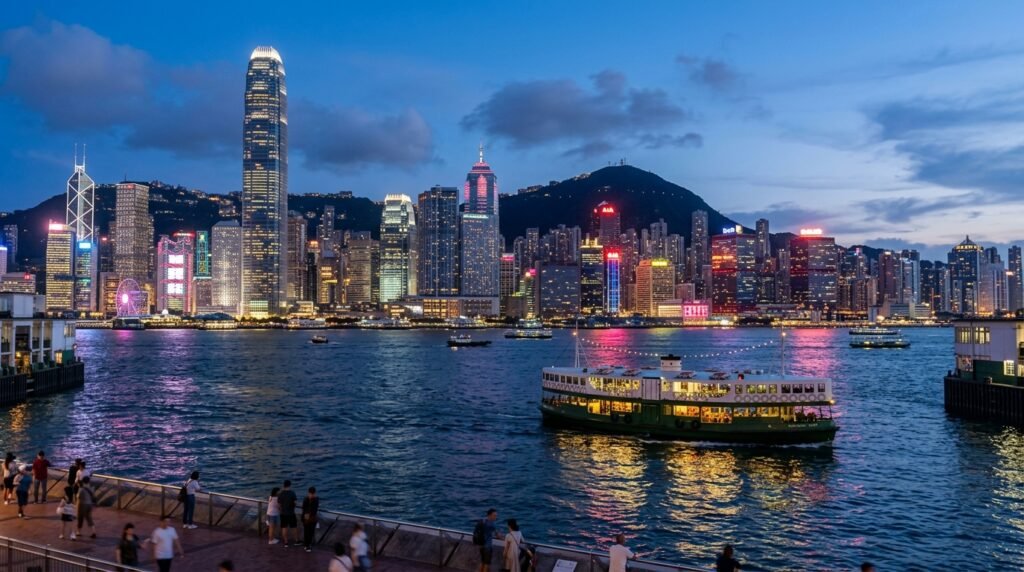
Getting from Hong Kong International Airport (HKG) to the city centre is incredibly efficient. Located on the island of Chek Lap Kok, the airport is well-connected to Kowloon, Central, and the New Territories. Your best transport choice will depend on your budget,…
Getting from Hong Kong International Airport (HKG) to the city centre is incredibly efficient. Located on the island of Chek Lap Kok, the airport is well-connected to Kowloon, Central, and the New Territories. Your best transport choice will depend on your budget, your exact destination, the size of your group, and how much luggage you are carrying. This guide provides a detailed breakdown of all available transport options, from high-speed trains and double-decker buses to convenient taxis and private transfers.
If you need an immediate recommendation: taking the Airport Express train is the best overall option. It is the fastest, most reliable, and most comfortable way to get to Central or Kowloon. However, if you are looking for the cheapest way from Hong Kong Airport, the Cityflyer A-route buses offer excellent value and drop you closer to many major hotels without the need to navigate the MTR network with heavy bags. Taxis and private transfers remain the top choices for families, large groups, or those arriving late at night.
Some links in this guide are affiliate links. FlyFono may earn a commission if you book through them, at no extra cost to you. Recommendations are based on practical relevance, not commission.
Transport Comparison Table
Here is a quick overview of the main transport options from Hong Kong Airport to the city. Prices and times are verified as of August 2026, though you should always double-check the latest details directly on the operator websites.
| Transport Mode | Average Time | Estimated Cost (HKD) | Best For |
|---|---|---|---|
| Airport Express | 24 minutes to Central | $100 – $115 | Speed, solo travellers, business trips |
| Cityflyer Bus (A-Routes) | 45 – 75 minutes | $33 – $48 | Budget travellers, direct hotel drop-offs |
| Taxi (Red) | 35 – 50 minutes | $250 – $400+ | Groups of 3-4, heavy luggage, door-to-door |
| Private Transfer | 35 – 50 minutes | $350 – $600+ | Late arrivals, ultimate convenience |
For those travelling onward, you might want to Compare Hong Kong Airport transport options to find the best current deals and book tickets in advance, which can save you precious holiday time upon arrival.
Taking the Airport Express
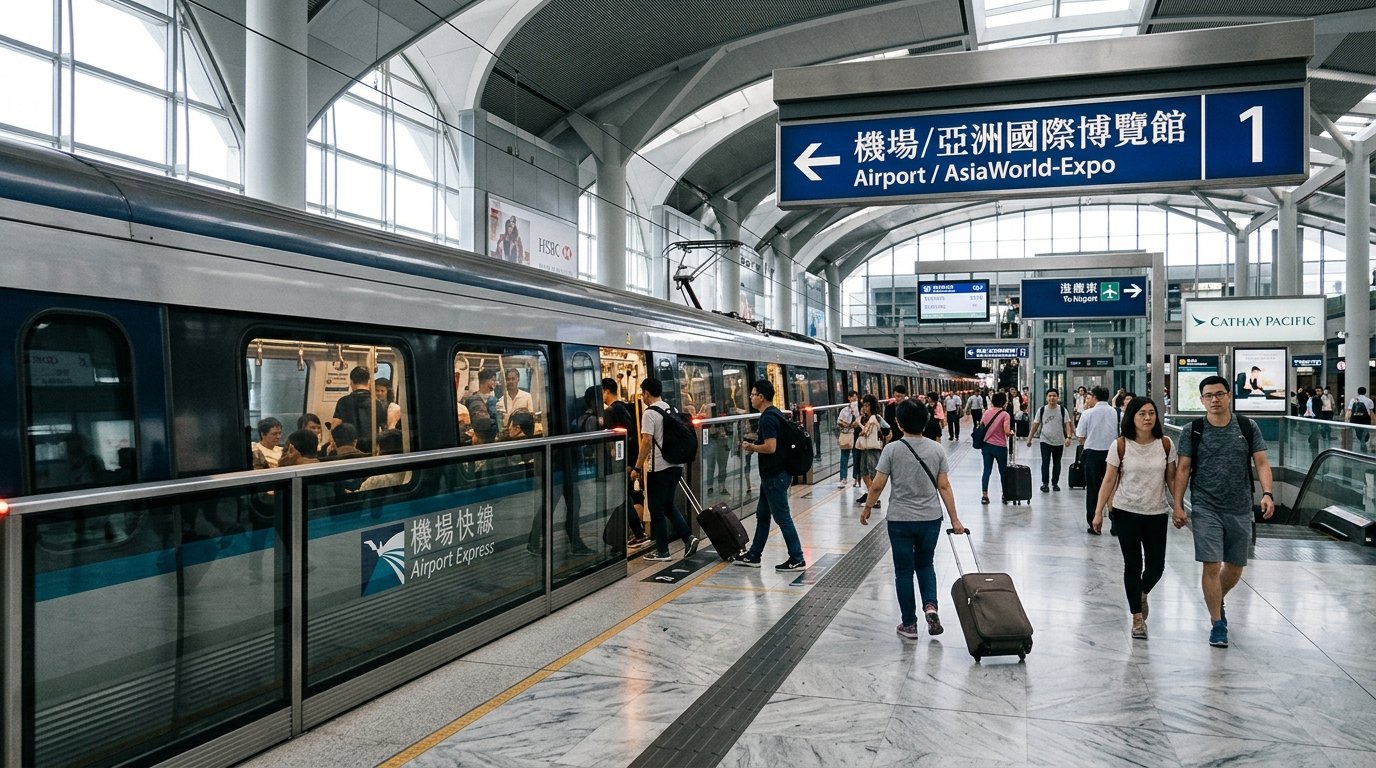
The Hong Kong Airport Express is arguably one of the best airport rail links in the world. Designed purely for efficiency, trains depart every 10 minutes from the airport terminal between 05:54 AM and 00:48 AM. One of the best features is the ticketless boarding system at the airport—you simply hop on the train and pay when you exit at your destination station.
Routes and Fares
The train makes three stops after leaving the airport: Tsing Yi, Kowloon, and Hong Kong (Central) stations. The journey to Kowloon takes just 22 minutes, while the full trip to Hong Kong Station takes exactly 24 minutes. A one-way ticket to Hong Kong Station costs around $115 HKD, and to Kowloon Station, it is $105 HKD. If you are travelling in a group, look out for Group Tickets at the Customer Service Centre, which offer substantial discounts for groups of two, three, or four passengers. Children aged 3 to 11 receive a 50% discount on standard fares.
Pros and Cons
- Pros: Unbeatable speed, free Wi-Fi and charging points on board, very spacious seating with plenty of luggage racks, no traffic jams, and seamless connections to the wider MTR network.
- Cons: More expensive than the bus, and you may still need a taxi or another MTR ride from the station to reach your final hotel, particularly if you are staying deep in Kowloon or the New Territories.
If you prefer a stress-free arrival without the hassle of navigating stations, Check private Hong Kong Airport transfers to compare vehicle types and prices. This is particularly cost-effective if you have a group of four or more people, as you can book a large comfortable van rather than trying to squeeze into a standard five-seater taxi.
Riding the Airport Buses
If you have more time than money, or if your hotel is directly on a bus route, the Cityflyer “A” buses are fantastic. They are modern, air-conditioned double-decker buses with dedicated luggage racks on the lower deck and a CCTV monitor on the upper deck so you can keep an eye on your bags while enjoying the incredible views of the Tsing Ma Bridge and the shipping channels.
Popular Bus Routes
The most common routes for tourists are the A11 and A21. The A11 runs from the airport to Hong Kong Island, servicing Central, Wan Chai, Causeway Bay, and North Point, costing about $40 HKD. The A21 runs straight down the spine of Kowloon, stopping in Mong Kok, Yau Ma Tei, Jordan, and Tsim Sha Tsui, and costs about $33 HKD. Buses run frequently, usually every 15-20 minutes during the day, right up until midnight.
Pros and Cons
- Pros: Cheap, incredibly scenic, and often drops you much closer to your hotel than the train. There are no heavy bags to carry up and down station stairs.
- Cons: Subject to traffic, significantly slower travel times during peak hours, and can be crowded. You also need to pay attention to your stop announcement.
Taking a Taxi from Hong Kong Airport
Hong Kong taxis are famously colour-coded based on their operating areas. When you follow the signs to the taxi rank at the airport, you will be directed to different queues depending on your destination. The system works remarkably well, with attendants handing you a printed card with the estimated fare and the taxi’s registration number.
Which Taxi Colour?
- Red Taxis: These serve all of Hong Kong Island and Kowloon. If you are heading to Central, Tsim Sha Tsui, or Mong Kok, this is the queue you need to join.
- Green Taxis: These serve the New Territories only. Do not take a green taxi unless you are heading to a specific residential area in the New Territories, as they are legally restricted from entering Kowloon and Hong Kong Island.
- Blue Taxis: These serve Lantau Island only, which is highly useful if you are heading straight to Hong Kong Disneyland, the Big Buddha, or a hotel in Tung Chung.
A red taxi to Kowloon will generally cost between $250 and $300 HKD, while a trip to Hong Kong Island will be closer to $350-$400 HKD, inclusive of bridge and tunnel tolls. Note that there is a standard extra charge of $6 HKD per piece of large luggage placed in the boot, which is added to the meter fare.
Booking a Private Transfer
For the ultimate peace of mind, especially after a long-haul flight or when travelling with small children, booking a private transfer is highly recommended. A driver will meet you in the arrivals hall with a nameboard, assist with your luggage, and drive you directly to your accommodation in a spacious, climate-controlled vehicle. Private transfers start at around $350 HKD but can go much higher for luxury vehicles or large groups.
Transport to Specific Areas
Hong Kong Airport to Central
Central is the bustling financial, commercial, and political heart of Hong Kong Island. The absolute best way to get here is the Airport Express. The train terminates at Hong Kong Station, which is seamlessly connected to Central MTR station via underground walkways equipped with moving travelators. If you are staying in the mid-levels, Soho, or further east in Causeway Bay, you might want to Compare Hong Kong accommodation by area to ensure you pick a spot near good MTR access.
Hong Kong Airport to Tsim Sha Tsui and Kowloon
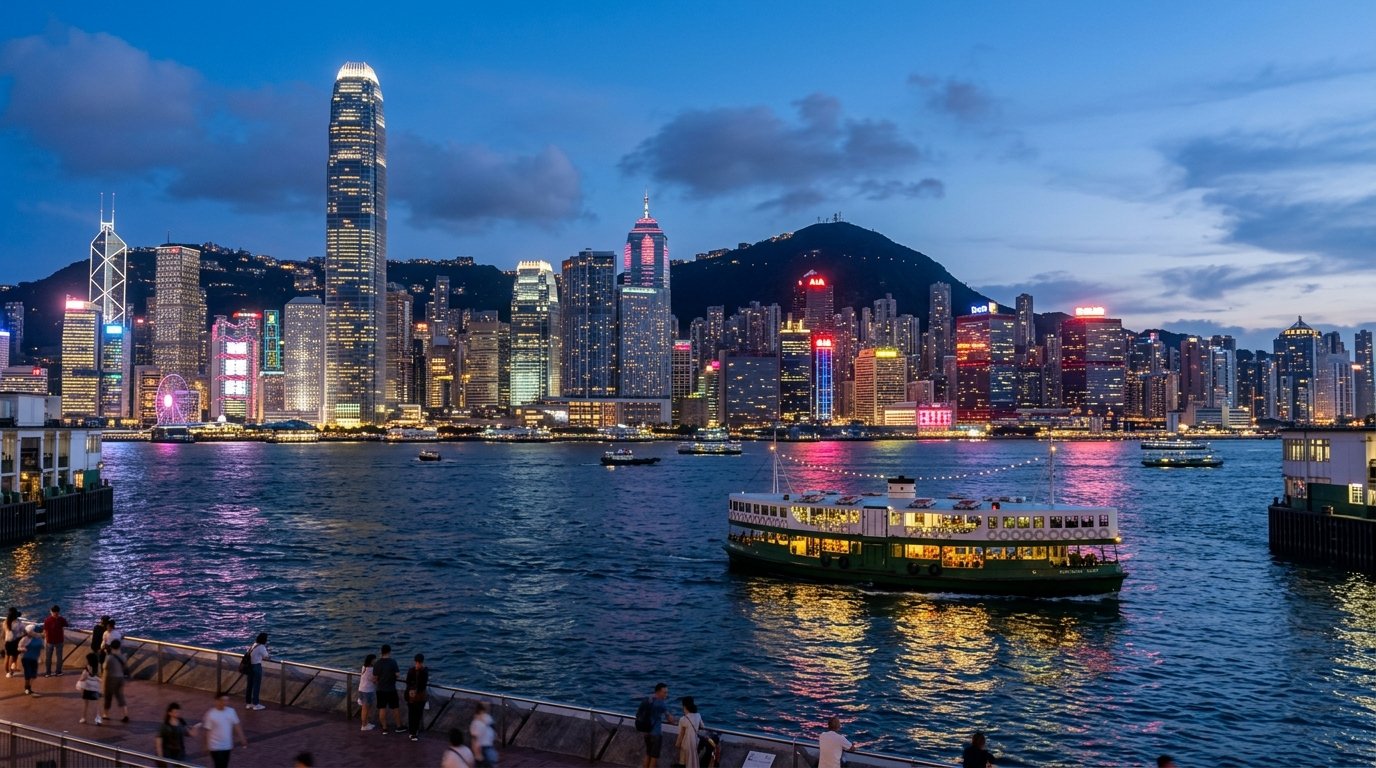
Tsim Sha Tsui (TST) is a massive tourist hub, known for its luxury shopping, museums, and stunning views of the Victoria Harbour skyline. While the Airport Express goes to Kowloon Station, this station is actually located on reclaimed land in West Kowloon—a bit of a walk or a short taxi ride away from the main TST hotel district around Nathan Road. For many travellers heading to TST, the A21 bus is actually more convenient than the train, as it drives straight down Nathan Road with multiple stops right outside major hotels, hostels, and guesthouses.
Hong Kong Airport to Mong Kok
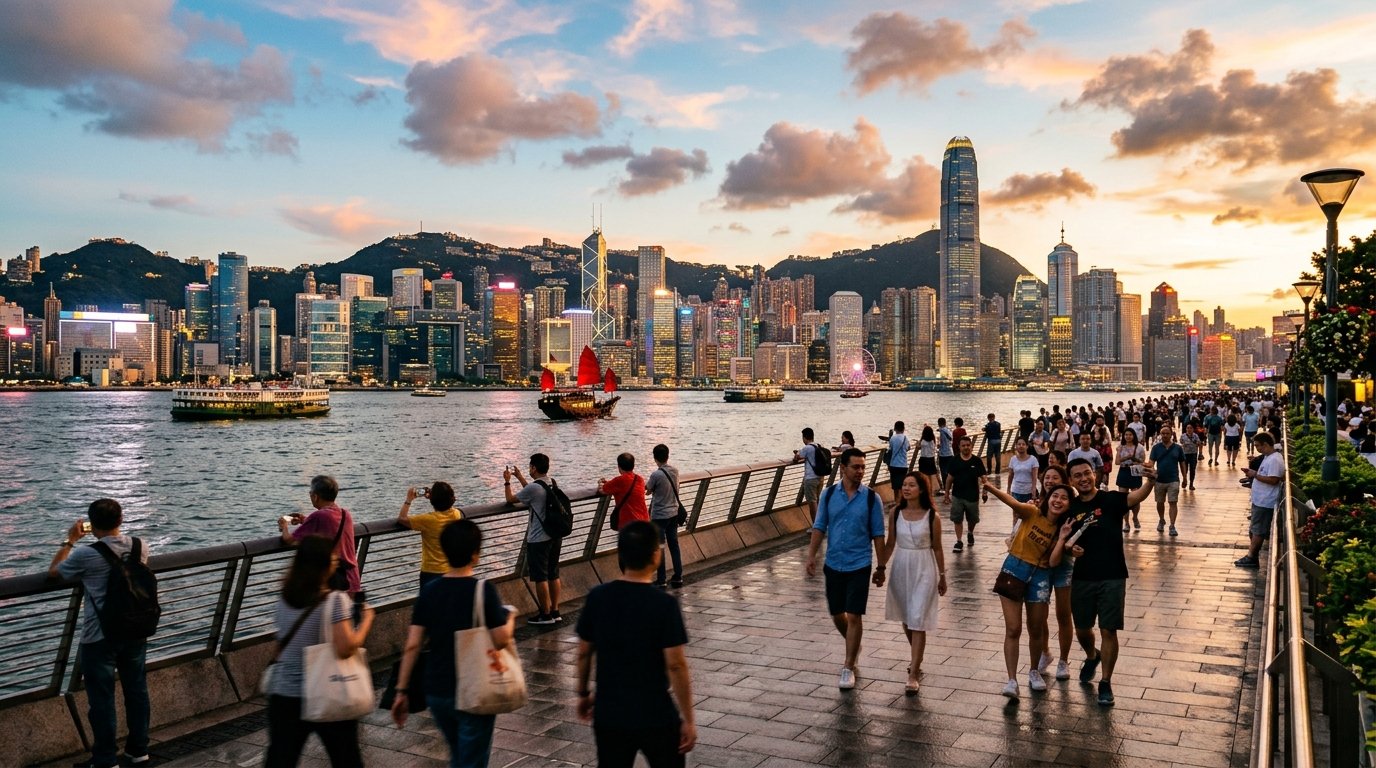
Mong Kok is famous for its dense streets, night markets, and incredible local street food scene. Similar to TST, the A21 bus is the most direct public transport route to Mong Kok. Alternatively, if you take the Airport Express, get off at Tsing Yi station, switch to the Tung Chung Line, go one stop to Lai King, and switch to the Tsuen Wan Line straight down to Mong Kok. This sounds complicated, but the MTR system is incredibly efficient, clearly signed in English, and very easy to navigate.
Late-Night Arrivals
If your flight lands between midnight and 5:30 AM, the Airport Express will be closed. Your transport options are limited to taxis, private transfers, or the Night Buses (N-Routes). The N11 bus goes to Hong Kong Island, and the N21 goes to Kowloon. Night buses run less frequently (usually every 30-60 minutes) and take longer than daytime routes, but they are an absolute lifesaver for budget travellers arriving on red-eye flights. If you are arriving late, it is also a fantastic idea to pre-arrange connectivity. You can Check Hong Kong eSIM options so your phone is online the moment you land, making it easy to track your night bus on Google Maps or hail a ride.
Families and Heavy Luggage
Navigating the Hong Kong MTR with multiple large suitcases, prams, and young children can be exhausting, particularly during the intense local rush hours (usually 7:30 AM – 9:30 AM and 5:30 PM – 7:30 PM). While all MTR stations have lifts, they can be hard to find and often involve long detours through large stations. For families, spending the extra money on a direct taxi or a pre-booked private transfer is almost always worth it to avoid the hassle and ensure a smooth start to your holiday.
Octopus Card and Contactless-Payment Guidance
You cannot talk about transport in Hong Kong without mentioning the Octopus card. It is a ubiquitous, essential smart card used for all public transport (trains, buses, ferries, trams, and minibuses) and can also be used in convenience stores, supermarkets, and many fast-food restaurants. As of 2026, you can easily add a digital Tourist Octopus to your Apple Wallet or Google Wallet before you even fly, allowing you to top it up directly from your home credit card.
Alternatively, the Airport Express and all public buses now accept standard Visa and Mastercard contactless payments directly at the turnstiles and bus card readers. However, having an Octopus card is still highly recommended for the wider MTR network and ferries, as some older station turnstiles still prefer it and it makes minor purchases a breeze.
Common Arrival Mistakes
- Joining the wrong taxi queue: Ensure you are in the Red taxi queue unless you are heading to the outer islands or deep New Territories. Getting into a green taxi by mistake will result in the driver refusing your fare if you are heading to the city.
- Buying an Airport Express ticket when you do not need one: You can simply tap your contactless credit card or digital Octopus card at the destination station. There is absolutely no need to queue for a physical ticket at the airport.
- Underestimating walking distances: Hong Kong Station and Central Station are connected, but it is a 5-10 minute walk through a long underground tunnel. If you have heavy bags, this can be surprisingly tiring.
Return Journey to the Airport
When returning to the airport at the end of your trip, the exact same transport options apply in reverse. A major perk of the Airport Express used to be the In-Town Check-In service, where you could drop your checked bags at Hong Kong or Kowloon station hours before your flight. While this service was suspended during the pandemic, it has been successfully restored for most major airlines as of August 2026. Always check with your specific airline on their official website to see if they offer In-Town Check-In, as it allows you to enjoy your final day in the city hands-free.
If you are planning multi-city Asia travel, perhaps heading to Thailand or Singapore next, you might find our guide on Singapore Changi Airport to City or our guide on getting from Bangkok Airport to City highly useful. You can also explore What to do in Bangkok during transit if you have a layover scheduled.
Final Decision Table
| Your Priority | Recommended Option |
|---|---|
| Fastest to Central or Business Districts | Airport Express Train |
| Cheapest Overall Option | Cityflyer Bus (A11/A21) |
| Most Convenient for TST Hotels | Cityflyer Bus (A21) or Taxi |
| Travelling with 3-4 People | Red Taxi or Private Transfer |
| Arriving at 2:00 AM | Night Bus (N21/N11) or Taxi |
FAQs
Is Uber available at Hong Kong Airport?
Yes, Uber operates across Hong Kong and can definitely pick you up from the airport. However, they use the regular car park areas (Car Park 1 or 4) rather than the dedicated taxi ranks right outside arrivals. Prices are dynamic and can sometimes be significantly higher than a standard red taxi during peak hours or bad weather.
Do Hong Kong taxis accept credit cards?
Historically, Hong Kong taxis were strictly cash-only operations. While there has been a strong push towards digital payments (such as AlipayHK, WeChat Pay, and Octopus) by 2026, many older drivers still prefer cash (HKD). It is strongly advised to withdraw some Hong Kong Dollars from an ATM in the arrivals hall before getting into a taxi, just in case the driver’s electronic payment terminal is “broken”.
Can I take luggage on the bus?
Yes, the A-route and N-route airport buses are specifically designed for travellers. They have large, sturdy luggage racks on the lower floor. You are expected to leave large suitcases there and take smaller valuables and backpacks to your seat. The upper deck is usually equipped with a CCTV screen so you can monitor your bags from above.
For more travel preparation and budgeting tips, consider using our Airport layover planner, read up on the Best eSIM for travel, map your entire journey with our Trip planner, or manage your finances efficiently with our Realistic trip budget calculator.
Conclusion
Hong Kong International Airport offers some of the most world-class transport links of any global aviation hub, catering easily to every type of traveller. The Airport Express remains a masterpiece of civic engineering and is the premium choice for speed and comfort, whisking you to the financial districts in under half an hour.
Yet, the double-decker Cityflyer buses provide an excellent, highly scenic, and budget-friendly alternative that often delivers you closer to your doorstep in Kowloon. Assess your luggage situation, check your hotel’s exact location on a map, and choose the option that best fits your travel style. With contactless payments now widely accepted, your journey from the arrivals hall to your accommodation will be completely seamless. Enjoy your trip to Hong Kong!
Continue planning
Your most useful next steps
Move from reading to one clear travel decision.
Pingback: Where to Stay in Hong Kong: Best Areas for First-Time Visitors - FlyFono