
The practical takeaway
Deciding where to stay in Kyoto is one of the most critical parts of planning a Japan trip. Unlike Tokyo’s dense subway network or Osaka’s compact grid, Kyoto is a sprawling city built around ancient temples, winding streets, and a primarily bus-based…
Deciding where to stay in Kyoto is one of the most critical parts of planning a Japan trip. Unlike Tokyo’s dense subway network or Osaka’s compact grid, Kyoto is a sprawling city built around ancient temples, winding streets, and a primarily bus-based transit system. For first-time visitors, the best area to stay in Kyoto usually comes down to two choices: Kyoto Station for absolute transit convenience, or Downtown Kawaramachi / Gion for atmosphere, dining, and walkability.
Some links in this guide are affiliate links. FlyFono may earn a commission if you book through them, at no extra cost to you. Recommendations are based on practical relevance, not commission.
To help you narrow it down, you can compare Kyoto accommodation by area to see current pricing across these neighborhoods. Below is our complete Kyoto accommodation guide, comparing the four best areas to base your trip.
Quick Area Comparison
| Area | Best for | Transport | Evening vibe | Price range |
|---|---|---|---|---|
| Kyoto Station | First-timers, day trips, heavy luggage | Excellent (Bullet train, subway, buses) | Quiet, mostly malls/station dining | $$ – $$$ |
| Downtown Kawaramachi | Dining, nightlife, shopping | Very Good (Subway, Hankyu line) | Bustling, late-night options | $$ – $$$ |
| Gion / Higashiyama | Traditional atmosphere, couples | Average (Buses, much walking) | Atmospheric, traditional, quiet late | $$$ – $$$$ |
| Arashiyama | Nature, relaxing retreats, ryokans | Fair (Requires train to center) | Very quiet, everything closes early | $$$$ |
Gion and Higashiyama
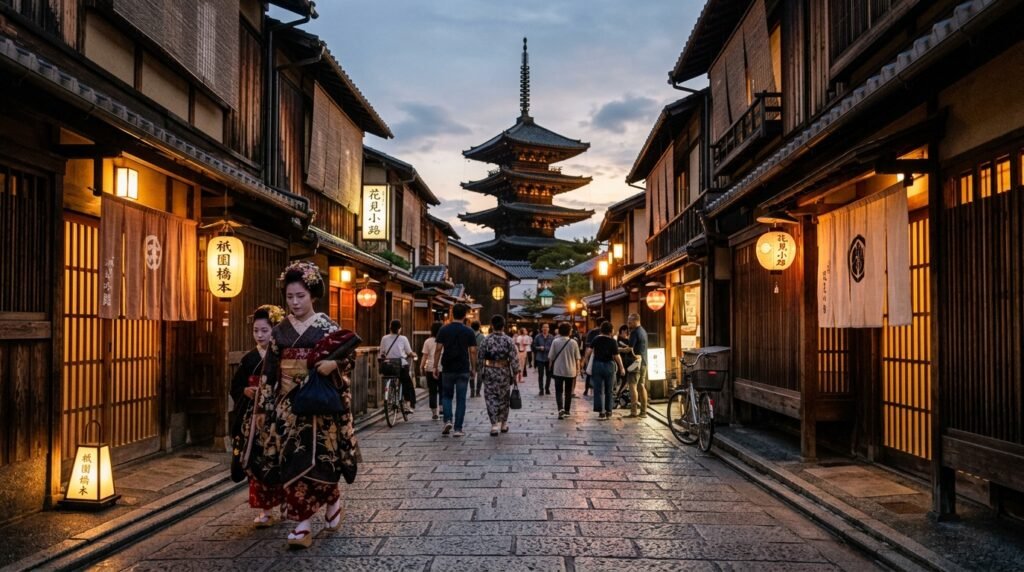
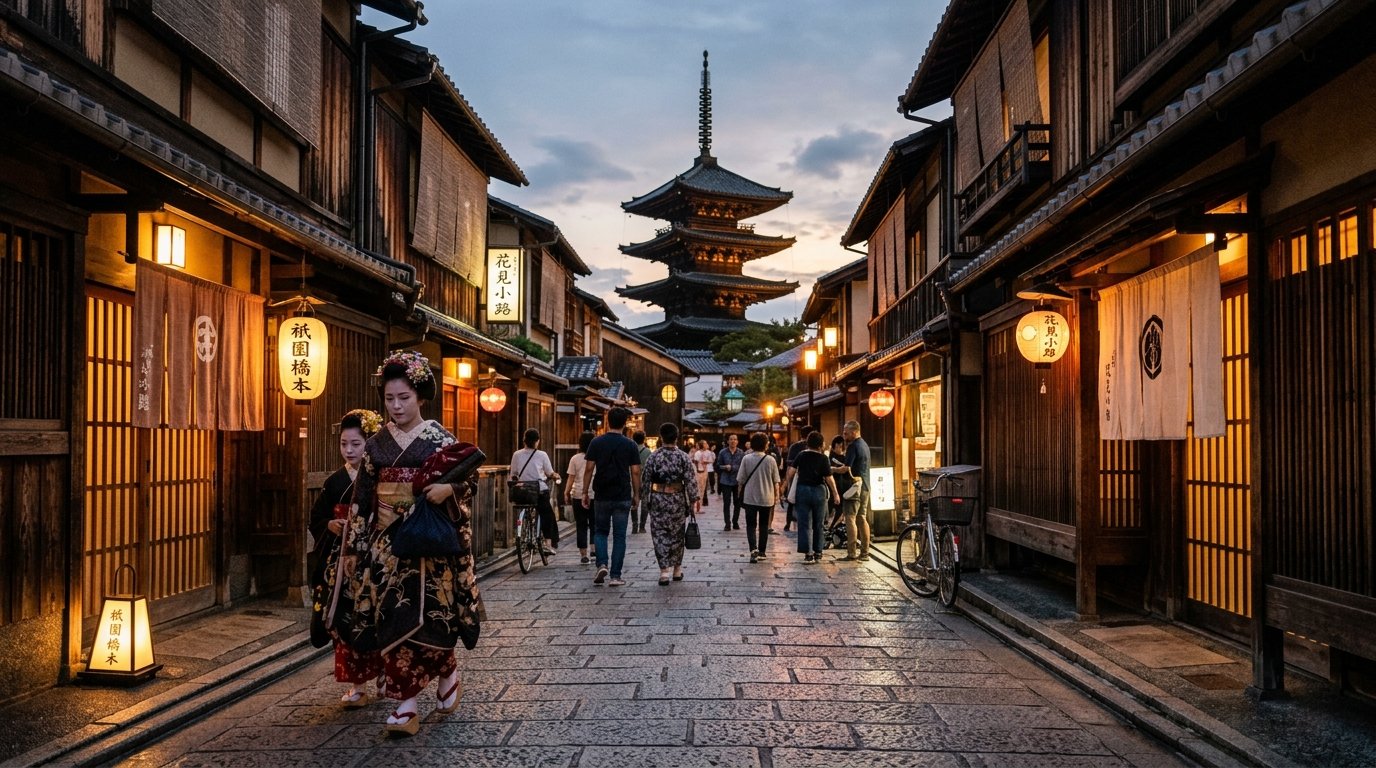
If you have dreams of stepping out of your hotel and onto cobblestone streets lined with wooden machiya houses, Gion and the broader Higashiyama district are where you want to be. This is Kyoto’s historic heart and its most famous geisha district.
Staying here puts you within walking distance of iconic sights like Kiyomizu-dera, Yasaka Shrine, and the traditional streets of Ninenzaka and Sannenzaka. You can wake up early and explore these highly photographed areas before the tour buses arrive around 9:00 AM.
The downside? It’s expensive, and public transport is heavily reliant on buses, which frequently get stuck in Kyoto’s notorious daytime traffic. It is also quite hilly, so you will be walking a lot. Gion hotels Kyoto are best for travelers prioritizing ambiance over pure logistical convenience.
Kyoto Station area
For practical travelers, the Kyoto Station area is arguably the best area to stay in Kyoto. When you arrive with heavy bags, being able to walk directly to your hotel in under five minutes is a massive relief.
Kyoto Station is the central hub for the Shinkansen (bullet train), the JR Haruka airport express, two subway lines, and the city’s massive bus terminal. If you are taking day trips to Nara, Osaka, or Uji, staying here saves you 30-40 minutes of transit time each day.
While the immediate area lacks traditional charm—it looks like a modern commercial district—it makes up for it with incredible dining options inside the station complex itself, including the famous Kyoto Ramen Koji (Ramen Street).
Downtown Kyoto — Kawaramachi and Shijo
Kawaramachi accommodation offers the best of both worlds. Bounded roughly by the Kamo River to the east and Karasuma Street to the west, Downtown Kyoto is the beating heart of the city’s dining, shopping, and nightlife.
Here, you are within walking distance of Nishiki Market, the atmospheric dining alleys of Pontocho, and hundreds of restaurants that stay open late. Transport is very good, with access to the Hankyu railway line (great for Osaka trips) and the municipal subway. You can also easily walk across the river into Gion.
This is generally the best recommendation for young couples, solo travelers, and anyone who wants a lively evening atmosphere without sacrificing too much transport convenience.
Arashiyama — secondary option
Located on the far western edge of Kyoto, Arashiyama is famous for its Bamboo Grove and scenic river views. It is a stunning area, heavily focused on nature and high-end ryokans (traditional Japanese inns).
However, we do not recommend Arashiyama as a primary base for your entire Kyoto stay, especially for first-time visitors. It is geographically isolated from the rest of the city. Taking a train to Higashiyama or Fushimi Inari from here takes nearly an hour. Furthermore, almost all restaurants and shops in Arashiyama shut down by 5:00 PM or 6:00 PM.
If you want to experience Arashiyama, it is better to book one or two nights here at the end of your trip as a relaxing retreat, rather than using it as a launchpad for daily sightseeing.
Sightseeing convenience from each area
When mapping out your Kyoto for first time visitors itinerary, consider how you will move around. Kyoto’s subway network only has two lines (forming a plus sign in the city center). The rest of the city is connected by buses and private rail lines.
- Kyoto Station: The undisputed king of convenience. Every bus route starts here, and you have direct train access to Fushimi Inari (JR Nara Line) and Arashiyama (JR Sagano Line). Before locking in your regional travel, you might want to consider the Japan Rail Pass vs individual tickets.
- Downtown Kawaramachi: Excellent for walking to central and eastern sights. You will rely heavily on the Keihan railway and city buses.
- Gion: Perfect for walking to Higashiyama temples, but poor for reaching Western Kyoto (like the Golden Pavilion) or Southern Kyoto.
To organize your daily routes, it is often helpful to compare Kyoto activities and day tours, especially for out-of-the-way locations like Amanohashidate.
Evening atmosphere compared
Kyoto shuts down surprisingly early. Many temples close by 5:00 PM, and the surrounding tourist shops roll down their shutters shortly after.
If evening strolls are important to you, Downtown Kawaramachi and the adjacent Pontocho Alley offer the best atmosphere. The narrow streets are lit by paper lanterns, and you can find everything from casual yakitori joints to high-end kaiseki dining.
Gion is incredibly atmospheric at night—dark, quiet, and moody—but dining options are mostly exclusive, expensive, and require reservations. Kyoto Station is bright and modern, feeling much like a standard commercial hub, but it lacks the romantic “old Japan” feel.
Transport, luggage storage and practical tips
Navigating Kyoto with large suitcases on local buses is highly discouraged (and in some cases, drivers may refuse boarding if the bus is crowded). This makes your hotel location critical on arrival and departure days.
If you are traveling directly from the airport, check out our guide on getting from Kansai Airport to Osaka or Kyoto. You can also check Kansai Airport private transfers if you have a group or heavy bags and are staying deep in Gion or Higashiyama.
For seamless navigation, having reliable mobile data is non-negotiable. Don’t forget to organize the best eSIM for Japan before you land so you can use Google Maps the moment you step off the train. You can check Japan eSIM options here.
Dining options by area
Dining accessibility greatly impacts where to stay in Kyoto.
- Kyoto Station: Incredible variety, but it is mostly department store dining (Porta, Isetan). Excellent for quick, high-quality, and reasonably priced meals without wandering the streets.
- Kawaramachi: The absolute best. From Nishiki Market street food to hidden izakayas in Kiyamachi, you will never run out of options.
- Gion: High-end, traditional multi-course (kaiseki) dining. Budget options are scarce.
Best area for families
For families traveling with children, Kyoto Station or the nearby Karasuma Oike area (just north of downtown) are best. Kyoto Station minimizes the time spent hauling kids and luggage across the city upon arrival. Karasuma Oike is slightly quieter than Kawaramachi but sits directly on the intersection of Kyoto’s two subway lines, making stroller navigation much easier than dealing with crowded city buses.
Best area for couples
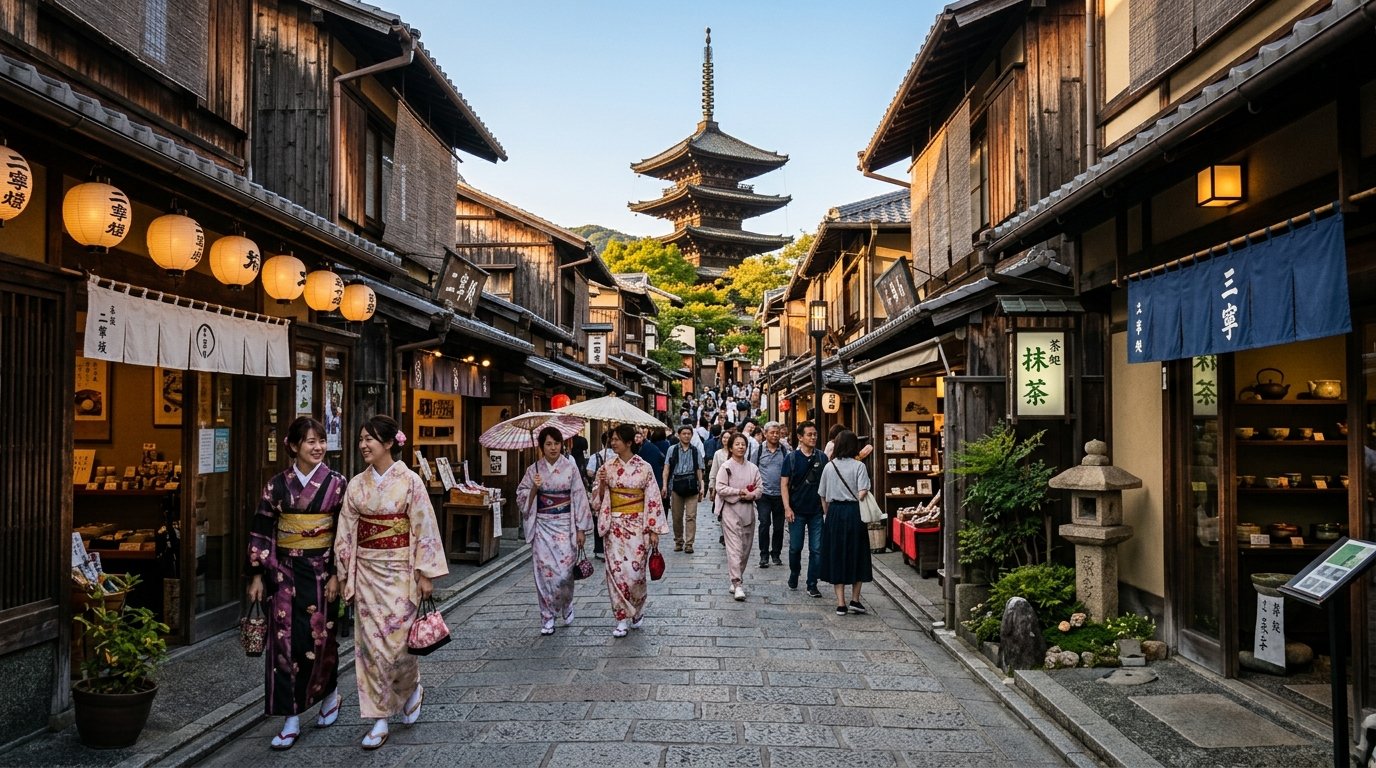
Couples seeking a romantic getaway should look at Gion / Higashiyama. Waking up early to walk the preserved historic streets before the crowds arrive is a memory that will last a lifetime. If budget allows, booking a traditional ryokan here provides an authentic Japanese hospitality experience that standard hotels cannot match.
Best area for first-time visitors
If you are planning a 7-day Japan itinerary or a 14-day Japan itinerary, efficiency is key. Downtown Kawaramachi is our top recommendation for first-timers. It provides the perfect balance: it is deeply atmospheric, incredibly walkable, packed with food, and connected enough to make day trips viable.
Budget, mid-range and comfortable accommodation
Kyoto offers everything from $30 hostel beds to $1,000-per-night luxury ryokans. As a general rule:
- Budget travelers: Look slightly north or south of Kyoto Station. You will find excellent, clean business hotels and guesthouses.
- Mid-range: Kawaramachi and Shijo offer great 3- and 4-star modern hotels. Look for newly built properties, as they often include public baths (onsen).
- Luxury: Gion, Higashiyama, and Arashiyama hold the highest concentration of premium ryokans and international 5-star properties.
Kyoto versus Osaka as a base
Many travelers debate whether to stay in Kyoto or commute from nearby Osaka. If you prefer modern nightlife, budget-friendly food, and late-night energy, staying in Osaka and doing day trips to Kyoto is entirely viable (they are only 15-30 minutes apart by train). However, if you want to experience serene, early-morning temple walks, you absolutely must stay in Kyoto. For a deeper breakdown, read our guide on Kyoto vs Osaka to decide which fits your travel style.
Best area by trip length — one night, three nights, longer
- One night: Stay at Kyoto Station. Do not waste time transiting to a hotel across the city; drop your bags and immediately start sightseeing.
- Three nights: Downtown Kawaramachi. This gives you enough time to enjoy the evening dining scene and walk the central sights at a comfortable pace.
- Longer stays (5+ nights): Consider splitting your stay. Spend three nights in Downtown Kawaramachi for active sightseeing, and finish with two nights in a quiet Arashiyama or Kurama ryokan to relax.
5 Common mistakes when booking in Kyoto
- Booking too far from a train/subway station: Relying purely on buses will cost you hours of transit time in Kyoto traffic. Ensure you are within a 10-minute walk of a train or subway stop.
- Assuming ‘Central Kyoto’ means ‘near the sights’: The geographic center of Kyoto (around Nijo Castle) is largely residential and somewhat distant from the major eastern temples.
- Ignoring the curfew at ryokans: Traditional inns often have curfews and strict dinner times. Do not book a ryokan if you plan to stay out late.
- Booking Arashiyama for a short trip: As mentioned, it is too isolated for efficient city-wide sightseeing.
- Underestimating the walking: Kyoto is flat in the center but hilly on the edges. Book a hotel with a comfortable bed and consider packing epsom salts for tired feet.
FAQ
Is it better to stay in Gion or Kyoto Station?
It depends on your priorities. Choose Kyoto Station for maximum transport convenience, easy day trips, and handling heavy luggage. Choose Gion for a romantic, traditional atmosphere and walkability to historic temples, even if it means slightly harder transport logistics.
How many days should I stay in Kyoto?
Three full days (four nights) is the sweet spot for a first-time visitor. This allows you to spend one day in eastern Kyoto (Higashiyama/Gion), one day in western Kyoto (Arashiyama/Kinkaku-ji), and one day covering central/southern sights like Fushimi Inari and Nijo Castle.
Is Kawaramachi a good area to stay in Kyoto?
Yes, Kawaramachi is arguably the best overall area for most tourists. It balances excellent dining, great nightlife, solid transport links, and walkability to eastern Kyoto’s historic districts.
Does Kyoto have a reliable subway system?
Kyoto only has two subway lines (Karasuma Line and Tozai Line). While very reliable, they do not cover the entire city. You will need to supplement subway travel with city buses, walking, or private rail lines like Keihan and Hankyu.
Final Thoughts
Choosing where to stay in Kyoto shapes your entire experience of Japan’s ancient capital. For absolute transport ease, lock in a hotel near Kyoto Station. For the perfect blend of food, culture, and evening atmosphere, Downtown Kawaramachi is unmatched. Whichever you choose, you are in for an unforgettable trip.
Travel Disclaimer: Transit routes, accommodation offerings, and entry rules are subject to change. This guide was last checked in September 2026. For the most up-to-date regional information, we recommend cross-referencing your plans with official sources like the Kyoto Tourism Official site or Visit Japan.
Continue planning
Your most useful next steps
Move from reading to one clear travel decision.