
The practical takeaway
Planning the perfect Vietnam itinerary can feel overwhelming when you realize just how long and geographically diverse this Southeast Asian nation truly is. Spanning over 1,600 kilometers from the mountainous northern borders to the tropical Mekong Delta in the south, traversing the…
Planning the perfect Vietnam itinerary can feel overwhelming when you realize just how long and geographically diverse this Southeast Asian nation truly is. Spanning over 1,600 kilometers from the mountainous northern borders to the tropical Mekong Delta in the south, traversing the entire country in a single trip requires careful logistics, efficient internal flights, and a realistic grasp of travel times.
For most first-time visitors, a 10-day Vietnam itinerary is the sweet spot. It provides enough time to taste the distinct cultural differences between the north and south, cruise through iconic limestone karsts, and wander the lantern-lit streets of ancient trading ports. This guide breaks down a practical, well-paced north to south Vietnam route that maximizes your time without turning your vacation into an exhausting transit marathon. We have thoroughly checked all routes, prices, and requirements as of August 2026.
Some links in this guide are affiliate links. FlyFono may earn a commission if you book through them, at no extra cost to you. Recommendations are based on practical relevance, not commission.
Immediate Route Recommendation
If you only have 10 days in Vietnam, we highly recommend the classic “Big Four” route: starting in Hanoi, cruising Ha Long Bay, flying into Central Vietnam for Hoi An and Da Nang, and finishing your journey in the southern metropolis of Ho Chi Minh City. This allows you to experience the country’s best culinary hubs, historical sites, and natural wonders. For seamless travel planning, be sure to use our trip planner to map out your transit days.
Table of Contents
- 10-Day Vietnam Itinerary at a Glance
- Is 10 Days Enough for Vietnam?
- Day 1-2: Hanoi Arrival and City Orientation
- Day 3: Ha Long Bay Overnight Cruise
- Day 4: Return from Ha Long Bay, Fly to Da Nang
- Day 5-6: Hoi An Ancient Town
- Day 7: Da Nang — Marble Mountains and My Khe Beach
- Day 8-9: Fly to Ho Chi Minh City
- Day 10: Departure Day and Cu Chi Optional
- North-Only Alternative
- South-Only Alternative
- Getting Around Vietnam
- Vietnam eVisa and Entry Requirements
- Accommodation Strategy by City
- Realistic Budget Categories
- Common Vietnam Itinerary Mistakes
- Final Route Summary Table
- Frequently Asked Questions
- Conclusion
10-Day Vietnam Itinerary at a Glance
| Day | Location | Highlights |
|---|---|---|
| Day 1 | Hanoi | Arrival, Old Quarter walking tour, Bia Hoi corner, Pho dinner |
| Day 2 | Hanoi | Ho Chi Minh Mausoleum, Temple of Literature, Egg Coffee, Water Puppet Show |
| Day 3 | Ha Long Bay | Transfer to coast, board overnight cruise, kayaking, sunset deck |
| Day 4 | Ha Long to Da Nang | Morning cave excursion, return to Hanoi airport, evening flight to Da Nang |
| Day 5 | Hoi An | Transfer to Hoi An, Ancient Town exploration, Japanese Bridge, tailor visit |
| Day 6 | Hoi An | Morning cooking class or cycling tour, evening lantern boat ride |
| Day 7 | Da Nang | Marble Mountains, My Khe Beach, Dragon Bridge weekend fire show |
| Day 8 | Ho Chi Minh City | Morning flight south, War Remnants Museum, Ben Thanh Market |
| Day 9 | Ho Chi Minh City | Notre Dame Cathedral, Central Post Office, District 1 rooftop bar |
| Day 10 | Departure | Optional Cu Chi Tunnels half-day, last-minute shopping, airport transfer |
Is 10 Days Enough for Vietnam?
While spending three to four weeks is ideal for traversing the entire length of the country, a 10-day Vietnam itinerary is absolutely enough to see the major highlights if you manage your transit well. The key is relying on domestic flights rather than overnight trains or sleeper buses. Flights between Hanoi, Da Nang, and Ho Chi Minh City typically take just under two hours and run frequently. If you try to squeeze in too many remote destinations (like adding Sapa, Ninh Binh, and the Mekong Delta all in 10 days), you will spend more time in vehicles than enjoying the sites.
For those debating how this destination stacks up against neighbors on a tight timeframe, check out our guide comparing Thailand vs Vietnam vs Bali to see if the travel pace matches your vacation style.
Day 1-2: Hanoi Arrival and City Orientation
Your Vietnam trip begins in the chaotic, charming capital of Hanoi. Arriving at Noi Bai International Airport (HAN), expect a 45-minute taxi ride into the heart of the city. Base yourself in or near the Old Quarter to be within walking distance of the main attractions.
On Day 1, take it easy. The sensory overload of thousands of motorbikes weaving through narrow streets takes getting used to. Spend your afternoon walking around Hoan Kiem Lake, visit the Ngoc Son Temple, and grab your first bowl of authentic northern-style Pho. In the evening, pull up a plastic stool at Bia Hoi junction for incredibly cheap local draft beer.
Day 2 is for deep cultural immersion. Start early at the Ho Chi Minh Mausoleum complex, then head to the ancient Temple of Literature, Vietnam’s first national university. In the afternoon, duck into a hidden cafe for Hanoi’s famous egg coffee (Ca Phe Trung). If you have extra time, you might want to look into day trips from Hanoi, though for this 10-day pace, staying in the city is recommended.
Day 3: Ha Long Bay Overnight Cruise
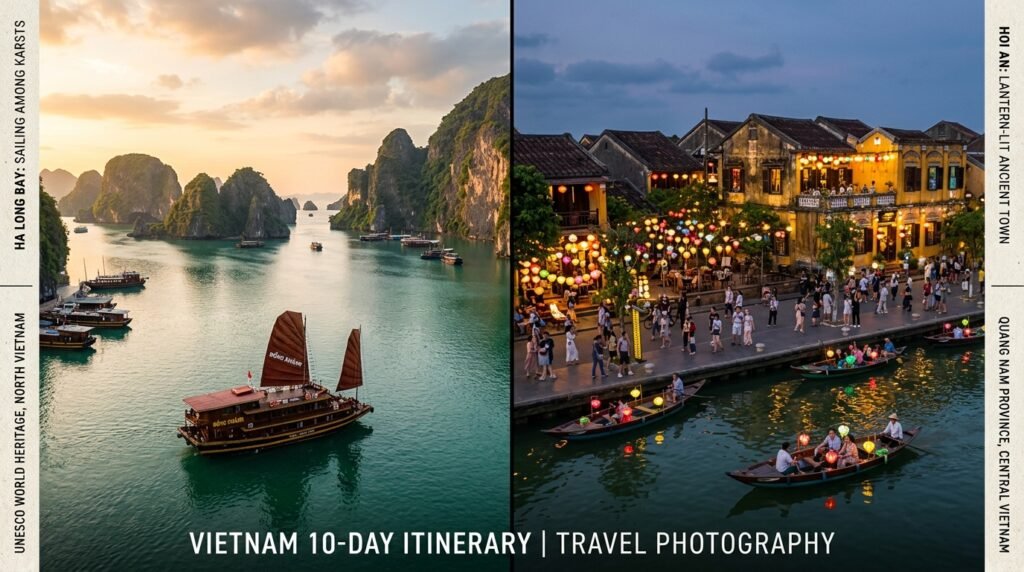
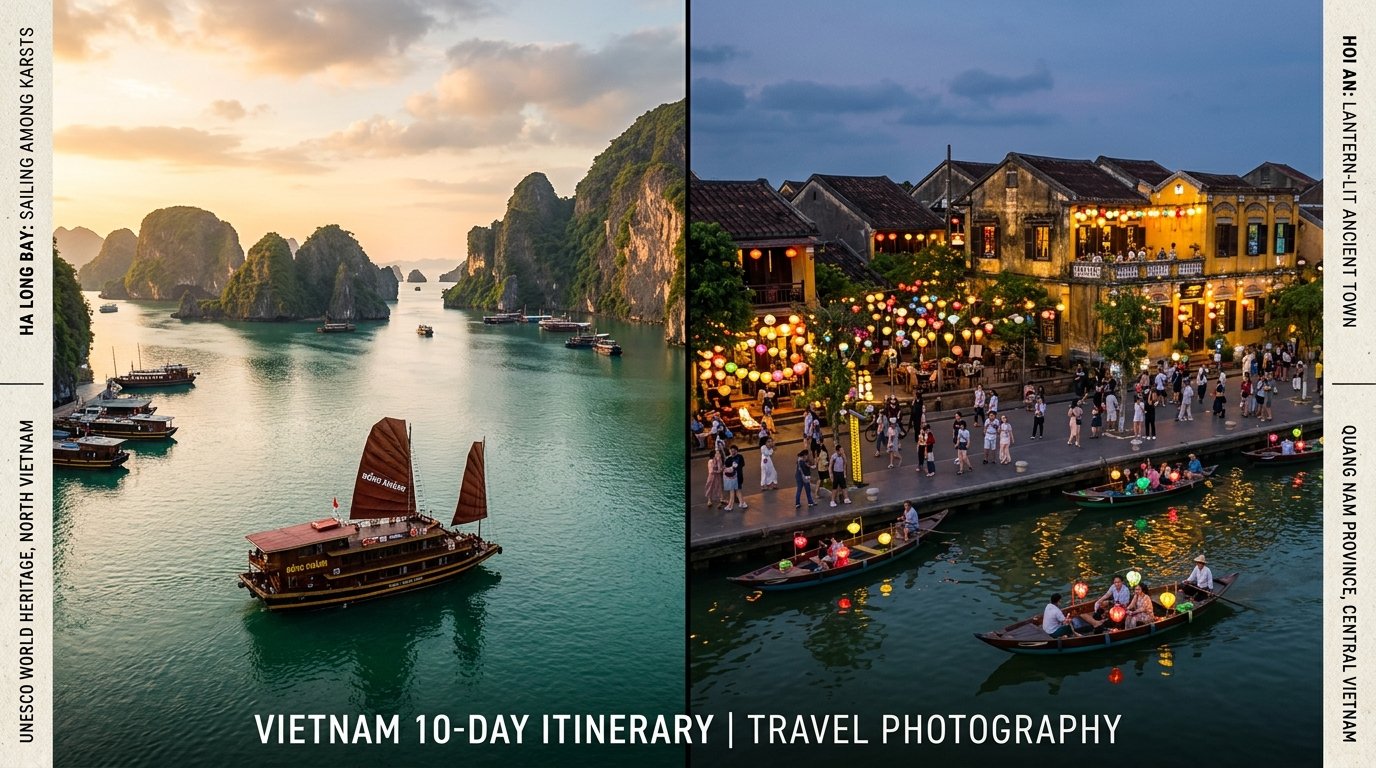
No first-time Vietnam itinerary is complete without witnessing the emerald waters and towering limestone pillars of Ha Long Bay. Book an overnight cruise in advance. Most operators include a shuttle bus transfer from your Hanoi hotel, picking you up around 8:00 AM and arriving at the marina by noon.
Once on board, you’ll be treated to a seafood lunch as the ship sails deeper into the karst labyrinth. Afternoon activities usually include kayaking through water caves, visiting floating fishing villages, or swimming. The evening sunsets from the top deck are spectacular. To browse reliable operators, you can Compare Ha Long Bay cruises and Vietnam activities.
Day 4: Return from Ha Long Bay, Fly to Da Nang
Wake up early for Tai Chi on the deck or a morning excursion to a large stalactite cave like Sung Sot (Surprise Cave). After a brunch buffet, the boat returns to the harbor by late morning. From here, take the transfer shuttle directly back to Noi Bai Airport in Hanoi instead of going back into the city.
Catch a late afternoon or early evening domestic flight to Da Nang (DAD). Upon arrival in Da Nang, hire a car or use a ride-hailing app like Grab for the 45-minute drive south to Hoi An, where you’ll check into your hotel for the next few nights.
Day 5-6: Hoi An Ancient Town
Hoi An is often the highlight of any north to south Vietnam route. This impeccably preserved 15th-century trading port is famous for its yellow heritage buildings, silk tailoring, and thousands of colorful silk lanterns.
On Day 5, wander the pedestrian-only streets. Visit the Japanese Covered Bridge, the Phuc Kien Assembly Hall, and browse the central market. If you want custom-made clothing, visit a tailor early so they have time for fittings over the next two days. In the evening, take a traditional wooden boat ride on the Thu Bon River as floating paper lanterns illuminate the water.
Use Day 6 for a more active experience. Rent a bicycle and ride through the surrounding rice paddies to An Bang Beach, or join a half-day cooking class that starts with a market tour and ends with you learning to make local specialties like Cao Lau noodles.

Day 7: Da Nang — Marble Mountains and My Khe Beach
Head back north slightly to spend a day in Da Nang, Vietnam’s most modern coastal city. Da Nang offers a distinct contrast to the ancient feel of Hoi An. Spend your morning climbing the steep steps of the Marble Mountains, a cluster of five limestone and marble hills filled with Buddhist shrines and hidden caves.
In the afternoon, relax on the expansive white sands of My Khe Beach. If you happen to be in Da Nang on a Friday, Saturday, or Sunday evening, stick around the city center to watch the famous Dragon Bridge breathe fire and water at 9:00 PM. For an in-depth breakdown of where to base yourself in this central region, read our comparison of Da Nang vs Hoi An.
Day 8-9: Fly to Ho Chi Minh City
Take a morning flight from Da Nang to Tan Son Nhat International Airport (SGN) in Ho Chi Minh City (formerly Saigon). The southern capital is faster-paced, more commercial, and noticeably more modern than Hanoi.
Dedicate Day 8 to understanding the country’s complex history. The War Remnants Museum is an essential, albeit sobering, experience. Follow this with a visit to the Independence Palace. In the evening, dive into the bustling street food scene around Ben Thanh Market or Bui Vien Walking Street.
On Day 9, admire the French colonial architecture at the Notre Dame Cathedral of Saigon and the spectacular Central Post Office designed by Gustave Eiffel. Spend the afternoon exploring the upscale boutiques of District 1 or relaxing at a luxury rooftop bar for panoramic views of the sprawling skyline. Not sure which city suits you better? We compare the two capitals in our Hanoi vs Ho Chi Minh City guide.
Day 10: Departure Day and Cu Chi Optional
If your departure flight isn’t until late afternoon or evening, you have time for a half-day excursion to the Cu Chi Tunnels. Located about 90 minutes outside the city, this vast underground network was used by the Viet Cong during the Vietnam War. It provides fascinating insight into the guerrilla warfare tactics used during the conflict.
Return to the city for a final bowl of Bun Bo Hue or Banh Mi, pick up some Vietnamese coffee beans as souvenirs, and head to the airport for your journey home.
North-Only Alternative (Hanoi + Ha Long + Sapa)
If you prefer dramatic landscapes over city hopping, consider a north-only 10 day Vietnam itinerary. Skip the flights and instead spend 3 days in Hanoi, a 2-day Ha Long Bay cruise, 2 days in the spectacular karst valleys of Ninh Binh, and take the overnight train up to Sapa for 3 days of trekking through terraced rice paddies with local ethnic minority guides. This reduces transit time and offers a deeper dive into northern culture.
South-Only Alternative (HCMC + Mekong + Phu Quoc)
Alternatively, sun-seekers and tropical lovers can focus entirely on the south. Spend 3 days in Ho Chi Minh City, take a 2-day boat tour through the floating markets of the Mekong Delta, and then fly to the southern island paradise for 5 days of pure relaxation. If this sounds appealing, check out our guide on Phu Quoc to plan your beach days.
Getting Around Vietnam: Domestic Flights vs Train vs Bus
For a 10-day north to south route, domestic flights are mandatory. Vietnam Airlines and VietJet Air offer dozens of daily flights between Hanoi, Da Nang, and Ho Chi Minh City. Flights are generally inexpensive (often between $40 to $80 USD one-way) and save you precious vacation days. The Reunification Express train is incredibly scenic but takes over 30 hours to travel from Hanoi to HCMC. Sleeper buses are a cheap option for backpackers, but they are cramped and slow, and thus not recommended for a tight 10-day schedule.
Connectivity is also crucial while navigating on the go. To ensure you can book rides and use maps upon landing, Check Vietnam eSIM options before your trip.
Vietnam eVisa and Entry Requirements
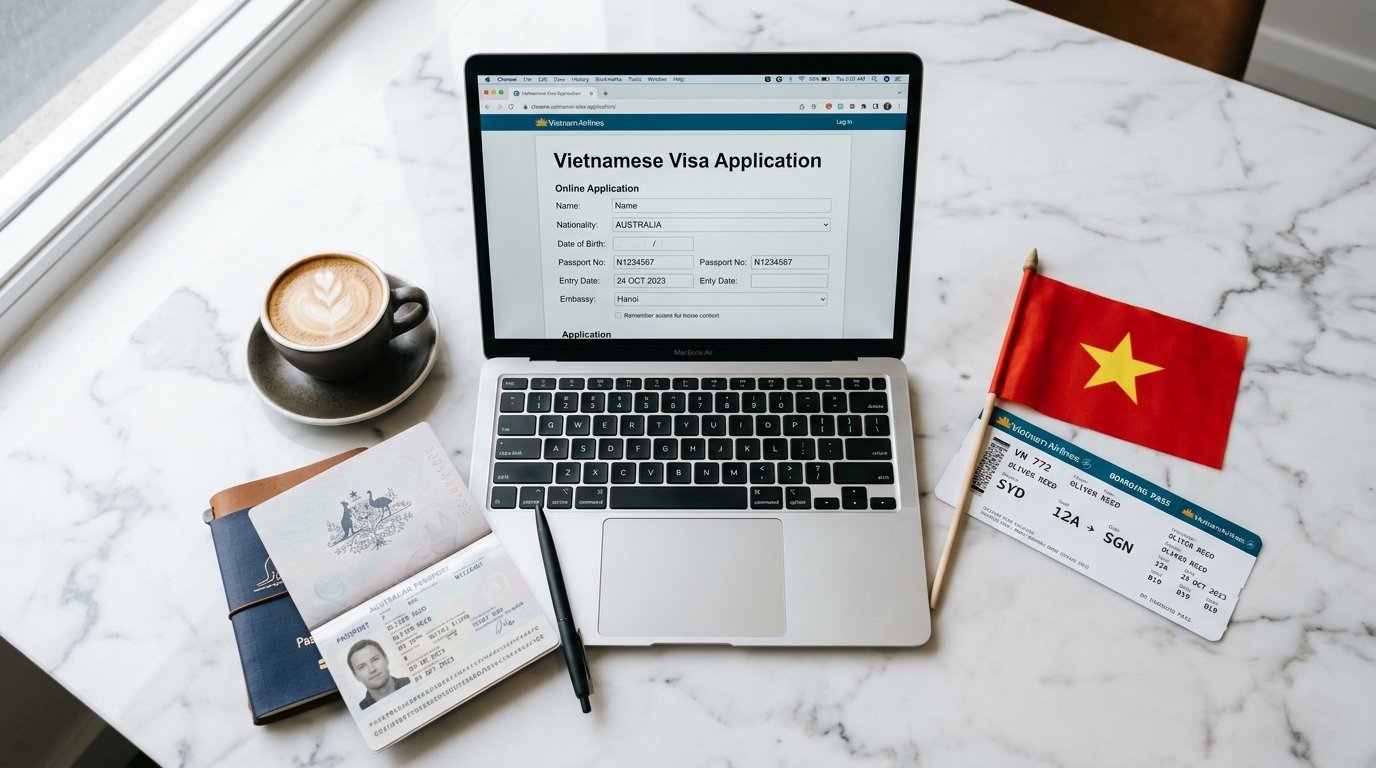
Before you arrive, ensure your paperwork is in order. Most nationalities require an eVisa to enter Vietnam. The application process is entirely online, costs $25 USD for a single-entry 30-day visa, and takes about 3 to 5 working days to process. Always use the Vietnam e-visa official portal to avoid third-party agency fees. For a step-by-step walk-through of the application form, read our comprehensive Vietnam eVisa guide.
Accommodation Strategy by City
Vietnam offers incredible value for money when it comes to lodging. In Hanoi, prioritize location by booking boutique hotels right in the Old Quarter. In Hoi An, you can choose between staying in the Ancient Town for historical ambiance or near An Bang Beach for a resort feel. In Ho Chi Minh City, District 1 is the most convenient for tourists. Whether you want luxury high-rises or budget-friendly stays, you can Compare Vietnam accommodation and flights.
For backpackers looking to socialize, the hostel scene in Vietnam is legendary and highly affordable. You can easily Compare hostels in Hanoi, Hoi An and Ho Chi Minh City to find the best party or chill vibes.
Realistic Budget Categories
Vietnam is one of the most budget-friendly destinations in the world, though luxury options are readily available.
- Backpacker Budget ($30 – $45 / day): Hostel dorm beds, strictly street food, local buses, and free walking tours.
- Mid-Range Budget ($60 – $100 / day): Private boutique hotel rooms, a mix of street food and sit-down air-conditioned restaurants, occasional Grab taxis, and standard Ha Long Bay cruises.
- Luxury Budget ($150+ / day): 5-star resorts, fine dining, private transfers, and luxury small-boat overnight cruises.
Common Vietnam Itinerary Mistakes
The most frequent mistake travelers make is underestimating travel times. A bus ride that looks short on a map can take hours due to traffic and road conditions. Another common error is packing too much heavy clothing. Vietnam is generally hot and humid year-round, though the north (Hanoi and Ha Long) can get surprisingly chilly from December to February. Finally, don’t forget to cross the street with confidence—walk at a slow, predictable pace, and the motorbikes will weave around you.
Final Route Summary Table
| Transit Route | Mode of Transport | Estimated Time |
|---|---|---|
| Hanoi to Ha Long Bay | Shuttle Bus | 2.5 – 3 hours |
| Hanoi to Da Nang | Domestic Flight | 1.5 hours |
| Da Nang to Hoi An | Taxi / Grab | 45 minutes |
| Da Nang to Ho Chi Minh City | Domestic Flight | 1.5 hours |
*Note: Always factor in an extra 2 hours for airport security and boarding for domestic flights.
Frequently Asked Questions
When is the best time to visit Vietnam for a north to south trip?
The best overall months to travel the entire length of Vietnam are spring (February to April) and autumn (August to October). During these windows, the weather is relatively mild across the north, central, and southern regions, minimizing the chance of encountering severe monsoons.
Should I bring cash or cards to Vietnam?
Cash is still king in Vietnam, especially for street food, small markets, and taxis. The local currency is the Vietnamese Dong (VND). While major hotels, nice restaurants, and larger tour operators accept credit cards, you should always carry a few million Dong (roughly $50-$100 USD equivalent) in cash for daily expenses. ATMs are widely available.
Is the tap water safe to drink in Vietnam?
No, you should not drink the tap water in Vietnam. Always stick to bottled or filtered water. However, ice at reputable restaurants and cafes is generally safe, as it is produced commercially from purified water.
Conclusion
Executing a 10-day Vietnam itinerary from north to south requires a bit of logistical finesse, but the payoff is immense. By utilizing domestic flights and grouping regional attractions, you can savor the steaming bowls of Pho in Hanoi, marvel at the geological wonders of Ha Long Bay, step back in time in Hoi An, and embrace the modern energy of Ho Chi Minh City. For more official travel updates, check the Vietnam National Administration of Tourism website before you fly. Safe travels!
Continue planning
Your most useful next steps
Move from reading to one clear travel decision.