
Dubai Alternatives in 2026: Where Travelers Are Going Instead
For a long time, Dubai felt like the safest travel decision you could make.
It was modern, clean, warm, well-connected, and predictable. You could book a trip without overthinking logistics, safety, or comfort. For many travelers, Dubai was not the dream destination. It was the default.
In 2026, that default behavior has changed.
Travelers are not cancelling Dubai out of frustration or disappointment. They are quietly switching because the value equation no longer holds. As prices climbed across hotels, food, and transport, travelers began looking sideways instead of upward.
This is why searches for dubai alternatives are increasing. Not because Dubai stopped working, but because it stopped feeling like the smartest option.

This article explains where travelers are going instead of Dubai in 2026, and how those destinations offer similar comfort with fewer cost and crowd penalties.
Table of Contents
Dubai Is Still Impressive — It Is Just No Longer Forgiving
Dubai’s problem is not quality. It is tolerance.
For years, travelers accepted higher prices because Dubai delivered reliability. Hotels worked exactly as advertised. Transport was easy. The city felt safe, clean, and efficient.
What changed is the margin for error.
When prices were moderate, travelers overlooked small inconveniences. In 2026, with higher hotel rates and heavier daily spending, those same inconveniences feel amplified.
This is why many travelers who once searched for ways to stay in Dubai on a budget are now asking a different question: “Where else delivers the same basics without the premium?”
Dubai Lost Its Position as the Middle-Ground Destination
Dubai used to sit in a very specific position in the global travel spectrum.
It was more polished than most of Asia, cheaper than Europe, and less chaotic than emerging destinations. That balance made it powerful.
In 2026, Dubai no longer sits in the middle.
Pricing now overlaps with cities like London, Paris, and Singapore, but the experience remains largely transactional. Once travelers realize this, they do not argue. They adjust.
Instead of stretching budgets to fit Dubai, they look for places that still occupy that middle ground.
Safety and Stability Still Matter — But They Are No Longer Exclusive to Dubai
One of Dubai’s strongest advantages was always perceived safety and regional stability.
That still matters in 2026, especially given ongoing concerns about airspace, conflicts, and rerouted flights across parts of the Middle East.
Travelers are actively researching whether it is safe to move through the region at all, as seen in rising interest around guides like Middle East flight safety right now.
The key shift is this: Dubai is no longer the only destination in the region that feels safe, structured, and reliable.
Other cities now offer similar stability without Dubai’s price tag.
Sharjah: Dubai’s Closest and Most Practical Alternative
Sharjah is not a new destination. What is new is how travelers are using it.
Instead of treating Sharjah as a compromise, travelers now treat it as a base.
Hotels in Sharjah remain significantly cheaper, especially in the mid-range category. The infrastructure feels familiar, and the distance to Dubai is manageable for selective visits.
Many travelers sleep in Sharjah, spend selectively in Dubai, and avoid paying Dubai prices for every night of their stay.
This shift mirrors broader comparisons travelers are already making between regional hubs, such as in detailed breakdowns like Dubai vs Doha, where cost-to-comfort ratios increasingly matter more than skyline comparisons.
Ajman: When Travelers Want Calm Instead of Constant Stimulation
Ajman attracts a very specific traveler in 2026.
These are people who are done paying premiums for atmosphere. They want space, quiet, and predictable daily spending.
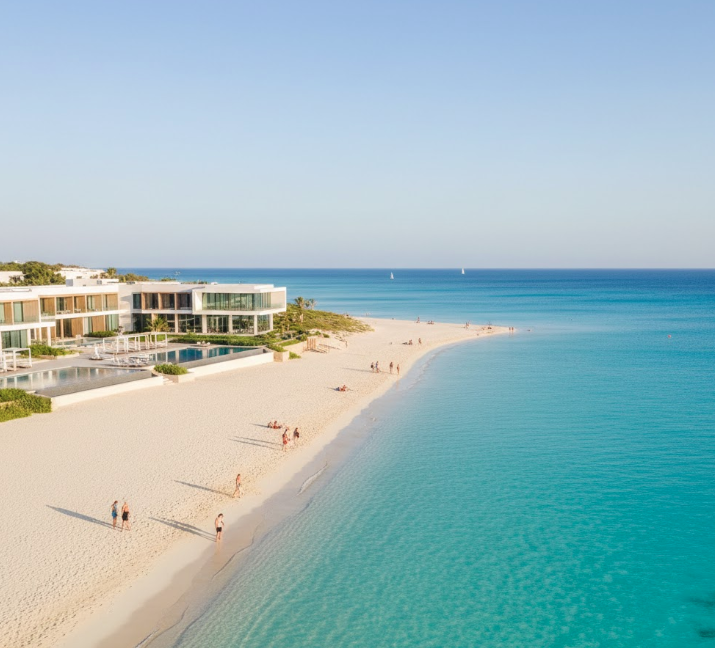
Ajman’s beachfront resorts deliver exactly that. Prices remain lower, crowds are thinner, and the pace is slower.
Ajman does not compete with Dubai on spectacle. It competes on rest.
For longer stays, this matters more than malls or nightlife.
Ras Al Khaimah: The Resort Alternative Dubai Accidentally Created
If Dubai created its own competitor, it is Ras Al Khaimah.
Resorts here offer the same modern standards travelers expect, but without the density and pricing pressure. Mountains, desert landscapes, and beaches create variety that Dubai struggles to offer without constant movement.
Families and couples increasingly choose Ras Al Khaimah for value-driven resort stays, especially when comparing cost per night rather than brand names.
Riyadh: A Different Direction, But Increasingly Compared
Riyadh is not a Dubai substitute in the traditional sense, but it increasingly appears in the same comparison set.
As Saudi Arabia opens up and infrastructure improves, travelers begin to compare Riyadh and Dubai side by side, especially for short regional trips.
Detailed route and city comparisons like Riyadh vs Dubai show how cost, pace, and experience are diverging.
Riyadh is not cheaper across the board, but it represents a shift: travelers are no longer defaulting to Dubai without comparison.
Why Travelers Are Switching Instead of Downgrading
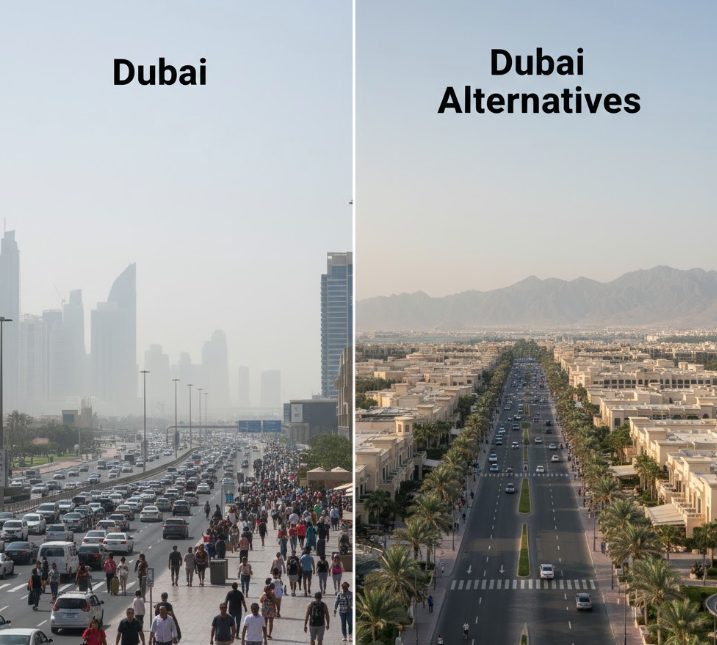
What is happening in 2026 is not budget travel replacing premium travel.
It is substitution.
Travelers are not choosing worse hotels. They are choosing different cities that still deliver comfort, safety, and infrastructure — just without the inflated price layer.
This is why dubai alternatives is not a niche search term anymore. It is a planning shortcut.
Who Dubai Still Works For
Dubai still makes sense for:
First-time visitors. Business travel. Short, event-focused trips. Travelers prioritizing shopping and nightlife.
For repeat leisure travelers, the calculation has changed.
They are no longer asking what Dubai offers. They are asking where else offers the same basics with better value.
The Brutal Cost Reality Behind Dubai Alternatives in 2026
Once travelers reach the comparison stage, emotions disappear. This is where dubai alternatives stop being a curiosity and become a financial decision.
In 2026, travelers are not abandoning Dubai blindly. They are comparing total trip cost, daily spend, hidden charges, and stress. When those numbers are laid out clearly, dubai alternatives often outperform Dubai by a wide margin.
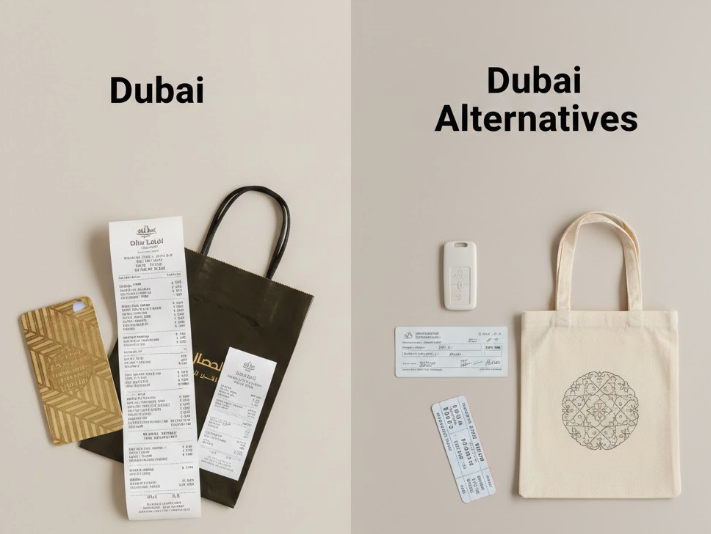
Daily Cost Comparison: Dubai vs Dubai Alternatives
Daily spending is where Dubai loses momentum fastest. Travelers feel this within the first 48 hours.
Daily spending is the fastest way travelers feel whether a destination is still worth it. This is not about luxury splurges or extreme budgeting. It is about normal behavior: booking a comfortable hotel, eating out twice a day, moving around the city, and visiting a few attractions.
When travelers arrive in Dubai, the first two days often feel manageable. The shock does not come immediately. It comes when daily costs repeat themselves. Hotel prices stay high every night. Meals remain expensive regardless of neighborhood. Transport costs stack quietly.
This is where Dubai starts to feel unforgiving. There is very little room to course-correct without downgrading the experience. Travelers either accept the spend or feel constant friction.
Dubai alternatives behave differently. They allow travelers to adjust daily behavior without sacrificing comfort. A cheaper hotel night does not feel like a compromise. A simpler meal does not feel like a downgrade. This flexibility is what makes daily cost the most important comparison point.
| Expense (Per Day) | Dubai | Dubai Alternatives |
|---|---|---|
| Mid-range hotel | AED 700–1,000 | AED 350–600 |
| Meals | AED 150–250 | AED 80–140 |
| Local transport | AED 50–80 | AED 25–40 |
| Attractions | AED 100+ | AED 30–60 |
| Daily total | AED 1,000–1,400 | AED 500–800 |
This is the moment travelers stop defending Dubai and start bookmarking dubai alternatives.
The difference shown above is not theoretical. Travelers feel it in real time. A few hundred dirhams per day may not sound dramatic until it repeats for five or seven consecutive days.
This is why many travelers describe Dubai as tiring rather than exciting. It is not just the money leaving the account. It is the constant awareness of spending. Every decision feels weighted.
Dubai alternatives remove that mental pressure. Travelers stop doing math after every meal. They stop questioning whether an attraction is “worth it.” This psychological relief is a major reason people do not return to Dubai year after year, even if they enjoyed it once.
7-Day Trip Cost: Why Switching Makes Financial Sense
A week-long trip exposes the gap brutally.
A seven-day trip is the point where travel decisions become emotional. Short trips can hide inefficiencies. Longer stays expose them.
When travelers price a full week in Dubai, the total cost often surprises them. Not because any single item is outrageous, but because nothing becomes cheaper with time. There is no compounding benefit.
Dubai alternatives, on the other hand, reward longer stays. Average nightly rates decrease. Food choices diversify. Transport becomes predictable. The longer travelers stay, the more value they extract.
This is why switching behavior accelerates at the one-week mark. People do not leave Dubai angry. They leave informed.
| Expense | Dubai | Dubai Alternatives |
|---|---|---|
| Accommodation | AED 6,000 | AED 3,000–4,000 |
| Food | AED 1,500 | AED 700–900 |
| Transport | AED 400 | AED 200 |
| Activities | AED 800+ | AED 300–400 |
| Total | AED 8,700+ | AED 4,200–5,500 |
This difference alone explains the surge in searches for dubai alternatives in 2026.
Hidden Costs That Push Travelers Away from Dubai
Dubai’s base prices are not the only issue. The real frustration comes from layered costs that appear after arrival.
| Hidden Cost | Dubai | Dubai Alternatives |
|---|---|---|
| Service charges | Common | Limited |
| Tourism fees | High | Lower |
| Alcohol pricing | Very high | Moderate |
| Upselling pressure | Constant | Minimal |
These hidden costs are why many travelers describe Dubai as “exhausting” and dubai alternatives as calmer.
Hidden costs are where trust erodes fastest. Travelers expect advertised prices to be incomplete, but they do not expect constant upselling.
Dubai’s problem is not that these costs exist. It is how frequently they appear. Service charges, premium add-ons, and optional fees feel unavoidable. Over time, travelers stop feeling like guests and start feeling like revenue targets.
Dubai alternatives still charge for services, but the frequency and intensity are lower. Travelers feel in control rather than managed. This difference may seem subtle, but it strongly influences repeat visitation.
External Data Confirms the Shift
This is not anecdotal.
According to data from the International Monetary Fund, inflation-adjusted travel costs in the UAE’s premium cities have risen faster than regional alternatives.
The Dubai Department of Economy and Tourism itself highlights a strategic shift toward high-spend tourism, not budget volume.
Meanwhile, destinations like Ras Al Khaimah and Oman explicitly market value-led growth through official tourism bodies such as the Oman Ministry of Heritage and Tourism.
These signals reinforce why dubai alternatives are gaining traction globally.
Who Should Still Choose Dubai

Dubai still works for:
• Business travel * Events and exhibitions * Short luxury-focused trips * First-time visitors
For repeat leisure travelers, especially families and long-stay visitors, dubai alternatives now offer better value per day.
At this point, most travelers do not need persuasion. They have already made the decision internally.
Dubai remains impressive. It remains functional. But it no longer feels generous.
Dubai alternatives feel generous. They offer space, time, and financial breathing room. In 2026, that matters more than spectacle.
This is why switching behavior feels quiet rather than dramatic. People are not announcing that they are done with Dubai. They are simply not booking it again.
Final Verdict: Dubai Alternatives Win on Value in 2026
The conclusion is uncomfortable but clear.
Dubai did not fail. It priced itself out of its old role.
In 2026, dubai alternatives deliver similar comfort, safety, and infrastructure with less financial pressure and fewer psychological costs.
That is why travelers are not complaining. They are switching.
Frequently Asked Questions
Are Dubai alternatives really cheaper?
Yes. Most Dubai alternatives cost 30–50% less per day while offering similar hotel standards.
Which Dubai alternative is best for resorts?
Ras Al Khaimah currently offers the strongest resort value compared to Dubai.
Is Dubai still worth visiting?
Yes, but mainly for short trips, events, and first-time visitors.
What are the best Dubai alternatives for budget travelers?
The most popular Dubai alternatives in 2026 are Sharjah, Ajman, Ras Al Khaimah, and Muscat. These destinations offer modern hotels, safe environments, and similar infrastructure at lower prices.
Which Dubai alternative feels closest to Dubai?
Sharjah feels closest to Dubai in terms of lifestyle, infrastructure, and access. Many travelers stay in Sharjah and visit Dubai selectively to control costs.
Is Ras Al Khaimah cheaper than Dubai?
Yes. Ras Al Khaimah is significantly cheaper than Dubai, especially for resorts and longer stays. Hotel prices are lower, crowds are lighter, and daily expenses are more predictable.
Is Muscat a good alternative to Dubai?
Muscat is one of the best Dubai alternatives for travelers who want calm, scenery, and cultural depth. Costs for hotels and food are generally lower, and the travel experience feels less commercial.
Why are travelers choosing Dubai alternatives instead of Dubai?
Travelers are switching because Dubai has become less forgiving on price. Higher hotel rates, expensive dining, and constant upselling push people toward destinations that offer similar comfort with less financial pressure.
Are Dubai alternatives safe for tourists?
Yes. Popular Dubai alternatives like Sharjah, Ras Al Khaimah, and Muscat are considered safe and stable for tourists, with good infrastructure and well-developed hospitality sectors.
Which Dubai alternative is best for families?
Ras Al Khaimah and Ajman are particularly good for families due to quieter environments, larger resorts, and better value for longer stays.
Do Dubai alternatives offer luxury hotels?
Yes. Many Dubai alternatives offer high-quality four- and five-star hotels at lower prices than Dubai, especially outside peak season.
Pingback: Saudi Arabia Tourism: 7 Powerful Reasons Asia Is Suddenly Interested - FlyFono