
The practical takeaway
Working out how to get from Bangkok to Ayutthaya is usually one of the first logistical steps for travellers exploring central Thailand. Just 80 kilometres north of the capital, the sprawling Ayutthaya Historical Park is Thailand’s former capital, filled with crumbling brick…
Working out how to get from Bangkok to Ayutthaya is usually one of the first logistical steps for travellers exploring central Thailand. Just 80 kilometres north of the capital, the sprawling Ayutthaya Historical Park is Thailand’s former capital, filled with crumbling brick stupas, ancient Buddha statues, and deep history.
The route is straightforward, but the transport options vary heavily in comfort, price, and flexibility. Whether you want a dusty 20 THB third-class train ticket or an air-conditioned private transfer, there are six main ways to make the journey. If you are deciding where to stay in Bangkok, staying near a major transit hub like Bang Sue will make this day trip much easier.
Some links in this guide are affiliate links. FlyFono may earn a commission if you book through them, at no extra cost to you. Recommendations are based on practical relevance, not commission.
Quick Comparison: Bangkok to Ayutthaya Options
| Option | Travel Time | Estimated Cost (One Way) | Best For | Guided? |
|---|---|---|---|---|
| Train | 1.5 – 2 hours | 20 – 300 THB | Budget travellers & scenery | No |
| Minivan | 1.5 hours | 70 – 150 THB | Fast, cheap transit | No |
| Organised Day Tour | Full day | 1,000 – 2,500 THB | First-timers & history buffs | Yes |
| Taxi | 1 – 1.5 hours | 1,000 – 1,500 THB | Small groups needing flexibility | No |
| Private Transfer | 1 – 1.5 hours | 1,200 – 2,500 THB | Families & maximum comfort | No |
| River Cruise Tour | Full day | 1,500 – 3,000+ THB | Relaxed, scenic experience | Yes |
1. Train from Bangkok to Ayutthaya
Taking the Bangkok to Ayutthaya train is the most popular independent method. It is exceptionally cheap, avoids road traffic, and offers a glimpse into local Thai commuter life.
Historically, trains left from Hua Lamphong. Today, the vast majority of long-distance trains depart from the massive new Krung Thep Aphiwat Central Terminal (formerly Bang Sue Grand Station). You can reach this station easily via the MRT Blue Line.
- Ordinary & Rapid Trains: These take around 1.5 to 2 hours. Third-class seats with fans cost a mere 20 THB. You cannot book these far in advance; just buy a ticket at the station on the day.
- Express & Special Express Trains: These take around 1 hour and 15 minutes, offering air-conditioning and reserved seating. Prices range from 150 to 350 THB. According to the State Railway of Thailand, you can book these seats online or at the station.
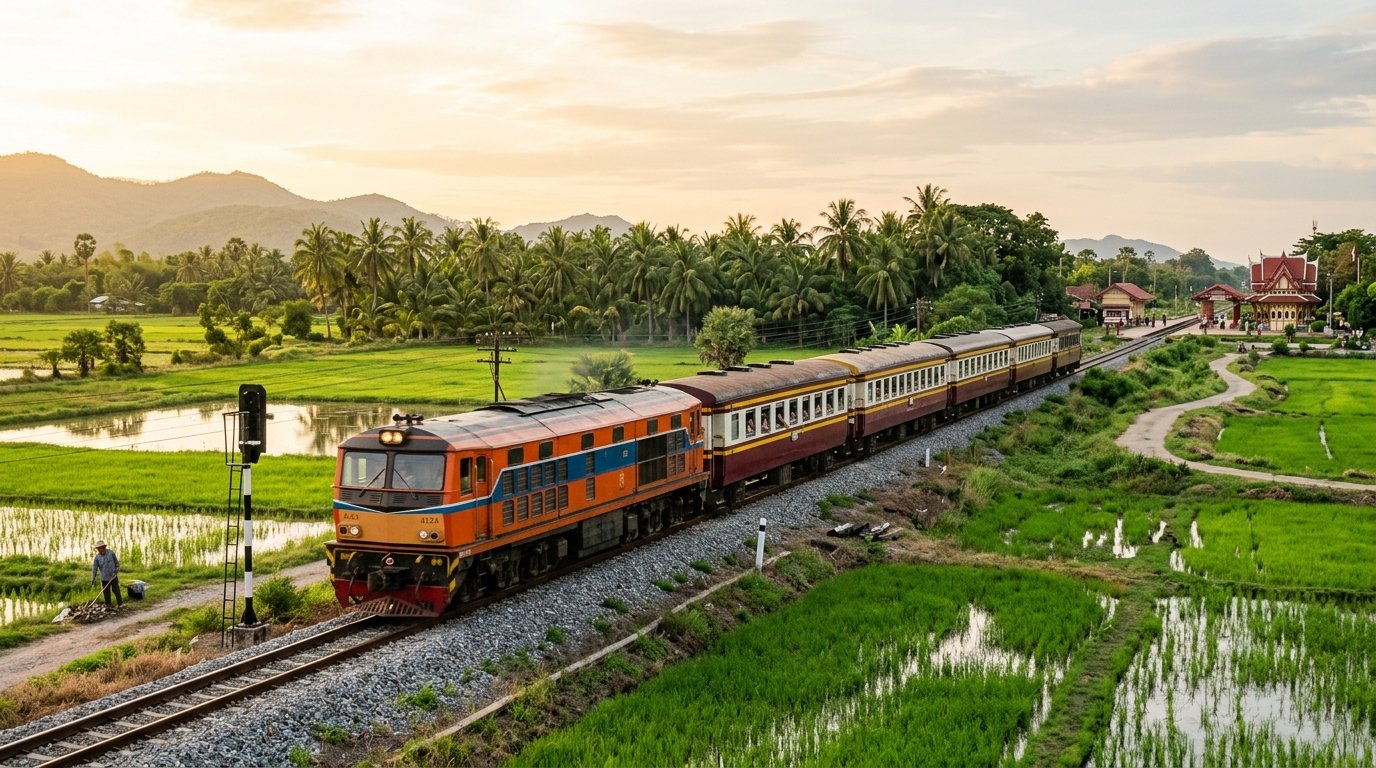
The Bang Sue to Ayutthaya train journey is scenic once you clear the Bangkok suburbs, passing rice paddies and small provincial stations. Once you arrive at Ayutthaya station, you are on the east side of the river, requiring a quick ferry crossing or a tuk-tuk ride to reach the main historical park.
2. Minivan from Bangkok
If you prefer rubber to rail, a Bangkok to Ayutthaya bus or minivan is a swift alternative. Large public buses are rare for this short route now; minivans run the show.
Minivans depart primarily from Mochit New Van Terminal (often referred to as Mochit 2). The trip takes around 1.5 hours depending on Bangkok traffic, dropping you near Naresuan Road in central Ayutthaya, much closer to the temples than the train station.
Tickets cost between 70 and 100 THB. Vans leave when they are full, which is usually every 30 to 45 minutes. Expect a tight squeeze; if you have large luggage, you might have to buy an extra seat for your bags. This option is purely practical—there is no scenery, but it gets the job done quickly.
3. Organised Day Tour
An Ayutthaya day tour from Bangkok solves all logistical headaches. Ayutthaya is vast, and the ruins lack detailed English signage. Staring at brick foundations gets repetitive without historical context.
Guided tours typically include round-trip transport from Bangkok (often picking you up at your hotel), entry fees, a knowledgeable guide, and sometimes lunch. They provide vital context about the Burmese invasion of 1767 that destroyed the city.
For those who want zero hassle and maximum historical insight, you can compare Ayutthaya day tours and activities to find one that fits your schedule, whether it is a small group van tour or a luxury private guided excursion.
4. Taxi from Bangkok to Ayutthaya
Hailing a standard Bangkok taxi for a day trip to Ayutthaya is entirely possible, though you must negotiate the fare beforehand. Drivers will not use the meter for an inter-provincial trip.
Expect to pay around 1,000 to 1,500 THB for a one-way drop-off. You can also negotiate a full-day rate where the driver takes you to Ayutthaya, drives you between the spread-out temple sites, and brings you back to Bangkok. A full-day negotiated rate usually lands between 2,500 and 3,500 THB.
Be aware that communication can be a barrier, and standard taxis might lack well-maintained air-conditioning, which is vital during the hot season.
5. Private Transfer
If you prefer certainty over haggling, booking a private transfer in advance is a step up from a regular taxi. You get a guaranteed modern, air-conditioned vehicle—often a spacious SUV or a 9-seater VIP van—with a professional driver.
This is the most comfortable way to manage your own Bangkok to Ayutthaya day trip, especially for families or groups splitting the cost. The driver will pick you up at your hotel, wait while you explore, and return you precisely when you want.
You can easily check private Bangkok to Ayutthaya transfers to secure a fixed price before your trip begins.
6. River Cruise
For a slower pace, several operators run boat tours up the Chao Phraya River from Bangkok to Ayutthaya. Often, these tours operate as a hybrid: you take a coach or van to Ayutthaya in the morning, explore the ruins, and then cruise back to Bangkok in the afternoon while enjoying a buffet lunch.
This is less about efficient transport and more about the experience of approaching the ancient capital the way traders and diplomats did centuries ago.
Reaching the Temples from Ayutthaya Station
If you arrive by train, the main Ayutthaya temples are across the Pa Sak River. The quickest way across is the small ferry boat just opposite the train station, which costs around 10 THB.
Once across, or if you arrive by minivan, you need a way to navigate the Ayutthaya historical park, which is too large to walk comfortably in the heat. According to the Fine Arts Department, the historical park covers nearly 300 hectares.
- Bicycle: Renting a bike costs around 50 THB per day. The terrain is flat, making it an excellent way to explore at your own pace, provided you can handle the afternoon sun.
- Tuk-Tuk: Ayutthaya has unique, frog-faced tuk-tuks. You can hire them by the hour (typically 200-300 THB/hour) to drive you from temple to temple.
- Songthaew: These shared pickup trucks run fixed routes, mostly used by locals, but less practical for hopping between specific ruins.
Independent Trip vs Guided Tour
Choosing between going independently or taking a tour comes down to your priorities.
An independent trip via train or minivan gives you the freedom to start late, linger at specific sites, and leave when you are tired. It is significantly cheaper. However, you must handle the heat, negotiate your own local transport, and read up on the history yourself.
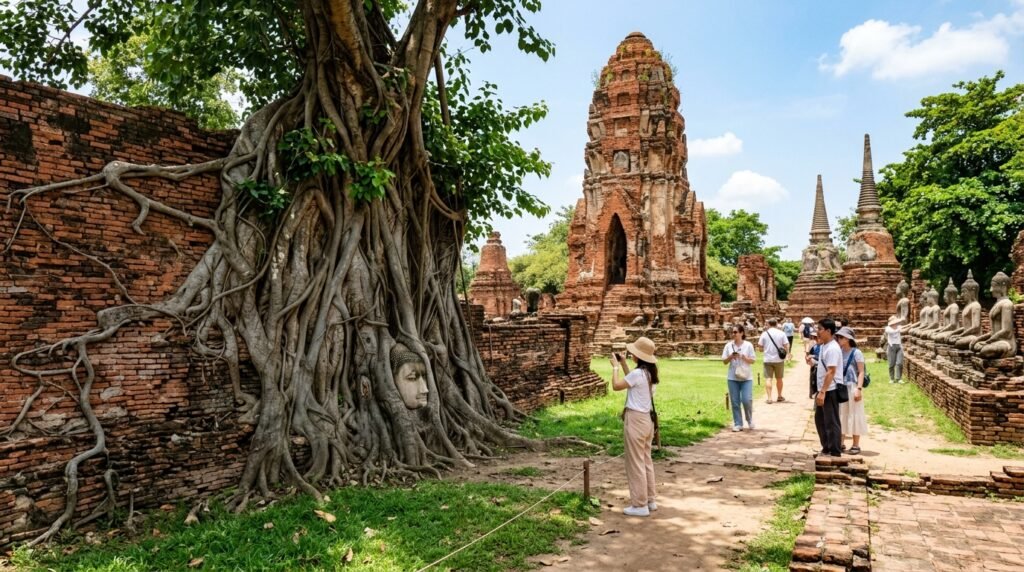
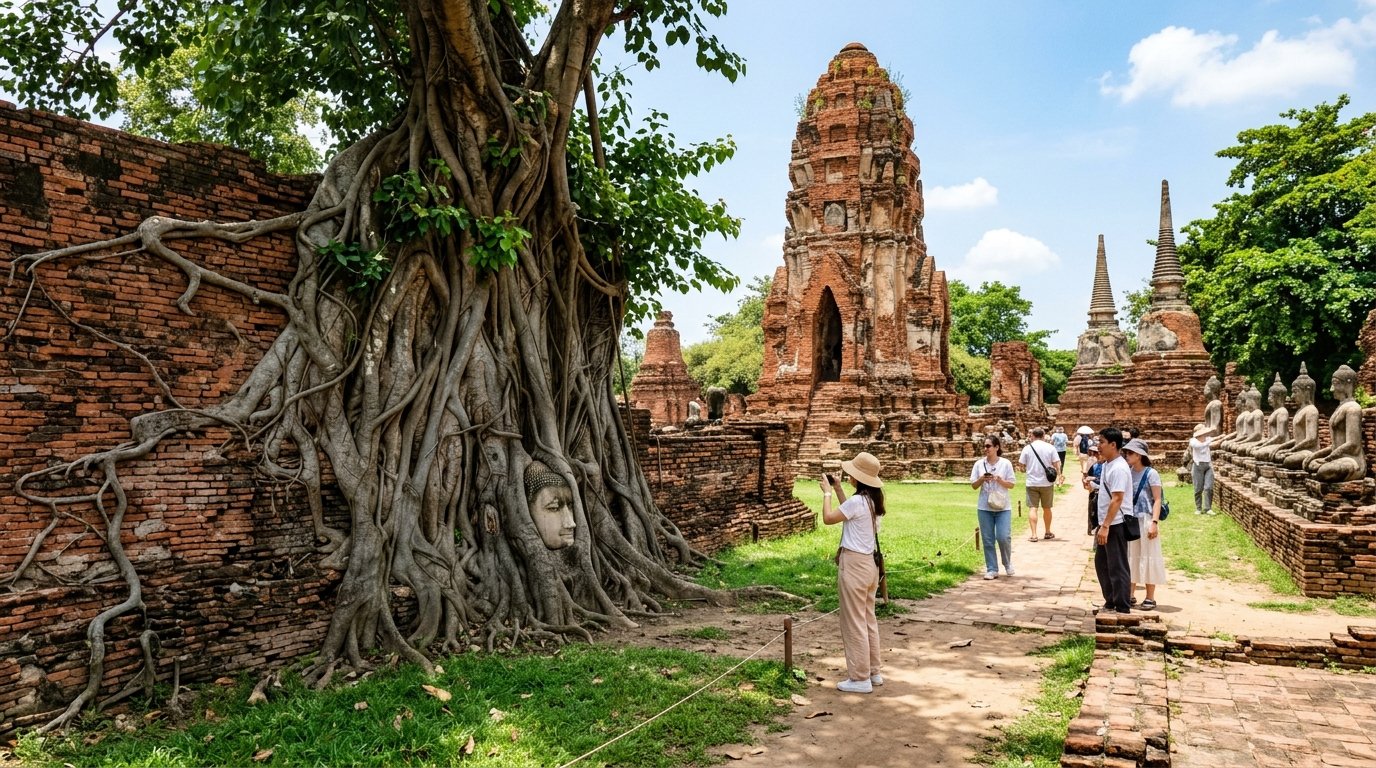
A guided tour removes all friction. You get air-conditioned transport between sites, cold water, and a guide who can explain why the famous Buddha head is wrapped in the roots of a Bodhi tree at Wat Mahathat. For most short-term visitors, a tour is a highly efficient use of a single day.
Heat, Clothing and Temple Etiquette
Ayutthaya is an active religious site, and the heat can be intense, especially during the dry and hot seasons. If you are unsure when to go, checking the best time to visit Thailand will help you plan around the monsoon.
Even though most structures are ruins, temple dress codes apply. Both men and women must cover their shoulders and knees. Scarves thrown over shoulders are sometimes rejected by guards at major temples; wear T-shirts and long trousers or skirts. Wear comfortable slip-on shoes, as you may need to take them off if entering modern shrine buildings on the site.
Returning to Bangkok
Getting back is just a matter of reversing your journey. Minivans run until around 6:00 PM, and trains run late into the evening. Keep an eye on the time, as missing the last minivan means relying on a more expensive late train or a private taxi.
If you need mobile data to check train schedules or book a ride back, make sure you have sorted the best eSIM for Thailand. You can check Thailand eSIM options to stay connected effortlessly.
Is Staying Overnight in Ayutthaya Worthwhile?
While most visitors treat it as a day trip, staying overnight allows you to see the ruins beautifully illuminated after dark, long after the tour buses have returned to the capital. It also means you can beat the heat by exploring early in the morning.
If you choose to stay, there are excellent boutique guesthouses along the river. If you prefer to head back to the city, you can compare Bangkok accommodation for the rest of your stay. Ayutthaya also makes a good stopover if you are heading further north to Chiang Mai by train, rather than returning to Bangkok.
Speaking of onward travel, if you are looking for beach destinations after your cultural tour, the logistics of getting from Bangkok to Pattaya or Bangkok to Hua Hin are just as straightforward.
Best Option by Traveller Type
- The Budget Backpacker: Take the third-class train from Bang Sue. It costs less than a bottle of water and offers a great cultural experience.
- The First-Timer: Book an organised day tour. The history is complex, and having a guide prevents “temple fatigue.”
- The Family: Book a private transfer. Having an air-conditioned base to retreat to when the kids get tired is invaluable.
- The Speed Seeker: Take the minivan. It is cheap and drops you right near the action without needing a ferry.
5 Frustrating Mistakes on a Bangkok-Ayutthaya Trip
- Wearing inappropriate clothing: Showing up in short shorts or tank tops will result in being turned away from major temples or forced to buy overpriced elephant pants.
- Underestimating the sun: Ayutthaya is highly exposed. Midday heat radiating off brick ruins is punishing. Bring a hat, sunscreen, and plenty of water.
- Hiring a bicycle if you aren’t fit: The park is flat, but cycling for 4 hours in 35-degree heat isn’t for everyone. Hire a tuk-tuk if you are unsure.
- Not agreeing on tuk-tuk prices: If you hire a tuk-tuk by the hour, confirm the total price and duration before getting in to avoid arguments later.
- Going to Hua Lamphong for the train: Remember that most long-distance trains now depart from Krung Thep Aphiwat (Bang Sue), not the old central station.
FAQ
How long is the train ride from Bangkok to Ayutthaya?
The train journey takes between 1 hour 15 minutes and 2 hours, depending on whether you take an express or an ordinary service from Krung Thep Aphiwat Central Terminal.
How much does it cost to get to Ayutthaya?
Costs range from 20 THB for a third-class train ticket, to 70-100 THB for a minivan, up to 2,500 THB for a private transfer.
Can you go straight from Bangkok Airport to Ayutthaya?
There are no direct public trains or minivans from Suvarnabhumi or Don Mueang. You must arrange a private transfer or head into the city first. Read up on your Bangkok Airport to city options to plan the best route.
How much time do you need in Ayutthaya?
A half-day (4 to 5 hours) is sufficient to see the major ruins like Wat Mahathat and Wat Chaiwatthanaram before the heat becomes too intense.
Conclusion
Getting from Bangkok to Ayutthaya is cheap, fast, and highly rewarding. The train remains the most charming and economical method, while day tours offer the best educational value. Whichever you choose, start early to beat the crowds and the midday heat, and respect the local etiquette.
Travel Disclaimer: Schedules, ticket prices, and train departure stations can change. We recommend verifying current timetables with the State Railway of Thailand or your tour operator before making non-refundable plans. Last checked: September 2026.
Continue planning
Your most useful next steps
Move from reading to one clear travel decision.