
The practical takeaway
Compare 4 ways from Kuala Lumpur to Penang: ETS high-speed train, domestic flights, express buses, and car rental. Covers fares, travel times, terminals, and booking tips.
If you are planning a trip up the Malaysian peninsula, you are probably wondering how to get from Kuala Lumpur to Penang efficiently. The direct answer is that you have four main options: the high-speed KTMB ETS train, a quick domestic flight, a comfortable express bus, or renting a car to drive yourself. For the vast majority of travelers, the ETS high-speed train (specifically the Platinum service from KL Sentral to Butterworth, followed by a short ferry ride to Penang Island) is the best balance of comfort, cost, and overall travel time (taking around 4 to 4.5 hours door-to-door). However, depending on your luggage, budget, and starting point in Kuala Lumpur, a flight or an express bus might actually be a better fit for your itinerary.
Last checked: October 2026.
Quick Answer: The Best Way to Travel from Kuala Lumpur to Penang
Some links in this guide are affiliate links. FlyFono may earn a commission if you book through them, at no extra cost to you. Recommendations are based on practical relevance, not commission.
- Fastest overall (if near the airport): Flying from Subang Airport (SZB) or KLIA to Penang International Airport (PEN). Flight time is 1 hour, but allow 3.5 hours total for airport transit.
- Most comfortable & scenic: KTMB ETS Train from KL Sentral to Butterworth. Takes 4 hours. Connects directly to the Penang Ferry. Highly recommended. Book your train tickets early via Klook tours & transport.
- Cheapest option: Express Bus from TBS (Terminal Bersepadu Selatan) to Sungai Nibong Bus Terminal. Takes 5-6 hours, costs under $10 USD.
- Most flexible: Renting a car. Takes about 4 hours via the PLUS Highway. Great if you plan to explore the mainland or outer parts of Penang.
Comparing the 4 Ways to Travel from Kuala Lumpur to Penang
Malaysia’s infrastructure is incredibly well-developed, particularly along the west coast of the peninsula. Whether you are transitioning from a bustling city break to a heritage food tour, or wrapping up a larger Singapore and Malaysia 7-day itinerary, getting between the capital and the culinary hub of George Town is a breeze. Let’s look closely at the four transportation modes.
Kuala Lumpur and Penang are separated by approximately 350 kilometers (about 217 miles). While this might not sound like an immense distance, the route is one of the busiest in the country, frequented by daily commuters, commercial freight, and millions of domestic and international tourists every year. Because this corridor is so critical to the Malaysian economy, the government and private sectors have invested heavily in ensuring that you have multiple reliable, safe, and comfortable ways to make the journey. Whether you value speed, scenery, budget, or flexibility, there is an option perfectly suited to your travel style. Below is a detailed breakdown of what you can expect from each mode of transport.
| Transport Mode | Average Travel Time | Estimated Cost (One Way) | Best For… |
|---|---|---|---|
| ETS Train | 4 hours (Train) + 20 mins (Ferry) | $17 – $20 USD (RM 75 – RM 90) | Comfort, scenery, and avoiding traffic jams. |
| Domestic Flight | 1 hour (Flight) + 2.5 hours (Transit) | $25 – $75 USD | Those already at the airport or in a major rush. |
| Express Bus | 5 to 6 hours | $8 – $12 USD (RM 35 – RM 50) | Budget travelers and backpackers. |
| Car Rental | 4 to 5 hours | $30+ USD/day + gas & tolls | Families, road-trippers, and groups with lots of luggage. |
1. The KTMB ETS Train (Electric Train Service)
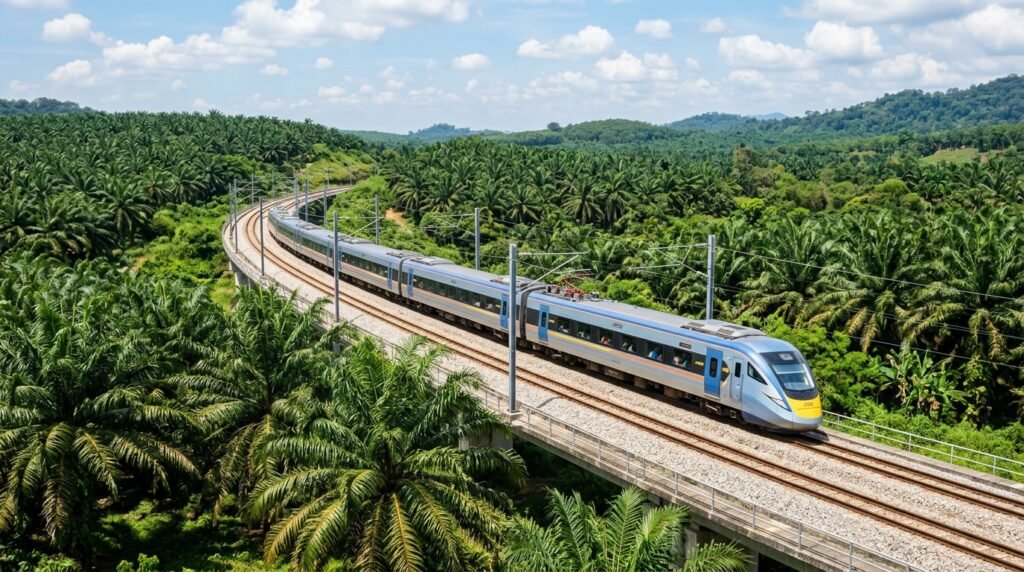
The KTMB ETS (Electric Train Service) is widely considered the best overall way to travel from Kuala Lumpur to Penang. Introduced over a decade ago and constantly upgraded, these high-speed electric trains operate at speeds of up to 140 km/h. They are clean, modern, fully air-conditioned, and feature large windows that offer a splendid view of the Malaysian countryside. As you speed through the state of Perak, you will pass towering limestone karst formations, lush palm oil plantations, sleepy kampungs (traditional villages), and beautiful mosques. It is a relaxing, low-stress way to travel that drops you exactly where you need to be.
The Journey: KL Sentral to Butterworth
The vast majority of ETS trains depart from KL Sentral, Kuala Lumpur’s primary and most integrated transport hub. This makes it exceptionally easy to access from almost anywhere in the city via the LRT, MRT, Monorail, or a quick Grab ride. The train terminates at Butterworth Railway Station, which is located on the mainland of Peninsular Malaysia, directly across the strait from Penang Island (George Town). You will not be taking the train onto the island itself, as there are no rail bridges.
There are two main classes of ETS trains operating this route:
- ETS Gold: This service stops at a few more major stations along the way, such as Ipoh, Taiping, and Kuala Kangsar. It takes approximately 4 hours and 15 minutes. The seating is comfortable, in a 2×2 configuration, with power outlets available.
- ETS Platinum: This is the premier express service with fewer stops, meaning it usually completes the journey in just under 4 hours. Platinum trains often feature a slightly newer carriage layout, free Wi-Fi (though cellular data is usually faster), and passengers are given a complimentary snack box. The price difference between Gold and Platinum is negligible (usually just a few Ringgit), making Platinum the highly preferred choice.
Tickets, Booking, and Facilities
ETS tickets are released 30 to 60 days in advance, and they sell out incredibly fast. This cannot be overstated: for weekend travel, public holidays, and school vacation periods, trains will be fully booked weeks ahead of time. You absolutely must book your tickets ahead of time. Fares range from RM 75 to RM 90 depending on the class of service. The trains are equipped with clean restrooms (both Western and squat style), a prayer room (surau) for Muslim travelers, and a small food carriage usually located in Coach C that serves hot meals, snacks, coffee, and tea.
Crossing to Penang Island (George Town)
Once you arrive at Butterworth station, do not panic about how to cross to the island. The station is connected directly to the Penang Sentral ferry terminal via a covered, elevated walkway equipped with elevators and escalators. The walk takes about 5 to 10 minutes, even with luggage. From there, you board the modern passenger ferries (introduced in recent years to replace the iconic but aging car ferries). The fast ferry takes just 15 to 20 minutes to cross the strait, arriving right at the Swettenham Pier Cruise Terminal in the heart of historic George Town. The ferry ride is very cheap (about RM 2) and offers a beautiful, breezy approach to the island, giving you your first glimpse of the colonial architecture and Penang Hill in the background.
2. Domestic Flights (KLIA / KLIA2 / Subang to PEN)
If speed is your absolute top priority, or if you are connecting directly from an international arrival, flying from Kuala Lumpur to Penang is technically the fastest way to cover the distance. The actual time in the air is merely 50 to 60 minutes—barely enough time for the flight attendants to hand out peanuts and water. However, when you factor in getting to the airport in KL, waiting for security and boarding, and transiting from Penang International Airport (PEN) to your hotel, the total door-to-door time is often around 3.5 to 4.5 hours, which puts it neck-and-neck with the train.
Choosing Your Departure Airport
Kuala Lumpur is serviced by two main aviation hubs for this route, and choosing the right one is crucial to saving time:
- Kuala Lumpur International Airport (KLIA / KLIA2): This is the massive international hub located about 45 minutes to an hour south of the city center. Malaysia Airlines and Batik Air fly from Terminal 1, while low-cost giant AirAsia dominates Terminal 2. If you are already arriving on an international flight and want to head straight to Penang without entering KL, this is incredibly convenient. You can check flight schedules, compare airlines, and find the best prices on Trip.com flights & hotels.
- Sultan Abdul Aziz Shah Airport (Subang Airport – SZB): Located much closer to the city center (about 20 to 30 minutes depending on traffic), Subang handles turboprop flights operated by Firefly (a Malaysia Airlines subsidiary) and Batik Air. Flying from Subang is vastly more relaxing; the airport is small, security takes minutes rather than hours, and you don’t have to walk for miles to your gate. If you are staying in the city center, Petaling Jaya, or Mont Kiara, fly out of Subang.
Arriving in Penang
Penang International Airport (PEN) is located in Bayan Lepas, at the southeastern tip of the island. Depending on traffic (which can be notoriously bad in Penang during rush hour), getting from the airport to George Town can take anywhere from 30 minutes to over an hour. You can take a Grab car (Malaysia’s Uber equivalent), an airport taxi using a coupon system, or the Rapid Penang bus if you are on a strict budget.
Pro Tip: Ensure you stay connected as soon as you land to call a Grab, navigate to your hotel, or message your Airbnb host. I highly recommend picking up an eSIM beforehand so you don’t have to queue for a physical SIM card at the airport. Check out our guide on the best eSIM for Japan, Thailand, and Southeast Asia, or simply grab a Saily eSIM which works flawlessly across all major Malaysian networks.
3. Express Buses
For backpackers, students, and budget-conscious travelers, the express bus is a reliable, highly economical, and surprisingly luxurious choice. Malaysia is renowned for having some of the most comfortable long-distance buses in Southeast Asia. We are talking deep-reclining massage chairs, expansive legroom (often a 1-2 seating configuration rather than the standard 2-2), and air conditioning that resembles an arctic blast.
The Route: TBS to Sungai Nibong
Most buses depart from Terminal Bersepadu Selatan (TBS), Kuala Lumpur’s massive, state-of-the-art bus terminal located in the south of the city. TBS feels more like an international airport than a bus station, complete with digital departure boards, automated ticketing kiosks, numerous restaurants, and comfortable waiting areas. You can reach TBS via the LRT (Sri Petaling Line), KTM Komuter, or the KLIA Transit train.
The journey generally takes between 4.5 to 6 hours. This duration is highly dependent on traffic on the North-South Expressway (PLUS highway) and how long the driver decides to stop at the rest areas (R&R) for bathroom and food breaks. Buses generally terminate at the Sungai Nibong Bus Terminal on Penang Island, meaning the bus drives directly over the Penang Bridge, saving you the hassle of transferring to a ferry.
Companies and Comfort
Dozens of companies operate this route around the clock, including Plusliner, KKKL, Transnasional, and Billion Stars. Standard buses cost around RM 35 to RM 50. There is also a premium operator called Aeroline, which departs from the Corus Hotel in the KL city center rather than TBS. Aeroline is considered the business class of bus travel, offering a meal, hot drinks, an onboard lounge, and personalized service. It costs more (around RM 60+), but for the level of comfort provided, it is an absolute steal.
4. Car Rental and Self-Drive
If you love a good road trip, are traveling with a large family, or are carrying sports equipment and massive suitcases, renting a car offers unmatched flexibility. The drive from Kuala Lumpur to Penang is very straightforward, following the E1 North-South Expressway (Lebuhraya Utara-Selatan) for about 350 kilometers.
The Drive, Rest Stops, and Tolls
Malaysian highways are among the best in the region. The roads are well-paved, clearly signposted, and mostly consist of two or three lanes in each direction. Along the way, you will find excellent Rest and Service Areas (known as R&R), which feature clean bathrooms, petrol stations, and massive food courts where you can sample local dishes like Nasi Campur or fresh fruit. You will need to pay highway tolls; you can do this using a Touch ‘n Go card (an essential purchase upon arriving in Malaysia, available at convenience stores). Tolls for the journey will cost roughly RM 50.
Crossing onto the Island
When you reach the mainland near Butterworth, you have two choices for getting your car onto the island:
- The Penang Bridge (First Bridge): The classic route. It spans 13.5km and drops you in the Gelugor area, relatively close to George Town. There is a toll for crossing onto the island (but no toll when leaving the island). This is the most direct route for most tourists.
- The Sultan Abdul Halim Muadzam Shah Bridge (Second Bridge): Located further south, it spans an impressive 24km, making it one of the longest bridges in Southeast Asia. It is generally quieter and less prone to traffic jams, but it drops you in Batu Maung. This is much further from George Town but convenient if your hotel is in the south near Bayan Lepas or if you plan to explore the southern parts of the island.
A word of warning: having a car in Penang is a double-edged sword. While it’s wonderful for exploring the beautiful beaches of Batu Ferringhi, the durian farms of Balik Pulau, or the hiking trails of Penang Hill, driving within the tight, one-way streets of historic George Town can be a frustrating exercise. Finding parking in George Town is notoriously difficult and often requires navigating narrow alleys filled with pedestrians and trishaws.
Best Option by Traveller Type
Still not sure which option to pick? We have traveled this route dozens of times using every available method. Here is our breakdown based on different travel styles.
- The Sightseer (Train): If you want to relax, read a book, use your laptop, and watch the Malaysian countryside roll by, the ETS Train is unbeatable. The train-to-ferry connection adds a layer of romance and nostalgia to arriving in George Town that a bus or plane simply cannot match.
- The “Time is Money” Traveler (Flight): If you only have a short weekend to stuff yourself with char kway teow and laksa, flying from Subang Airport gets you there fastest. If you are trying to decide between spending your weekend in KL or Singapore before heading to Penang, read our Singapore vs Kuala Lumpur guide to see which city suits your vibe.
- The Digital Nomad / Backpacker (Bus): If your schedule is entirely flexible and you’re watching your wallet carefully, the express bus is incredibly cheap and comfortable enough to catch up on some sleep or listen to podcasts.
- The Family / Explorer Group (Car): If you have four people, lots of luggage, and a desire to stop at random roadside fruit stalls in Perak, rent a car. It gives you the freedom to explore beyond the tourist hotspots. Want to expand this trip? You could drive all the way from Bangkok down to Singapore! (Check out our Bangkok vs Kuala Lumpur vs Singapore comparison to see what each capital offers).
5 Common Mistakes When Traveling from KL to Penang
Over the years, we have seen travelers make the same easily avoidable errors. Don’t let these happen to your itinerary!
- Not booking train tickets in advance: We cannot stress this enough. ETS tickets are not like commuter rail where you can just tap in and out. They sell out weeks in advance for popular times. Do not show up at KL Sentral on a Friday afternoon expecting to buy a ticket for the next train.
- Flying out of KLIA when your hotel is near Subang: If you are staying in Petaling Jaya, Mont Kiara, or KL Sentral, traveling an hour south to KLIA just to fly an hour north to Penang is a massive waste of time. Always check flights from Subang Airport (SZB) first.
- Underestimating holiday traffic: During Hari Raya, Chinese New Year, Deepavali, or long public holiday weekends, the North-South Expressway becomes a parking lot. Millions of Malaysians return to their hometowns. A 4.5-hour bus or car ride can easily turn into an 8 to 12-hour nightmare. Stick to the train or fly during major public holidays.
- Forgetting a jacket on the bus or train: Malaysians love air conditioning. Transport operators turn the temperature down to freezing levels to combat the tropical heat. Even if it is 32°C (90°F) outside, you will absolutely want a hoodie, a light jacket, or a thick scarf inside the bus or train.
- Renting a large SUV for George Town: If you do decide to drive, rent a compact car (like a Perodua Myvi or Honda City). The heritage zone of George Town is composed of narrow, centuries-old streets filled with parked motorcycles, trishaws, and pedestrians. Navigating and parking a massive SUV is a fast track to scraping your rental car.
Frequently Asked Questions (FAQs)
How much luggage can I bring on the ETS train?
KTMB does not strictly weigh your luggage like a budget airline, but physical space is limited. There are overhead racks for cabin-sized bags and backpacks, and a small luggage rack at the end of each carriage for larger suitcases. If you have massive steamer trunks, you might struggle to find space during full capacity. Keep your valuables with you at your seat.
Is there food available on the train and bus?
Yes, for the train. The ETS trains have a small bistro coach (usually Coach C). They sell microwave meals (like Nasi Lemak and Fried Rice), hot coffee, tea, and snacks. ETS Platinum ticket holders usually get a small complimentary snack box. For buses, standard buses do not sell food onboard, but they will stop at R&R stations where you can buy hot meals. Premium buses like Aeroline serve meals onboard.
Can I take a Grab from Penang Airport to Batu Ferringhi?
Absolutely. Grab operates extensively throughout Penang. The ride from the airport in the far south to the beach resorts of Batu Ferringhi in the north takes about 45 minutes to over an hour, depending on traffic, and will usually cost between RM 40 and RM 60. It is much easier than taking the public bus.
Is the bus safe for solo female travelers?
Yes, express buses in Malaysia are generally very safe for solo female travelers. Terminals like TBS are well-lit, heavily patrolled by security, and use a centralized ticketing system. The buses themselves are safe, but standard travel precautions apply: keep your valuables in a small bag on your lap rather than in the overhead compartment or stowed under the bus.
Do I need my passport for domestic flights to Penang?
If you are a foreigner, yes. You must present your original, physical passport (not a photocopy or a photo on your phone) when checking in and passing through security for all domestic flights within Malaysia. Malaysians can use their MyKad identity card.
Does the Butterworth to Penang ferry run 24 hours?
No. The modern passenger ferries run from around 6:30 AM to 11:00 PM. If you arrive at Butterworth station in the middle of the night (which shouldn’t happen on standard ETS schedules unless heavily delayed), you will need to take a taxi or Grab across the Penang Bridge, which is open 24 hours.
Final Recommendation
Traveling from Kuala Lumpur to Penang is one of the most common and easily navigated routes in Southeast Asia. The infrastructure is fantastic, giving you plenty of superb choices. For the ultimate blend of comfort, price, scenery, and convenience, we highly recommend taking the KTMB ETS Train (Platinum or Gold). The journey is relaxing, you don’t have to deal with the stress of airport security or unpredictable highway traffic jams, and arriving in historic George Town via the short ferry ride offers a wonderfully scenic and memorable introduction to the island. Just remember to secure your tickets well in advance, pack a light jacket for the air conditioning, and get ready to enjoy some of the best food in Asia!
Continue planning
Your most useful next steps
Move from reading to one clear travel decision.