
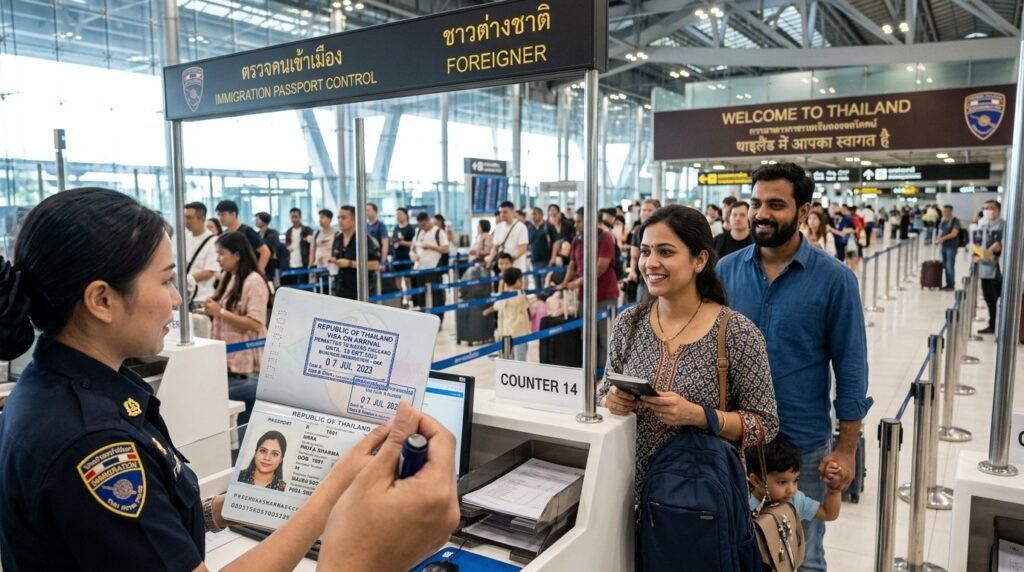
The practical takeaway
Do Indians need a visa for Thailand? As of 2026, the answer is a resounding no for short trips! When planning your next tropical getaway, the most important thing to know about a Thailand visa for Indians is that Indian passport holders…
Do Indians need a visa for Thailand? As of 2026, the answer is a resounding no for short trips! When planning your next tropical getaway, the most important thing to know about a Thailand visa for Indians is that Indian passport holders currently enjoy visa-free entry for tourism. This policy allows Indians to stay in Thailand without applying for a visa beforehand or waiting in the tedious visa on arrival queue. Whether you are exploring the bustling streets of Bangkok or the serene beaches of Phuket, entry is incredibly straightforward. However, you must always verify the current policy with the Royal Thai Embassy or official Thai immigration sources before travelling, as entry rules are subject to rapid change.
Some links in this guide are affiliate links. FlyFono may earn a commission if you book through them, at no extra cost to you. Recommendations are based on practical relevance, not commission.
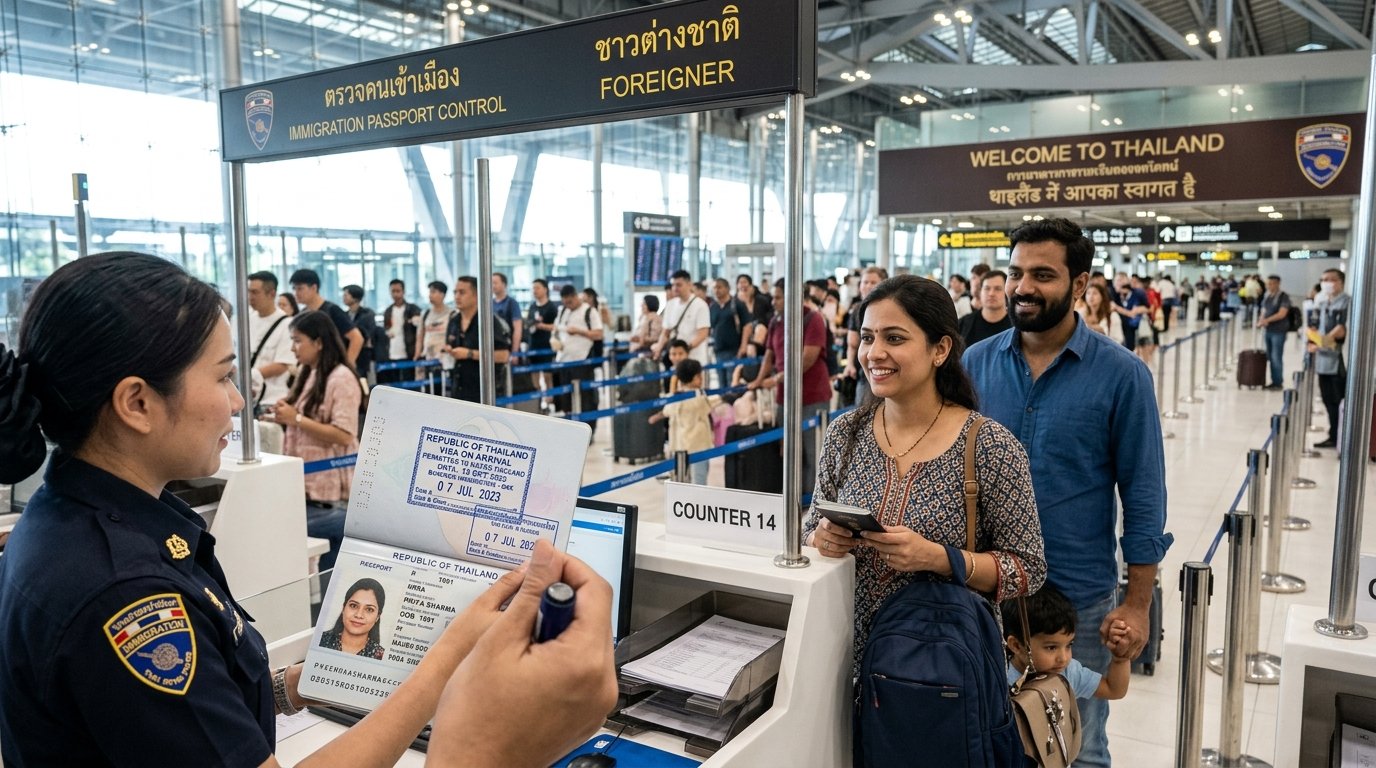
Quick Summary: Thailand Visa for Indians Entry Requirements
Here is a quick overview of the current Thailand entry requirements for Indian passport holders in 2026. This summarizes everything you need to know at a glance before diving into the specifics of your travel plans.
| Entry Type | Duration | Cost | Required Documents |
|---|---|---|---|
| Visa-Free (Tourism) | Up to 60 days | Free | Passport (6 months validity), return flight ticket, hotel booking, proof of funds |
| Visa on Arrival | Up to 15 days (if applicable) | 2,000 THB | Passport, photo, return ticket, hotel booking, funds |
| e-Visa (Long Stay/Work) | Varies (up to 90 days+) | Varies | Extensive documentation depending on visa category |
For more details on visa differences globally and how they compare to Thailand’s policies, check our comprehensive guide on visa-free vs visa on arrival vs eVisa.
Current Thailand Visa Policy for Indian Passport Holders
As of 2026, the Thailand visa policy for Indians is exceptionally favourable. Following the temporary visa exemption scheme introduced in late 2023 and generously extended through 2024 and beyond, Thailand has practically cemented visa-free entry for Indian nationals. This means that if you are travelling purely for tourism, you do not need to apply for a Thailand visa before your trip. The days of complicated paperwork and embassy visits for short holidays are behind us.
This visa exemption is strategically designed to boost tourism and makes planning spontaneous trips significantly easier. Whether you are wondering is Thailand safe for solo travellers, planning a romantic honeymoon, or organizing a massive family holiday, the barrier to entry is minimal. You can simply land in Thailand, proceed directly to the regular immigration counters, and receive an entry stamp allowing you to stay for up to 60 days. To ensure everything goes smoothly, always carry physical printouts of your return flight and hotel bookings, as immigration officers retain the right to request them randomly.
It is important to understand that this visa-free entry is specifically for tourism. If you are travelling to Thailand for business meetings, employment, long-term education, or medical treatment that exceeds the 60-day limit, you will still need to apply for the appropriate visa category. However, for the vast majority of Indian travellers seeking sun, sand, and culture, the visa-free policy is a massive relief.
This policy has significantly altered the travel landscape for Indians in Southeast Asia, making Thailand the absolute top choice for quick getaways and extended vacations alike. The simplicity of packing a bag and hopping on a flight without visa anxiety cannot be overstated.
What Changed: From Visa on Arrival to Visa-Free
For many years, Indian travellers relied heavily on the traditional Thailand visa on arrival for Indians. While convenient compared to applying at an embassy in advance, it often involved waiting in long, slow-moving queues at Suvarnabhumi Airport, especially during peak seasons like Diwali or the New Year. Furthermore, it required paying a fee of 2,000 THB per person, which added a significant extra cost for families travelling together.
The monumental shift to visa-free entry has transformed the arrival experience entirely. By eliminating the visa on arrival process for short tourism trips, Thai immigration has drastically reduced bottlenecks and made the country much more accessible. Travellers can now save both time and money, redirecting those funds towards experiencing more of what Thailand has to offer.
The visa-free scheme was initially rolled out as a temporary measure to stimulate the economy post-pandemic. However, it proved so spectacularly successful in drawing record numbers of Indian tourists that it has been maintained as the standard policy into 2026. This extended duration allows tourists more time to explore diverse regions beyond just the standard tourist trail.
If you are currently debating between Bangkok vs Chiang Mai vs Phuket for your next trip, you now have the time and budget freedom to easily visit all three without worrying about visa processing times or additional entry fees. The flexibility offered by this policy is truly unmatched in the region.
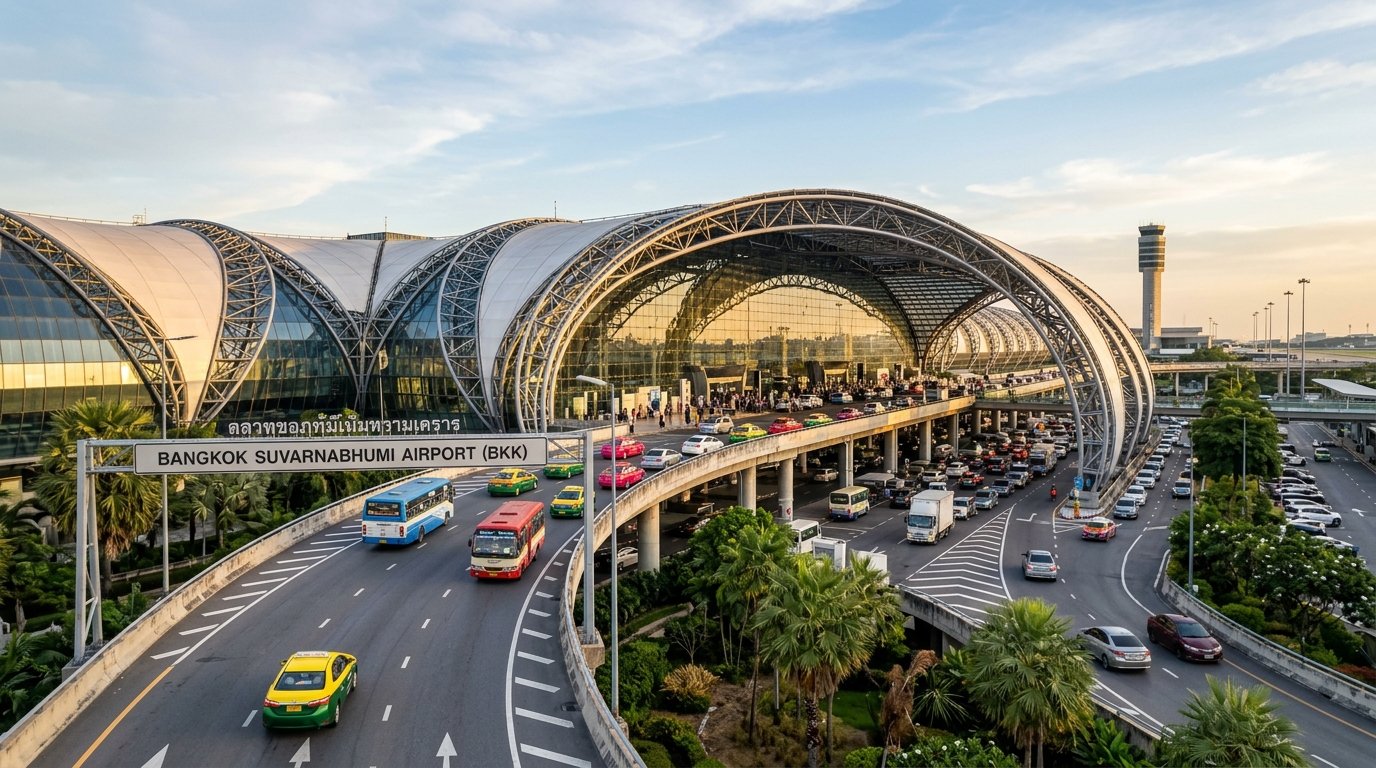
Documents Required at Immigration
Even though you enjoy the privilege of visa-free entry, entering Thailand is not an absolute free-for-all. Thai immigration officers strictly enforce specific entry requirements to ensure that visitors are genuine tourists and intend to comply with local laws. When you arrive at passport control, you must be prepared to present the following documents:
- Valid Passport: Your Indian passport must have at least six months of validity remaining from your exact date of entry into Thailand. It must also have at least two blank pages for entry and exit stamps. Do not travel with a damaged passport.
- Return or Onward Flight Ticket: You must show definitive proof that you intend to leave Thailand within the 60-day visa-free period. A confirmed return ticket to India or an onward ticket to a third country is mandatory. Without this, airlines may deny you boarding in India.
- Proof of Accommodation: Confirmed hotel bookings for at least the first few nights of your stay are required. The booking should ideally show the names of all travellers. If you are staying with a friend or relative who resides in Thailand, you may need a formal invitation letter, a copy of their passport or Thai ID, and proof of their address.
- Proof of Funds: Officially, you are required to carry sufficient funds for your stay. The stated requirement is 10,000 THB per person or 20,000 THB per family (or the equivalent amount in foreign currency, such as USD or INR). While immigration officers do not check this for every single passenger, having the cash ready prevents denial of entry if you are randomly selected for a check. Credit cards alone may not be accepted as proof.
Having all these documents printed and neatly organized in a folder will significantly speed up your immigration process. To Compare flights and hotels for your Thailand trip, use trusted platforms to ensure your bookings are confirmed and easily accessible upon arrival. It is always better to be over-prepared than to face delays or rejection at the border.
How Long Can Indians Stay in Thailand?
Under the current, highly beneficial visa-free arrangement in 2026, Indian passport holders can stay in Thailand for up to 60 days for tourism purposes per entry. This is a massive and welcome increase from the previous 30-day allowance that was standard in earlier years.
This generous 60-day duration gives you ample opportunity to embrace “slow travel.” Instead of rushing from one city to another, you can spend weeks deeply experiencing the culture. It gives you the flexibility to enjoy the best time to visit Thailand, exploring the misty northern mountains of Chiang Rai, relaxing in the central plains, and island-hopping across the southern archipelagos without ever feeling rushed. You can truly immerse yourself in the local way of life, take cooking classes, complete diving certifications, and explore off-the-beaten-path destinations.
Can Indians Extend Their Stay in Thailand?
Yes, absolutely. If 60 days is simply not enough time to soak in all the beauty Thailand has to offer, you can extend your stay legally. Extensions are typically granted for an additional 30 days, bringing your total possible continuous stay to 90 days.
To do this, you must visit a Thai Immigration Office before your current 60-day entry stamp expires. Immigration offices are located in all major tourist hubs including Bangkok, Chiang Mai, Phuket, Pattaya, and Koh Samui. You will need to fill out a specific application form (usually TM.7), provide a recent passport-sized photograph, photocopies of your passport details and current entry stamp, and pay an extension fee (which is usually 1,900 THB, though prices are subject to change).
It is critically important not to overstay your permitted time. Overstaying incurs a strict fine of 500 THB per day (up to a maximum of 20,000 THB) and can lead to severe consequences, including detention, deportation, and future bans on entering Thailand. Always handle your extension well in advance of your stamp’s expiry date.
Thailand Visa on Arrival — Still Applicable for Some?
With the fantastic visa-free policy firmly in place for tourists, the traditional Thailand visa on arrival for Indians is largely obsolete for standard holidaymakers. For the vast majority of Indian citizens visiting for less than 60 days, you simply do not need it.
However, the visa on arrival infrastructure still exists at Thai airports for certain other nationalities and theoretically might apply if specific visa-free conditions are abruptly suspended (though this is not the case in 2026). If you ever find yourself in a highly unusual situation requiring a visa on arrival instead of visa-free entry, the fee remains 2,000 THB (payable only in Thai Baht cash), and you must use the designated VOA lanes before proceeding to passport control. You would also need a passport photo and the specific VOA application form.
Before finalizing your itinerary, we always recommend you double-check with the Royal Thai Embassy to confirm that visa-free entry still applies to your specific dates of travel, just for peace of mind.
Thailand e-Visa for Longer Stays or Work
If you plan to stay significantly longer than the permitted visa-free and extension periods (i.e., beyond 90 days), or if you are travelling for purposes other than tourism—such as business, formal education, or retirement—you cannot use the visa-free entry. Instead, you will need to apply for a Thailand e-visa for Indians.
The e-Visa system is a modern, streamlined process that allows you to apply online through the official Thai e-Visa portal prior to your departure from India. You no longer need to physically visit the embassy in most cases.
Common e-Visa categories include:
- Tourist Visa (TR): For meticulously planned stays that might require multiple entries over a longer period.
- Non-Immigrant Visas: These are specialized visas. They include the Business Visa (B) for working or attending meetings, the Education Visa (ED) for studying at recognized institutions, and Retirement Visas (O-A/O-X) for older expats looking to settle down.
The e-Visa process requires creating an account, filling out extensive details, uploading digital copies of your supporting documents (which vary heavily depending on the visa type), and paying the non-refundable visa fee securely online. Processing times can vary from a few days to several weeks depending on the volume of applications, so it is highly recommended to apply at least 3-4 weeks in advance of your intended travel date.

Arriving at Suvarnabhumi vs Don Mueang: What to Expect at Immigration
Most Indian travellers will arrive in Bangkok, touching down at either Suvarnabhumi Airport (BKK) or Don Mueang International Airport (DMK). Understanding the difference can help you prepare for your arrival experience.
Suvarnabhumi is the massive primary hub for full-service international airlines like Thai Airways, Air India, and Vistara. The immigration halls here are vast and can handle thousands of passengers simultaneously. With visa-free entry, you can confidently bypass the visa on arrival section entirely and head straight to the regular foreign passport control lines. Wait times can range from a breezy 15 minutes during off-peak hours to over an hour during peak arrival banks. To make your arrival smoother and to start your holiday right away, you might want to Compare Bangkok activities and airport transfers in advance.
Don Mueang, on the other hand, is the older, slightly smaller airport but serves as a massive hub for many low-cost carriers from India, such as Thai AirAsia and IndiGo. While smaller, immigration queues here can still be quite substantial when multiple fully-loaded low-cost flights land simultaneously. Regardless of which airport you fly into, ensure your physical documents are organized and ready to hand to the officer. For seamless, air-conditioned onward travel from either airport directly to your hotel, Check private airport transfer options in Bangkok.
Common Mistakes Indian Travellers Make at Thai Immigration
Even with visa-free entry, Indian travellers occasionally face issues at Thai immigration. To ensure a completely hassle-free entry, be sure to avoid these common pitfalls:
- Not carrying enough physical cash: While credit and debit cards are widely accepted across Thailand, immigration officers specifically want to see physical currency (THB, USD, or INR equivalent) to prove you can support yourself immediately upon entry without relying on working illegally. Do not rely solely on showing a bank balance on your phone.
- No onward ticket: Attempting to enter Thailand on a one-way ticket is a major red flag. It often leads to being denied boarding by your airline in India, or worse, denied entry by Thai immigration. Always have a return ticket.
- Invalid or fake hotel bookings: Ensure your hotel booking is genuine, clearly shows your name, and covers at least the initial part of your trip. Immigration occasionally calls hotels to verify bookings.
- Poor condition of passport: Damaged, torn, or water-damaged passports, or those with fewer than two blank pages, can and often do cause severe issues at border control.
- Not securing connectivity upon arrival: Having internet access immediately upon arrival helps with navigating the airport, contacting your transfer, and showing digital documents if asked. Be sure to Check Thailand eSIM options for Indian travellers before you fly. You can also read our detailed guide on the best eSIM for Thailand to stay connected effortlessly without dealing with physical SIM card stalls at the airport.
Travelling from India to Thailand: Which Airlines Fly Direct?
The flight connectivity between India and Thailand is arguably some of the best in Asia. Direct flights operate daily from major Indian metropolitan cities like New Delhi, Mumbai, Bengaluru, Chennai, Hyderabad, and Kolkata straight to Bangkok, and increasingly direct to Phuket as well.
A variety of airlines cater to different budgets, offering direct routes including:
- Thai Airways (Full service, flying mostly into BKK)
- IndiGo (Low cost, flying extensively to both BKK and Phuket)
- Air India (Full service, flying into BKK)
- Vistara (Full service, flying into BKK)
- Thai AirAsia (Low cost, flying primarily into DMK)
With such affordable and frequent flights combined with a straightforward entry process, it has never been easier to explore different aspects of Thai culture. This includes the rapidly growing appeal of northern regions, making places like Chiang Mai for Indian travellers a top trending topic. And if you ever find yourself missing home cuisine during a long stay, rest assured that finding incredibly authentic Indian food in Thailand is remarkably easy, especially in cosmopolitan areas like Bangkok, Pattaya, and Phuket.
Remember, this generous visa-free entry is valid for up to 60 days, making Thailand an unbeatable and hassle-free destination for Indian tourists throughout 2026.
FAQs
Do Indians need a visa for Thailand?
As of 2026, Indian passport holders do not need a visa for tourism trips lasting up to 60 days. They are graciously granted visa-free entry upon arrival at any international airport or land border in Thailand. However, you must always verify current policies with the Royal Thai Embassy before travelling, as exemptions can be modified.
How many days can Indians stay in Thailand without a visa?
Under the current visa-free policy, Indian tourists can stay in Thailand for up to 60 days per entry without applying for a visa beforehand. If needed, this 60-day period can typically be extended once for an additional 30 days by visiting a local Thai immigration office and paying the required fee.
What documents do Indian tourists need for Thailand?
To enter Thailand visa-free, Indian tourists absolutely need a passport valid for at least 6 months, a confirmed return or onward flight ticket departing within 60 days, proof of accommodation such as hotel bookings for the initial days, and proof of sufficient funds (officially 10,000 THB per person or 20,000 THB per family in cash).
Can Indians get a Thailand visa on arrival?
While the physical visa on arrival scheme technically still exists at airports, it has been largely superseded by the superior visa-free policy for short-term tourism. For standard holidays up to 60 days, Indian citizens simply use the visa-free entry lines, completely bypassing the visa on arrival application process and saving the 2,000 THB fee.
Conclusion
The official implementation and continuation of visa-free entry has made the complicated process of obtaining a Thailand visa for Indians effectively a thing of the past for standard holidays. By allowing Indian citizens to enter without a visa and stay for a generous period of up to 60 days, Thailand has firmly solidified its position as one of the most accessible, affordable, and attractive destinations for Indian tourists in 2026. Whether you are seeking deep cultural immersion in the mountainous north, thrilling urban adventures in the neon-lit streets of Bangkok, or pure relaxation on the pristine southern islands, the journey from India to Thailand has never been smoother. Remember to prepare your essential documents carefully, pack your bags, and get ready to enjoy everything the vibrant Land of Smiles has to offer. As always, ensure you check the latest updates from official Thai immigration channels right before you book to guarantee a seamless and stress-free travel experience.
Continue planning
Your most useful next steps
Move from reading to one clear travel decision.