
The practical takeaway
The best time to visit Japan is generally during spring (March to May) and autumn (September to November), when you will enjoy mild, pleasant weather and spectacular seasonal transformations. For first-time visitors looking to experience the country’s most iconic sights without extremes…
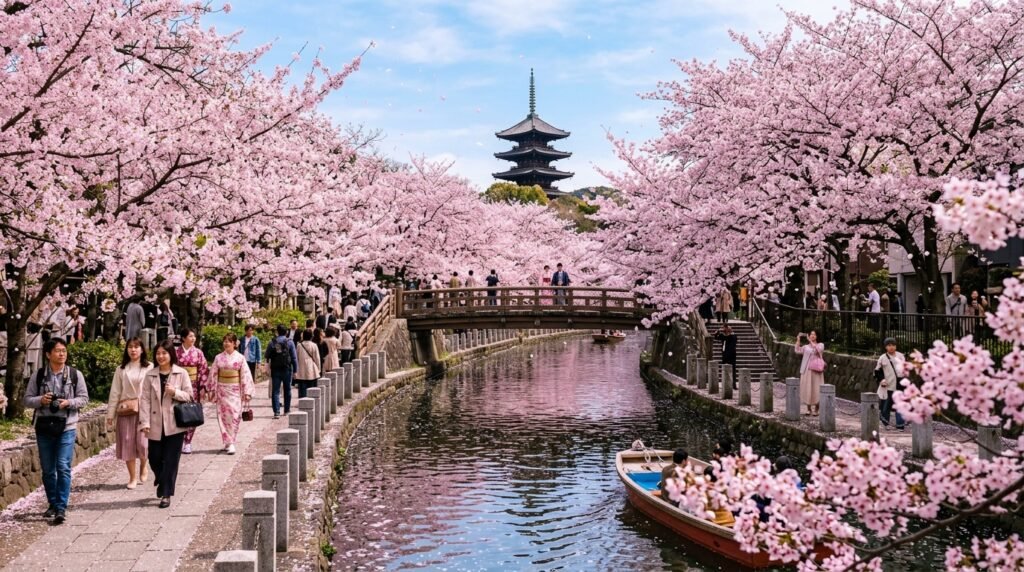
The best time to visit Japan is generally during spring (March to May) and autumn (September to November), when you will enjoy mild, pleasant weather and spectacular seasonal transformations. For first-time visitors looking to experience the country’s most iconic sights without extremes in temperature, late March and early April are famous for the cherry blossoms (sakura), while November offers striking autumn foliage (koyo) framed by crisp blue skies. However, these popular seasons also bring peak crowds and higher accommodation prices, making careful planning absolutely essential.
Deciding exactly when to go ultimately depends on your priorities—whether that is budget-friendly travel, participating in traditional festivals, or seeking out the most picturesque landscapes. Summer (June to August) brings heat, humidity and a host of lively street festivals, while winter (December to February) rewards intrepid travellers with pristine snowy landscapes, brilliant illuminations and far fewer tourists at major landmarks. This comprehensive guide breaks down what to expect during every season to help you plan the perfect journey.
Some links in this guide are affiliate links. FlyFono may earn a commission if you book through them, at no extra cost to you. Recommendations are based on practical relevance, not commission.
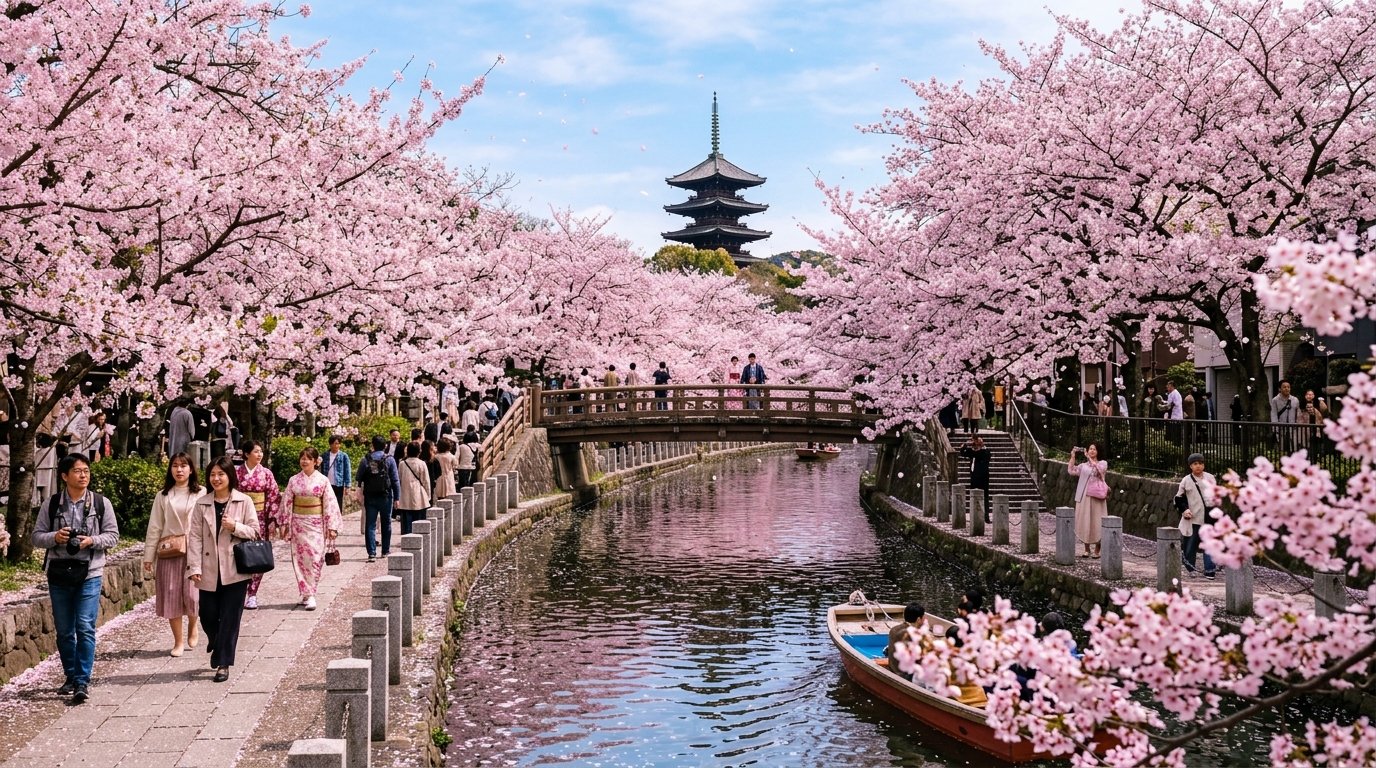
Table of Contents
- Quick Season Comparison
- Spring — March to May: Cherry Blossom Season
- Summer — June to August: Festivals, Heat, Typhoons
- Autumn — September to November: Foliage Season
- Winter — December to February: Snow, Fewer Crowds, Illuminations
- When to Avoid Japan: Peak Domestic Holidays
- Best Time to Visit Tokyo Specifically
- Best Time to Visit Kyoto Specifically
- Best Time to Visit Osaka Specifically
- Best Time for Budget Travellers
- Best Time for First-Time Visitors
- Booking Lead Times: Flights and Hotels
- Month-by-Month Summary Table
- Frequently Asked Questions
Quick Season Comparison
| Season | Months | Highlights | Crowds | Cost |
|---|---|---|---|---|
| Spring | Mar – May | Cherry blossoms, pleasant weather, strawberries | Very High | Peak |
| Summer | Jun – Aug | Festivals (matsuri), fireworks, Mount Fuji climbing | Moderate to High | Shoulder |
| Autumn | Sep – Nov | Colourful foliage, mild climate, autumn harvest foods | High | Peak |
| Winter | Dec – Feb | Snow sports, onsen experiences, winter illuminations | Low (except NYE) | Off-Peak |
Spring — March to May: Cherry Blossom Season
Spring is undoubtedly the most celebrated season in the country, often considered the best time to visit Japan by both international tourists and domestic travellers. As the winter frost thaws, the landscape comes alive with delicate pink and white cherry blossoms. The sakura front gradually moves northward from Kyushu in late March to Hokkaido in early May. Exact dates vary significantly by latitude and from year to year depending on weather patterns, so keeping an eye on official forecasts from the Japan National Tourism Organization is crucial for timing your trip correctly. If you’re focusing on the central route, our Japan cherry blossom planning guide provides essential tips for securing accommodation during this competitive window.
Aside from the breathtaking floral displays, spring weather is incredibly mild and comfortable, making it ideal for walking around temples, gardens, and city streets. You can expect daytime temperatures to range from a crisp 10°C to a pleasant 20°C in the major cities. Because it is the peak travel season, compare Japan accommodation and flights many months in advance. Parks become lively hubs for hanami (flower viewing) parties, where locals gather under the blooming trees with picnic mats and bento boxes. The atmosphere is joyous, but you will share the experience with massive crowds.
Summer — June to August: Festivals, Heat, Typhoons
Summer in Japan is characterised by intense heat, high humidity, and a vibrant cultural calendar. The season kicks off with the tsuyu (rainy season) in June, which typically lasts into mid-July. Once the rain clears, the temperature soars, frequently exceeding 30°C in Tokyo, Kyoto, and Osaka. If you struggle with humidity, you might prefer to head north to Hokkaido or the Japanese Alps, where the climate remains refreshingly cool.
Despite the challenging weather, summer is an exhilarating time to visit if you want to experience traditional Japanese culture at its most energetic. This is the season of matsuri (traditional festivals) and hanabi (fireworks displays). Major events like Kyoto’s Gion Matsuri and Osaka’s Tenjin Matsuri draw millions of spectators. It is also the only time of year when the trails up Mount Fuji are officially open to hikers. If your trip involves hopping between multiple regions to catch various festivals, checking whether the Japan Rail Pass vs individual tickets works better for your itinerary is a smart move.
Autumn — September to November: Foliage Season
Many seasoned travellers argue that autumn is genuinely the best time to visit Japan, rivalling spring in beauty but often offering slightly more predictable weather. September can still be quite warm and is technically the peak of the typhoon season, which can cause temporary transport disruptions. However, by October and November, the weather settles into a glorious pattern of clear blue skies, crisp air, and comfortable temperatures.
The main attraction is the koyo (autumn foliage) season. Unlike the fleeting cherry blossoms, the autumn colours linger for a longer period. Vibrant red maples and golden ginkgo trees transform the landscapes of Kyoto, Nikko, and the Japanese Alps into a photographer’s dream. Accommodation prices remain high, and crowds at famous viewing spots can be dense, but the comfortable touring conditions make it worthwhile. Before travelling across different regions for leaf-peeping, it’s wise to sort out your connectivity; check out the best eSIM for Japan so you can navigate seamlessly.
Winter — December to February: Snow, Fewer Crowds, Illuminations
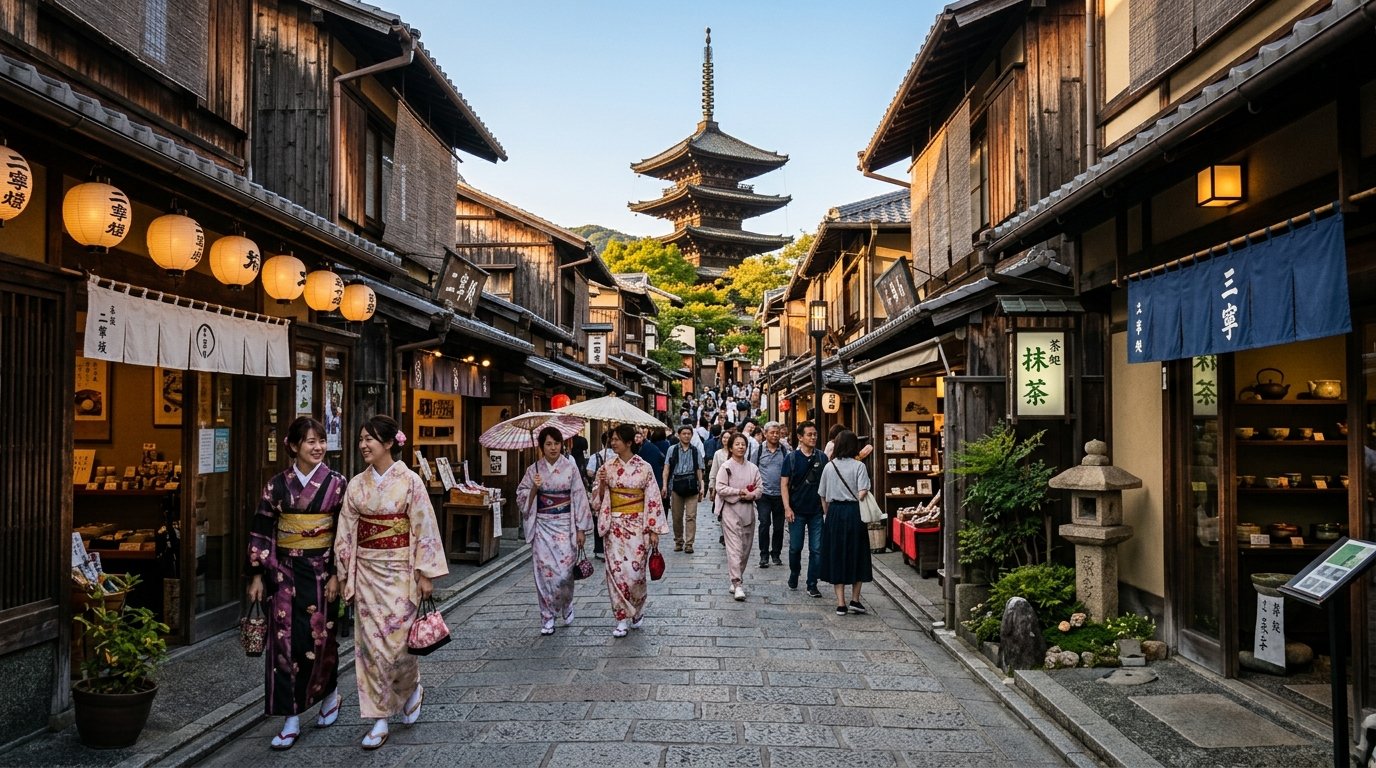
Winter is Japan’s best-kept secret for travellers who don’t mind bundling up. The weather is cold and crisp, but outside the northern and mountainous regions, skies are generally clear and sunny. This is the off-peak tourist season for most major cities, meaning you can explore iconic sites like Kyoto’s Golden Pavilion or Tokyo’s Meiji Shrine with a fraction of the usual crowds, making it a wonderful time for a 7-day Japan itinerary if you prefer peaceful sightseeing.
Winter brings its own unique magic. The country is famous for its elaborate winter illuminations, where entire city districts are draped in millions of LED lights. It is also the premier season for soaking in a rotenburo (outdoor hot spring bath) while surrounded by snow. For winter sports enthusiasts, the powdery snow in Hokkaido and Nagano is world-class. If you are travelling on a tight budget, this is the time to compare budget stays in Tokyo, Kyoto and Osaka, as room rates drop significantly compared to spring and autumn.
When to Avoid Japan: Peak Domestic Holidays
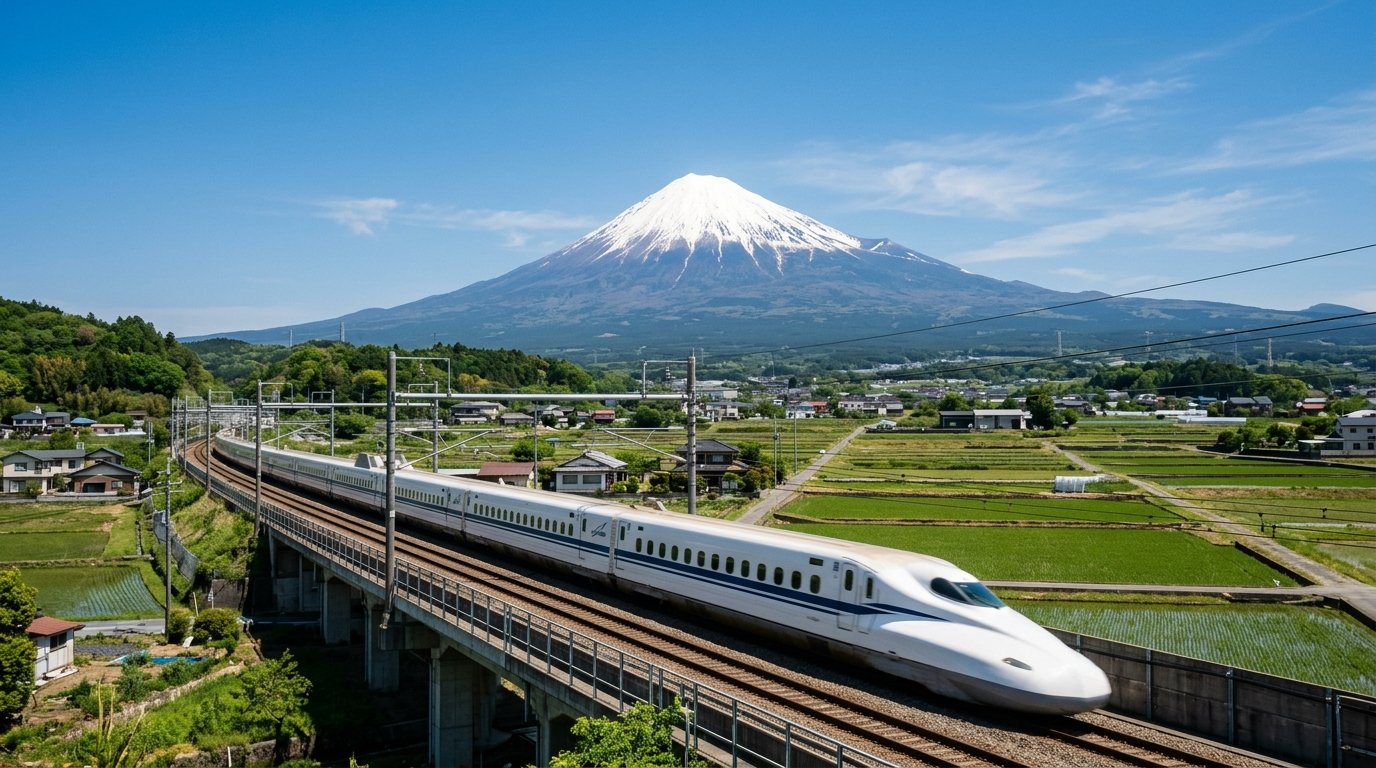
While determining the best time to visit Japan, it is equally important to know when not to go. There are several peak domestic travel periods when transport is fully booked months in advance, accommodation prices skyrocket, and crowds can be overwhelming:
- Golden Week (Late April to Early May): A cluster of national holidays that prompts massive domestic travel. Bullet trains and hotels are packed.
- Obon (Mid-August): A Buddhist custom honouring the spirits of ancestors. Many Japanese return to their hometowns, causing significant transport congestion.
- New Year (Late December to Early January): Many businesses, smaller restaurants, and museums close for several days. Shrines are incredibly crowded for hatsumode (the first shrine visit of the year).
- Peak Sakura Weekends: Weekends during full bloom in major cities can result in gridlock at popular parks.
Best Time to Visit Tokyo Specifically
Tokyo is a year-round destination with endless indoor attractions, but the most comfortable months are April, May, October, and November. During these shoulder-season months, you avoid the sweltering concrete-jungle heat of summer and the chilly winds of winter. If you are a fan of subculture and anime events, visiting around major conventions or using a trip planner tool to align with specific exhibitions can dictate your travel dates. The city’s transport system is robust enough to handle the rain in June, but typhoons in September occasionally cause train delays.
Best Time to Visit Kyoto Specifically
Kyoto is arguably the most seasonal city in Japan. Surrounded by mountains, it suffers from a phenomenon known as the “Kyoto basin effect”—making it exceptionally hot and humid in summer and bitingly cold in winter. Therefore, November is arguably the very best month for Kyoto, offering stunning autumn foliage against ancient temples. Late March to early April is equally spectacular but significantly more crowded. If deciding between the two major Kansai cities, you might want to read our Kyoto vs Osaka guide to see which base suits your travel style better.
Best Time to Visit Osaka Specifically
Osaka shares a similar climate to Kyoto but with a slightly more coastal breeze. It is famous for its street food and nightlife, which are enjoyable year-round. However, October and November are fantastic for strolling through Dotonbori without breaking a sweat. If you plan to visit Universal Studios Japan or other outdoor attractions, consider using platforms to compare Japan transport passes and seasonal activities, booking well in advance for the spring and autumn peak periods.
Best Time for Budget Travellers
If you are travelling on a strict budget, avoid the cherry blossom season and autumn foliage peaks at all costs. Instead, aim for the deep winter months of mid-January to late February (excluding the Chinese New Year period). During this time, flight prices drop, and hotels often offer steep off-peak discounts. The rainy season in June also sees a dip in prices, making it a viable option if you don’t mind carrying an umbrella. Staying connected doesn’t have to break the bank either; remember to check Japan eSIM options before you fly to avoid exorbitant roaming charges.
Best Time for First-Time Visitors
For a first-time visitor embarking on a classic 14-day Japan itinerary covering Tokyo, Kyoto, and Hiroshima, October is widely considered the ultimate sweet spot. You benefit from excellent weather, smaller crowds than the spring peak, and the beginning of the autumn colours in the mountainous regions. It provides a balanced, comfortable introduction to the country without the stress of navigating the extreme heat of summer or the frenetic crowds of the sakura season.
Booking Lead Times: Flights and Hotels
To secure the best rates and availability, your booking timeline should reflect the season you intend to travel. For spring and autumn, aim to book flights 6 to 8 months in advance, and secure your accommodation as soon as hotel booking windows open (typically 3 to 6 months prior). For summer and winter, a lead time of 3 to 4 months is usually sufficient, though popular ski resorts in winter require earlier reservations. Always consult resources like Visit Japan official for up-to-date travel alerts and major event schedules.
Month-by-Month Summary Table
| Month | Weather | Crowd Level | Key Events / Vibe |
|---|---|---|---|
| January | Cold, clear, snowy in north | Low | Hatsumode (New Year shrine visits), skiing |
| February | Very cold, dry | Low | Sapporo Snow Festival, plum blossoms |
| March | Warming up, mild | High | Start of cherry blossom season |
| April | Pleasant, spring showers | Very High | Peak cherry blossoms, Golden Week begins |
| May | Warm, sunny | Moderate | Golden Week ends, wisteria in bloom |
| June | Rainy season, humid | Low | Hydrangeas, lower prices |
| July | Hot, very humid | Moderate | Mt Fuji opens, summer matsuri begin |
| August | Peak heat and humidity | High | Obon holiday, massive fireworks festivals |
| September | Warm, typhoon risk | Moderate | Silver Week holidays, transitioning weather |
| October | Mild, clear skies | Moderate-High | Autumn foliage begins in north/mountains |
| November | Cool, crisp | High | Peak autumn foliage in Tokyo/Kyoto |
| December | Cold, clear | Low-Moderate | Winter illuminations, end-of-year parties |
Frequently Asked Questions
What is the absolute cheapest month to visit Japan?
Late January to February is generally the cheapest time to visit Japan. After the New Year holidays conclude, tourist numbers plummet, resulting in significantly lower prices for flights and accommodation.
Is the rainy season in Japan really that bad?
The rainy season (June to mid-July) doesn’t mean constant torrential downpours. It usually involves overcast skies, high humidity, and intermittent rain showers. While it lacks the picturesque blue skies of autumn, it is quieter and temples surrounded by rain-slicked moss can be incredibly atmospheric.
How many days in Japan is enough for a first trip?
A minimum of 10 to 14 days is recommended for a first-time visit. This allows enough time to explore Tokyo, take the bullet train to the Kansai region to see Kyoto and Osaka, and possibly include a day trip to Hiroshima or Nara without rushing.
Conclusion
Determining the best time to visit Japan ultimately comes down to what you wish to prioritise during your travels. If perfect weather and stunning natural beauty are non-negotiable, joining the crowds in spring or autumn is well worth the premium price tag. If cultural immersion through raucous festivals excites you, summer is unmatched, provided you can handle the heat. Conversely, if you prioritise budget, peaceful exploration, and unique winter landscapes, the colder months offer a completely different but equally enchanting perspective of this incredible country. Plan ahead, book early for peak periods, and whichever season you choose, Japan promises an unforgettable adventure.
Continue planning
Your most useful next steps
Move from reading to one clear travel decision.