
The practical takeaway
If you only have one week, a 7-day Japan itinerary requires focus, discipline and realistic pacing. You cannot see the entire country, but you can experience its most iconic contrasts. The classic "Golden Route" connecting Tokyo's futuristic sprawl, Kyoto's ancient temples and…
If you only have one week, a 7-day Japan itinerary requires focus, discipline and realistic pacing. You cannot see the entire country, but you can experience its most iconic contrasts. The classic “Golden Route” connecting Tokyo’s futuristic sprawl, Kyoto’s ancient temples and Osaka’s vibrant street food scene is the undisputed best choice for first-time visitors.
This guide skips the overly optimistic, minute-by-minute scheduling found elsewhere. Instead, we offer a practical blueprint for one week in Japan that accounts for travel time, station navigation, jet lag and the inevitable distractions of incredible food and culture. Before diving into the details, remember to secure the best eSIM for Japan so you have seamless Google Maps access from the moment you land. Note that all details are current as of August 2026.
Table of Contents
- 7-Day Japan Itinerary at a Glance
- Is Seven Days Enough for Japan?
- Day 1: Tokyo Arrival and Orientation
- Day 2: Western Tokyo — Shibuya, Harajuku, Shinjuku
- Day 3: Eastern Tokyo — Asakusa, Ueno, Akihabara
- Day 4: Tokyo to Kyoto by Shinkansen
- Day 5: Kyoto Highlights — Temples and Arashiyama
- Day 6: Kyoto to Osaka — Nishiki Market, Dotonbori
- Day 7: Osaka and Departure
- Tokyo–Kyoto Alternative for Travellers Skipping Osaka
- Osaka–Kyoto Alternative for Travellers Skipping Tokyo
- Why Hiroshima, Hakone and Day Trips Usually Do Not Fit
- Accommodation Strategy
- Rail Tickets Versus the JR Pass
- Realistic Budget Categories
- Seasonal Adjustments
- Common 7-Day Itinerary Mistakes
- Final Route Summary
- FAQs
- Conclusion
7-Day Japan Itinerary at a Glance
Here is how your Tokyo to Kyoto to Osaka journey breaks down day by day. This structure balances major sights with necessary travel time.
| Day | City | Highlights |
|---|---|---|
| Day 1 | Tokyo | Arrival, hotel check-in, local neighbourhood dinner |
| Day 2 | Tokyo | Shibuya Crossing, Meiji Shrine, Shinjuku nightlife |
| Day 3 | Tokyo | Senso-ji Temple, Ueno Park, Akihabara electronics |
| Day 4 | Kyoto | Shinkansen travel, Fushimi Inari Taisha at dusk |
| Day 5 | Kyoto | Arashiyama Bamboo Grove, Kinkaku-ji (Golden Pavilion) |
| Day 6 | Osaka | Nishiki Market (morning), transfer to Osaka, Dotonbori |
| Day 7 | Osaka | Osaka Castle, Kuromon Market, airport departure |
Some links in this guide are affiliate links. FlyFono may earn a commission if you book through them, at no extra cost to you. Recommendations are based on practical relevance, not commission.
Is Seven Days Enough for Japan?
A common question is whether a one week in Japan trip is actually worthwhile. The honest answer is yes, but only if you manage your expectations. Seven days in Japan is not enough to explore rural areas, visit distant islands, or leisurely wander without a plan. However, seven days is the perfect amount of time for a focused Japan trip for beginners. By sticking to the high-speed rail corridor between the capital and the Kansai region, you minimise transit hours and maximise cultural experiences. If you do have more time, we highly recommend upgrading to our 14-day Japan itinerary for a broader perspective.
Day 1: Tokyo Arrival and Orientation
Your Japan itinerary for beginners begins the moment you land at Narita (NRT) or Haneda (HND) airports. Customs and immigration usually take about an hour. From Narita, the Narita Express or Keisei Skyliner will get you into central Tokyo in roughly 45 to 60 minutes. From Haneda, the monorail is even faster.
Check into your accommodation. If you arrive before check-in time (usually 3:00 PM), ask the hotel to store your bags. Use this afternoon to orient yourself. Find a local convenience store (konbini) like 7-Eleven, FamilyMart, or Lawson, grab an onigiri (rice ball), and perhaps check out options to check Japan eSIM options if you haven’t sorted your connectivity yet. Have a relaxed dinner near your hotel and get some rest. Jet lag is real.
Day 2: Western Tokyo — Shibuya, Harajuku, Shinjuku
Wake up early and tackle the hyper-modern, bustling side of Tokyo. Start at Shibuya Station to witness the famous Shibuya Crossing. Go early to beat the massive crowds, or visit the Starbucks overlooking the scramble for a great photo vantage point.
Next, walk or take a short train ride to Harajuku. Walk down Takeshita Street for quirky fashion and massive crepes, then escape the noise by entering the forested grounds of Meiji Shrine. The contrast between neon-soaked youth culture and serene Shinto tradition perfectly encapsulates Tokyo.
As evening falls, head to Shinjuku. Explore the neon canyons, check out the free observation deck at the Tokyo Metropolitan Government Building, and wander through Omoide Yokocho (Memory Lane) for yakitori and beer. If you are debating city vibes for future trips, our Tokyo vs Seoul guide compares these Asian megacities extensively.
Day 3: Eastern Tokyo — Asakusa, Ueno, Akihabara
Shift your focus to the historical and traditional eastern side of the city. Begin at Asakusa to see Senso-ji, Tokyo’s oldest and most significant Buddhist temple. Walk through the Kaminarimon (Thunder Gate) and browse the Nakamise shopping street for traditional snacks and souvenirs.
From there, take a short hop to Ueno. Ueno Park is fantastic year-round, home to numerous museums and a zoo. Finally, end your day in Akihabara, the centre of Japan’s otaku (geek) culture. Even if you aren’t into anime or video games, the multi-story arcades and maid cafes are a fascinating cultural spectacle. Make sure you use a reliable platform to compare Japan transport passes and activities in advance to skip ticket queues at major attractions.
Day 4: Tokyo to Kyoto by Shinkansen
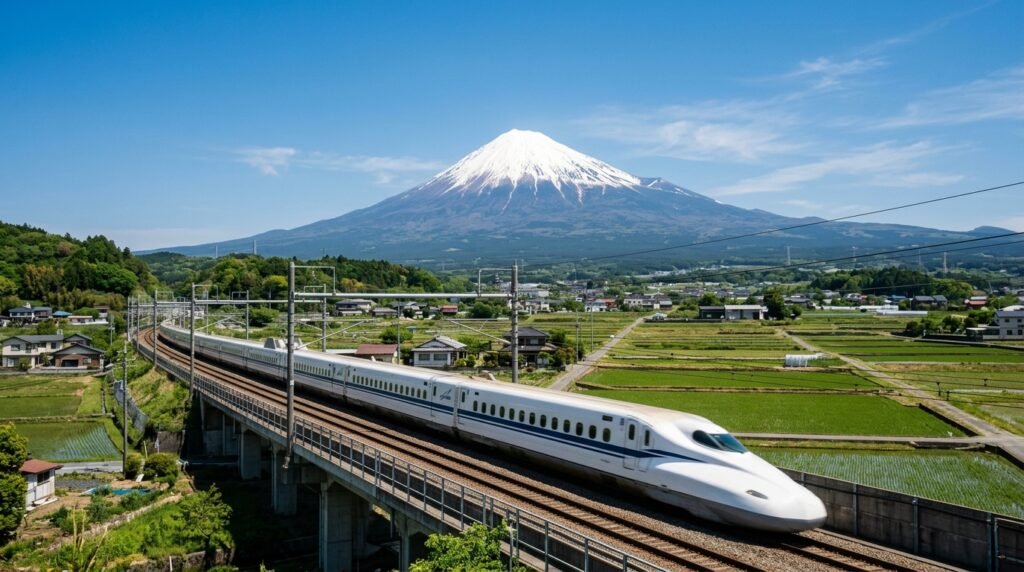
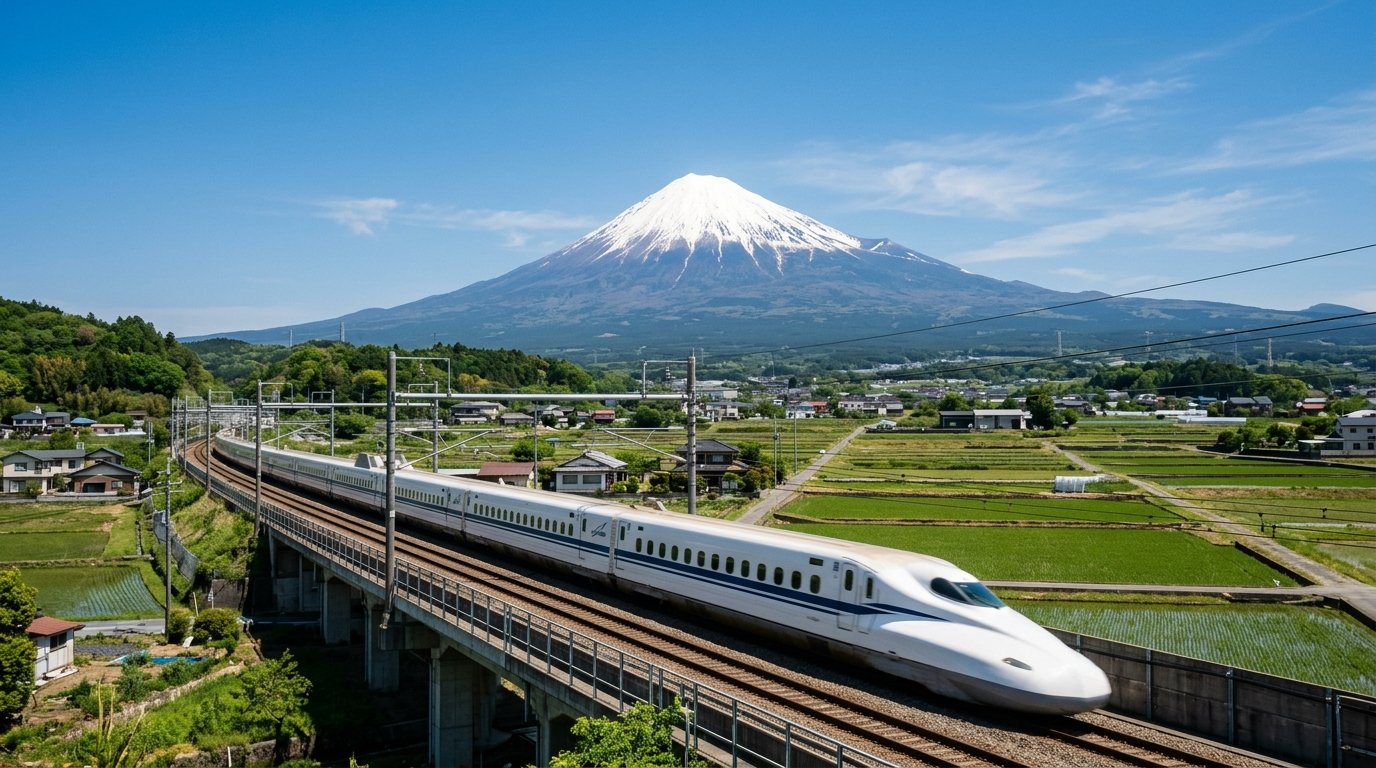
It’s time to ride the iconic Shinkansen (bullet train). The journey from Tokyo to Kyoto takes roughly two hours and fifteen minutes on the Nozomi train. Buy a bento box at Tokyo Station to eat on the train, and sit on the right side of the carriage for a chance to spot Mount Fuji if the weather is clear.
Arrive in Kyoto, drop your bags at your hotel, and head straight to southern Kyoto to visit Fushimi Inari Taisha. This shrine, famous for its thousands of vermilion torii gates winding up the mountain, is best visited in the late afternoon or early evening to avoid the worst of the daytime crowds.
Day 5: Kyoto Highlights — Temples and Arashiyama
Kyoto is the historical heart of your 7-day Japan itinerary. Start very early (around 7:30 AM) at the Arashiyama Bamboo Grove in western Kyoto. By 9:30 AM, it will be packed with tour groups. While in the area, visit the stunning Tenryu-ji Temple.
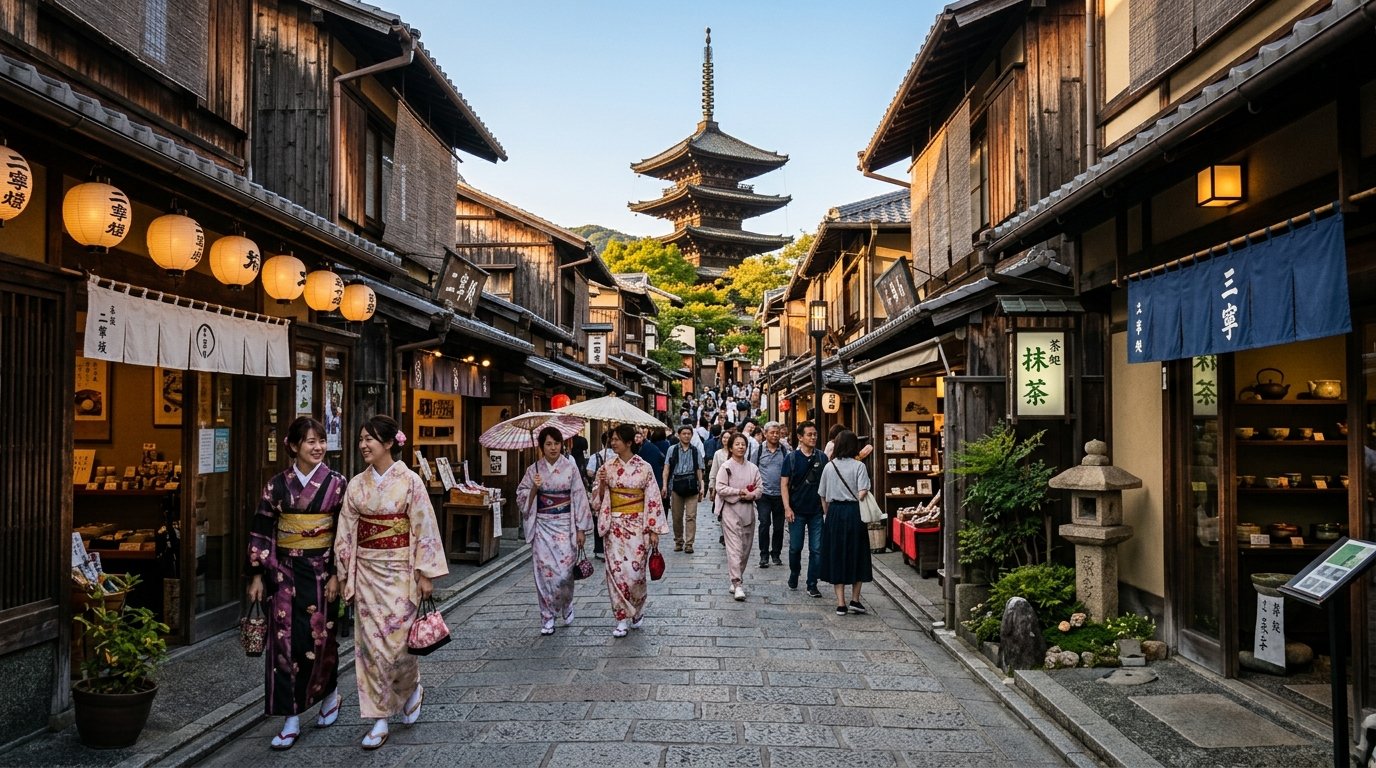
In the afternoon, cross the city to see Kinkaku-ji, the famous Golden Pavilion. It is dazzling but expect crowds. End your day exploring the Higashiyama district, specifically around Kiyomizu-dera. Walking the preserved historic streets (Ninenzaka and Sannenzaka) as the sun sets is magical.
Day 6: Kyoto to Osaka — Nishiki Market, Dotonbori
Spend your final morning in Kyoto grazing your way through Nishiki Market, known as “Kyoto’s Kitchen”. Here you can try everything from matcha sweets to fresh seafood skewers. Afterwards, take the quick 30-minute local train ride from Kyoto to Osaka.
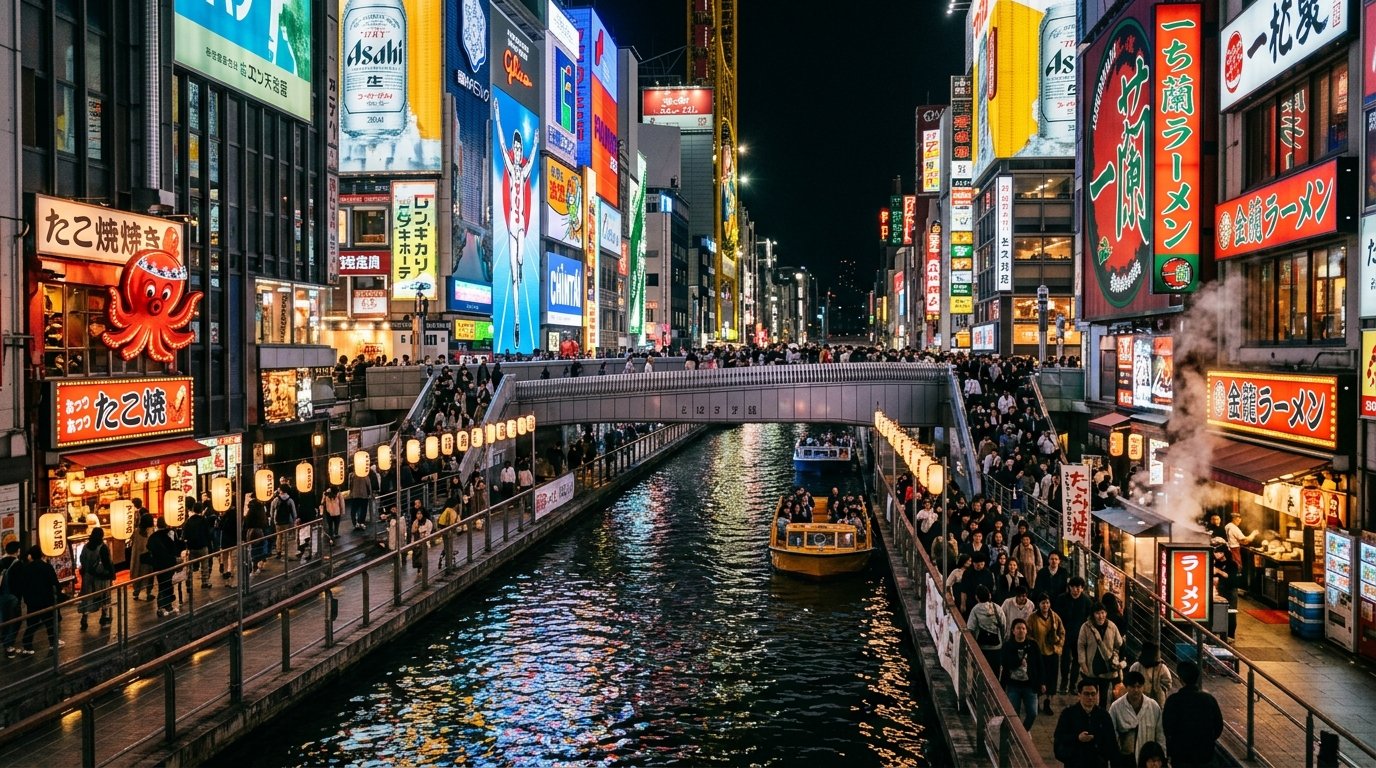
Osaka is known for its outgoing locals and incredible street food. Once checked into your Osaka accommodation, head straight for the Dotonbori canal area. This is where Osaka comes alive with towering neon signs, including the famous Glico Running Man. Eat takoyaki (octopus balls) and okonomiyaki (savoury pancakes) until you burst.
Day 7: Osaka and Departure
On your final day, visit Osaka Castle to learn about the city’s samurai history. If you have time before your flight, wander through Kuromon Ichiba Market or the retro Shinsekai district for one last bowl of ramen or some kushikatsu (deep-fried skewers).
Head to Kansai International Airport (KIX) for your flight home, concluding a whirlwind but deeply satisfying one week in Japan.
Tokyo–Kyoto Alternative for Travellers Skipping Osaka
If you prefer to move slower, drop Osaka entirely. Spend four days in Tokyo and three in Kyoto. This Tokyo and Kyoto in one week approach reduces hotel changes and gives you time for a deeper dive into Tokyo’s lesser-known neighbourhoods like Shimokitazawa or Nakameguro, and allows for a day trip from Kyoto to Nara to see the giant Buddha and bowing deer.
Osaka–Kyoto Alternative for Travellers Skipping Tokyo
Conversely, if you find flights into KIX, you can skip Tokyo entirely. Spend three days in Osaka, three in Kyoto, and one day visiting Nara or Kobe. This Kansai-only route is phenomenal for foodies and history buffs, and completely eliminates the need for expensive long-distance bullet train tickets.
Why Hiroshima, Hakone and Day Trips Usually Do Not Fit
In a 7-day Japan itinerary, ambition is your enemy. Trying to squeeze in Hiroshima or a ryokan stay in Hakone will leave you exhausted. Each major city transition consumes roughly half a day once you account for packing, hotel check-out, navigating massive stations, taking the train, and checking into a new hotel. Stick to the core cities.
Accommodation Strategy
To maximise time, book hotels close to major transit hubs (Shinjuku or Tokyo Station in Tokyo; Kyoto Station or Kawaramachi in Kyoto; Namba or Umeda in Osaka). You can also compare hostels in Tokyo, Kyoto and Osaka if you are on a tighter budget.
Crucially, use Japan’s brilliant luggage forwarding service (Takuhaibin/Takkyubin). Send your large suitcases from your Tokyo hotel directly to your Osaka hotel, and simply take a small overnight backpack to Kyoto. This makes riding crowded trains significantly less stressful.
Rail Tickets Versus the JR Pass — What Actually Makes Sense
With the massive price increase in late 2023, the national JR Pass is almost never worth it for a standard 7-day Tokyo–Kyoto–Osaka route. You are far better off buying individual point-to-point Shinkansen tickets. For a detailed cost breakdown, read our guide on Japan Rail Pass vs individual tickets. Local travel within cities is easily handled with a rechargeable IC card (Suica or Pasmo).
Realistic Budget Categories
Japan can accommodate various budgets. Check official JNTO or JR sources for current transit fares. Generally, expect the following daily costs (excluding flights):
- Budget: Stay in hostels, eat konbini meals and cheap ramen. (Roughly $60-$80 USD/day)
- Mid-Range: Business hotels (APA, Dormy Inn), casual dining, occasional taxi. (Roughly $150-$200 USD/day)
- Comfort: 4-star hotels, nice sushi dinners, guided tours. (Roughly $300+ USD/day)
To plan your exact finances, utilise our free trip budget calculator and trip planner. If you need accommodation options, you can compare Japan accommodation and transport online for the best deals.
Seasonal Adjustments
Your itinerary pacing should change based on the season:
- Spring (Cherry Blossoms): Spectacular but overwhelmingly crowded. Add 30% more time to all transit estimates.
- Summer: Extremely hot and humid. Plan indoor activities during midday.
- Autumn (Fall Foliage): Perfect weather, very busy in Kyoto. Book Kyoto hotels months in advance.
- Winter: Cold but dry and clear. Great for Mount Fuji views from the Shinkansen.
Common 7-Day Itinerary Mistakes
Avoid these typical first-timer errors:
- Trying to visit five different temples in Kyoto in one day (temple fatigue is real).
- Underestimating the size of train stations like Shinjuku and Tokyo Station.
- Not carrying enough cash (though card acceptance is improving, cash is still king for small vendors).
- Failing to plan ahead for peak season crowds.
Final Route Summary
| City | Nights | Primary Vibe |
|---|---|---|
| Tokyo | 3 Nights | Futuristic, endless neighborhoods, high-energy |
| Kyoto | 2 Nights | Traditional, spiritual, slower paced |
| Osaka | 1 Night | Street food, nightlife, friendly locals |
FAQs
Is 7 days in Japan enough?
Yes, 7 days is enough to see the highlights of Tokyo, Kyoto, and Osaka, provided you plan efficiently and do not try to add too many side trips.
Should I get a JR Pass for a 7-day trip?
Usually, no. If you are only travelling from Tokyo to Kyoto to Osaka, individual tickets are significantly cheaper than the 7-day JR Pass following recent price hikes.
How much money do I need for 7 days in Japan?
Excluding flights and accommodation, a comfortable mid-range budget is around $70 to $100 USD per day for food, local transport, and attractions.
Conclusion
A well-planned 7-day Japan itinerary offers an unforgettable introduction to a country where ancient traditions and cutting-edge modernity coexist seamlessly. By accepting the limits of a one-week timeframe and focusing on the Tokyo-Kyoto-Osaka corridor, you ensure your trip is spent experiencing the culture rather than exhausting yourself in transit. For further authoritative travel advice, consult the Japan National Tourism Organization or the Visit Japan official tourism portal.
Continue planning
Your most useful next steps
Move from reading to one clear travel decision.
Pingback: Where to Stay in Tokyo: Best Areas for First-Time Visitors - FlyFono