
The practical takeaway
Where to Stay in Seoul for First-Time Visitors If you are travelling to South Korea's capital for the first time, deciding where to stay in Seoul can feel overwhelming. The city is massive, divided by the Han River into distinct neighbourhoods, each…
Where to Stay in Seoul for First-Time Visitors
If you are travelling to South Korea’s capital for the first time, deciding where to stay in Seoul can feel overwhelming. The city is massive, divided by the Han River into distinct neighbourhoods, each with its own character and connectivity. For the vast majority of first-time visitors, the best area to stay in Seoul is Myeongdong. It provides unparalleled access to major tourist attractions, comprehensive public transport options, and an abundance of dining and shopping choices right at your doorstep.
However, Myeongdong is not the only viable option. Depending on your travel style—whether you are chasing late-night café culture, historical palaces, or high-end shopping—neighbourhoods like Hongdae, Insadong, and Gangnam might suit you better. In this comprehensive guide, updated for August 2026, we break down Seoul’s primary districts, evaluate their transport links, and help you select the ideal base for your itinerary.
Some links in this guide are affiliate links. FlyFono may earn a commission if you book through them, at no extra cost to you. Recommendations are based on practical relevance, not commission.
Seoul Neighbourhood Comparison Overview
| Neighbourhood | Best For | Vibe | Subway Access |
|---|---|---|---|
| Myeongdong | First-timers, shopping, convenience | Busy, tourist-centric, vibrant | Excellent (Line 4) |
| Hongdae | Youth culture, nightlife, cafés | Energetic, creative, late-night | Excellent (Line 2, AREX) |
| Insadong & Jongno | Culture, palaces, history | Traditional, quieter evenings, cultural | Good (Line 1, 3, 5) |
| Gangnam | Business, luxury, K-pop, medical tourism | Modern, upscale, sprawling | Good (Line 2, 9) |
| Itaewon | Expat community, international food | Diverse, lively nightlife, westernised | Moderate (Line 6) |
| Dongdaemun | Late-night shopping, wholesale | 24/7 hustle, architectural, commercial | Excellent (Line 2, 4, 5) |
Myeongdong: The Most Convenient Base for First-Timers
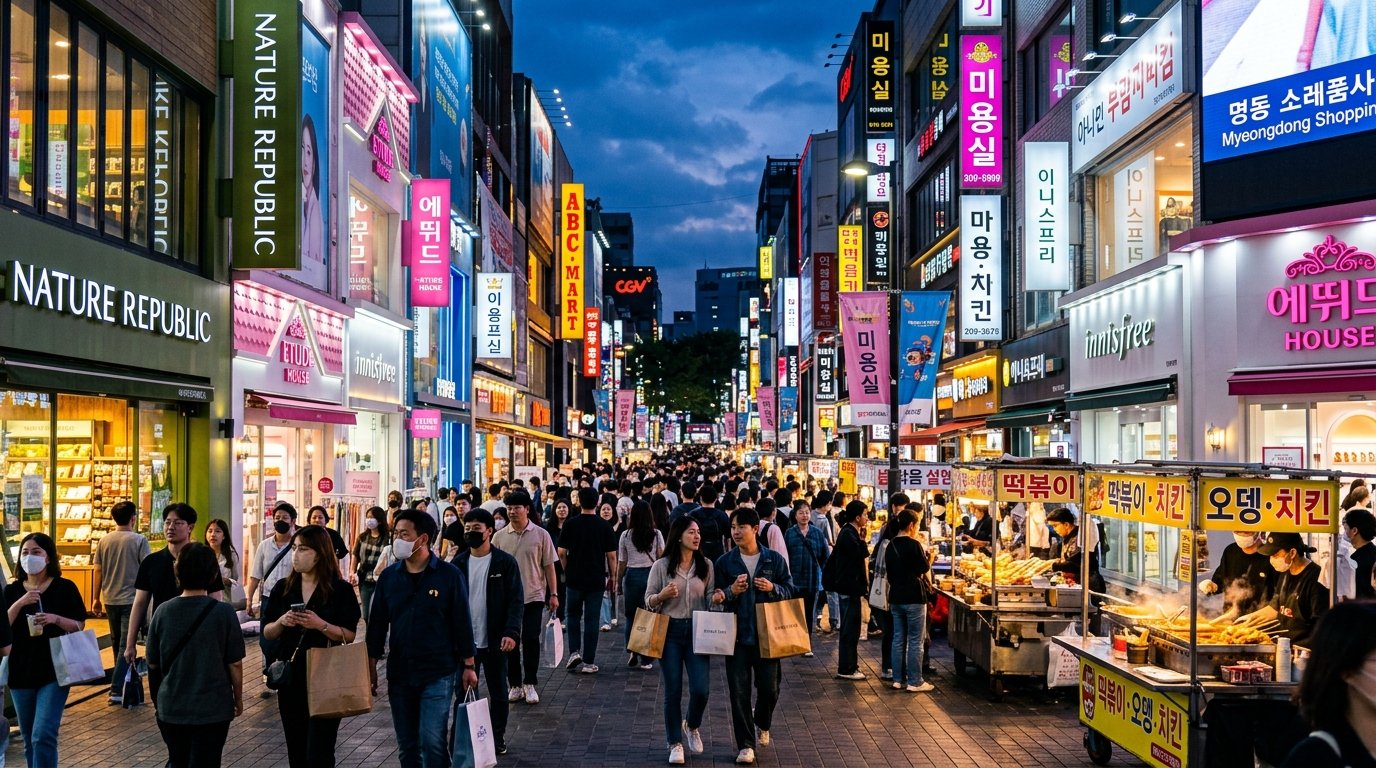
When asking where to stay in Seoul first time, Myeongdong is the universally accepted answer, and for good reason. Geographically, it sits in the heart of central Seoul (Jung-gu), bridging the gap between historical sights to the north and modern attractions elsewhere. Myeongdong is famous for its dense grid of skincare boutiques, department stores (like Lotte and Shinsegae), and a prolific night market.
The primary advantage of staying here is logistics. Myeongdong Station sits on Subway Line 4, which connects directly to Seoul Station and Dongdaemun. Furthermore, Euljiro 1-ga Station (Line 2) is often just a short walk away. This means you can navigate to almost any point in the city with zero or one transfer. You are also within walking distance of Namsan Tower (N Seoul Tower) and Namdaemun Market.
To view lodging options in Myeongdong, you can Compare Seoul accommodation by neighbourhood. Myeongdong caters well to mid-range budgets, offering a high concentration of clean, efficient three- and four-star business hotels. The downside? It is undeniably tourist-heavy. You will rarely hear Korean spoken on the main shopping streets, and authentic local dining requires stepping slightly away from the primary tourist strips into the surrounding alleys.
Hongdae: Nightlife, Cafés and Younger Travellers
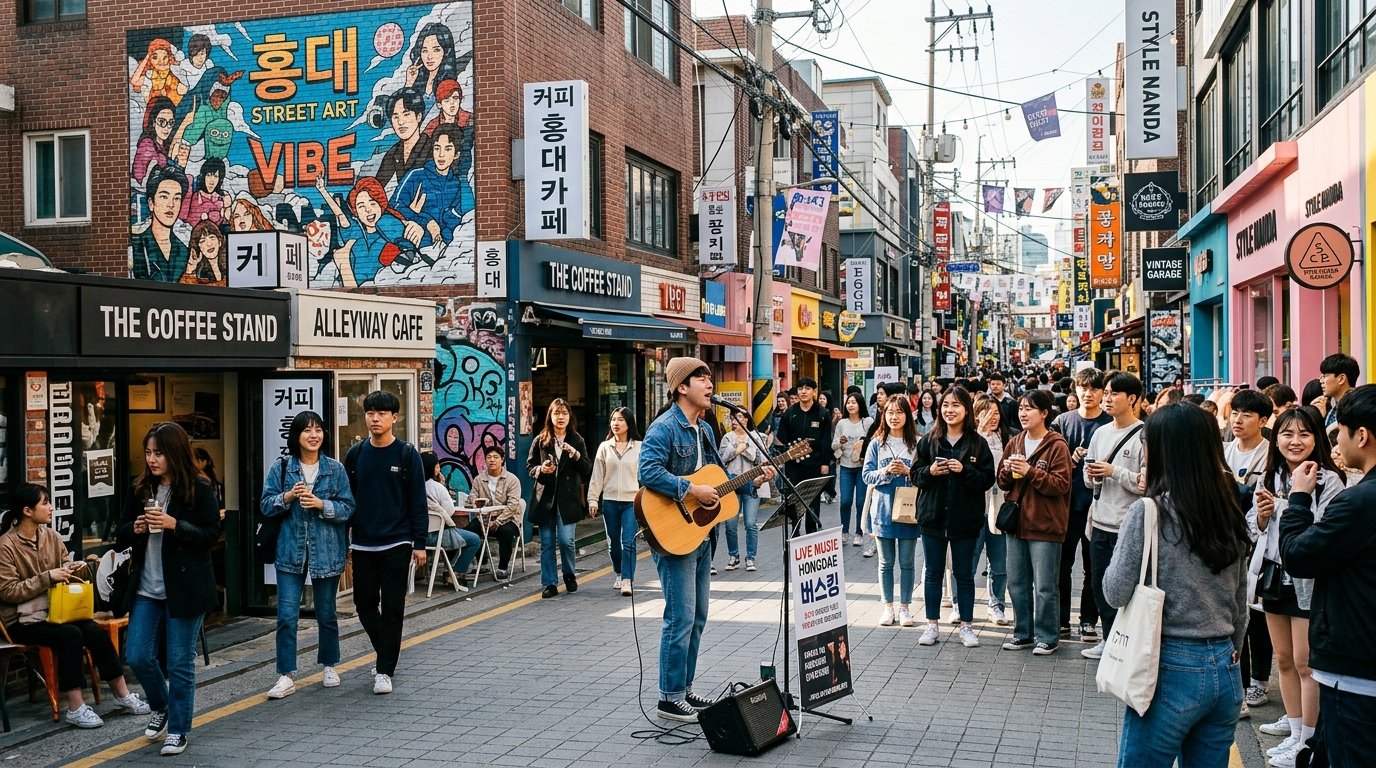
Hongdae, anchored by Hongik University, is the epicentre of Seoul’s youth culture. If your priority is experiencing Seoul’s famous café culture, indie music scene, vintage shopping, and vibrant nightlife, Hongdae is the best area to stay in Seoul. The streets here are alive until the early hours, filled with buskers, late-night eateries, and clubs.
For budget-conscious and solo travellers looking to Compare Seoul hostels and budget stays, Hongdae offers the highest density of guesthouses and boutique hostels in the city. When considering Hongdae vs Gangnam, Hongdae is significantly more walkable, cheaper, and boasts an edgier, artistic vibe compared to Gangnam’s polished corporate atmosphere.
Transport-wise, Hongik University Station is arguably the best-connected hub in western Seoul. It sits on the AREX (Airport Railroad Express) line, meaning you can travel directly from Incheon International Airport to Hongdae without transferring. It is also on Line 2 (the green circular line), which efficiently loops around the entire city. Read more about managing logistics in our guide to solo travel in Asia.
Insadong and Jongno: Culture and Sightseeing
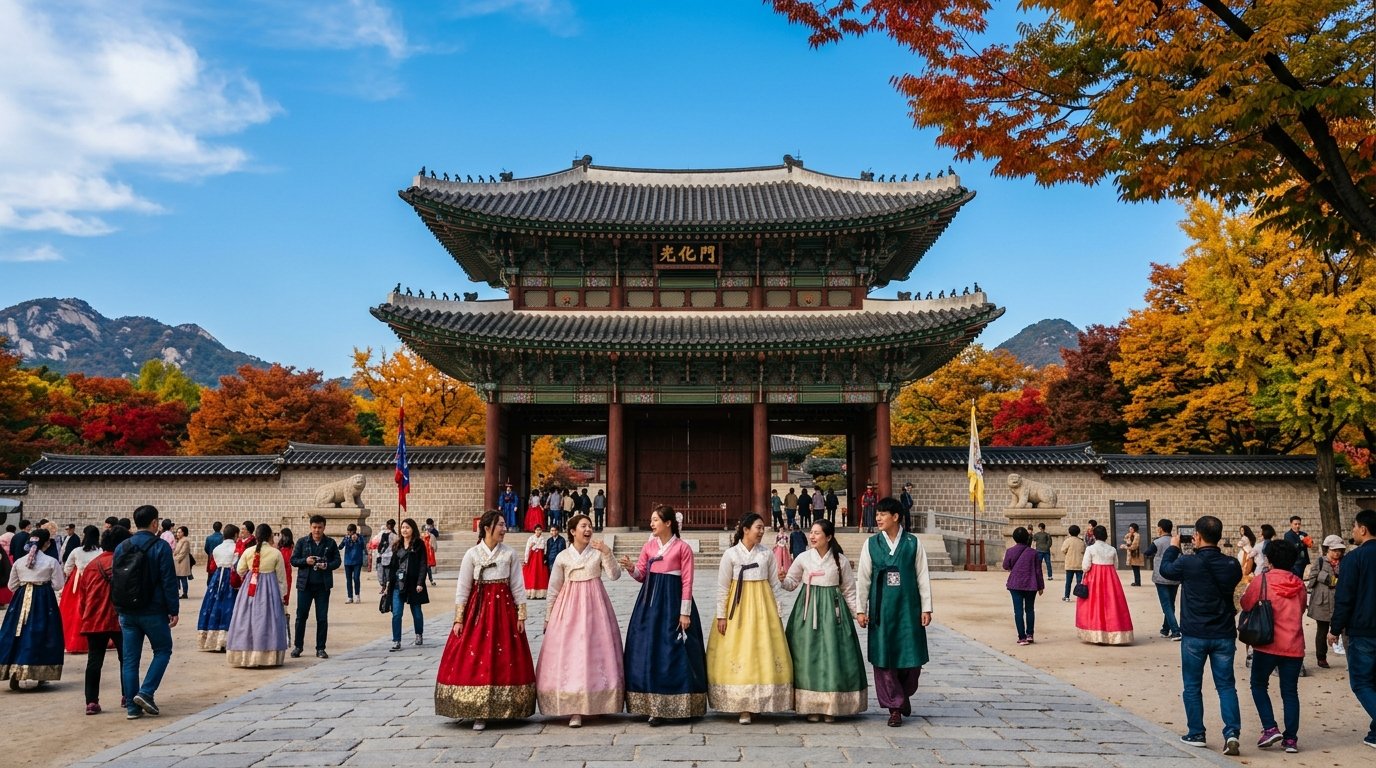
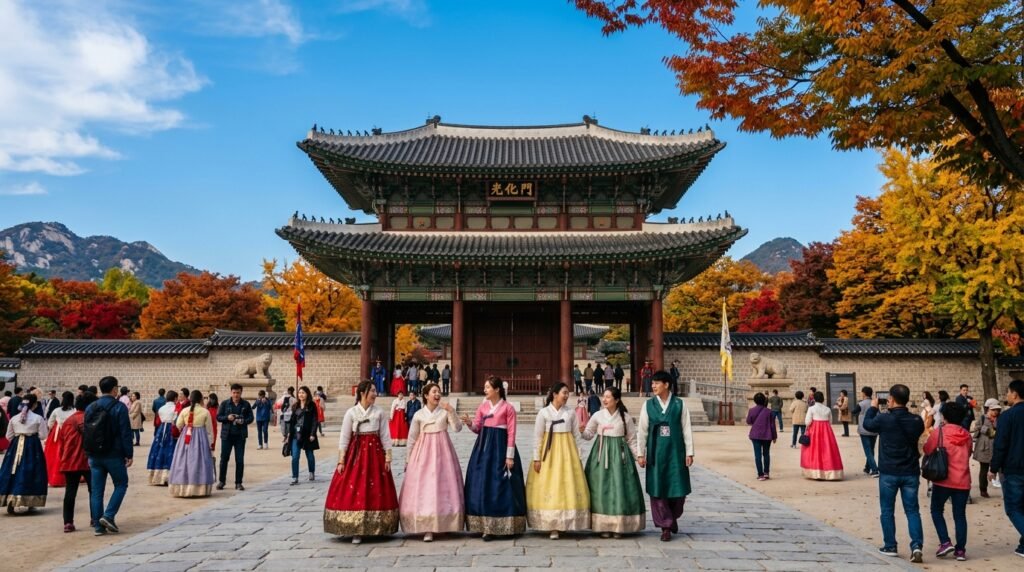
If you envision your trip filled with ancient palaces, traditional hanok villages, and tea houses, you should base yourself in Jongno-gu, specifically around Insadong or Bukchon. This area is the historical heart of Seoul. Gyeongbokgung Palace, Changdeokgung Palace, and the Bukchon Hanok Village are all within walking distance.
Insadong itself is a pedestrian-friendly street lined with antique shops, art galleries, and traditional restaurants. It is an excellent choice for families or older travellers who prefer a calmer environment after dark, as the area quietens down significantly by 9 PM. Accommodation here ranges from modern mid-scale hotels to traditional hanok guesthouses where you sleep on heated floors (ondol).
While the cultural immersion is high, keep in mind that Insadong is slightly less connected to southern Seoul. However, stations like Anguk (Line 3) and Jonggak (Line 1) provide easy access to most northern attractions. For those planning an extensive cultural itinerary, reviewing our 7-day Korea itinerary can help you allocate your time efficiently.
Gangnam: Shopping, Business and Modern Seoul
South of the Han River lies Gangnam, a sprawling district synonymous with wealth, K-pop, and high-end fashion. When weighing Myeongdong vs Hongdae, you are generally comparing two northern districts. Gangnam offers an entirely different, highly modernised experience. It features wide boulevards, towering skyscrapers, underground shopping malls, and upscale dining in neighbourhoods like Cheongdam-dong and Apgujeong.
Gangnam is heavily favoured by business travellers, medical tourists (due to the concentration of cosmetic clinics), and luxury shoppers. It is also home to COEX, a massive underground mall and exhibition centre. However, for a first-time tourist focused on historical sights, Gangnam is not ideal. It takes roughly 45 to 60 minutes via subway to reach the palaces or Myeongdong from here.
If you do choose Gangnam, ensure your hotel is near a Line 2 or Line 9 subway station. The district is incredibly large, and staying far from a station can result in excessive reliance on taxis. Before booking, you might want to run your numbers through our realistic trip budget calculator, as Gangnam hotels generally command a premium.
Itaewon: International Dining and Nightlife
Located near the US military base in Yongsan-gu, Itaewon is Seoul’s most diverse and international neighbourhood. It is renowned for its global culinary scene, offering everything from authentic Mexican tacos to Middle Eastern shawarma, alongside a bustling nightlife scene that attracts expats and locals alike.
Itaewon is a fascinating area with hilly streets and a distinctly non-traditional vibe. It is excellent if you crave familiar foods or vibrant, diverse nightlife. However, its transport links are a notable weakness. Served primarily by Line 6, reaching major hubs like Hongdae or Gangnam requires transfers. Therefore, while it is a great neighbourhood to visit for dinner and drinks, it is rarely the optimal base for first-time sightseeing.
Dongdaemun: Shopping and Late-Night Activity
Dongdaemun is famous for one primary reason: shopping, often continuing until 5 AM. The Dongdaemun Design Plaza (DDP), an architectural marvel designed by Zaha Hadid, anchors the area. Surrounding it are dozens of multi-story retail malls and wholesale markets selling fabrics, clothing, and accessories.
This is a solid alternative to Myeongdong for shopaholics. Dongdaemun is incredibly well-connected, with Dongdaemun History & Culture Park Station acting as a major interchange for Lines 2, 4, and 5. This makes navigating the city exceptionally easy. The accommodation here is largely comprised of towering business hotels that offer good value. However, the area lacks the quaint charm of Insadong or the trendy café culture of Hongdae.
Choosing the Best Neighbourhood for Your Travel Style
To help you narrow down the best Seoul neighbourhood for tourists, here are tailored recommendations based on traveler demographics:
- Couples: Insadong offers romantic walks through hanok villages, while Hongdae provides trendy date spots and vibrant nightlife.
- Families: Myeongdong is highly convenient with minimal walking required to reach transport and food. Insadong is quieter and culturally rich.
- Solo Travellers: Hongdae is unmatched for meeting people, affordable dining, and safe, well-lit streets late at night.
- Budget Travellers: Hongdae and nearby Sinchon have the highest concentration of affordable guesthouses and cheap student-focused eateries.
Before arriving, it is highly recommended to organise your connectivity so you can navigate the subway system from day one. You can Check South Korea eSIM options, and learn more about data management in our guide to the best eSIM for travel.
Best Areas for Airport Access
Navigating from Incheon International Airport to your hotel with heavy luggage is a crucial consideration. The Airport Railroad Express (AREX) is the most efficient transport method.
Hongdae (Hongik University Station) and Seoul Station are directly on the AREX line. Staying near either of these stations means zero transfers from the airport. Myeongdong requires a brief transfer at Seoul Station or taking the Airport Limousine Bus, which drops you off directly at major hotels but is subject to traffic. Gangnam is best accessed via the Airport Limousine Bus, as subway transfers from Incheon to southern Seoul can be tedious with luggage. You can easily Compare Seoul activities and transport options to book your airport express tickets in advance.
Why Proximity to the Correct Subway Line Matters
Seoul is vast. Relying on taxis is possible, but traffic can be severe, especially crossing the Han River. The subway is clean, cheap, and comprehensive. However, transferring between lines can sometimes involve walking long distances underground.
Therefore, staying near Seoul hotels near subway stations on major lines (particularly Line 2, the circular green line, and Line 4, the light blue line) drastically reduces travel time. Line 2 connects Hongdae, Gangnam, and Dongdaemun. Line 4 connects Seoul Station, Myeongdong, and Dongdaemun. Prioritise a hotel within a five-minute walk of a station on one of these lines.
Common Accommodation-Booking Mistakes
First-time visitors often make a few predictable errors when booking accommodation in Seoul:
- Underestimating the city’s size: Booking a cheap hotel on the outskirts (like in Guro or Nowon) will result in spending two hours a day commuting to attractions.
- Ignoring the topography: Seoul is mountainous. A hotel that looks close to a station on a map might be located up a massive, steep hill (common in Itaewon and parts of Hongdae). Read reviews carefully regarding accessibility.
- Assuming Gangnam is the centre: Thanks to pop culture, many assume Gangnam is the heart of Seoul. For a traditional tourist itinerary, it is actually quite peripheral. For comparisons with other major Asian capitals, read our Tokyo vs Seoul analysis.
Suggested Neighbourhood by Trip Length
The length of your stay should heavily influence your choice of neighbourhood. Short trips demand efficiency, while longer stays allow for exploration from a slightly less central base. Use our trip planner to sketch out your daily routes.
- 1-3 Days: Stay in Myeongdong. You do not have time to waste on long subway rides. Centralize yourself to hit the major sights quickly.
- 4-6 Days: Hongdae or Insadong. With a bit more time, you can afford a slightly longer commute in exchange for a neighbourhood with a more distinct local flavor.
- 7+ Days: Consider splitting your stay. Spend the first half north of the river in Insadong or Hongdae for culture and street life, and the second half south of the river in Gangnam or Jamsil for modern attractions and shopping.
Final Decision Overview Table
| Traveler Priority | Recommended Area | Runner Up |
|---|---|---|
| First-Time Convenience | Myeongdong | Insadong |
| Nightlife & Youth Culture | Hongdae | Itaewon |
| Palaces & History | Insadong | Jongno |
| Luxury & Business | Gangnam | Yeouido |
| Late Night Shopping | Dongdaemun | Myeongdong |
Frequently Asked Questions
Is it better to stay in Myeongdong or Hongdae?
Myeongdong is better for sheer convenience, proximity to historical sights, and traditional retail shopping. Hongdae is superior for nightlife, trendy cafés, indie culture, and younger, budget-conscious travellers.
Is Seoul safe to walk around at night?
Yes, Seoul is exceptionally safe. Neighbourhoods like Hongdae, Dongdaemun, and Myeongdong remain active well into the night, with brightly lit streets and a heavy presence of locals and tourists.
Do I need to tip at hotels in Seoul?
No. Tipping is not a part of Korean culture. Service charges are typically included in hotel bills, and attempting to tip staff may cause confusion or polite refusal.
Which area is best for a short layover?
If you only have one night, stay near Hongik University Station (Hongdae) or Seoul Station. Both are connected directly to the airport via the AREX train, minimising transit time and hassle.
Conclusion
Choosing where to stay in Seoul fundamentally shapes your experience of the city. For the majority of first-time visitors, Myeongdong remains the most practical and efficient choice, placing the city’s top attractions and best transport links at your fingertips. However, if your interests skew towards nightlife, youth culture, or deep historical immersion, alternatives like Hongdae or Insadong offer equally compelling, albeit distinctly different, experiences.
Regardless of where you base yourself, ensuring you are within a short walk of a major subway line (preferably Line 2 or 4) will make navigating this sprawling, dynamic metropolis manageable and enjoyable. Prioritise your personal travel style—be it shopping, dining, or sightseeing—and you will find a Seoul neighbourhood perfectly suited to your itinerary.
Continue planning
Your most useful next steps
Move from reading to one clear travel decision.
Pingback: Incheon Airport to Seoul: AREX, Bus, Taxi or Private Transfer? - FlyFono