
Winter storm travel disruption has become one of the most predictable yet misunderstood forces in modern aviation. Each winter, a single weather system can cascade into tens of thousands of flight cancellations, missed connections, stranded passengers, and overloaded airline support systems.
What most travelers fail to understand is that winter storm travel disruption is not caused by snow alone. It is driven by a combination of weather forecasting buffers, airport operational limits, aircraft positioning, crew legality rules, and airline risk management decisions.
This guide breaks down exactly how winter storm travel disruption works, why airlines cancel flights earlier than expected, and how the disruption spreads far beyond the storm’s geographic footprint.
This is not a panic article. It is a systems-level explanation. Plan ahead with FlyFono AI Trip Planner.
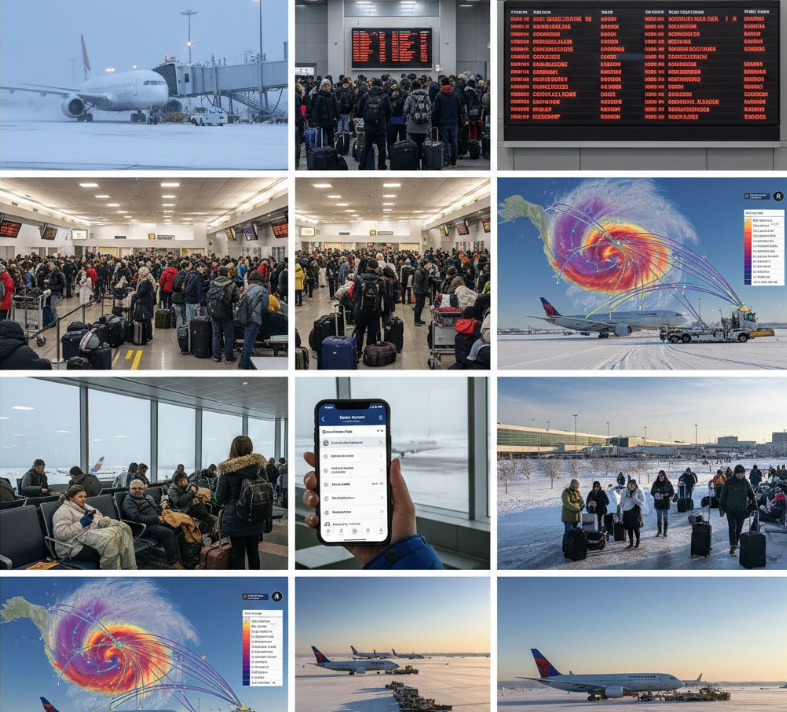
Table of Contents
How Winter Storm Travel Disruption Actually Starts
Most travelers assume disruption begins when snow starts falling. In reality, winter storm travel disruption begins days earlier inside airline operations centers.
Airlines operate on tightly optimized schedules. Aircraft, crews, and gates are reused multiple times per day. A disruption at one airport rarely stays local.
Once meteorological models show a high probability of severe weather, airlines shift into defensive mode.
Why Airlines Cancel Flights Before the Storm Hits
Preemptive cancellations are not arbitrary. Airlines cancel early because:
- Aircraft must be repositioned to avoid being trapped
- Crews must remain within legal duty limits
- Airports impose reduced arrival and departure rates
- Deicing capacity becomes the bottleneck
Canceling early reduces downstream chaos, even if it feels unnecessary to passengers watching clear skies.
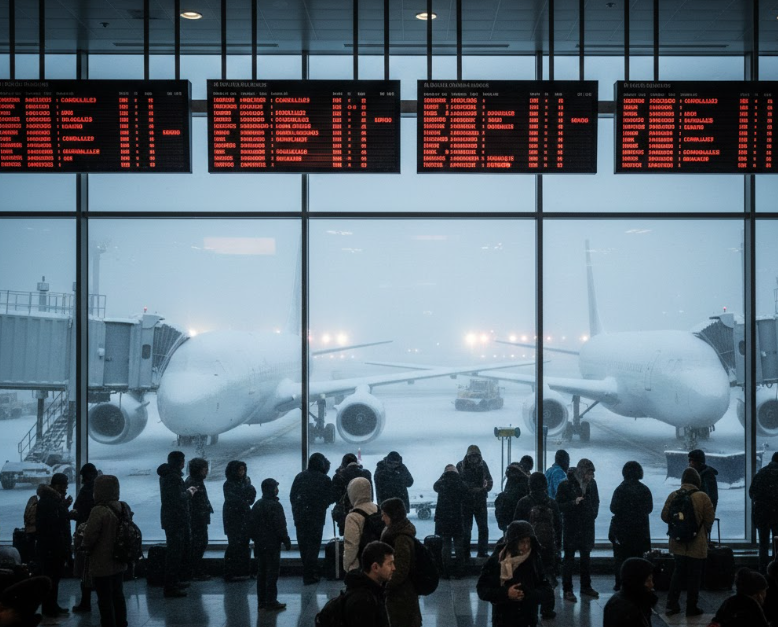
The Deicing Bottleneck Most Travelers Never See
Deicing is one of the most critical constraints in winter storm travel disruption.
Every aircraft departing icy conditions must be deiced. This process:
- Takes 10–20 minutes per aircraft
- Requires specialized equipment
- Depends on fluid availability and temperature
Airports have limited deicing trucks. When departure demand exceeds deicing capacity, flights back up rapidly.
This is why airlines often reduce schedules drastically instead of attempting full operations.
How to Find Cheap Flights During Disruptions
Why One Storm Cancels Flights Thousands of Miles Away
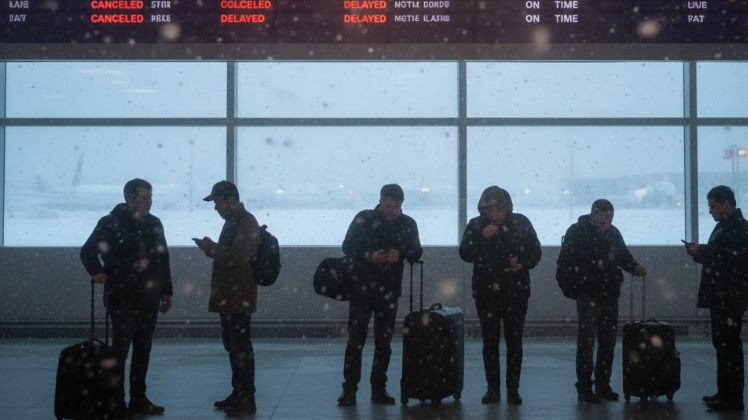
Winter storm travel disruption spreads through the network.
If a storm shuts down a major hub, aircraft scheduled to depart other cities never arrive. Those outbound flights must be canceled, even under clear skies.
This network effect explains why travelers in unaffected regions still experience cancellations.
Hub Airports Multiply Disruption
Disruption at a hub is exponentially worse than at a spoke airport.
Hubs concentrate:
- Aircraft rotations
- Crew bases
- Connecting passengers
When a hub slows down, the entire airline network destabilizes.
Airline Waivers: What They Really Mean
During winter storm travel disruption, airlines issue travel waivers.
These waivers allow:
- Date changes without fees
- Route flexibility
- Standby options
However, waivers do not guarantee seat availability.
Flights after a storm often operate full due to rebooked passengers, leaving limited options.
Why Recovery Takes Longer Than the Storm Itself
A storm may last 24 hours, but recovery can take days.
Reasons include:
- Aircraft out of position
- Crews timing out
- Maintenance backlogs
- Passenger rebooking waves
Airlines must rebuild the schedule sequentially, not instantly.
Airport Capacity Reductions During Winter Storms
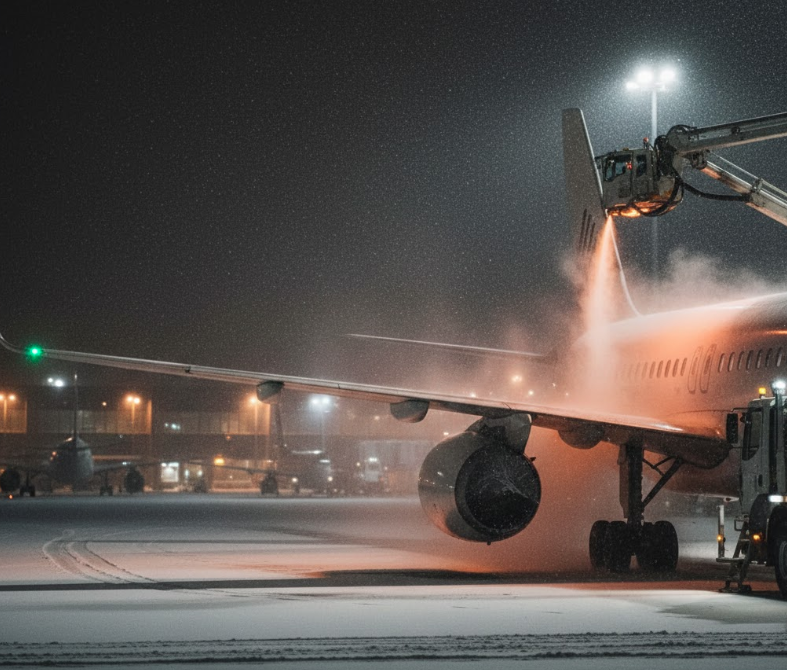
Airports reduce arrival and departure rates during winter conditions.
This is due to:
- Runway contamination
- Snow removal cycles
- Visibility limits
- Spacing requirements between aircraft
Even a modest reduction in hourly capacity causes exponential delays.
Why Morning Flights Are Often Safer Than Evening Ones
During winter storm travel disruption, early flights have an advantage.
Morning flights benefit from:
- Aircraft already on the ground
- Crews within duty limits
- Fewer accumulated delays
Evening flights inherit the entire day’s disruption.
The Crew Legality Problem
Pilots and cabin crew operate under strict duty-time rules.
Delays push crews toward legal limits. Once exceeded, flights must be canceled, regardless of weather improvement.
This is a major hidden driver of winter storm travel disruption.
Why Rebooking Systems Collapse During Storms
When thousands of flights cancel simultaneously, airline IT systems are overwhelmed.
Symptoms include:
- App crashes
- Phone wait times exceeding hours
- Inconsistent rebooking results
Airlines prioritize operational recovery over individual service during these periods.
Hotels, Ground Transport, and the Secondary Disruption
Winter storm travel disruption does not stop at airports.
Secondary impacts include:
- Hotel sell-outs near airports
- Rental car shortages
- Train and bus delays
Travelers who do not plan backup accommodation are hit hardest.
Why Travel Insurance Often Disappoints Travelers
Many travelers assume insurance will solve winter storm travel disruption.
In reality:
- Weather coverage varies widely
- “Known events” may be excluded
- Documentation requirements delay payouts
Insurance is a safety net, not a rescue service.
Why Some Airlines Recover Faster Than Others
Airline recovery speed depends on:
- Fleet simplicity
- Hub concentration
- Crew base distribution
Carriers with diversified networks and flexible crews tend to stabilize faster.
Federal Aviation Administration (FAA)
Passenger Behavior That Makes Disruption Worse
Certain passenger actions amplify winter storm travel disruption.
- Waiting too long to rebook
- Overloading airport counters
- Ignoring waiver windows
Proactive travelers fare significantly better.
Why This Keeps Getting Worse Every Year
Winter storm travel disruption has intensified due to:
- Tighter airline schedules
- Higher load factors
- Fewer spare aircraft
- Climate volatility
Airlines run leaner than ever. There is less margin for error.
What This Means for Future Winter Travel
Winter storm travel disruption is no longer an exception. It is a seasonal certainty.
Travelers who understand airline behavior, network effects, and recovery timelines are better positioned to minimize losses.
What Travelers Should Do Before a Winter Storm Hits
Once winter storm travel disruption enters forecasts, waiting is the worst possible move. Airlines act early, and travelers who prepare before cancellations are announced retain the most control.
The first step is flexibility, not confirmation.
Lock Backup Plans Early
Before a storm arrives:
- Identify alternative airports within 2–4 hours
- Check next-day flight availability
- Secure cancellable hotel options
Travelers who plan alternate routes in advance rebook faster when systems overload.
A practical way to test reroutes and buffer days is by simulating itineraries using the FlyFono AI Trip Planner .
How to Rebook Faster Than Everyone Else
During winter storm travel disruption, speed matters more than loyalty status.
Use Digital Channels First
Airline apps usually regain functionality before call centers recover. Push notifications and auto-rebooking tools activate faster than human agents.
Do not wait at airport counters unless instructed. They are the slowest recovery channel.
Book Temporary Tickets to Hold Seats
Some travelers temporarily book alternative flights on other airlines to secure space, then cancel later if their original booking recovers.
This tactic works best when travelers understand fare flexibility rules, explained here:
How to Find Cheap Flights Without Losing Flexibility
Hotels: The Silent Cost of Winter Storm Disruption
When flights cancel, nearby hotels sell out quickly. Prices spike, and availability disappears within hours.
Smart travelers:
- Reserve hotels with free cancellation
- Choose properties near airports or rail hubs
- Avoid prepaid rates during storm windows
If stranded between cities, branded hotels often stabilize faster. This guide helps identify value options:
Cheapest Branded Hotels Worth Booking During Disruptions
What to Do When You Are Stuck at the Airport
Winter storm travel disruption often turns airports into overnight holding areas.
Three tools reduce friction immediately:
- Mobile data access
- Luggage flexibility
- Pre-booked experiences if stranded overnight
Stay Connected When Networks Collapse
Airport Wi-Fi becomes unreliable during mass delays.
Travelers increasingly rely on eSIMs to maintain access to airline apps and messaging platforms.
Two commonly used options:
Use Luggage Storage to Stay Mobile
Passengers forced into long layovers or overnight delays often struggle with baggage.
Short-term luggage storage allows travelers to leave airports, find food, or rest without dragging bags.
A widely used option:
Radical Storage – Secure Luggage Storage Near Airports
When Airlines Will Pay — and When They Will Not
Winter storm travel disruption falls under “extraordinary circumstances.”
This means:
- No mandatory compensation for weather delays
- Limited hotel or meal coverage
- Rebooking prioritized over refunds
Travelers who understand this avoid unnecessary disputes and focus on recovery instead.
How Ground Transport Becomes the Backup Plan
When flights collapse, trains and buses absorb displaced demand.
However:
- Rail capacity fills quickly
- Rental cars sell out
- Prices rise sharply
Travelers who pre-check ground options recover faster than those who wait for airline solutions.
Should You Cancel or Wait?
The hardest decision during winter storm travel disruption is whether to cancel voluntarily.
General rule:
- If the storm is 48+ hours away, wait
- If your flight is within the impact window, act early
Waiting too long removes your seat options.
Travel Insurance: What It Actually Covers
Insurance helps only if purchased before a storm becomes a “known event.”
Coverage typically includes:
- Trip interruption
- Additional accommodation
- Missed connections
Insurance does not override airline policies or guarantee immediate refunds.
What Experienced Travelers Do Differently
Experienced travelers treat winter storm travel disruption as inevitable.
They:
- Avoid last flights of the day
- Build buffer days into itineraries
- Track aircraft routing, not just weather
Preparation replaces panic.
Final Takeaway
Winter storm travel disruption is no longer rare or unpredictable.
Travelers who understand airline behavior, use digital tools, and prepare backups experience fewer losses and regain control faster.
The difference between chaos and recovery is planning — not luck.
Frequently Asked Questions
What is winter storm travel disruption?
Winter storm travel disruption refers to widespread flight cancellations, delays, and airport shutdowns caused by snow, ice, wind, and reduced airport operating capacity during winter weather events.
Why do airlines cancel flights before a storm arrives?
Airlines cancel flights early to reposition aircraft, manage crew duty limits, and avoid network-wide chaos once airport capacity drops. Early cancellations reduce larger disruptions later.
Why are flights canceled in clear weather during winter storms?
Even if local weather is clear, aircraft and crews may be stuck at storm-affected hubs. This network effect causes cancellations far from the storm itself.
Do airlines compensate passengers for winter storm cancellations?
Generally no. Winter storm travel disruption is classified as an extraordinary circumstance, meaning airlines are not required to provide cash compensation, only rebooking or refunds.
Is it better to cancel a flight early or wait during a winter storm?
If your flight falls within the storm’s impact window, acting early usually gives more rebooking options. Waiting often results in limited seat availability once mass cancellations begin.
Are morning flights safer during winter storms?
Yes. Morning flights are less affected because aircraft and crews start the day in position. Evening flights inherit accumulated delays and crew timeouts.
Why does recovery take days after a storm ends?
Recovery is slowed by aircraft repositioning, crew legality resets, maintenance backlogs, and rebooking waves. Airlines must rebuild schedules step by step.
Can travel insurance help during winter storm travel disruption
Sometimes. Coverage depends on policy terms and whether the storm was considered a “known event” at the time of purchase. Insurance helps with costs but does not speed up rebooking.
What should travelers do first when a winter storm is forecast?
Travelers should check airline waivers, identify alternate airports, reserve cancellable hotels, and plan backup routes before cancellations are announced.
Why do airline apps and call centers crash during storms?
Mass cancellations trigger millions of simultaneous rebooking attempts, overwhelming airline IT systems and customer support capacity.
Is it better to rebook online or speak to an agent?
Online and app-based rebooking is usually faster. Airport counters and phone lines are the slowest options during peak disruption.
Do winter storms affect international flights differently?
Yes. International flights face additional crew legality, customs timing, and aircraft rotation constraints, making recovery slower than domestic routes.
What is the biggest mistake travelers make during winter storms?
Waiting too long to act. Travelers who delay decisions lose flexibility and are left with fewer rebooking options.
Will winter storm travel disruption get worse in the future?
Likely yes. Airlines operate leaner schedules with fewer spare aircraft, making networks more vulnerable to weather-related shocks.