
The practical takeaway
Compare Bali's 7 best areas: Seminyak, Ubud, Canggu, Nusa Dua, Uluwatu, Sanur, and Kuta. Find the perfect base for couples, families, surfers, digital nomads, and luxury travellers.
Deciding where to stay in Bali can make or break your trip, as the island’s varied regions cater to vastly different travel styles. If you’re looking for a quick answer: Seminyak is best for first-timers seeking great dining and beach clubs, Ubud is the cultural heart perfect for nature lovers and yogis, Canggu is the trendy hub for surfers and digital nomads, and Nusa Dua is the top choice for families wanting luxury beachfront resorts. Meanwhile, Uluwatu offers dramatic cliffs and romantic honeymoons, Sanur provides calm waters for older travellers and families, and Kuta remains the lively, budget-friendly party centre near the airport.
Quick Answer: The Best Areas to Stay in Bali
- First-Timers & Dining: Seminyak
- Culture, Rice Terraces & Yoga: Ubud
- Surfers, Cafes & Digital Nomads: Canggu
- Families & Luxury Resorts: Nusa Dua
- Honeymoons & Dramatic Cliffs: Uluwatu
- Calm Beaches & Laid-Back Vibe: Sanur
- Budget & Nightlife: Kuta
Some links in this guide are affiliate links. FlyFono may earn a commission if you book through them, at no extra cost to you. Recommendations are based on practical relevance, not commission.
Before you dive into finding your ideal base, remember that navigating from the airport to any of these locations can be chaotic. Booking a Bali airport transfer in advance is highly recommended to start your holiday smoothly.
When you’re planning a trip to Bali, it’s essential to match the neighbourhood to your personal travel style. Are you looking for a spiritual retreat, endless surf breaks, five-star pampering, or vibrant nightlife? The island is incredibly diverse, and traffic can make travelling between areas time-consuming. It’s common for visitors to split their time between two different regions—for example, spending four days by the beach in Seminyak and three days in the lush jungles of Ubud.
Below, we compare the seven best areas to stay in Bali in detail, looking at atmosphere, beach quality, transport, the food scene, nightlife, typical accommodation costs, and distance from Ngurah Rai International Airport.
1. Seminyak: The Best Area for Beach Clubs, Dining, and Shopping
Seminyak is Bali’s stylish playground, known for its upscale boutiques, trendy cafes, and world-famous beach clubs like Potato Head and Ku De Ta. It offers a more sophisticated and slightly more expensive alternative to its southern neighbour, Kuta.
Atmosphere: Chic, vibrant, and bustling. Seminyak attracts a mix of fashionable travellers, groups of friends, and couples looking for a lively but refined holiday.
Beach Quality: The beach features wide stretches of grey-golden sand. It’s excellent for sunsets and long walks, and the waves are suitable for intermediate surfers, but it’s not the best spot for calm swimming.
Transport: Traffic in Seminyak can be notoriously congested, especially along Jalan Kayu Aya (Eat Street). Walking is often the fastest way to get around locally, or you can use Gojek or Grab motorcycle taxis.
Food Scene & Nightlife: Exceptional. Seminyak boasts some of Bali’s best fine-dining restaurants, chic bistros, and high-end nightlife venues.
Accommodation Costs: Mid-range to luxury. You’ll find a high concentration of private villas with pools, as well as stylish boutique hotels. Check out hotel deals on Trip.com to find the perfect Seminyak villa.
Distance from Airport: About 30-45 minutes (10 km), depending on traffic.
2. Ubud: The Cultural Heart for Rice Terraces, Yoga, and Nature
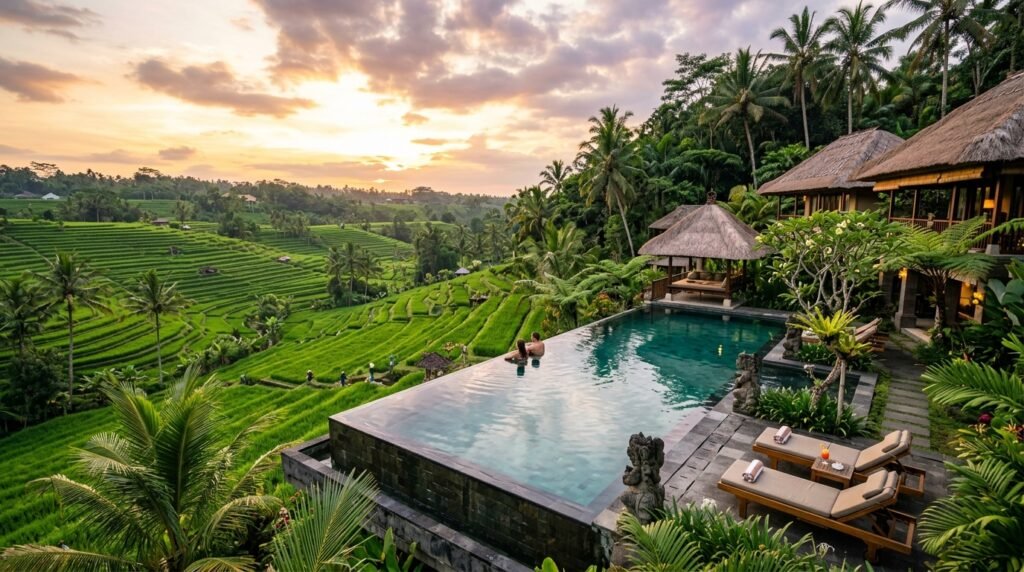
Located in the central foothills, Ubud is the cultural and spiritual epicentre of Bali. Surrounded by emerald rice terraces, deep river valleys, and dense rainforests, it is the antithesis of the island’s bustling beach towns.
Atmosphere: Tranquil, artistic, and deeply spiritual. Ubud is famous for traditional Balinese arts, holistic healing centres, and a strong sense of community.
Beach Quality: None. Ubud is located inland. However, you can easily access stunning waterfalls and jungle river clubs instead.
Transport: The town centre is walkable, but to explore the surrounding rice terraces (like Tegallalang) or temples, you will need to rent a scooter or hire a private driver.
Food Scene & Nightlife: A haven for vegans, vegetarians, and health-conscious foodies. The nightlife is very subdued; most places close early, with the focus instead on ecstatic dance, sound healing, and relaxed acoustic music.
Accommodation Costs: Budget to ultra-luxury. Ubud offers everything from $15-a-night homestays to exclusive jungle resorts overlooking the Ayung River.
Distance from Airport: Around 1.5 to 2 hours (40 km), heavily dependent on traffic.
3. Canggu: The Hub for Surfers, Digital Nomads, and Cafes
Once a quiet coastal village with endless rice paddies, Canggu has exploded into Bali’s coolest neighbourhood. It’s the ultimate destination for digital nomads, serious surfers, and anyone looking for a bohemian, laid-back vibe with modern amenities.
Atmosphere: Hip, youthful, and energetic. There is a strong community of expats and long-term travellers here.
Beach Quality: The beaches (Batu Bolong, Echo Beach) have dark volcanic sand and powerful surf breaks. They are not ideal for casual swimming but are perfect for surfing and sunset beers.
Transport: Scooters are an absolute necessity here. The area is spread out, and the narrow “shortcut” roads are infamous for traffic jams. Staying connected for maps and Gojek is crucial, so consider picking up a Saily eSIM before you arrive.
Food Scene & Nightlife: Unbeatable brunch culture, specialty coffee, and international fusion. The nightlife is lively, featuring massive beach clubs like Finns and relaxed skater bars.
Accommodation Costs: Mid-range. While luxury options are increasing, Canggu still offers plenty of affordable guesthouses, co-living spaces, and mid-range villas.
Distance from Airport: Roughly 45-60 minutes (20 km).
4. Nusa Dua: The Secure Enclave for Luxury Resorts and Families
Nusa Dua is a purpose-built, gated resort area on Bali’s southeastern peninsula. It is manicured, secure, and home to many of the island’s largest five-star international hotel chains.
Atmosphere: Peaceful, exclusive, and highly sanitized. It lacks the authentic “Bali feel” of other areas, but offers unparalleled comfort, safety, and pristine grounds.
Beach Quality: Excellent. Nusa Dua boasts some of the best white-sand beaches in Bali with calm, clear waters protected by a reef, making it incredibly safe for children to swim.
Transport: The gated complex is pedestrian-friendly with paved footpaths. Taxis or private drivers are needed to explore outside the enclave.
Food Scene & Nightlife: Dining is mostly confined to high-end resort restaurants. Nightlife is practically non-existent, limited to quiet hotel bars or cultural dinner shows.
Accommodation Costs: High-end luxury. This is the place for massive resorts with kids’ clubs, multiple pools, and all-inclusive packages.
Distance from Airport: About 20-30 minutes (15 km) via the Mandara Toll Road.
5. Uluwatu: Dramatic Cliffs, Honeymoons, and World-Class Surf
Located on the rugged Bukit Peninsula at Bali’s southern tip, Uluwatu is famous for its limestone cliffs, hidden white-sand coves, and the spectacular Uluwatu Temple. It’s widely considered one of the most romantic spots on the island.
Atmosphere: Dramatic, relaxed, and romantic. It retains a raw, natural beauty and a slow pace of life, though it has seen significant upscale development in recent years.
Beach Quality: Breathtaking. Beaches like Padang Padang, Bingin, and Dreamland feature white sand and turquoise water. Many require navigating steep stairs down the cliffs. The surf here is legendary and best suited for advanced surfers.
Transport: The area is very spread out. Renting a scooter is the best way to get around, as Gojek/Grab are sometimes restricted by local taxi cartels.
Food Scene & Nightlife: A growing selection of excellent clifftop bars, aesthetic cafes, and fine-dining restaurants. The nightlife revolves around spectacular clifftop day clubs like Savaya or single-origin coffee spots.
Accommodation Costs: Mid-range to ultra-luxury. Uluwatu is famous for its breathtaking cliff-edge luxury resorts and boutique eco-lodges.
Distance from Airport: About 45-60 minutes (20 km), via winding hilly roads.
6. Sanur: The Calm East Coast for Families and Mature Travellers
Sanur is Bali’s oldest resort town, located on the east coast. It is famously laid-back, earning it the affectionate (if slightly unfair) nickname “Snore.” It offers a peaceful retreat away from the aggressive hustle of the west coast.
Atmosphere: Relaxed, quiet, and family-oriented. It has a charming, retro resort feel with a beautiful coastal promenade.
Beach Quality: Very good. The long stretch of golden sand is protected by a reef, resulting in shallow, extremely calm waters. It’s perfect for toddlers, paddleboarding, and sunrise viewing.
Transport: The 5km beachfront paved pathway makes walking or cycling the best way to get around. It’s also the main hub for speedboats heading to the Nusa Islands (Nusa Penida, Nusa Lembongan), which you can book easily via Klook.
Food Scene & Nightlife: Plentiful traditional warungs, excellent seafood, and relaxed beachfront dining. Nightlife is very quiet, usually consisting of live acoustic music at local pubs.
Accommodation Costs: Budget to mid-range. You’ll find excellent value here, with large, traditional Balinese-style hotels and family-friendly villas.
Distance from Airport: About 25-35 minutes (15 km).
7. Kuta: The Original Hub for Budget Travel, Nightlife, and Airport Proximity
Once the crown jewel of Bali tourism, Kuta is the island’s most heavily developed area. It is unapologetically loud, busy, and commercialized, acting as the primary hub for backpackers and budget travellers.
Atmosphere: Hectic, energetic, and party-centric. It is highly commercial, with massive shopping malls like Beachwalk and narrow streets packed with souvenir stalls.
Beach Quality: Kuta Beach is a long, wide stretch of sand famous for its sunsets and consistent, gentle whitewash, making it arguably the best place in Bali to learn how to surf.
Transport: Very walkable, though the sidewalks can be crowded. Traffic is notoriously bad, so walking or short scooter rides are preferable.
Food Scene & Nightlife: Dominated by cheap eats, fast food chains, and massive nightclubs that stay open until dawn. It’s the epicentre of Bali’s party scene.
Accommodation Costs: Strictly budget to mid-range. Kuta offers the highest concentration of cheap hostels, budget hotels, and affordable guesthouses.
Distance from Airport: About 10-15 minutes (5 km), making it a convenient stopover for late arrivals or early departures.
Comparison Table: Bali’s Best Areas at a Glance
| Area | Best For | Vibe | Beach Quality | Price Range |
|---|---|---|---|---|
| Seminyak | Dining, Beach Clubs, First-timers | Chic, Upscale, Lively | Good (Sunsets, Intermediate Surf) | $$ – $$$ |
| Ubud | Culture, Nature, Yoga | Spiritual, Jungle, Tranquil | None (Inland) | $ – $$$$ |
| Canggu | Digital Nomads, Cafes, Surfers | Trendy, Bohemian, Hip | Dark Sand (Advanced Surf) | $$ – $$$ |
| Nusa Dua | Families, Luxury, Safety | Manicured, Secure, Quiet | Excellent (White Sand, Calm) | $$$ – $$$$ |
| Uluwatu | Honeymoons, Dramatic Views | Romantic, Rugged, Relaxed | Stunning (Hidden Coves, Surf) | $$ – $$$$ |
| Sanur | Older Travellers, Young Families | Laid-back, Retro, Peaceful | Very Good (Calm, Shallow) | $ – $$ |
| Kuta | Budget, Nightlife, Surfing Beginners | Hectic, Party-focused, Commercial | Good (Beginner Surf, Sunsets) | $ – $$ |
Best Option by Traveller Type
Still unsure where to stay in Bali? Let’s break it down by your specific travel style:
- Couples & Honeymooners: Uluwatu offers unmatched romance with its clifftop views and secluded luxury resorts. Ubud is a close second for couples wanting a secluded jungle retreat.
- Families with Children: Nusa Dua is the clear winner for safety, calm waters, and kids’ clubs. Sanur is an excellent, more affordable alternative with equally calm swimming conditions.
- Surfers: Canggu and Uluwatu cater to intermediate and advanced surfers. Beginners should head to Kuta or Seminyak for easier beach breaks and numerous surf schools.
- Digital Nomads: Canggu is the undisputed capital for remote workers, offering endless cafes with fast Wi-Fi, co-working spaces, and a built-in community.
- Luxury Travellers: Nusa Dua features massive, traditional luxury, while Seminyak and Uluwatu offer ultra-modern, chic luxury villas and boutique design hotels.
- Budget Backpackers: Kuta remains the most affordable base, with Canggu offering a slightly more expensive but infinitely trendier backpacker scene.
- First-Timers: Seminyak strikes the perfect balance. It’s comfortable, offers incredible food, beautiful sunsets, and isn’t quite as chaotic as Kuta, making it an ideal introduction to the island.
5 Common Mistakes When Choosing Where to Stay in Bali
- Underestimating Traffic: Distances in Bali look short on a map, but a 10km journey can take an hour. Don’t plan to sleep in Nusa Dua and commute to Canggu for dinner every night.
- Assuming Everywhere Has a Beach: First-timers often book Ubud expecting to walk to the ocean. Ubud is centrally located in the mountains, at least an hour’s drive from the nearest coast.
- Overlooking Regional Comparisons: If you are debating broader Southeast Asia itineraries, you might want to compare destinations. Read our guide on Bali vs Phuket or our deep dive into Thailand vs Vietnam vs Bali before finalizing your flights.
- Booking Only One Hotel for a Long Trip: If you are staying longer than 5 days, split your time. Combine a beach destination (like Seminyak or Canggu) with an inland retreat (Ubud) to experience both sides of the island.
- Ignoring the Vibe: Booking a trendy Canggu villa when you actually want a quiet, relaxing family holiday will lead to disappointment due to the noise and traffic. Match the area to your desired atmosphere.
Frequently Asked Questions
Is it better to stay in Seminyak or Canggu?
If you prefer paved sidewalks, high-end shopping, and chic dining, choose Seminyak. If you prefer a younger, more bohemian crowd, surfing, specialty coffee, and don’t mind navigating narrow scooter shortcuts, Canggu is better.
Where is the clearest water in Bali?
The clearest water on mainland Bali is generally found in the south, around Uluwatu’s hidden beaches (like Melasti or Thomas Beach) and the protected shores of Nusa Dua. However, for truly crystal-clear, tropical water, you should take a boat to the nearby Nusa Islands (Nusa Penida or Nusa Lembongan).
How many days should I stay in Bali?
To truly experience the island’s diversity, you need a minimum of 10 to 14 days. This allows you to spend a few days in a beach town, a few days in the cultural centre of Ubud, and perhaps take a side trip to the nearby islands without feeling rushed.
Do I need a scooter to get around?
In areas like Canggu and Uluwatu, a scooter is almost essential due to traffic and the spread-out nature of the attractions. In Seminyak, Sanur, and Kuta, you can rely more on walking or cheap Gojek/Grab rides. Only rent a scooter if you are an experienced rider and possess an international driver’s permit.
Which part of Bali is least touristy?
The areas listed above are the most popular hubs. For a less touristy experience, look to North Bali (Lovina), East Bali (Amed, Sidemen), or West Bali (Pemuteran). These areas offer black sand beaches, world-class diving, and a glimpse into traditional village life far removed from the southern crowds.
Final Recommendation
Choosing where to stay in Bali ultimately dictates the flavour of your holiday. For a foolproof first visit, a combination itinerary is almost always the best approach. Spend the first half of your trip enjoying the spectacular sunsets, beach clubs, and dining of Seminyak, and dedicate the second half to the serene rice terraces, wellness retreats, and cultural richness of Ubud. This classic “beach and jungle” pairing guarantees you experience the best of what the Island of the Gods has to offer.
Last checked: October 2026.
Continue planning
Your most useful next steps
Move from reading to one clear travel decision.