
The practical takeaway
A practical 3-day Seoul itinerary for first-timers. Covers Gyeongbokgung, Bukchon, Myeongdong, Hongdae, Namsan Tower, Korean BBQ, and day trip options with realistic timing.
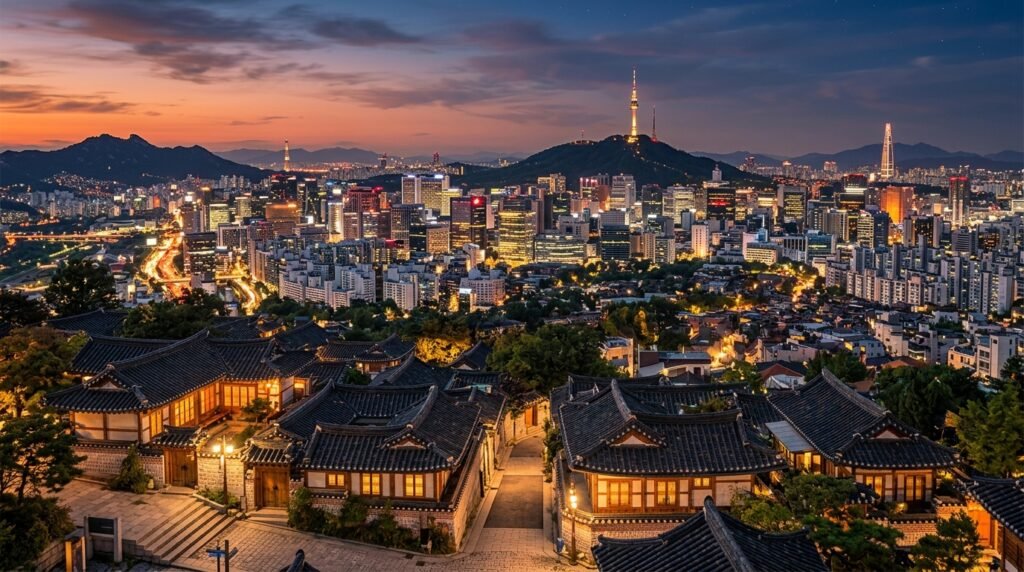
If you have three days in Seoul, the best way to spend them is by dividing your time between the historical north side and the modern south side of the Han River. A perfect Seoul 3 day itinerary starts with traditional culture at Gyeongbokgung Palace and Bukchon Hanok Village, moves on to panoramic views at N Seoul Tower or bustling streets in Hongdae, and finishes with shopping and modern sights in Gangnam. Three full days gives you enough time to see the major highlights without feeling completely rushed, though you’ll definitely want a T-money card to quickly navigate the massive subway system.
Quick Answer: The Best 3 Days in Seoul
For a perfect 3-day Seoul trip, focus Day 1 on history (Gyeongbokgung Palace, Bukchon Hanok Village, and Myeongdong street food). Day 2 should blend culture and youth vibes (Hongdae, N Seoul Tower, and a Korean BBQ dinner). Use Day 3 for modern Seoul (Starfield Library, Gangnam, and Dongdaemun Design Plaza) or take a half-day trip to the DMZ.
Some links in this guide are affiliate links. FlyFono may earn a commission if you book through them, at no extra cost to you. Recommendations are based on practical relevance, not commission.
Seoul is a massive, sprawling metropolis that seamlessly blends ancient traditions with ultra-modern technology. As a first-time visitor, planning an itinerary can feel overwhelming simply because there is so much ground to cover. But fear not: with the right game plan and a bit of subway navigation, a Seoul 3 day itinerary is entirely manageable.
Before you dive into the itinerary, make sure you know exactly where to stay in Seoul for first timers. Generally, staying in Myeongdong, Jongno, or Hongdae makes commuting to all the major sights much easier. It’s also wise to figure out your transportation from Incheon Airport to Seoul beforehand so you can hit the ground running.
To stay connected, grab a reliable eSIM like Saily eSIM so you can use Google Maps (or preferably Naver Maps or KakaoMap, which work much better in Korea) right when you land.
Before You Go: Logistics and the T-Money Card
Navigating Seoul is highly efficient thanks to its world-class public transportation system. The single most important item for your Seoul 3 day itinerary is the T-money card. This is a rechargeable smart card used to pay for subways, buses, and even purchases at convenience stores.
- Where to buy: You can buy a T-money card at any convenience store (CU, GS25, 7-Eleven) or at ticket vending machines inside subway stations.
- How to reload: You can recharge it using cash at convenience stores or subway station machines. Remember, you cannot reload it with a foreign credit card!
- Why you need it: Fares are slightly discounted when using a T-money card, and it saves you the hassle of buying single-journey tickets every time you travel. It also allows for free transfers between subway lines and buses within a certain time frame.
For your hotel, consider browsing Trip.com hotels for excellent deals in the Myeongdong or Jongno areas, which are perfectly central for this itinerary.
Seoul 3-Day Itinerary Overview
| Day | Focus | Key Locations |
|---|---|---|
| Day 1 | Tradition & History | Gyeongbokgung, Bukchon Hanok Village, Insadong, Myeongdong |
| Day 2 | Views, Vibe & BBQ | Hongdae, Ikseondong, Namsan Tower / War Memorial, Korean BBQ |
| Day 3 | Modernity or DMZ | Starfield Library, Gangnam, DDP or Lotte World / DMZ Trip |
Day 1: Royal Palaces, Traditional Villages, and Street Food
Your first day in Seoul focuses on the historical heart of the city. You’ll be spending most of your time in the Jongno district, exploring palaces and traditional houses.
9:00 AM: Gyeongbokgung Palace
Start your day early at Gyeongbokgung Palace, the largest and most impressive of the Five Grand Palaces built during the Joseon Dynasty. Arriving at 9:00 AM helps you beat the heaviest crowds.
Pro Tip: If you rent a traditional Korean Hanbok (available at numerous rental shops surrounding the palace), your entrance fee to Gyeongbokgung is completely free! The Changing of the Royal Guard ceremony typically takes place at 10:00 AM and 2:00 PM at Gwanghwamun Gate, and is absolutely worth seeing. Plan to spend about 1.5 to 2 hours wandering the expansive grounds.
11:30 AM: Bukchon Hanok Village
A short walk east of the palace brings you to Bukchon Hanok Village. This residential neighborhood is home to hundreds of traditional Korean houses (hanoks) that date back to the Joseon Dynasty. Today, many operate as cultural centers, guesthouses, restaurants, and tea houses.
Keep in mind that this is a living neighborhood where real people reside. Look for the “Bukchon 8 Views” for the best photo spots, particularly the alleyway looking down toward modern Seoul with N Seoul Tower in the distance. Please be respectful of the residents and keep your voice down.
1:30 PM: Lunch and Shopping in Insadong
Walk south from Bukchon to reach Insadong. This vibrant neighborhood is famous for its main street, Insadong-gil, which is lined with antique shops, traditional tea houses, and art galleries. It’s the perfect place to pick up traditional souvenirs like Korean pottery, calligraphy materials, and hanji (traditional paper).
For lunch, duck into one of the many alleyways and look for a restaurant serving Mandu (Korean dumplings) or Bibimbap. Afterward, don’t miss Ssamzigil, a unique spiral-shaped shopping complex showcasing local artisans.
5:00 PM: Myeongdong Shopping and Street Food
As evening approaches, take the subway to Myeongdong, Seoul’s premier shopping district. If you are looking for K-beauty products, this is your paradise. Every major Korean skincare and makeup brand has at least one (often multiple) storefronts here.
Around 5:00 PM, the famous Myeongdong Street Food carts begin to set up. You can easily make a dinner out of snacking here. Must-try items include tteokbokki (spicy rice cakes), hotteok (sweet pancakes), gyeran-ppang (egg bread), and Korean fried chicken. It’s loud, crowded, and an essential Seoul experience.
Day 2: Youth Culture, History, and Panoramic Views
Day two mixes the trendy, youthful energy of Seoul with poignant modern history and iconic city views.
10:00 AM: Hongdae or Ikseondong
Depending on your vibe, start your morning in either Hongdae or Ikseondong. Hongdae, located near Hongik University, is the epicenter of youth culture, indie music, and quirky cafes. It’s relatively quiet in the morning, making it a great time to visit a themed cafe (like a sheep cafe or a 2D drawing cafe) and browse the boutique clothing stores.
Alternatively, Ikseondong is one of Seoul’s oldest hanok villages that has recently been gentrified into a maze of trendy, highly Instagrammable cafes, restaurants, and boutiques. It’s a fascinating juxtaposition of old architecture and modern hipster aesthetics.
1:00 PM: War Memorial of Korea
In the early afternoon, head to the War Memorial of Korea. This massive museum offers a profound look at Korea’s turbulent history, particularly the Korean War. The exhibits are incredibly well-curated and mostly translated into English. Outside, you’ll find an impressive display of military aircraft, tanks, and artillery. It’s an essential visit for understanding the modern context of the Korean peninsula.
4:00 PM: N Seoul Tower (Namsan Tower)
As the late afternoon sets in, make your way to Namsan Mountain. You can hike up, take a bus, or ride the scenic Namsan Cable Car. At the top sits the iconic N Seoul Tower.
Aim to arrive about an hour before sunset. You can enjoy the expansive views of the city as the sun goes down and watch Seoul light up for the night. Don’t forget to check out the thousands of “love locks” attached to the fences around the tower base. You can pre-book your observation deck tickets via Klook Seoul activities & passes to skip the lines.
7:30 PM: Authentic Korean BBQ Dinner
No trip to Seoul is complete without a proper Korean BBQ experience. Head back down from the mountain (perhaps toward Itaewon or back to Myeongdong/Hongdae) and find a bustling BBQ joint. Order Samgyeopsal (pork belly) or Hanu (premium Korean beef), wrap the grilled meat in lettuce with some ssamjang (spicy paste) and garlic, and wash it down with a cold Cass beer or some Soju.
Day 3: Modern Seoul, Gangnam, and the Future
Your final day is dedicated to the south side of the Han River, focusing on the ultra-modern side of Seoul, or taking a fascinating day trip.
Option A: Modern Seoul (Gangnam & COEX)
If you want to stay in the city, start your morning at the Starfield COEX Mall in Gangnam. Here you will find the spectacular Starfield Library, a massive, two-story open-air library located right in the middle of the mall. It’s a stunning architectural feat and a major photo spot.
Afterward, explore the Gangnam district. You can stroll down K-Star Road, check out the upscale boutiques in Apgujeong, or visit the towering Lotte World Tower, the 6th tallest building in the world. If you prefer theme parks, the nearby Lotte World (an massive indoor/outdoor amusement park) is a fantastic way to spend the afternoon.
Option B: DMZ Half-Day Trip
If you prefer history over shopping, use the morning of Day 3 to take a half-day tour to the Demilitarized Zone (DMZ). The DMZ is the heavily fortified border separating North and South Korea. You must book an organized tour to visit. Tours typically include the Third Infiltration Tunnel, the Dora Observatory (where you can look into North Korea), and Imjingak Park. You will usually be back in Seoul by 2:00 PM or 3:00 PM.
6:00 PM: Dongdaemun Design Plaza (DDP)
Whichever option you choose, spend your final evening at the Dongdaemun Design Plaza (DDP). Designed by Zaha Hadid, this neo-futuristic building looks like a silver spaceship landed in the middle of Seoul. It’s a hub for art, design, and fashion. The area really comes alive at night, and the nearby Dongdaemun Night Market stays open well past midnight, perfect for some last-minute shopping and late-night eats.
Best Add-Ons if You Have Extra Days
If you realize three days isn’t enough (and if you are comparing Tokyo vs Seoul, you’ll know both cities demand time), here are the best things to add if you extend to a 4 or 7-day Korea itinerary:
- Nami Island & Petite France: A popular day trip outside Seoul known for beautiful tree-lined avenues and a quaint French cultural village.
- Suwon Hwaseong Fortress: A UNESCO World Heritage site located just a short train ride south of Seoul. You can walk the massive fortress walls.
- Bukhansan National Park: For outdoor enthusiasts, this national park offers incredible hiking and stunning granite peaks right on the edge of the city.
- A Day in Busan: While better suited for a longer trip, the KTX bullet train makes it possible to visit the coastal city of Busan in just over two hours.
5 Common Mistakes on a First Seoul Trip
- Relying on Google Maps: Google Maps does not have full functionality in South Korea due to national security laws. Walking directions often don’t work. Download Naver Maps or KakaoMap instead.
- Not Buying a T-Money Card Immediately: Paying for individual subway tickets is a massive waste of time. Buy and load a T-Money card at the convenience store in the airport arrivals hall.
- Underestimating the Size of the City: Seoul is huge. Traveling from Gyeongbokgung in the north to Gangnam in the south can take nearly an hour by subway. Group your sightseeing by neighborhood.
- Ignoring the Trash Can Situation: Public trash cans are notoriously difficult to find in Seoul. Be prepared to carry your empty street food skewers or coffee cups for a while until you find a bin (often inside subway stations).
- Expecting Everyone to Speak English: While younger Koreans and those in major tourist areas often speak some English, it’s not ubiquitous. Learn a few basic Korean phrases (like “Annyeong haseyo” for hello and “Kamsahamnida” for thank you) and use translation apps like Papago.
Frequently Asked Questions (FAQs)
Is 3 days enough for Seoul?
Three days is a great introduction to Seoul. It gives you enough time to see the major historical sites, experience the shopping and food culture, and get a feel for both the old and new sides of the city. However, you won’t be able to see everything, and you’ll likely want to come back!
What is the best month to visit Seoul?
The best times to visit are during the spring (April to May) for cherry blossoms and mild weather, or autumn (September to November) for spectacular fall foliage and crisp, clear skies. Summers are extremely hot and humid (with a monsoon season in July), and winters are bitterly cold.
Is Seoul expensive for tourists?
Seoul is moderately priced. It is generally cheaper than Tokyo or New York, but more expensive than Southeast Asian destinations like Bangkok or Hanoi. Public transport and street food are incredibly cheap, while upscale dining and international brand shopping can be pricey.
Do I need cash in Seoul?
South Korea is a highly cashless society, and credit cards are accepted almost everywhere. However, you will need cash to reload your T-Money card, to pay for street food in Myeongdong, and at some smaller independent shops or traditional markets.
Is it safe to walk around Seoul at night?
Yes, Seoul is widely considered one of the safest major cities in the world. Violent crime is extremely rare. Areas like Hongdae, Gangnam, and Itaewon are bustling well into the early hours of the morning. Standard common-sense precautions still apply, but you generally do not need to worry about walking at night.
Final Recommendation
A Seoul 3 day itinerary is a whirlwind of ancient palaces, cutting-edge technology, and some of the best food in Asia. To make the most of it, group your activities geographically to minimize subway time, always wear comfortable walking shoes (you will easily hit 20,000 steps a day), and don’t be afraid to try the street food. Seoul is a city that rewards curiosity, so allow yourself to wander down the narrow alleyways—you never know what incredible cafe or hidden restaurant you might find.
Last checked: October 2026.
Continue planning
Your most useful next steps
Move from reading to one clear travel decision.