
The practical takeaway
Deciding between Phnom Penh vs Siem Reap is often the first step in planning a trip to Cambodia. While they share the same national culture and tropical climate, these two destinations offer distinctly different experiences. Siem Reap is the gateway to the…
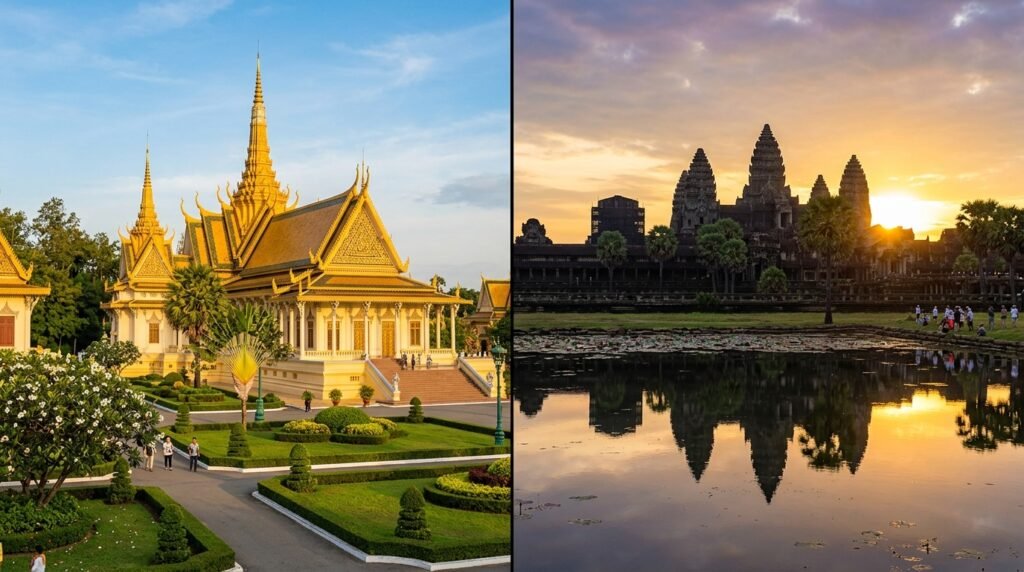
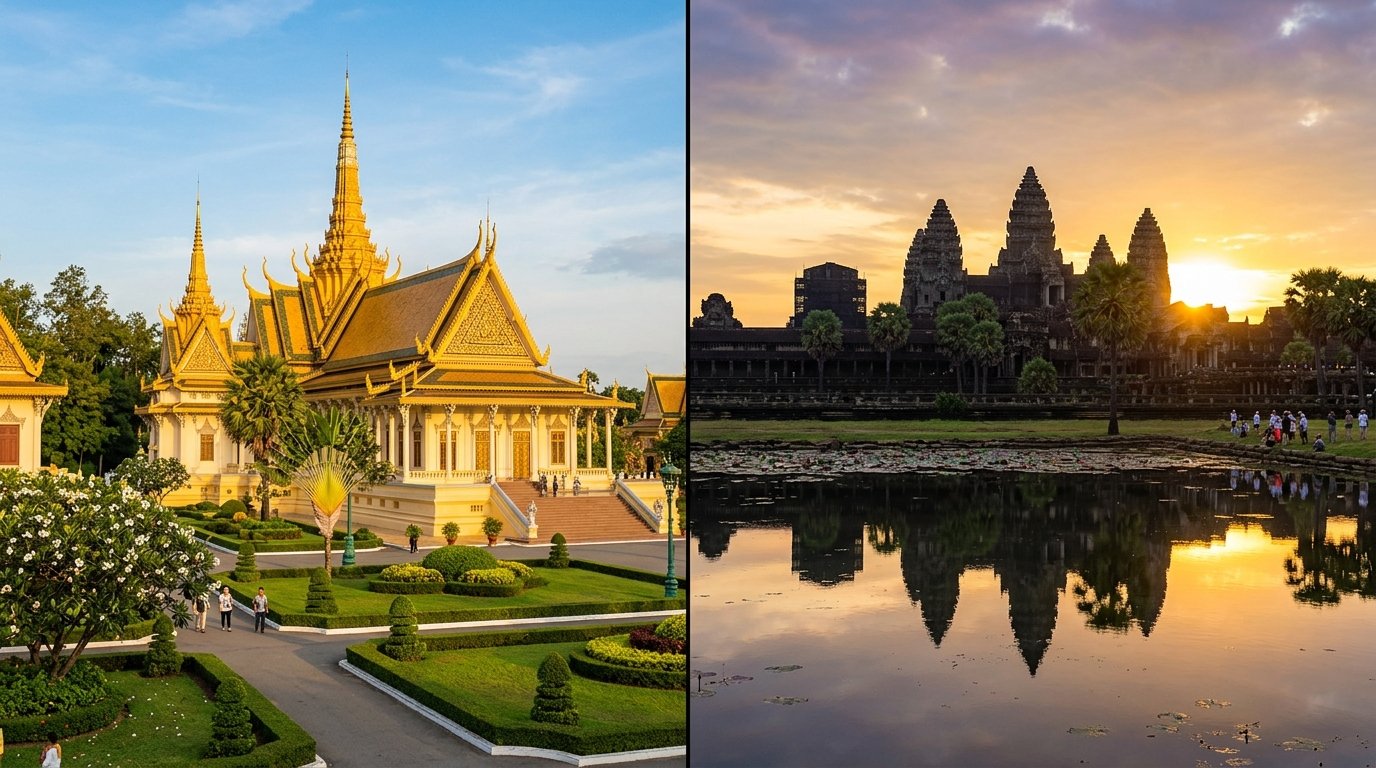
Deciding between Phnom Penh vs Siem Reap is often the first step in planning a trip to Cambodia. While they share the same national culture and tropical climate, these two destinations offer distinctly different experiences. Siem Reap is the gateway to the world-famous Angkor Wat temples and thrives on tourism, whereas Phnom Penh is a bustling capital city grounded in modern commerce and poignant 20th-century history.
If you only have time for one, your choice depends entirely on what you want from your visit. History and ancient architecture enthusiasts should head straight for Siem Reap. Travellers interested in modern city life, riverfront dining, and understanding Cambodia’s recent past will find Phnom Penh more rewarding.
Some links in this guide are affiliate links. FlyFono may earn a commission if you book through them, at no extra cost to you. Recommendations are based on practical relevance, not commission.
Phnom Penh vs Siem Reap: Quick Comparison
Here is a fast breakdown of how the two cities compare on key travel metrics before we look closer at each category.
| Feature | Phnom Penh | Siem Reap |
|---|---|---|
| Primary Draw | Capital city, history, riverfront | Angkor Wat, ancient temples |
| Atmosphere | Bustling, commercial, modernising | Tourist-oriented, relaxed, green |
| Pace of Life | Fast and busy | Slower and laid-back |
| Cost | Slightly cheaper for local food | Higher tourist prices, cheap hostels |
| Walkability | Low (heavy traffic) | Moderate (around central areas) |
| Nightlife | Rooftop bars, riverfront pubs | Pub Street, night markets |
If you are travelling across borders, you might also find our comparison of Thailand vs Cambodia useful for planning your itinerary.
Main attractions compared
The attractions in these two cities cater to completely different interests. Siem Reap focuses on ancient history and traditional arts, while Phnom Penh centres on royal heritage and the 20th century.
In Phnom Penh, the highlights include the Royal Palace, the Silver Pagoda, and the National Museum of Cambodia. You can also walk along the Sisowath Quay riverfront, which is active in the evenings. Siem Reap offers the Angkor Archaeological Park, floating villages on the Tonle Sap lake, and cultural performances like the Phare Cambodian Circus.
Angkor temples: Siem Reap’s headline draw
Siem Reap exists in its current form largely because of the Angkor temples. Angkor Wat is the largest religious monument in the world, but it is just one part of a massive complex that includes Bayon (known for its many stone faces) and Ta Prohm (famous for the giant tree roots growing through the ruins).
You need at least two full days to see the main temples without rushing. You can easily compare Angkor Wat tours and Phnom Penh activities online to find guided options that provide historical context, which is highly recommended for first-time visitors.
Museums and modern history
Phnom Penh is the necessary stop for visitors who want to understand Cambodia’s modern history. The city is home to the Tuol Sleng Genocide Museum (S-21) and the Choeung Ek Genocidal Center (commonly known as the Killing Fields). These sites document the atrocities committed during the Khmer Rouge regime in the late 1970s.
Visiting these locations is a sobering but important experience. The audio guide at Choeung Ek is excellent and provides meaningful context. While Siem Reap has the Landmine Museum, Phnom Penh remains the primary destination for understanding this difficult period of Cambodian history.
Atmosphere and city size
Phnom Penh is a rapidly growing capital with a population of over 2 million. It feels like a busy Southeast Asian metropolis. Traffic is dense, high-rises are being constructed constantly, and there is a tangible sense of commerce and local life.
Siem Reap is significantly smaller and greener. While it has grown substantially to accommodate millions of annual tourists, it retains a low-rise layout because buildings are legally restricted from being taller than Angkor Wat. The atmosphere is more relaxed, though the central areas are heavily focused on tourist services.
Food scene
Both cities offer excellent Cambodian cuisine, such as fish amok and beef lok lak, but the dining scenes differ.
Phnom Penh has a more diverse culinary landscape. You will find outstanding local street food, high-end French restaurants (a remnant of the colonial era), and international dining options catering to the expat community. Siem Reap caters heavily to tourists, meaning you will find many restaurants serving “Westernised” Cambodian food, alongside excellent social enterprise restaurants that train local youth in hospitality.
Evening entertainment
Evening entertainment in Siem Reap is famous for Pub Street—a brightly lit, loud, and busy pedestrian area packed with bars offering cheap drinks. It is fun for a night out but can feel overwhelming. The city also has quieter night markets and excellent cultural shows.
Phnom Penh’s evening options are more spread out. The riverside is popular for sunset drinks, while areas like Bassac Lane offer stylish micro-bars and a more sophisticated atmosphere. The capital feels more like a working city winding down after business hours.
Accommodation and daily costs
When comparing Phnom Penh vs Siem Reap cost, the differences are minor but noticeable depending on your travel style.
Siem Reap has an oversupply of hotels, meaning you can find excellent mid-range boutique hotels with pools for very reasonable prices. However, dining near Pub Street and paying for temple passes ($37 USD for one day) increases your daily budget. Phnom Penh offers a wider range of business hotels and luxury options, with street food and transport generally costing less than in Siem Reap.
You can easily compare Cambodia accommodation to see current rates across both cities for your travel dates.
Airport access
Airport logistics have changed recently. Phnom Penh International Airport (PNH) is relatively close to the city centre, though traffic can make the 10km journey take 45 minutes or more.
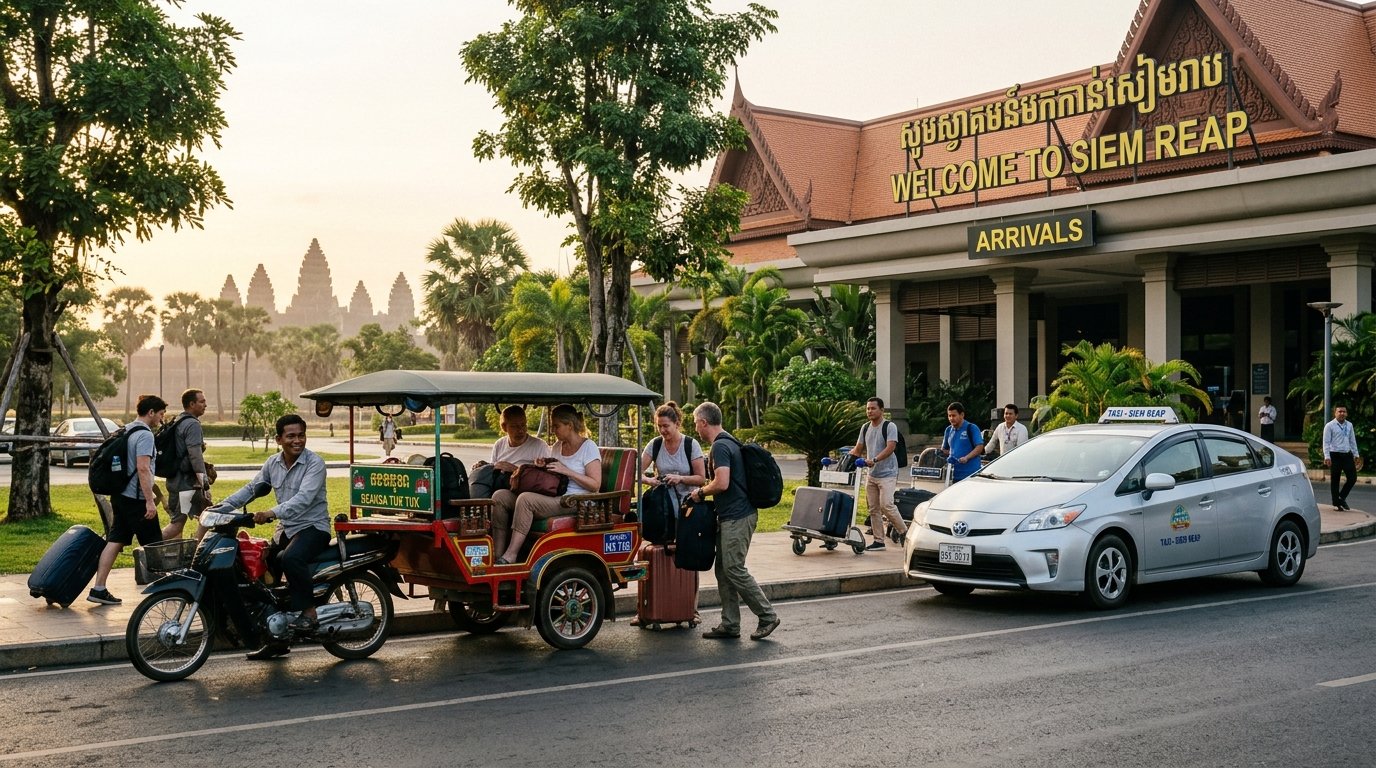
Siem Reap now operates from the Siem Reap-Angkor International Airport (SAI), which opened in late 2023. This new airport is located 40 to 50 km from the city centre, meaning the transfer takes about an hour. For details on navigating this, read our guide on getting from Siem Reap Airport to city.
To avoid haggling upon arrival, it is smart to check Cambodia airport transfers in advance.
Local transport
In both cities, the primary mode of transport for visitors is the tuk-tuk or remorque (a carriage pulled by a motorbike). Ride-hailing apps like PassApp and Grab are essential for getting fair prices without negotiation.
Phnom Penh’s traffic is heavy, making travel times longer. Siem Reap is easier to navigate, and renting a bicycle is a viable option for exploring the town, though most visitors hire a tuk-tuk driver for the day to visit the temples.
Best for families
Siem Reap is generally better for families. The smaller scale of the city, abundance of hotels with swimming pools, and the adventurous nature of exploring the temples appeal to children. There are also family-friendly activities like mini-golf, the circus, and easy countryside excursions.
Phnom Penh’s heavy traffic and focus on intense historical sites make it more challenging for younger children.
Best for couples
Couples might prefer Siem Reap for its romantic settings, boutique resorts, and the chance to watch the sunrise at Angkor Wat. However, couples who enjoy urban exploration, high-end dining, and riverside walks might find Phnom Penh more appealing.
Best for solo travellers
Both cities are safe for solo travellers, but Siem Reap is easier to navigate socially. The high concentration of backpackers and tourists makes it simple to join group tours to the temples or meet people in the central areas.
Phnom Penh requires more effort to find social hubs, but it offers a more authentic look at modern Cambodian life for independent travellers.
Combining both cities
Many visitors choose not to decide between Phnom Penh or Siem Reap, and instead visit both. The journey between the two cities takes about 5 to 6 hours by modern VIP bus (companies like Giant Ibis are reliable) or a short 45-minute domestic flight.
A sensible itinerary includes 3 days in Siem Reap and 2 days in Phnom Penh. From there, you might consider heading to the coast; you can read our comparison of Koh Rong vs Koh Rong Samloem if island life appeals to you.
Remember to stay connected during transit. You can check Cambodia eSIM options to ensure you have data as soon as you arrive. We also have a guide on the best eSIM for Southeast Asia if you are on a longer trip.
Best choice for a first visit
For a first-time visitor to Cambodia, Siem Reap is the clear winner. Angkor Wat is the country’s defining landmark, and the tourism infrastructure in Siem Reap makes for an easy introduction to the country. Before you arrive, make sure you understand the entry requirements by reading our Cambodia visa on arrival guide and our breakdown of visa types explained.
Best city for a short stop
If you only have two days, Phnom Penh is easier to manage. The main sites are close together, and you don’t need a multi-day pass to see them. Trying to rush Angkor Wat in a single day often leads to temple fatigue.
5 Common mistakes when choosing between Phnom Penh and Siem Reap
- Skipping Phnom Penh entirely: Many visitors only go to Siem Reap, missing out on understanding Cambodia’s recent history and modern development.
- Underestimating temple time: Thinking you can see all of Angkor in one day usually leaves visitors exhausted and overwhelmed.
- Forgetting dress codes: Both the Royal Palace in Phnom Penh and the temples in Siem Reap require shoulders and knees to be covered.
- Not booking airport transfers for Siem Reap: The new SAI airport is far from the city; arranging transport on arrival can be stressful.
- Relying on cash only: While US dollars and Cambodian Riel are used, QR code payments are now ubiquitous in both cities.
FAQ
Is it cheaper to fly into Phnom Penh or Siem Reap?
It depends on your departure point, but Phnom Penh (PNH) often has cheaper flight options from major Asian hubs like Kuala Lumpur and Bangkok. However, budget airlines also serve Siem Reap (SAI).
How many days do I need in Siem Reap?
Three full days is ideal. This allows for two days exploring the Angkor temples at a comfortable pace and one day for the city, museums, or a floating village tour.
How many days do I need in Phnom Penh?
Two full days are sufficient for most visitors. This provides enough time to see the Royal Palace, National Museum, and spend a half-day visiting the Tuol Sleng Genocide Museum and Choeung Ek.
Can I take a train between Phnom Penh and Siem Reap?
No, there is currently no passenger rail service between Phnom Penh and Siem Reap. Travel between the two cities is done by bus, private taxi, or domestic flight.
Conclusion
Choosing between Phnom Penh vs Siem Reap comes down to priorities. Siem Reap delivers an unforgettable historical spectacle with its ancient temples and caters heavily to tourists. Phnom Penh offers a grittier, more authentic look at a fast-moving capital city while providing essential context for Cambodia’s difficult recent history. If possible, a well-rounded trip should include both.
Travel disclaimer: Visa policies, transport routes, and airport operations in Cambodia change frequently. Prices and details are accurate as of writing but should be confirmed directly with operators before travel. Last checked: September 2026.
Continue planning
Your most useful next steps
Move from reading to one clear travel decision.