
The practical takeaway
Detailed comparison of Chiang Mai's 5 best neighborhoods: Old City, Nimman, Riverside, Night Bazaar, and Santitham. Ideal bases for first-timers, nomads, families, and couples.
Deciding where to stay in Chiang Mai is the most important choice you will make when planning your trip to Northern Thailand. The quick answer is that first-timers should stay in the Old City for walkability and historical temples, while digital nomads and cafe lovers should base themselves in Nimman (Nimmanhemin). For a quieter, romantic escape, the Riverside offers luxury resorts, and if you want to be close to shopping and evening entertainment, the Night Bazaar area is ideal. Finally, budget-conscious travelers or those staying longer term might prefer the local, residential feel of Santitham.
Last checked: September 2026.
Quick Answer: Where to Stay in Chiang Mai
- Old City: Best overall for first-timers, culture, and walkability.
- Nimman: Best for digital nomads, cafes, modern lifestyle, and nightlife.
- Riverside: Best for couples, luxury stays, and quiet relaxation.
- Night Bazaar: Best for shopping, evening markets, and mid-range hotels.
- Santitham: Best for long-term stays, budget travelers, and local vibe.
Some links in this guide are affiliate links. FlyFono may earn a commission if you book through them, at no extra cost to you. Recommendations are based on practical relevance, not commission.
Chiang Mai is fundamentally different from Bangkok or Phuket. While deciding on your itinerary and the best time to visit Thailand, choosing your Chiang Mai neighborhood will dictate how you experience the city. Are you here to explore 700-year-old temples on foot? Are you working remotely from chic coffee shops? Or are you looking for a tranquil resort overlooking the Ping River? Whatever your travel style, booking your accommodation in advance is highly recommended, especially during the peak cool season. You can check current hotel rates and availability on Trip.com.
Comparison of the 5 Best Neighborhoods in Chiang Mai
| Neighborhood | Vibe | Walkability | Noise Level | Cost (Avg/Night) | Best For |
|---|---|---|---|---|---|
| Old City | Historical, Cultural | High | Medium | $30 – $80 | First-timers, sightseers |
| Nimman | Modern, Trendy | High | High | $40 – $100 | Nomads, cafe culture |
| Riverside | Peaceful, Upscale | Low | Low | $80 – $250+ | Couples, luxury, quiet |
| Night Bazaar | Bustling, Commercial | Medium | High | $30 – $70 | Shoppers, short stays |
| Santitham | Local, Authentic | Medium | Low | $15 – $40 | Budget, long-term |
1. Old City: The Best Area for First-Timers and Culture Seekers
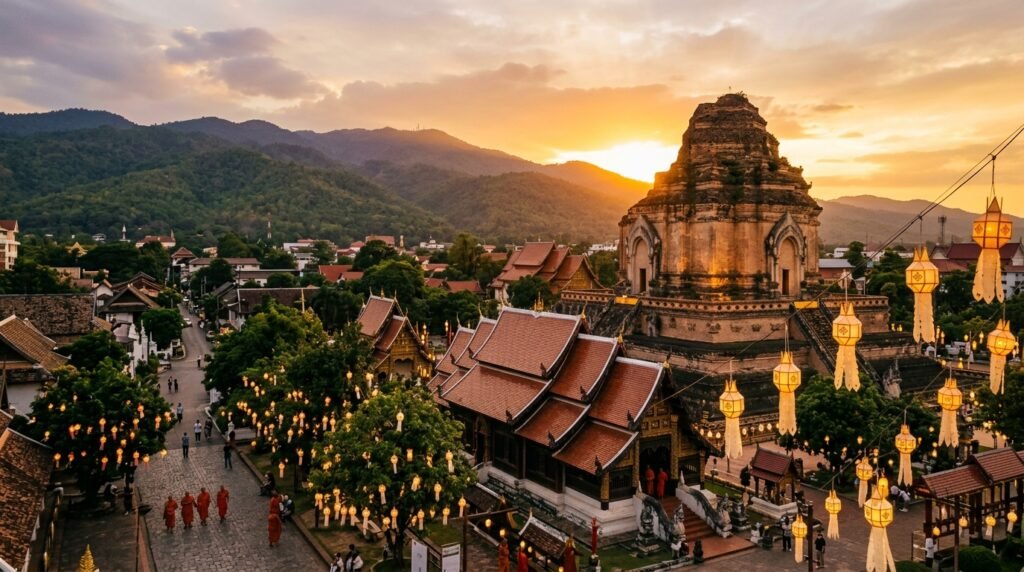
Surrounded by a perfect square of ancient brick walls and a tranquil moat, the Old City is the historical heart of Chiang Mai. This roughly 1.5-kilometer-square area is where the city was founded over 700 years ago as the capital of the Lanna Kingdom. Today, it remains the absolute best place to base yourself if you want to be completely immersed in Chiang Mai’s incredible history and culture.
Atmosphere and Walkability
The Old City is arguably the most walkable neighborhood in Chiang Mai. Narrow lanes, known as “sois,” branch off from the main roads, revealing hidden cafes, traditional massage parlors, and beautiful teakwood guesthouses. The vibe is a perfect mix of historical reverence and backpacker convenience. If you are comparing Bangkok vs Chiang Mai vs Phuket, the Old City is exactly the kind of slow-paced, culturally immersive environment that sets Chiang Mai apart from the bustling capital or the southern beaches. Wandering around the four ancient gates is a joy in itself. Every Sunday evening, the main thoroughfare is completely closed to traffic for the famous Sunday Night Walking Street, transforming the area into a massive, vibrant outdoor market.
Food and Nightlife
Food options in the Old City range from incredible street food stalls at the North Gate (Chang Phuak Gate) serving famous Khao Kha Moo (stewed pork leg), to mid-range restaurants offering authentic Khao Soi. You’ll find legendary dining spots nestled among ancient temple grounds. Nightlife here is generally subdued, characterized by relaxed reggae bars, live acoustic music venues like the North Gate Jazz Co-op, and quiet street-side pubs. Noise levels are generally low to medium, though it depends on your proximity to the main roads or the Sunday Market route.
Transport and Costs
Getting around is incredibly easy. You can walk to most attractions, including Wat Phra Singh (the most revered temple) and Wat Chedi Luang (featuring massive ancient ruins). For longer trips, you can easily flag down a red songthaew (shared taxi) or a tuk-tuk. Accommodation ranges from cheap hostel dorms ($10/night) to beautiful boutique hotels ($60-$120/night), many of which are styled with traditional Lanna architecture featuring dark teak wood and intricate carvings.
2. Nimman (Nimmanhemin): The Trendy Hub for Digital Nomads
Located just west of the Old City and nestled near the foothills of Doi Suthep mountain, Nimman (or Nimmanhaemin Road) is the modern, cosmopolitan face of Chiang Mai. It’s the epicenter of the city’s massive digital nomad community, attracting expats, online entrepreneurs, and trendy Thai university students.
Atmosphere and Walkability
Nimman is trendy, chic, and significantly more modern than the Old City. The main road and its intersecting sois are packed with artisan coffee shops, co-working spaces, boutique fashion stores, and modern art galleries. Key landmarks include the Maya Lifestyle Shopping Center, a massive modern mall, and One Nimman, a beautifully designed open-air shopping and dining complex that feels like a slice of Europe in Southeast Asia. Walkability is excellent, with wide sidewalks on the main road, though the area is denser and traffic can be heavier. If you’ve just taken the train from Bangkok to Chiang Mai and want to transition immediately into a comfortable, modern environment with high-speed internet, Nimman is the place to be.
Food and Nightlife
Dining in Nimman is a global affair. Alongside excellent high-end Thai restaurants, you’ll find fantastic Japanese sushi bars, authentic Italian pizzerias, Mexican taquerias, and countless brunch spots serving avocado toast and specialty coffee. The coffee scene is world-class, with award-winning cafes leading the charge. The nightlife is vibrant, featuring upscale cocktail bars, craft beer taprooms, and large nightclubs popular with local university students such as Warm Up Cafe. Noise levels can be higher here, especially on the weekends or if you are located directly on a main soi.
Transport and Costs
Transport is convenient, with abundant Grab taxis and songthaews. Costs in Nimman are slightly higher than the rest of the city. Expect to pay a premium for stylish boutique hotels and modern condominiums, averaging $50 to $100+ per night. If you’re looking for eSIMs to ensure you’re connected the moment you arrive to book Grab cars or check Google Maps, we highly recommend Saily eSIM for reliable coverage in Nimman and across Thailand.
3. Riverside: Peaceful Luxury for Couples and Families
For those seeking a tranquil retreat away from the noise of the city center, the banks of the Mae Ping River offer the most luxurious and relaxing environment in Chiang Mai. Located east of the Old City and Night Bazaar, this area provides a distinct resort feel.
Atmosphere and Walkability
The Riverside area is characterized by large, leafy resort properties, colonial-era architecture, and beautiful river views. It feels worlds away from the backpacker energy of the Old City or the hustle of Nimman. The vibe is decidedly upscale, quiet, and romantic. Historic bridges, like the Iron Bridge (Sapaan Lek), add to the scenic charm. However, walkability is low. The distances between resorts, restaurants, and main attractions are larger, and sidewalks are less consistent. You will likely rely on taxis, Grab cars, or shuttle services provided by your hotel to get into town. This area is built for relaxation, spa days, and lingering over breakfast with a view.
Food and Nightlife
Dining here is a premium experience. Many of the city’s finest restaurants are located along the river, offering spectacular sunset views alongside excellent traditional Thai and international cuisine. Famous spots like The Good View or Riverside Bar & Restaurant offer live music and great food in a lively but sophisticated setting. Nightlife is restricted to hotel bars and riverside restaurants; there are no noisy clubs or loud backpacker bars here. Consequently, the noise level is very low, making it perfect for light sleepers and families.
Transport and Costs
You will need a taxi or a Grab to get to the Old City, which takes about 10-15 minutes depending on traffic. This is the most expensive neighborhood in Chiang Mai. Five-star resorts like Anantara Chiang Mai Resort, Cross Chiang Mai Riverside, and high-end boutique properties dominate the landscape, with nightly rates typically ranging from $100 to well over $300.
4. Night Bazaar: Action, Shopping, and Convenience
Situated directly between the eastern edge of the Old City and the Ping River, the Night Bazaar area is exactly what it sounds like—the commercial shopping hub of the city, centered around the famous daily night markets.
Atmosphere and Walkability
The area is heavily commercial, bustling, and energetic. During the day, it can feel a bit quiet as many vendors set up for the evening, though nearby Warorot Market (Kad Luang) provides a fascinating daytime glimpse into local wholesale commerce. But after 5:00 PM, the streets come alive with neon lights, hundreds of market stalls selling clothing, souvenirs, and handicrafts, and throngs of tourists. Walkability is very good, and you are positioned perfectly halfway between the Old City (a 15-minute walk west) and the Riverside (a 10-minute walk east).
Food and Nightlife
Food options are incredibly varied, catering almost entirely to international tourists. You’ll find extensive international buffets, large seafood restaurants, fast-food chains, and massive open-air food courts within the markets themselves featuring live entertainment. The Night Bazaar area also features a high concentration of Indian and Middle Eastern restaurants. Nightlife revolves around the markets, cabaret shows, and sports bars. Noise levels are high in the evening, so request a room at the back of your hotel if you are a light sleeper.
Transport and Costs
The area is crawling with tuk-tuks and taxis, making it very easy to get anywhere, or to arrange pick-ups for day trips. If you want to book tours to Doi Inthanon National Park, ethical elephant sanctuaries, or cooking classes, the Klook activities platform offers excellent options with easy hotel pick-ups, and the Night Bazaar is a primary pick-up zone. Costs are very reasonable here. The Night Bazaar is characterized by larger, older mid-range hotels offering excellent value, with typical prices between $30 and $70 per night.
5. Santitham: The Authentic Local Experience
Located just north of the Old City and east of Nimman, Santitham is the neighborhood that many long-term expats and budget-conscious travelers eventually gravitate towards. It remains off the radar for most short-term tourists.
Atmosphere and Walkability
Santitham is authentically Thai. It lacks the polished veneer of Nimman and the historical grandeur of the Old City. Instead, you get a genuine, everyday neighborhood filled with local wet markets, students from the nearby Chiang Mai University, and residential apartment buildings. The vibe is laid-back, welcoming, and entirely untouristy. The heart of the neighborhood is Thanin Market (Siri-wattana Market), a bustling hub of local produce and ready-to-eat meals. Walkability is decent within the neighborhood itself, but sidewalks are practically non-existent and the roads can be confusing. It’s an area best navigated by renting a scooter.
Food and Nightlife
The food here is strictly local, authentic, and incredibly cheap. You will find massive portions of pad thai, local noodle soups, and spicy som tam for a fraction of the price you’d pay in Nimman or the Old City. The coffee scene is also emerging here. Nightlife is equally local, featuring small Thai dive bars, karaoke joints, and casual outdoor barbecue (Moo Krata) restaurants. It is generally very quiet late at night, as it is a residential zone.
Transport and Costs
Transport is slightly less convenient than in tourist hubs; you will likely need to order a Grab or rent your own scooter to get around efficiently. However, the costs are unbeatable. You can find simple guesthouses and serviced apartments for $15 to $30 a night. It’s the perfect base if you are traveling on a strict budget, backpacking across Southeast Asia, or planning to stay for a month or longer to soak up a slower pace of life.
Best Option by Traveller Type
Still not sure which neighborhood fits your specific needs? Here is our breakdown based on different travel profiles:
- First-Timers: The Old City. If you only have a few days, the Old City allows you to step out of your hotel and immediately be surrounded by Chiang Mai’s rich history. It is the most convenient location for sightseeing and soaking in the culture without needing to worry about transportation logistics.
- Digital Nomads and Remote Workers: Nimman. Nimman was practically built for remote workers. With blazing fast internet, dozens of comfortable cafes equipped with power outlets, dedicated co-working spaces like Punspace, and modern condo rentals available on monthly contracts, it is the most comfortable and productive environment for long-term remote work.
- Families with Children: Riverside or Old City. For families with young children, the Riverside offers spacious resorts with large swimming pools, expansive lawns, and quiet environments away from traffic. Alternatively, the Old City offers high walkability, meaning less time wrangling kids in and out of taxis, and immediate access to family-friendly restaurants and pedestrian-friendly temple grounds.
- Couples and Honeymooners: Riverside. The serene atmosphere, sunset views over the Mae Ping River, and access to five-star luxury amenities and spas make the Riverside the undisputed choice for a romantic getaway.
- Short Stays and Shoppers: Night Bazaar. If you are only in Chiang Mai for 2 nights and want to maximize your time buying souvenirs, eating varied foods, and taking full-day tours into the mountains, the Night Bazaar offers incredible convenience and great mid-range hotel value.
Common Mistakes When Choosing a Chiang Mai Neighborhood
While Chiang Mai is generally an easy city to navigate, picking the wrong area can lead to frustration and eat up valuable vacation time. Here are the most common mistakes travelers make when deciding where to stay:
- Booking too far outside the city center. Many beautiful, sprawling resorts are located in the hills of Hang Dong, Mae Rim, or Samoeng, which are 30 to 45 minutes outside the city limits. While these properties are gorgeous, you will be entirely dependent on expensive private taxis or infrequent hotel shuttles to get anywhere. Unless you are intentionally booking a remote wellness retreat and don’t plan to leave the resort, stay within the city limits. This is especially relevant if you are tossing up between Chiang Mai vs Chiang Rai; if you want remote mountain nature, you might prefer the broader Chiang Rai province, but if you want to experience the culture of Chiang Mai city, stay central.
- Assuming Nimman is culturally authentic. Nimman is exceptionally fun, highly convenient, and modern, but it does not represent traditional Thai culture. If you book a hotel here expecting ancient architecture, traditional wooden houses, and classic street food carts on every corner, you will be deeply disappointed. It looks more like a trendy neighborhood in Seoul or Tokyo than historical Thailand.
- Ignoring the airport flight path. The Chiang Mai International Airport is situated very close to the city center, just southwest of the Old City. The flight path goes directly over the southern parts of the Nimman area and near the Suan Dok gate. If you are a light sleeper, read hotel reviews carefully to check for airplane noise complaints before booking in southern Nimman. Flights operate from early morning until late at night.
- Underestimating traffic congestion. While considerably smaller than Bangkok, Chiang Mai’s traffic, especially around the moat of the Old City and near the Night Bazaar during the evening rush hour, can be gridlocked. If you plan to take many excursions outside the city (like driving up the mountain to Doi Suthep), choose a location with easy road access that doesn’t require navigating the congested moat roads every single morning.
Frequently Asked Questions
Is it better to stay in Nimman or the Old City?
It depends entirely on your travel style and what you want out of your trip. Choose the Old City if you prioritize visiting historical temples, engaging in cultural immersion, and walking everywhere in a highly pedestrian-friendly environment. Choose Nimman if you prefer modern cafes, trendy boutiques, digital nomad culture, high-end dining, and a more vibrant, youthful nightlife scene.
How many days should I stay in Chiang Mai?
A minimum of 3 to 4 days is highly recommended. This gives you enough time to see the main temples within the Old City, visit an ethical elephant sanctuary, explore the night markets, and take a half-day trip up the mountain to Wat Phra That Doi Suthep. However, many travelers end up staying for a week or longer because of the remarkably relaxed pace of life, the excellent food, and the lower cost of living compared to Bangkok or the southern islands.
Is Chiang Mai a walkable city?
Yes, particularly within the Old City, which is relatively flat and contained within a manageable 1.5-kilometer square bordered by the moat. Nimman is also highly walkable along its main thoroughfares. However, walking between neighborhoods (for example, from Nimman to the Riverside, or from Santitham to the Night Bazaar) is not recommended due to the heat, the need to cross major multi-lane highways, and a general lack of consistent pedestrian infrastructure outside the central tourist zones.
Do I need air conditioning in my Chiang Mai hotel?
Yes, absolutely. Even during the “cool” season (November to February), daytime temperatures regularly exceed 30°C (86°F). During the hot and dry season (March to May), temperatures can easily approach 40°C (104°F) with high humidity. Air conditioning is essential for a comfortable sleep, and it also helps filter the air during the burning season (smoky season) which typically occurs between late February and April.
Is Chiang Mai safe for solo female travelers?
Chiang Mai is incredibly safe, and is widely considered one of the safest destinations in all of Southeast Asia for solo female travelers. Violent crime against tourists is extremely rare. Locals are friendly and respectful. However, standard common-sense precautions regarding petty theft, watching your drinks, and organizing reliable transport late at night still apply.
Final Recommendation
Ultimately, deciding where to stay in Chiang Mai comes down to matching your personal travel style, budget, and itinerary with the right neighborhood. For the vast majority of tourists visiting for the first time, the Old City remains the absolute best overall choice. It offers the perfect blend of historical charm, convenience, safety, and immediate access to the city’s most famous cultural landmarks, all within a highly walkable footprint. You step out of your hotel and immediately feel like you are in Northern Thailand.
However, if your priority is finding the best coffee in Thailand, connecting with other remote workers, and enjoying a modern, highly air-conditioned aesthetic, Nimman is your ideal base. Those with a higher budget seeking romance and tranquility should look no further than the Riverside. Whichever area you choose, Chiang Mai’s welcoming atmosphere, incredible food scene, and rich Lanna culture will ensure an unforgettable northern Thai adventure.
Continue planning
Your most useful next steps
Move from reading to one clear travel decision.