
The practical takeaway
The best transport option from Narita Airport to Tokyo depends directly on your final hotel neighborhood in the city. The Keisei Skyliner is the fastest choice for travellers staying in Ueno or Asakusa (41 minutes), while the JR Narita Express (N'EX) is…
The best transport option from Narita Airport to Tokyo depends directly on your final hotel neighborhood in the city. The Keisei Skyliner is the fastest choice for travellers staying in Ueno or Asakusa (41 minutes), while the JR Narita Express (N’EX) is the premier direct train for those staying in Tokyo Station, Shinjuku, Shibuya, or Shinagawa (55 to 75 minutes without transferring).
For families carrying multiple heavy suitcases, travellers arriving late at night after train lines close, or those heading directly to major hotels in Shinjuku and Roppongi, the Airport Limousine Bus or a pre-booked private transfer provides stress-free door-to-door luggage handling. Narita Airport (NRT) is situated roughly 60 kilometers east of central Tokyo, making selection of the correct express rail or highway transfer essential to avoid long journeys and unnecessary station steps.
Some links in this guide are affiliate links. FlyFono may earn a commission if you book through them, at no extra cost to you. Recommendations are based on practical relevance, not commission.
Overview: Understanding Narita Airport’s Location & Terminals
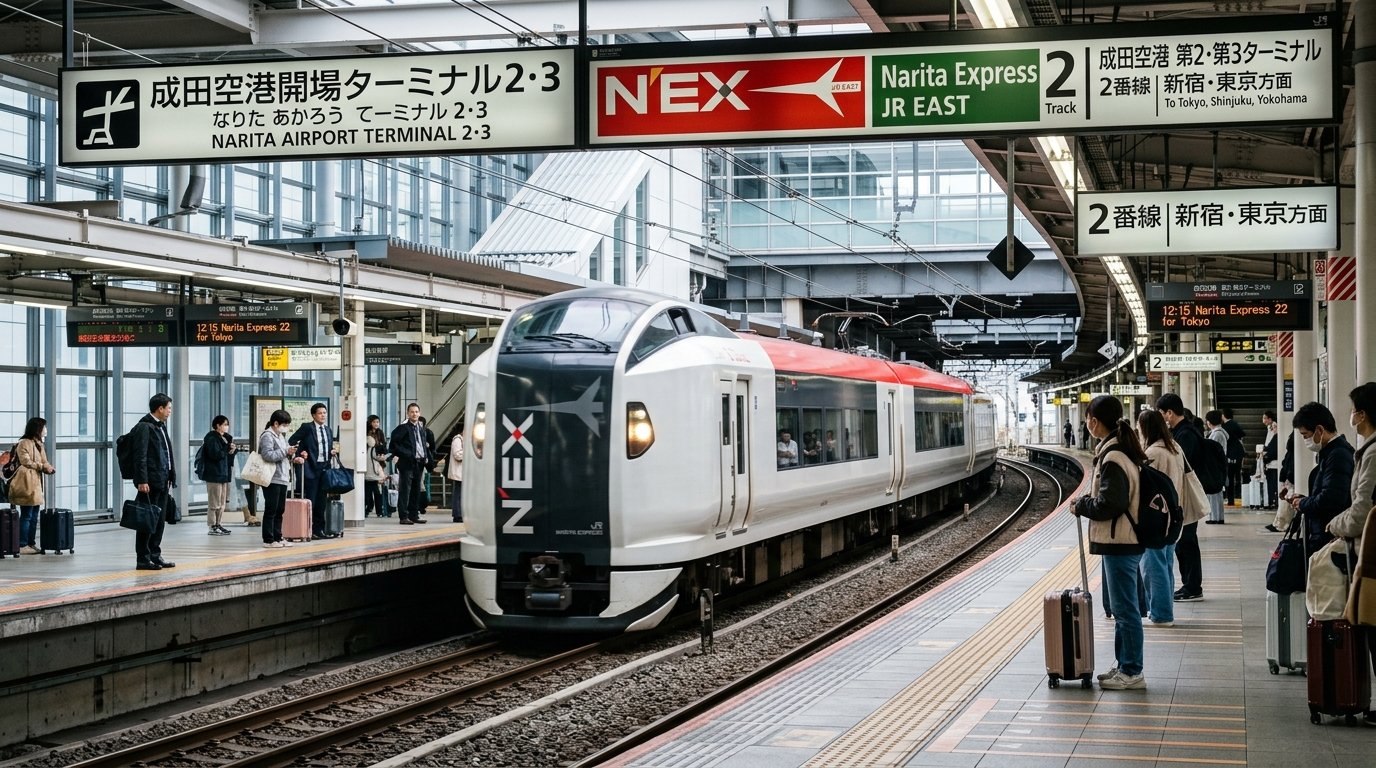
Narita International Airport (NRT) consists of three main passenger terminals connected by free inter-terminal shuttle buses. Train stations are located in the basement levels of Terminal 1 (Narita Airport Terminal 1 Station) and Terminal 2 (Narita Airport Terminal 2-3 Station). Passengers arriving at Terminal 3 must walk 10 minutes along a covered pedestrian skywalk or take a free shuttle bus to Terminal 2 to board express trains.
Before purchasing your airport transfer ticket, decide whether your priority is minimum travel time, direct seat access without changing trains, or door-to-door luggage convenience. Operating parameters, fares, and schedule rules in this guide were verified against official East Japan Railway Company (JR East) and Keisei Electric Railway guidelines as of August 2026.
Connecting Mobile Data Upon Arrival at Narita
Navigating Japanese train stations requires real-time access to transit apps like Navitime or Google Maps to check live platform numbers, track car positions, and locate elevator exits. While Narita Airport offers free terminal Wi-Fi, public Wi-Fi signals disconnect as soon as you descend into underground railway platforms or board express trains.
To ensure seamless data access the moment your flight lands, you can Activate a Japan eSIM with Saily before departing. This provides immediate 4G/5G mobile connectivity upon landing, enabling you to display digital train vouchers, check live train departure boards, and navigate Tokyo’s complex station exits without delay or unexpected international roaming surcharges.
Narita Airport to Tokyo Transport Modes Compared
Review this comparison table when choosing how to get from Narita Airport to Tokyo based on cost, travel time, luggage capacity, and destination hub:
| Transport Mode | Travel Time to Tokyo | Average Fare (JPY / USD) | Primary Destination Hubs | Luggage & Comfort Rating |
|---|---|---|---|---|
| Keisei Skyliner | 41 minutes | ¥2,580 (~$17 USD) | Nippori, Keisei Ueno (Asakusa connection) | High (Reserved seats, dedicated luggage racks) |
| JR Narita Express (N’EX) | 55–75 minutes | ¥3,070–¥3,250 (~$20–$22 USD) | Tokyo Station, Shinjuku, Shibuya, Shinagawa | High (Reserved seats, locked luggage racks) |
| Keisei Access Express | 55–65 minutes | ¥1,380–¥1,520 (~$9–$10 USD) | Asakusa, Oshiage (Skytree), Nihombashi | Moderate (Commuter seating, no reserved seats) |
| Airport Limousine Bus | 65–90 minutes | ¥3,200–¥3,600 (~$21–$24 USD) | Shinjuku Hotels, Tokyo Station, Ginza, Roppongi | Very High (Under-bus luggage hold, door-to-door) |
| TYO-NRT Low-Cost Bus | 65–80 minutes | ¥1,500 (~$10 USD) | Tokyo Station (Nihombashi Exit), Ginza | Moderate (Under-bus hold, non-reserved queues) |
| Metered Street Taxi | 60–90 minutes | ¥25,000–¥32,000 (~$165–$210 USD) | Any hotel in Greater Tokyo area | High (Flat-rate available, extremely expensive) |
| Private Airport Transfer | 60–80 minutes | Fixed pre-booked fare | Door-to-door to any hotel or residential address | Maximum (Driver meets in hall, fits all bags) |
1. Keisei Skyliner: Fastest Train to Ueno & Northern Tokyo
The Keisei Skyliner is Japan’s second-fastest train service (operating at speeds up to 160 km/h on the Narita Sky Access Line). It is the fastest overall rail transport from Narita into Tokyo.
- Routing & Time: Runs non-stop from Narita Airport Terminals 1 and 2 to Nippori Station in 36 minutes, terminating at Keisei Ueno Station in 41 minutes.
- Seating & Amenities: All seats are fully reserved with power outlets under every seat, free Wi-Fi, and spacious overhead racks plus dedicated luggage bays at car ends.
- Ticket Redemption: If purchasing digital vouchers online, redeem your physical seat pass at the Keisei Skyliner Ticket Counter or automated ticket machines located on Basement Level 1 of Terminal 1 or Terminal 2.
- Best For: Travellers staying in Ueno, Asakusa, Akihabara, or Yanaka. At Nippori, you can transfer seamlessly across the platform to the JR Yamanote loop line to reach Ikebukuro.
To secure discounted digital tickets before landing and skip queue lines at airport ticket counters, you can Book Keisei Skyliner and Tokyo transit tickets on Klook for instant QR code redemption at Narita terminal kiosks.
2. JR Narita Express (N’EX): Best Direct Train to Shinjuku & Shibuya
The JR Narita Express (N’EX) is the flagship express train operated by JR East. It offers a smooth, comfortable ride directly into the heart of western and central Tokyo without needing to navigate complex station transfers with heavy luggage.
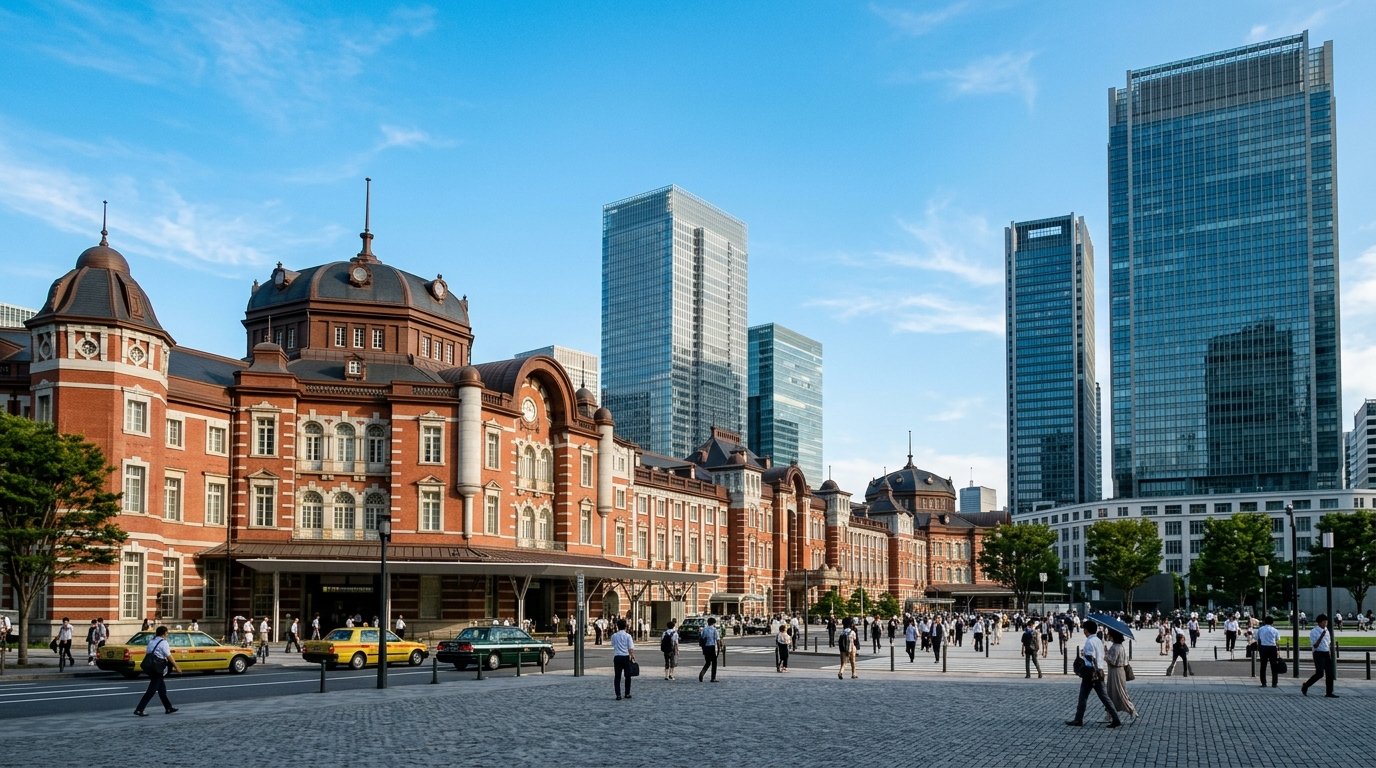
- Routing & Time: Reaches Tokyo Station in 55 minutes, Shinagawa in 65 minutes, Shibuya in 70 minutes, and Shinjuku in 75 minutes. Select trains continue to Yokohama.
- Luggage & Comfort: Features coded combination luggage locks at the end of each car, spacious reclining seats, fold-down tables, and large digital display screens announcing upcoming stops in English.
- N’EX Tokyo Round Trip Pass: JR East offers a discounted Round-Trip Pass for foreign passport holders (valid for 14 days), providing significant savings over purchasing single one-way tickets.
If you are still deciding whether landing at Haneda or Narita is better for your overall budget, read our detailed comparison of Haneda vs Narita Airport. To select your ideal neighborhood base in Tokyo, check our Where to Stay in Tokyo Accommodation Guide.
3. Airport Limousine Bus: Best for Heavy Luggage & Direct Hotel Pick-up
While trains are fast, hauling three large suitcases through crowded interchange stations like Shinjuku or Tokyo Station can be physically demanding. The Tokyo Airport Limousine Bus eliminates station stairs and transfers entirely.
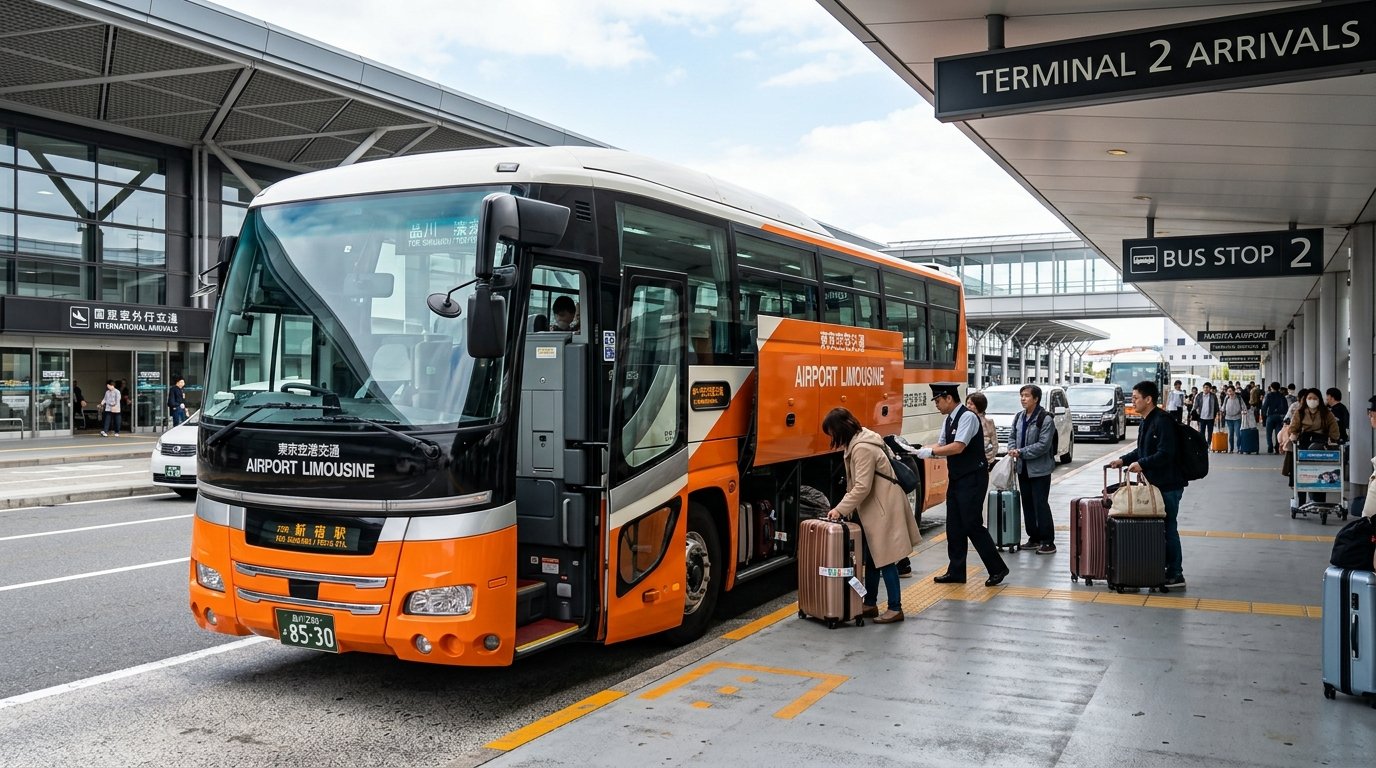
- Direct Hotel Drops: Limousine buses serve major international hotels in Shinjuku (such as the Keio Plaza, Hilton Tokyo, and Park Hyatt), Tokyo Station, Ginza, Roppongi, and the Tokyo Disney Resort area.
- Luggage Allowance: Each passenger can check up to 2 large suitcases (up to 30 kg each) into the under-bus cargo hold, stowed by professional staff who issue baggage claim receipts.
- Travel Time: Takes 65 to 90 minutes outside peak hours. During morning (07:30–09:30) and evening (17:00–19:00) highway rush hours, traffic delays can add 20 to 30 minutes.
4. Private Airport Transfers for Families & Groups
For families travelling with small children, elderly relatives, or extra-large luggage sets (such as ski bags or bike boxes), public transit or buses can be cumbersome. Private transfers offer a dedicated driver who meets you in the arrival hall with a name sign and drives you directly to your hotel entrance.
To reserve a comfortable multi-passenger van or luxury sedan with fixed pricing, you can Book a private Narita transfer with GetTransfer to guarantee vehicle size and avoid highway toll surcharges.
Best Transport Choice by Destination Neighborhood
Use this quick guide to choose your transport mode from Narita Airport based on where your hotel is located in Tokyo:
- Ueno & Asakusa: Take the Keisei Skyliner to Keisei Ueno (41 mins). For Asakusa, take the Keisei Access Express directly to Asakusa Station (55 mins) without transferring.
- Tokyo Station & Marunouchi: Take the JR Narita Express (N’EX) directly to Tokyo Station (55 mins) or the Low-Cost TYO-NRT Bus (65 mins).
- Shinjuku & Shibuya: Take the JR Narita Express (N’EX) for direct rail access, or the Airport Limousine Bus for direct drop-off at major Shinjuku hotels.
- Ginza & Roppongi: Take the Airport Limousine Bus or a Private Transfer for direct hotel arrival.
IC Cards, Ticket Collection & Late-Night Arrival Rules
Understanding Japanese ticketing systems prevents confusion upon arrival:
- IC Cards (Welcome Suica & Pasmo Passport): Contactless IC transit cards allow you to tap through turnstiles on local subway and JR lines throughout Tokyo. Physical IC cards can be purchased at airport JR Travel Service Centers or loaded onto Apple Wallet (digital Suica/Pasmo) on iPhones. Note that express trains like N’EX and Skyliner require a separate limited express seat ticket in addition to the base fare.
- Luggage Forwarding (Takkyubin): If travelling with excessive baggage, consider sending your large suitcases directly from Narita Airport to your Tokyo hotel via Hands-Free Travel counters operated by Yamato Transport or Sagawa Express in the arrival halls. Delivered bags typically arrive at your hotel by evening or the following morning.
- Late-Night Arrivals (After 22:30): The last Skyliner train departs Narita around 23:00, and the last N’EX train leaves around 21:44. If landing on a late flight past 22:30, your options are limited to late-night buses, taxis, or private transfers.
If you arrive after midnight and cannot reach your hotel, you can Compare Narita airport hotels on Trip.com to book a room at Nine Hours Narita (capsule hotel in T2) or Narita Airport Rest House before heading into Tokyo the next morning.
To budget your overall Japan trip expenses, use our Realistic Trip Budget Calculator or plan your multi-city route with our complete 14-day Japan travel itinerary.
Frequently Asked Questions About Narita Airport Transport
Is Narita Express or Keisei Skyliner better from Narita Airport?
Keisei Skyliner is faster (41 minutes) and cheaper if staying in Ueno, Asakusa, or northern Tokyo. Narita Express (N’EX) is better if staying in Shinjuku, Shibuya, or Tokyo Station because it runs directly to those major western hubs without needing a subway transfer.
How much does a taxi cost from Narita Airport to Tokyo?
A metered taxi from Narita Airport to central Tokyo costs between ¥25,000 and ¥32,000 ($165–$210 USD), plus expressway toll fees (~¥3,000). Due to the high cost, taxis are rarely recommended over trains or private transfers unless expense is not a concern.
Can I use a Japan Rail Pass (JR Pass) on the Narita Express?
Yes. The Narita Express is fully covered by the nationwide Japan Rail Pass. However, you must present your pass at the JR Ticket Office at Narita Airport to obtain a seat reservation ticket before boarding.
What is the cheapest way to get from Narita to Tokyo?
The cheapest option is the TYO-NRT Low-Cost Bus (formerly Tokyo Shuttle / 1,000 Yen Bus), which costs ¥1,500 (~$10 USD) one-way to Tokyo Station and Ginza. The Keisei Access Express train is another budget alternative at ¥1,380 to ¥1,520.
How early should I leave Tokyo for my return flight to Narita?
Leave central Tokyo at least 4 to 4.5 hours before an international flight departure from Narita. This accounts for a 60-minute train journey, terminal navigation, baggage drop, and security screening.
Continue planning
Your most useful next steps
Move from reading to one clear travel decision.