
To accurately project your overall travel spend across hotels, transit, and meals, use our free Realistic Trip Budget Calculator and customize your travel pace with our Trip Planner tool.
Ensure your mobile connectivity is ready prior to arrival by reviewing the Best eSIM for Japan, Thailand, and Southeast Asia guide, and compare pass savings in our Best Singapore Attraction Passes Compared review.
Final Decision Table
| Your Main Priority | Recommended Area | Alternative Option |
|---|---|---|
| Best all-round convenience | Bugis | City Hall |
| Local food & heritage value | Chinatown | Tanjong Pagar |
| Iconic views & luxury | Marina Bay | Civic District |
| Shopping & high-end malls | Orchard Road | Somerset |
| Nightlife & river dining | Clarke Quay | Robertson Quay |
| Budget travel & hostels | Little India | Chinatown |
| Resorts & theme parks | Sentosa Island | HarbourFront |
Frequently Asked Questions
Which is better for a first-timer: Bugis or Chinatown?
Bugis is slightly better for first-time visitors who want direct airport train access on the East-West Line and immediate proximity to both modern malls and cultural lanes. Chinatown is better if hawker food variety and historic shophouse boutique hotels are your highest priority.
Is it worth staying on Sentosa Island?
Staying on Sentosa is worth it if your trip focuses primarily on resort relaxation, beach activities, and Universal Studios Singapore. If you plan to spend most of your time exploring central city sights, staying on the mainland in Bugis, Chinatown, or Marina Bay is far more convenient.
How many days do you need in Singapore for a first trip?
A 3- to 4-day stay is ideal for a first visit to Singapore. This provides enough time to explore Marina Bay, Gardens by the Bay, major cultural quarters (Chinatown, Kampong Glam, Little India), and sample local hawker cuisine without rushing.
Is public transport in Singapore easy for tourists?
Yes. The MRT system is clear, safe, fully air-conditioned, and navigable in English. You can tap in and out at turnstiles using a contactless credit card, debit card, or mobile wallet (Apple Pay/Google Pay) without buying separate paper tickets.
Conclusion
Finding the right base in Singapore comes down to matching your daily habits with the right MRT line. For most first-time travellers, Bugis offers an unmatched balance of airport transit ease, neighbourhood character, and central connectivity. Food enthusiasts will thrive in Chinatown, while those celebrating a special occasion can justify the luxury price point of Marina Bay. Wherever you choose to book, prioritize staying within a short walking distance of an MRT station to ensure a seamless Singapore experience.
For additional destination updates, guidelines, and official travel notices, refer to the official Singapore Tourism Board Official Portal.
Base yourself in Chinatown or Tanjong Pagar. This gives you time to explore local hawker centers, visit museums in the Civic District, take a day trip to Sentosa, and experience evening dining along the Singapore River.
Planning a broader regional journey? Read our Singapore and Malaysia 7-Day Itinerary, or check our guide on Where to Stay in Kuala Lumpur for a Short Trip if continuing north.
To accurately project your overall travel spend across hotels, transit, and meals, use our free Realistic Trip Budget Calculator and customize your travel pace with our Trip Planner tool.
Ensure your mobile connectivity is ready prior to arrival by reviewing the Best eSIM for Japan, Thailand, and Southeast Asia guide, and compare pass savings in our Best Singapore Attraction Passes Compared review.
Final Decision Table
| Your Main Priority | Recommended Area | Alternative Option |
|---|---|---|
| Best all-round convenience | Bugis | City Hall |
| Local food & heritage value | Chinatown | Tanjong Pagar |
| Iconic views & luxury | Marina Bay | Civic District |
| Shopping & high-end malls | Orchard Road | Somerset |
| Nightlife & river dining | Clarke Quay | Robertson Quay |
| Budget travel & hostels | Little India | Chinatown |
| Resorts & theme parks | Sentosa Island | HarbourFront |
Frequently Asked Questions
Which is better for a first-timer: Bugis or Chinatown?
Bugis is slightly better for first-time visitors who want direct airport train access on the East-West Line and immediate proximity to both modern malls and cultural lanes. Chinatown is better if hawker food variety and historic shophouse boutique hotels are your highest priority.
Is it worth staying on Sentosa Island?
Staying on Sentosa is worth it if your trip focuses primarily on resort relaxation, beach activities, and Universal Studios Singapore. If you plan to spend most of your time exploring central city sights, staying on the mainland in Bugis, Chinatown, or Marina Bay is far more convenient.
How many days do you need in Singapore for a first trip?
A 3- to 4-day stay is ideal for a first visit to Singapore. This provides enough time to explore Marina Bay, Gardens by the Bay, major cultural quarters (Chinatown, Kampong Glam, Little India), and sample local hawker cuisine without rushing.
Is public transport in Singapore easy for tourists?
Yes. The MRT system is clear, safe, fully air-conditioned, and navigable in English. You can tap in and out at turnstiles using a contactless credit card, debit card, or mobile wallet (Apple Pay/Google Pay) without buying separate paper tickets.
Conclusion
Finding the right base in Singapore comes down to matching your daily habits with the right MRT line. For most first-time travellers, Bugis offers an unmatched balance of airport transit ease, neighbourhood character, and central connectivity. Food enthusiasts will thrive in Chinatown, while those celebrating a special occasion can justify the luxury price point of Marina Bay. Wherever you choose to book, prioritize staying within a short walking distance of an MRT station to ensure a seamless Singapore experience.
For additional destination updates, guidelines, and official travel notices, refer to the official Singapore Tourism Board Official Portal.
Base yourself in Chinatown or Tanjong Pagar. This gives you time to explore local hawker centers, visit museums in the Civic District, take a day trip to Sentosa, and experience evening dining along the Singapore River.
Planning a broader regional journey? Read our Singapore and Malaysia 7-Day Itinerary, or check our guide on Where to Stay in Kuala Lumpur for a Short Trip if continuing north.
To accurately project your overall travel spend across hotels, transit, and meals, use our free Realistic Trip Budget Calculator and customize your travel pace with our Trip Planner tool.
Ensure your mobile connectivity is ready prior to arrival by reviewing the Best eSIM for Japan, Thailand, and Southeast Asia guide, and compare pass savings in our Best Singapore Attraction Passes Compared review.
Final Decision Table
| Your Main Priority | Recommended Area | Alternative Option |
|---|---|---|
| Best all-round convenience | Bugis | City Hall |
| Local food & heritage value | Chinatown | Tanjong Pagar |
| Iconic views & luxury | Marina Bay | Civic District |
| Shopping & high-end malls | Orchard Road | Somerset |
| Nightlife & river dining | Clarke Quay | Robertson Quay |
| Budget travel & hostels | Little India | Chinatown |
| Resorts & theme parks | Sentosa Island | HarbourFront |
Frequently Asked Questions
Which is better for a first-timer: Bugis or Chinatown?
Bugis is slightly better for first-time visitors who want direct airport train access on the East-West Line and immediate proximity to both modern malls and cultural lanes. Chinatown is better if hawker food variety and historic shophouse boutique hotels are your highest priority.
Is it worth staying on Sentosa Island?
Staying on Sentosa is worth it if your trip focuses primarily on resort relaxation, beach activities, and Universal Studios Singapore. If you plan to spend most of your time exploring central city sights, staying on the mainland in Bugis, Chinatown, or Marina Bay is far more convenient.
How many days do you need in Singapore for a first trip?
A 3- to 4-day stay is ideal for a first visit to Singapore. This provides enough time to explore Marina Bay, Gardens by the Bay, major cultural quarters (Chinatown, Kampong Glam, Little India), and sample local hawker cuisine without rushing.
Is public transport in Singapore easy for tourists?
Yes. The MRT system is clear, safe, fully air-conditioned, and navigable in English. You can tap in and out at turnstiles using a contactless credit card, debit card, or mobile wallet (Apple Pay/Google Pay) without buying separate paper tickets.
Conclusion
Finding the right base in Singapore comes down to matching your daily habits with the right MRT line. For most first-time travellers, Bugis offers an unmatched balance of airport transit ease, neighbourhood character, and central connectivity. Food enthusiasts will thrive in Chinatown, while those celebrating a special occasion can justify the luxury price point of Marina Bay. Wherever you choose to book, prioritize staying within a short walking distance of an MRT station to ensure a seamless Singapore experience.
For additional destination updates, guidelines, and official travel notices, refer to the official Singapore Tourism Board Official Portal.
Base yourself in Bugis or City Hall. You minimize transit overhead, reach major sights like Marina Bay Sands and Gardens by the Bay quickly, and enjoy direct airport rail access.
5-Day / 4-Night Complete City Itinerary
Base yourself in Chinatown or Tanjong Pagar. This gives you time to explore local hawker centers, visit museums in the Civic District, take a day trip to Sentosa, and experience evening dining along the Singapore River.
Planning a broader regional journey? Read our Singapore and Malaysia 7-Day Itinerary, or check our guide on Where to Stay in Kuala Lumpur for a Short Trip if continuing north.
To accurately project your overall travel spend across hotels, transit, and meals, use our free Realistic Trip Budget Calculator and customize your travel pace with our Trip Planner tool.
Ensure your mobile connectivity is ready prior to arrival by reviewing the Best eSIM for Japan, Thailand, and Southeast Asia guide, and compare pass savings in our Best Singapore Attraction Passes Compared review.
Final Decision Table
| Your Main Priority | Recommended Area | Alternative Option |
|---|---|---|
| Best all-round convenience | Bugis | City Hall |
| Local food & heritage value | Chinatown | Tanjong Pagar |
| Iconic views & luxury | Marina Bay | Civic District |
| Shopping & high-end malls | Orchard Road | Somerset |
| Nightlife & river dining | Clarke Quay | Robertson Quay |
| Budget travel & hostels | Little India | Chinatown |
| Resorts & theme parks | Sentosa Island | HarbourFront |
Frequently Asked Questions
Which is better for a first-timer: Bugis or Chinatown?
Bugis is slightly better for first-time visitors who want direct airport train access on the East-West Line and immediate proximity to both modern malls and cultural lanes. Chinatown is better if hawker food variety and historic shophouse boutique hotels are your highest priority.
Is it worth staying on Sentosa Island?
Staying on Sentosa is worth it if your trip focuses primarily on resort relaxation, beach activities, and Universal Studios Singapore. If you plan to spend most of your time exploring central city sights, staying on the mainland in Bugis, Chinatown, or Marina Bay is far more convenient.
How many days do you need in Singapore for a first trip?
A 3- to 4-day stay is ideal for a first visit to Singapore. This provides enough time to explore Marina Bay, Gardens by the Bay, major cultural quarters (Chinatown, Kampong Glam, Little India), and sample local hawker cuisine without rushing.
Is public transport in Singapore easy for tourists?
Yes. The MRT system is clear, safe, fully air-conditioned, and navigable in English. You can tap in and out at turnstiles using a contactless credit card, debit card, or mobile wallet (Apple Pay/Google Pay) without buying separate paper tickets.
Conclusion
Finding the right base in Singapore comes down to matching your daily habits with the right MRT line. For most first-time travellers, Bugis offers an unmatched balance of airport transit ease, neighbourhood character, and central connectivity. Food enthusiasts will thrive in Chinatown, while those celebrating a special occasion can justify the luxury price point of Marina Bay. Wherever you choose to book, prioritize staying within a short walking distance of an MRT station to ensure a seamless Singapore experience.
For additional destination updates, guidelines, and official travel notices, refer to the official Singapore Tourism Board Official Portal.
Because humidity and tropical rain showers are common year-round, walking 15 minutes outdoors to a station can feel taxing. Selecting a hotel situated within a 300-meter walk of an MRT entrance — ideally an interchange station with multiple lines — vastly improves your daily travel comfort.
Key interchange stations for tourists include:
- Dhoby Ghaut: Connects North-South (Red), North-East (Purple), and Circle (Yellow) lines.
- Bugis: Connects East-West (Green) and Downtown (Blue) lines.
- Chinatown: Connects Downtown (Blue) and North-East (Purple) lines.
- City Hall & Raffles Place: Connect North-South (Red) and East-West (Green) lines.
Areas That May Look Central But Create Unnecessary Travel
When studying city maps, certain neighbourhoods appear central but present subtle transport drawbacks for first-time tourists:
- Geylang: Offers cheap hotel rates and excellent local dining. However, certain streets function as Singapore’s red-light district, and walking to the nearest MRT station (Aljunied or Kallang) can take 10 to 15 minutes in intense heat.
- Sentosa Island: As detailed earlier, staying on Sentosa while attempting to sightsee in central Singapore requires daily monorail or shuttle transfers to the mainland.
- East Coast / Katong: A wonderful heritage neighbourhood rich in Peranakan culture and food. However, it sits further from core city sights, relying on buses or long walks to Marine Parade MRT station.
- HarbourFront: Convenient for ferry departures to Indonesia or trips to Sentosa, but lacks independent neighbourhood charm for evening walks.
Airport Convenience & Transfer Strategies
Changi Airport is consistently rated among the world’s best airports. Transport from Changi into central Singapore is straightforward. Official details are available at the Changi Airport Official Website.
- MRT Train: Take the East-West Line branch from Changi Airport Station to Tanah Merah, then cross the platform to the main city-bound train toward Bugis, City Hall, or Tanjong Pagar.
- Taxi & Ride-Hailing: Metered taxis and Grab rides take roughly 20 to 30 minutes to reach downtown, depending on traffic conditions.
- Private Transfers: If landing late at night, travelling with elderly family members, or managing substantial luggage, you can Check private Changi Airport transfer options to secure fixed-rate vehicle pickups.
Suggested Choices by Budget and Trip Length
3-Day / 2-Night Stopover Itinerary
Base yourself in Bugis or City Hall. You minimize transit overhead, reach major sights like Marina Bay Sands and Gardens by the Bay quickly, and enjoy direct airport rail access.
5-Day / 4-Night Complete City Itinerary
Base yourself in Chinatown or Tanjong Pagar. This gives you time to explore local hawker centers, visit museums in the Civic District, take a day trip to Sentosa, and experience evening dining along the Singapore River.
Planning a broader regional journey? Read our Singapore and Malaysia 7-Day Itinerary, or check our guide on Where to Stay in Kuala Lumpur for a Short Trip if continuing north.
To accurately project your overall travel spend across hotels, transit, and meals, use our free Realistic Trip Budget Calculator and customize your travel pace with our Trip Planner tool.
Ensure your mobile connectivity is ready prior to arrival by reviewing the Best eSIM for Japan, Thailand, and Southeast Asia guide, and compare pass savings in our Best Singapore Attraction Passes Compared review.
Final Decision Table
| Your Main Priority | Recommended Area | Alternative Option |
|---|---|---|
| Best all-round convenience | Bugis | City Hall |
| Local food & heritage value | Chinatown | Tanjong Pagar |
| Iconic views & luxury | Marina Bay | Civic District |
| Shopping & high-end malls | Orchard Road | Somerset |
| Nightlife & river dining | Clarke Quay | Robertson Quay |
| Budget travel & hostels | Little India | Chinatown |
| Resorts & theme parks | Sentosa Island | HarbourFront |
Frequently Asked Questions
Which is better for a first-timer: Bugis or Chinatown?
Bugis is slightly better for first-time visitors who want direct airport train access on the East-West Line and immediate proximity to both modern malls and cultural lanes. Chinatown is better if hawker food variety and historic shophouse boutique hotels are your highest priority.
Is it worth staying on Sentosa Island?
Staying on Sentosa is worth it if your trip focuses primarily on resort relaxation, beach activities, and Universal Studios Singapore. If you plan to spend most of your time exploring central city sights, staying on the mainland in Bugis, Chinatown, or Marina Bay is far more convenient.
How many days do you need in Singapore for a first trip?
A 3- to 4-day stay is ideal for a first visit to Singapore. This provides enough time to explore Marina Bay, Gardens by the Bay, major cultural quarters (Chinatown, Kampong Glam, Little India), and sample local hawker cuisine without rushing.
Is public transport in Singapore easy for tourists?
Yes. The MRT system is clear, safe, fully air-conditioned, and navigable in English. You can tap in and out at turnstiles using a contactless credit card, debit card, or mobile wallet (Apple Pay/Google Pay) without buying separate paper tickets.
Conclusion
Finding the right base in Singapore comes down to matching your daily habits with the right MRT line. For most first-time travellers, Bugis offers an unmatched balance of airport transit ease, neighbourhood character, and central connectivity. Food enthusiasts will thrive in Chinatown, while those celebrating a special occasion can justify the luxury price point of Marina Bay. Wherever you choose to book, prioritize staying within a short walking distance of an MRT station to ensure a seamless Singapore experience.
For additional destination updates, guidelines, and official travel notices, refer to the official Singapore Tourism Board Official Portal.
Sentosa is a dedicated resort island located off Singapore’s southern coast. Connected to the mainland via a road bridge, cable car, and the Sentosa Express monorail from VivoCity, the island houses Universal Studios Singapore, S.E.A. Aquarium, golf courses, and man-made sandy beaches.
Sentosa is an excellent destination for a multi-day beach resort holiday. However, for a first-time visitor focused on exploring central Singapore’s city sights, staying on Sentosa introduces unnecessary transit friction. Traveling from a Sentosa hotel to downtown requires taking a shuttle or monorail to HarbourFront MRT, followed by a train transfer to the city center.
When Sentosa Makes Sense
- You are spending 3 or more days dedicated to theme parks and beach relaxation.
- You are travelling with young children who benefit from self-contained resort amenities.
When Sentosa Is Inconvenient
- Your itinerary focuses on museum visits, street food exploration, and cultural neighbourhood walking tours.
- You want quick access to late-night dining in central districts.
Best Area by Traveller Category
To help narrow down the best Singapore neighbourhood for tourists based on your travel setup, review these recommended pairings:
| Category | Recommended Base | Key Reason |
|---|---|---|
| First-Time Visitors | Bugis or City Hall | Central location, dual-line MRT connectivity, walkable streets. |
| Short 2–3 Night Trips | Marina Bay or Bugis | Minimizes transit time between major landmark sights. |
| Couples & Honeymooners | Robertson Quay or Marina Bay | Scenic river walkways, romantic dining, high-end amenities. |
| Families with Children | Orchard Road or Sentosa | Spacious hotel rooms, family suites, easy access to parks and malls. |
| Solo Travellers | Chinatown or Bugis | Social hostel environments, safe walkable streets, easy hawker meals. |
| Budget Travellers | Little India or Chinatown | Most affordable hostel beds and budget-tier hotel properties. |
| Shopping Enthusiasts | Orchard Road | Immediate proximity to major shopping centers along one boulevard. |
| Nightlife Seekers | Clarke Quay or Tanjong Pagar | Late-night bars, speakeasies, and riverside clubs within walking distance. |
| Attraction Focus | Marina Bay or Civic District | Short walk to Gardens by the Bay, museums, and Merlion Park. |
| Airport Convenience | Bugis or Jewel Changi | Direct East-West Line connection or terminal-adjacent hotels. |
If you are organizing sightseeing tickets alongside your accommodation, you can Compare Singapore attractions and transport options to review combined city passes and airport express tickets.
Why Proximity to an MRT Station Matters
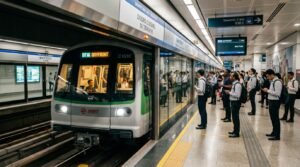
Singapore’s Mass Rapid Transit system is clean, air-conditioned, incredibly efficient, and economical. According to official transit guidelines from the Land Transport Authority (LTA), train services operate from approximately 05:30 to midnight daily, with frequent train arrivals during peak hours.
Because humidity and tropical rain showers are common year-round, walking 15 minutes outdoors to a station can feel taxing. Selecting a hotel situated within a 300-meter walk of an MRT entrance — ideally an interchange station with multiple lines — vastly improves your daily travel comfort.
Key interchange stations for tourists include:
- Dhoby Ghaut: Connects North-South (Red), North-East (Purple), and Circle (Yellow) lines.
- Bugis: Connects East-West (Green) and Downtown (Blue) lines.
- Chinatown: Connects Downtown (Blue) and North-East (Purple) lines.
- City Hall & Raffles Place: Connect North-South (Red) and East-West (Green) lines.
Areas That May Look Central But Create Unnecessary Travel
When studying city maps, certain neighbourhoods appear central but present subtle transport drawbacks for first-time tourists:
- Geylang: Offers cheap hotel rates and excellent local dining. However, certain streets function as Singapore’s red-light district, and walking to the nearest MRT station (Aljunied or Kallang) can take 10 to 15 minutes in intense heat.
- Sentosa Island: As detailed earlier, staying on Sentosa while attempting to sightsee in central Singapore requires daily monorail or shuttle transfers to the mainland.
- East Coast / Katong: A wonderful heritage neighbourhood rich in Peranakan culture and food. However, it sits further from core city sights, relying on buses or long walks to Marine Parade MRT station.
- HarbourFront: Convenient for ferry departures to Indonesia or trips to Sentosa, but lacks independent neighbourhood charm for evening walks.
Airport Convenience & Transfer Strategies
Changi Airport is consistently rated among the world’s best airports. Transport from Changi into central Singapore is straightforward. Official details are available at the Changi Airport Official Website.
- MRT Train: Take the East-West Line branch from Changi Airport Station to Tanah Merah, then cross the platform to the main city-bound train toward Bugis, City Hall, or Tanjong Pagar.
- Taxi & Ride-Hailing: Metered taxis and Grab rides take roughly 20 to 30 minutes to reach downtown, depending on traffic conditions.
- Private Transfers: If landing late at night, travelling with elderly family members, or managing substantial luggage, you can Check private Changi Airport transfer options to secure fixed-rate vehicle pickups.
Suggested Choices by Budget and Trip Length
3-Day / 2-Night Stopover Itinerary
Base yourself in Bugis or City Hall. You minimize transit overhead, reach major sights like Marina Bay Sands and Gardens by the Bay quickly, and enjoy direct airport rail access.
5-Day / 4-Night Complete City Itinerary
Base yourself in Chinatown or Tanjong Pagar. This gives you time to explore local hawker centers, visit museums in the Civic District, take a day trip to Sentosa, and experience evening dining along the Singapore River.
Planning a broader regional journey? Read our Singapore and Malaysia 7-Day Itinerary, or check our guide on Where to Stay in Kuala Lumpur for a Short Trip if continuing north.
To accurately project your overall travel spend across hotels, transit, and meals, use our free Realistic Trip Budget Calculator and customize your travel pace with our Trip Planner tool.
Ensure your mobile connectivity is ready prior to arrival by reviewing the Best eSIM for Japan, Thailand, and Southeast Asia guide, and compare pass savings in our Best Singapore Attraction Passes Compared review.
Final Decision Table
| Your Main Priority | Recommended Area | Alternative Option |
|---|---|---|
| Best all-round convenience | Bugis | City Hall |
| Local food & heritage value | Chinatown | Tanjong Pagar |
| Iconic views & luxury | Marina Bay | Civic District |
| Shopping & high-end malls | Orchard Road | Somerset |
| Nightlife & river dining | Clarke Quay | Robertson Quay |
| Budget travel & hostels | Little India | Chinatown |
| Resorts & theme parks | Sentosa Island | HarbourFront |
Frequently Asked Questions
Which is better for a first-timer: Bugis or Chinatown?
Bugis is slightly better for first-time visitors who want direct airport train access on the East-West Line and immediate proximity to both modern malls and cultural lanes. Chinatown is better if hawker food variety and historic shophouse boutique hotels are your highest priority.
Is it worth staying on Sentosa Island?
Staying on Sentosa is worth it if your trip focuses primarily on resort relaxation, beach activities, and Universal Studios Singapore. If you plan to spend most of your time exploring central city sights, staying on the mainland in Bugis, Chinatown, or Marina Bay is far more convenient.
How many days do you need in Singapore for a first trip?
A 3- to 4-day stay is ideal for a first visit to Singapore. This provides enough time to explore Marina Bay, Gardens by the Bay, major cultural quarters (Chinatown, Kampong Glam, Little India), and sample local hawker cuisine without rushing.
Is public transport in Singapore easy for tourists?
Yes. The MRT system is clear, safe, fully air-conditioned, and navigable in English. You can tap in and out at turnstiles using a contactless credit card, debit card, or mobile wallet (Apple Pay/Google Pay) without buying separate paper tickets.
Conclusion
Finding the right base in Singapore comes down to matching your daily habits with the right MRT line. For most first-time travellers, Bugis offers an unmatched balance of airport transit ease, neighbourhood character, and central connectivity. Food enthusiasts will thrive in Chinatown, while those celebrating a special occasion can justify the luxury price point of Marina Bay. Wherever you choose to book, prioritize staying within a short walking distance of an MRT station to ensure a seamless Singapore experience.
For additional destination updates, guidelines, and official travel notices, refer to the official Singapore Tourism Board Official Portal.
Sentosa is a dedicated resort island located off Singapore’s southern coast. Connected to the mainland via a road bridge, cable car, and the Sentosa Express monorail from VivoCity, the island houses Universal Studios Singapore, S.E.A. Aquarium, golf courses, and man-made sandy beaches.
Sentosa is an excellent destination for a multi-day beach resort holiday. However, for a first-time visitor focused on exploring central Singapore’s city sights, staying on Sentosa introduces unnecessary transit friction. Traveling from a Sentosa hotel to downtown requires taking a shuttle or monorail to HarbourFront MRT, followed by a train transfer to the city center.
When Sentosa Makes Sense
- You are spending 3 or more days dedicated to theme parks and beach relaxation.
- You are travelling with young children who benefit from self-contained resort amenities.
When Sentosa Is Inconvenient
- Your itinerary focuses on museum visits, street food exploration, and cultural neighbourhood walking tours.
- You want quick access to late-night dining in central districts.
Best Area by Traveller Category
To help narrow down the best Singapore neighbourhood for tourists based on your travel setup, review these recommended pairings:
| Category | Recommended Base | Key Reason |
|---|---|---|
| First-Time Visitors | Bugis or City Hall | Central location, dual-line MRT connectivity, walkable streets. |
| Short 2–3 Night Trips | Marina Bay or Bugis | Minimizes transit time between major landmark sights. |
| Couples & Honeymooners | Robertson Quay or Marina Bay | Scenic river walkways, romantic dining, high-end amenities. |
| Families with Children | Orchard Road or Sentosa | Spacious hotel rooms, family suites, easy access to parks and malls. |
| Solo Travellers | Chinatown or Bugis | Social hostel environments, safe walkable streets, easy hawker meals. |
| Budget Travellers | Little India or Chinatown | Most affordable hostel beds and budget-tier hotel properties. |
| Shopping Enthusiasts | Orchard Road | Immediate proximity to major shopping centers along one boulevard. |
| Nightlife Seekers | Clarke Quay or Tanjong Pagar | Late-night bars, speakeasies, and riverside clubs within walking distance. |
| Attraction Focus | Marina Bay or Civic District | Short walk to Gardens by the Bay, museums, and Merlion Park. |
| Airport Convenience | Bugis or Jewel Changi | Direct East-West Line connection or terminal-adjacent hotels. |
If you are organizing sightseeing tickets alongside your accommodation, you can Compare Singapore attractions and transport options to review combined city passes and airport express tickets.
Why Proximity to an MRT Station Matters
Singapore’s Mass Rapid Transit system is clean, air-conditioned, incredibly efficient, and economical. According to official transit guidelines from the Land Transport Authority (LTA), train services operate from approximately 05:30 to midnight daily, with frequent train arrivals during peak hours.
Because humidity and tropical rain showers are common year-round, walking 15 minutes outdoors to a station can feel taxing. Selecting a hotel situated within a 300-meter walk of an MRT entrance — ideally an interchange station with multiple lines — vastly improves your daily travel comfort.
Key interchange stations for tourists include:
- Dhoby Ghaut: Connects North-South (Red), North-East (Purple), and Circle (Yellow) lines.
- Bugis: Connects East-West (Green) and Downtown (Blue) lines.
- Chinatown: Connects Downtown (Blue) and North-East (Purple) lines.
- City Hall & Raffles Place: Connect North-South (Red) and East-West (Green) lines.
Areas That May Look Central But Create Unnecessary Travel
When studying city maps, certain neighbourhoods appear central but present subtle transport drawbacks for first-time tourists:
- Geylang: Offers cheap hotel rates and excellent local dining. However, certain streets function as Singapore’s red-light district, and walking to the nearest MRT station (Aljunied or Kallang) can take 10 to 15 minutes in intense heat.
- Sentosa Island: As detailed earlier, staying on Sentosa while attempting to sightsee in central Singapore requires daily monorail or shuttle transfers to the mainland.
- East Coast / Katong: A wonderful heritage neighbourhood rich in Peranakan culture and food. However, it sits further from core city sights, relying on buses or long walks to Marine Parade MRT station.
- HarbourFront: Convenient for ferry departures to Indonesia or trips to Sentosa, but lacks independent neighbourhood charm for evening walks.
Airport Convenience & Transfer Strategies
Changi Airport is consistently rated among the world’s best airports. Transport from Changi into central Singapore is straightforward. Official details are available at the Changi Airport Official Website.
- MRT Train: Take the East-West Line branch from Changi Airport Station to Tanah Merah, then cross the platform to the main city-bound train toward Bugis, City Hall, or Tanjong Pagar.
- Taxi & Ride-Hailing: Metered taxis and Grab rides take roughly 20 to 30 minutes to reach downtown, depending on traffic conditions.
- Private Transfers: If landing late at night, travelling with elderly family members, or managing substantial luggage, you can Check private Changi Airport transfer options to secure fixed-rate vehicle pickups.
Suggested Choices by Budget and Trip Length
3-Day / 2-Night Stopover Itinerary
Base yourself in Bugis or City Hall. You minimize transit overhead, reach major sights like Marina Bay Sands and Gardens by the Bay quickly, and enjoy direct airport rail access.
5-Day / 4-Night Complete City Itinerary
Base yourself in Chinatown or Tanjong Pagar. This gives you time to explore local hawker centers, visit museums in the Civic District, take a day trip to Sentosa, and experience evening dining along the Singapore River.
Planning a broader regional journey? Read our Singapore and Malaysia 7-Day Itinerary, or check our guide on Where to Stay in Kuala Lumpur for a Short Trip if continuing north.
To accurately project your overall travel spend across hotels, transit, and meals, use our free Realistic Trip Budget Calculator and customize your travel pace with our Trip Planner tool.
Ensure your mobile connectivity is ready prior to arrival by reviewing the Best eSIM for Japan, Thailand, and Southeast Asia guide, and compare pass savings in our Best Singapore Attraction Passes Compared review.
Final Decision Table
| Your Main Priority | Recommended Area | Alternative Option |
|---|---|---|
| Best all-round convenience | Bugis | City Hall |
| Local food & heritage value | Chinatown | Tanjong Pagar |
| Iconic views & luxury | Marina Bay | Civic District |
| Shopping & high-end malls | Orchard Road | Somerset |
| Nightlife & river dining | Clarke Quay | Robertson Quay |
| Budget travel & hostels | Little India | Chinatown |
| Resorts & theme parks | Sentosa Island | HarbourFront |
Frequently Asked Questions
Which is better for a first-timer: Bugis or Chinatown?
Bugis is slightly better for first-time visitors who want direct airport train access on the East-West Line and immediate proximity to both modern malls and cultural lanes. Chinatown is better if hawker food variety and historic shophouse boutique hotels are your highest priority.
Is it worth staying on Sentosa Island?
Staying on Sentosa is worth it if your trip focuses primarily on resort relaxation, beach activities, and Universal Studios Singapore. If you plan to spend most of your time exploring central city sights, staying on the mainland in Bugis, Chinatown, or Marina Bay is far more convenient.
How many days do you need in Singapore for a first trip?
A 3- to 4-day stay is ideal for a first visit to Singapore. This provides enough time to explore Marina Bay, Gardens by the Bay, major cultural quarters (Chinatown, Kampong Glam, Little India), and sample local hawker cuisine without rushing.
Is public transport in Singapore easy for tourists?
Yes. The MRT system is clear, safe, fully air-conditioned, and navigable in English. You can tap in and out at turnstiles using a contactless credit card, debit card, or mobile wallet (Apple Pay/Google Pay) without buying separate paper tickets.
Conclusion
Finding the right base in Singapore comes down to matching your daily habits with the right MRT line. For most first-time travellers, Bugis offers an unmatched balance of airport transit ease, neighbourhood character, and central connectivity. Food enthusiasts will thrive in Chinatown, while those celebrating a special occasion can justify the luxury price point of Marina Bay. Wherever you choose to book, prioritize staying within a short walking distance of an MRT station to ensure a seamless Singapore experience.
For additional destination updates, guidelines, and official travel notices, refer to the official Singapore Tourism Board Official Portal.
Little India and Kampong Glam represent two of Singapore’s most culturally distinct quarters. Little India is dense, vibrant, and filled with spice shops, flower garland stalls, and authentic South Indian vegetarian eateries. Kampong Glam centers around the landmark Sultan Mosque, lined with textile shops and trendy cafes.
These districts provide the highest concentration of affordable hostels, capsule stays, and budget hotels in central Singapore. If you are researching Bugis vs Chinatown Singapore or seeking alternative budget locations, Little India sits directly adjacent to Bugis along the Downtown Line.
Travellers managing tighter accommodation expenses can Compare Singapore hostels and budget stays to review dorm beds and private micro-rooms across these cultural quarters.
7. Sentosa Island: Resorts, Families, and When It Is Inconvenient
Sentosa is a dedicated resort island located off Singapore’s southern coast. Connected to the mainland via a road bridge, cable car, and the Sentosa Express monorail from VivoCity, the island houses Universal Studios Singapore, S.E.A. Aquarium, golf courses, and man-made sandy beaches.
Sentosa is an excellent destination for a multi-day beach resort holiday. However, for a first-time visitor focused on exploring central Singapore’s city sights, staying on Sentosa introduces unnecessary transit friction. Traveling from a Sentosa hotel to downtown requires taking a shuttle or monorail to HarbourFront MRT, followed by a train transfer to the city center.
When Sentosa Makes Sense
- You are spending 3 or more days dedicated to theme parks and beach relaxation.
- You are travelling with young children who benefit from self-contained resort amenities.
When Sentosa Is Inconvenient
- Your itinerary focuses on museum visits, street food exploration, and cultural neighbourhood walking tours.
- You want quick access to late-night dining in central districts.
Best Area by Traveller Category
To help narrow down the best Singapore neighbourhood for tourists based on your travel setup, review these recommended pairings:
| Category | Recommended Base | Key Reason |
|---|---|---|
| First-Time Visitors | Bugis or City Hall | Central location, dual-line MRT connectivity, walkable streets. |
| Short 2–3 Night Trips | Marina Bay or Bugis | Minimizes transit time between major landmark sights. |
| Couples & Honeymooners | Robertson Quay or Marina Bay | Scenic river walkways, romantic dining, high-end amenities. |
| Families with Children | Orchard Road or Sentosa | Spacious hotel rooms, family suites, easy access to parks and malls. |
| Solo Travellers | Chinatown or Bugis | Social hostel environments, safe walkable streets, easy hawker meals. |
| Budget Travellers | Little India or Chinatown | Most affordable hostel beds and budget-tier hotel properties. |
| Shopping Enthusiasts | Orchard Road | Immediate proximity to major shopping centers along one boulevard. |
| Nightlife Seekers | Clarke Quay or Tanjong Pagar | Late-night bars, speakeasies, and riverside clubs within walking distance. |
| Attraction Focus | Marina Bay or Civic District | Short walk to Gardens by the Bay, museums, and Merlion Park. |
| Airport Convenience | Bugis or Jewel Changi | Direct East-West Line connection or terminal-adjacent hotels. |
If you are organizing sightseeing tickets alongside your accommodation, you can Compare Singapore attractions and transport options to review combined city passes and airport express tickets.
Why Proximity to an MRT Station Matters
Singapore’s Mass Rapid Transit system is clean, air-conditioned, incredibly efficient, and economical. According to official transit guidelines from the Land Transport Authority (LTA), train services operate from approximately 05:30 to midnight daily, with frequent train arrivals during peak hours.
Because humidity and tropical rain showers are common year-round, walking 15 minutes outdoors to a station can feel taxing. Selecting a hotel situated within a 300-meter walk of an MRT entrance — ideally an interchange station with multiple lines — vastly improves your daily travel comfort.
Key interchange stations for tourists include:
- Dhoby Ghaut: Connects North-South (Red), North-East (Purple), and Circle (Yellow) lines.
- Bugis: Connects East-West (Green) and Downtown (Blue) lines.
- Chinatown: Connects Downtown (Blue) and North-East (Purple) lines.
- City Hall & Raffles Place: Connect North-South (Red) and East-West (Green) lines.
Areas That May Look Central But Create Unnecessary Travel
When studying city maps, certain neighbourhoods appear central but present subtle transport drawbacks for first-time tourists:
- Geylang: Offers cheap hotel rates and excellent local dining. However, certain streets function as Singapore’s red-light district, and walking to the nearest MRT station (Aljunied or Kallang) can take 10 to 15 minutes in intense heat.
- Sentosa Island: As detailed earlier, staying on Sentosa while attempting to sightsee in central Singapore requires daily monorail or shuttle transfers to the mainland.
- East Coast / Katong: A wonderful heritage neighbourhood rich in Peranakan culture and food. However, it sits further from core city sights, relying on buses or long walks to Marine Parade MRT station.
- HarbourFront: Convenient for ferry departures to Indonesia or trips to Sentosa, but lacks independent neighbourhood charm for evening walks.
Airport Convenience & Transfer Strategies
Changi Airport is consistently rated among the world’s best airports. Transport from Changi into central Singapore is straightforward. Official details are available at the Changi Airport Official Website.
- MRT Train: Take the East-West Line branch from Changi Airport Station to Tanah Merah, then cross the platform to the main city-bound train toward Bugis, City Hall, or Tanjong Pagar.
- Taxi & Ride-Hailing: Metered taxis and Grab rides take roughly 20 to 30 minutes to reach downtown, depending on traffic conditions.
- Private Transfers: If landing late at night, travelling with elderly family members, or managing substantial luggage, you can Check private Changi Airport transfer options to secure fixed-rate vehicle pickups.
Suggested Choices by Budget and Trip Length
3-Day / 2-Night Stopover Itinerary
Base yourself in Bugis or City Hall. You minimize transit overhead, reach major sights like Marina Bay Sands and Gardens by the Bay quickly, and enjoy direct airport rail access.
5-Day / 4-Night Complete City Itinerary
Base yourself in Chinatown or Tanjong Pagar. This gives you time to explore local hawker centers, visit museums in the Civic District, take a day trip to Sentosa, and experience evening dining along the Singapore River.
Planning a broader regional journey? Read our Singapore and Malaysia 7-Day Itinerary, or check our guide on Where to Stay in Kuala Lumpur for a Short Trip if continuing north.
To accurately project your overall travel spend across hotels, transit, and meals, use our free Realistic Trip Budget Calculator and customize your travel pace with our Trip Planner tool.
Ensure your mobile connectivity is ready prior to arrival by reviewing the Best eSIM for Japan, Thailand, and Southeast Asia guide, and compare pass savings in our Best Singapore Attraction Passes Compared review.
Final Decision Table
| Your Main Priority | Recommended Area | Alternative Option |
|---|---|---|
| Best all-round convenience | Bugis | City Hall |
| Local food & heritage value | Chinatown | Tanjong Pagar |
| Iconic views & luxury | Marina Bay | Civic District |
| Shopping & high-end malls | Orchard Road | Somerset |
| Nightlife & river dining | Clarke Quay | Robertson Quay |
| Budget travel & hostels | Little India | Chinatown |
| Resorts & theme parks | Sentosa Island | HarbourFront |
Frequently Asked Questions
Which is better for a first-timer: Bugis or Chinatown?
Bugis is slightly better for first-time visitors who want direct airport train access on the East-West Line and immediate proximity to both modern malls and cultural lanes. Chinatown is better if hawker food variety and historic shophouse boutique hotels are your highest priority.
Is it worth staying on Sentosa Island?
Staying on Sentosa is worth it if your trip focuses primarily on resort relaxation, beach activities, and Universal Studios Singapore. If you plan to spend most of your time exploring central city sights, staying on the mainland in Bugis, Chinatown, or Marina Bay is far more convenient.
How many days do you need in Singapore for a first trip?
A 3- to 4-day stay is ideal for a first visit to Singapore. This provides enough time to explore Marina Bay, Gardens by the Bay, major cultural quarters (Chinatown, Kampong Glam, Little India), and sample local hawker cuisine without rushing.
Is public transport in Singapore easy for tourists?
Yes. The MRT system is clear, safe, fully air-conditioned, and navigable in English. You can tap in and out at turnstiles using a contactless credit card, debit card, or mobile wallet (Apple Pay/Google Pay) without buying separate paper tickets.
Conclusion
Finding the right base in Singapore comes down to matching your daily habits with the right MRT line. For most first-time travellers, Bugis offers an unmatched balance of airport transit ease, neighbourhood character, and central connectivity. Food enthusiasts will thrive in Chinatown, while those celebrating a special occasion can justify the luxury price point of Marina Bay. Wherever you choose to book, prioritize staying within a short walking distance of an MRT station to ensure a seamless Singapore experience.
For additional destination updates, guidelines, and official travel notices, refer to the official Singapore Tourism Board Official Portal.
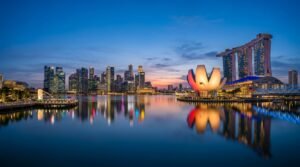
Selecting where to stay in Singapore for a first trip comes down to one fundamental principle: staying near an Mass Rapid Transit (MRT) interchange station matters far more than paying extra to sit in the geographic center. Singapore is compact, exceptionally well-connected by public transport, and easy to navigate when your hotel sits within a five-minute walk of an underground line.
However, each neighbourhood offers a distinct character, room rate tier, and daily rhythm. Bugis delivers an ideal balance of culture and transit connections. Chinatown and Tanjong Pagar combine heritage shophouses with world-class hawker food. Marina Bay delivers skyline views and luxury high-rises. Orchard Road caters to shopping enthusiasts, while Sentosa functions as an island resort escape.
This guide breaks down the best neighbourhoods for first-time visitors, comparing costs, transit convenience, evening atmosphere, and potential downsides to help you choose the right base before booking your room.
Direct Answer for First-Time Visitors
If you want a immediate recommendation on where to stay in Singapore first time, here is the quick breakdown based on traveller priorities:
- Best Overall Base for First-Timers: Bugis. Bugis sits at the intersection of the Downtown Line (Blue) and East-West Line (Green). You can reach Changi Airport directly without transfers, walk to Kampong Glam and Arab Street, and reach Marina Bay or Chinatown in under 10 minutes by train. Hotel rates are reasonable compared to downtown.
- Best for Food, Culture & Mid-Range Value: Chinatown & Tanjong Pagar. Packed with hawker centers (Maxwell, Chinatown Complex), boutique heritage shophouse hotels, and excellent MRT connectivity on the Downtown and Thomson-East Coast lines.
- Best for Luxury, Views & Iconic Landmarks: Marina Bay & City Hall. Home to Marina Bay Sands, Gardens by the Bay, and historic waterfront hotels. Expect high room rates, but unmatched convenience to major sightseeing spots.
- Best for Shopping & Polished Hotels: Orchard Road. Lined with flagship department stores, luxury malls, and international hotel chains along the North-South Line.
- Best for Families & Resort Stays: Sentosa Island. Ideal for beach access and Universal Studios Singapore, but inconvenient and expensive if you plan daily sightseeing trips into the city.
Singapore Area Comparison Table
Some links in this guide are affiliate links. FlyFono may earn a commission if you book through them, at no extra cost to you. Recommendations are based on practical relevance, not commission.
| Neighbourhood | Primary Vibe | MRT Lines | Price Range | Best For |
|---|---|---|---|---|
| Bugis & Kampong Glam | Cultural, vibrant, walkable | East-West (Green), Downtown (Blue) | Mid-range to Boutique | First-time visitors, direct airport transit |
| Chinatown & Tanjong Pagar | Heritage shophouses, hawker food | Downtown (Blue), North-East (Purple), Thomson-EC (Brown) | Budget to Upper Mid-range | Food lovers, solo travellers, culture seekers |
| Marina Bay & Downtown | Modern luxury, iconic skyline | Circle (Yellow), Downtown (Blue), North-South (Red) | Luxury to Ultra-Luxury | Short stays, couples, high-end sightseers |
| Orchard Road | Retail corridor, polished hotels | North-South (Red), Thomson-East Coast (Brown) | Mid-range to Luxury | Shoppers, family stays, brand loyalty members |
| Clarke Quay & Robertson Quay | Riverside dining, nightlife | North-East (Purple), Downtown (Blue) | Mid-range to Luxury | Evening dining, nightlife, river walks |
| Little India | Colourful, energetic, historic | North-East (Purple), Downtown (Blue) | Budget to Lower Mid-range | Backpackers, budget-conscious travellers |
| Sentosa Island | Tropical resort, beach, theme parks | Sentosa Express Monorail | Upper Mid-range to Luxury | Resort vacations, families with young kids |
To evaluate current room availability across these districts, you can Compare Singapore accommodation by area to check location filters and pricing tiers.
1. Bugis: The Best Balanced First-Time Base
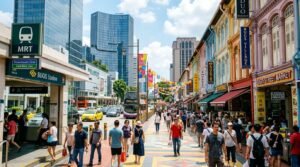
For most travellers deciding where to stay in Singapore, Bugis represents the single most practical location. Positioned just north of the Civic District, Bugis blends air-conditioned commercial shopping complexes (Bugis Junction, Bugis+) with the atmospheric shophouse lanes of Kampong Glam and Haji Lane.
The key advantage of Bugis is its transit infrastructure. Bugis MRT Station serves as a dual-line interchange for the East-West Line (EW) and the Downtown Line (DT). This allows you to board the train at Changi Airport and reach your hotel with a simple cross-platform transfer, while providing direct underground travel to Marina Bay, Chinatown, and the Botanic Gardens.
Advantages of Bugis
- Direct Airport Connectivity: Easy access from Changi Airport via the East-West Line.
- Walkability: Walking distance to Haji Lane, Sultan Mosque, National Gallery Singapore, and Little India.
- Diverse Dining: Excellent balance of affordable street food, Middle Eastern eateries on Arab Street, and indoor mall dining.
Disadvantages of Bugis
- Pedestrian Crowds: Bugis Street Market and Bugis Junction become heavily congested during weekend afternoons.
- Variable Room Sizes: Mid-range hotels in historic shophouses often feature compact room layouts without exterior windows.
2. Chinatown & Tanjong Pagar: Food, Heritage, and Value
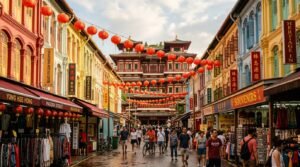
Chinatown and neighboring Tanjong Pagar form one of Singapore’s most engaging urban districts. The area combines low-rise 19th-century heritage shophouses with high-density modern skyscrapers. If your priority is authentic hawker dining and atmospheric streets, this is an outstanding choice for the best area to stay in Singapore.
Food options are exceptional. Maxwell Food Centre and Chinatown Complex Hawker Centre offer affordable Michelin-recommended dishes, while Tanjong Pagar Road is lined with Korean grill houses, Japanese izakayas, and cocktail bars. Transit is equally seamless, supported by Chinatown MRT Station (Downtown and North-East lines), Telok Ayer Station, and Tanjong Pagar Station.
Advantages of Chinatown
- Hawker Food Capital: Unmatched access to budget-friendly, high-quality local meals.
- Boutique Hotels: Concentrated selection of stylish shophouse conversion hotels and design-led boutique properties.
- Central Location: Short MRT ride or brisk walk to the Financial District and Marina Bay.
Disadvantages of Chinatown
- Evening Noise: Main thoroughfares near Smith Street and Club Street remain active into late hours.
- Compact Bathrooms: Heritage property conversions frequently feature micro-bathrooms due to architectural constraints.
3. Marina Bay: Landmarks, Views, and Premium Hotels
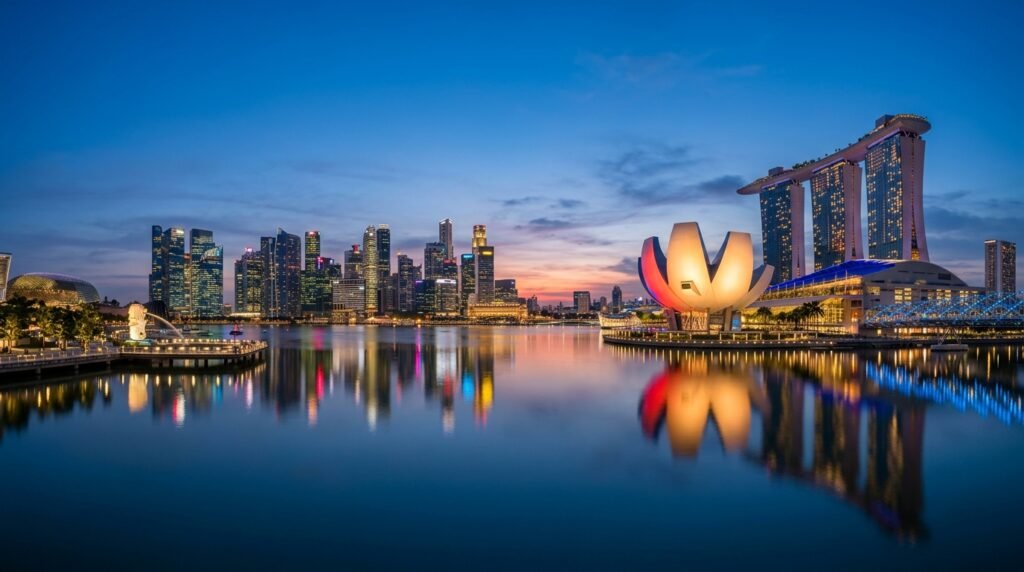
Marina Bay represents the modern futuristic postcard image of Singapore. Home to Marina Bay Sands, Gardens by the Bay, the Supertree Grove, and the waterfront promenade, this district caters to travellers seeking upscale accommodations, infinity pools, and expansive city skyline views.
While visually stunning, Marina Bay functions primarily as a commercial and tourism precinct rather than a residential neighbourhood. Walking between developments involves navigating wide boulevards and multi-level underground walkways. However, MRT connections at Bayfront, Downtown, and Marina Bay stations make traveling across the city straightforward.
Advantages of Marina Bay
- Iconic Views: Direct views of the bay, Gardens by the Bay, and city lights.
- Spacious Luxury Properties: Five-star hotels featuring expansive rooms, high-end spas, and international fine dining.
- Waterfront Walking: Paved, traffic-free promenades ideal for morning runs or evening walks.
Disadvantages of Marina Bay
- High Price Point: Hotel rates and dining options carry a premium compared to surrounding districts.
- Limited Local Street Character: Lacks traditional hawker centres or organic street markets within immediate walking distance.
4. Orchard Road: Shopping and Polished Accommodation
Orchard Road is Singapore’s premier retail boulevard, spanning nearly 2.2 kilometers of luxury shopping malls, department stores, and international hotel flagships. When comparing Marina Bay vs Orchard, Orchard offers a more traditional city shopping street environment, whereas Marina Bay focuses on architectural attractions and waterfront luxury.
Hotels along Orchard Road generally provide large room footprints, dedicated concierge services, and resort-style swimming pools. The area is served by three MRT stations: Orchard, Somerset, and Dhoby Ghaut (a major triple-line interchange connecting the North-South, North-East, and Circle lines).
Advantages of Orchard Road
- Retail Convenience: Direct indoor access to malls like ION Orchard, Ngee Ann City (Takashimaya), and Paragon.
- Family Amenities: High density of family suites, international dining, and Western comfort food options.
- Shaded Skywalks: Underground connections allow walking between major malls out of heat and rain.
Disadvantages of Orchard Road
- Distance from Waterfront Sights: Requires a 15- to 20-minute MRT ride to reach Marina Bay or Chinatown.
- Commercial Atmosphere: Feels primarily like a shopping mall corridor rather than a cultural neighbourhood.
5. Clarke Quay & Robertson Quay: Evening Atmosphere
Situated along the historic Singapore River, Clarke Quay and Robertson Quay offer two distinct riverfront experiences. Clarke Quay is known for restored warehouse entertainment complexes, neon-lit bars, and river cruise departures. Robertson Quay, located slightly further upriver, presents a quieter, residential atmosphere with waterfront cafes, wine bars, and boutique hotels.
Advantages of the Quays
- Riverfront Walks: Scenic pedestrian paths leading directly to the Civic District and Marina Bay.
- Evening Dining: Plentiful outdoor alfresco dining along the water.
Disadvantages of the Quays
- Late-Night Noise in Clarke Quay: Music from clubs and bars can disturb sleep in low-floor hotel rooms.
- Uneven Transit Distance: Some hotels in Robertson Quay sit a 10- to 12-minute walk from Fort Canning or Havelock MRT stations.
6. Little India & Kampong Glam: Culture and Budget Choices
Little India and Kampong Glam represent two of Singapore’s most culturally distinct quarters. Little India is dense, vibrant, and filled with spice shops, flower garland stalls, and authentic South Indian vegetarian eateries. Kampong Glam centers around the landmark Sultan Mosque, lined with textile shops and trendy cafes.
These districts provide the highest concentration of affordable hostels, capsule stays, and budget hotels in central Singapore. If you are researching Bugis vs Chinatown Singapore or seeking alternative budget locations, Little India sits directly adjacent to Bugis along the Downtown Line.
Travellers managing tighter accommodation expenses can Compare Singapore hostels and budget stays to review dorm beds and private micro-rooms across these cultural quarters.
7. Sentosa Island: Resorts, Families, and When It Is Inconvenient
Sentosa is a dedicated resort island located off Singapore’s southern coast. Connected to the mainland via a road bridge, cable car, and the Sentosa Express monorail from VivoCity, the island houses Universal Studios Singapore, S.E.A. Aquarium, golf courses, and man-made sandy beaches.
Sentosa is an excellent destination for a multi-day beach resort holiday. However, for a first-time visitor focused on exploring central Singapore’s city sights, staying on Sentosa introduces unnecessary transit friction. Traveling from a Sentosa hotel to downtown requires taking a shuttle or monorail to HarbourFront MRT, followed by a train transfer to the city center.
When Sentosa Makes Sense
- You are spending 3 or more days dedicated to theme parks and beach relaxation.
- You are travelling with young children who benefit from self-contained resort amenities.
When Sentosa Is Inconvenient
- Your itinerary focuses on museum visits, street food exploration, and cultural neighbourhood walking tours.
- You want quick access to late-night dining in central districts.
Best Area by Traveller Category
To help narrow down the best Singapore neighbourhood for tourists based on your travel setup, review these recommended pairings:
| Category | Recommended Base | Key Reason |
|---|---|---|
| First-Time Visitors | Bugis or City Hall | Central location, dual-line MRT connectivity, walkable streets. |
| Short 2–3 Night Trips | Marina Bay or Bugis | Minimizes transit time between major landmark sights. |
| Couples & Honeymooners | Robertson Quay or Marina Bay | Scenic river walkways, romantic dining, high-end amenities. |
| Families with Children | Orchard Road or Sentosa | Spacious hotel rooms, family suites, easy access to parks and malls. |
| Solo Travellers | Chinatown or Bugis | Social hostel environments, safe walkable streets, easy hawker meals. |
| Budget Travellers | Little India or Chinatown | Most affordable hostel beds and budget-tier hotel properties. |
| Shopping Enthusiasts | Orchard Road | Immediate proximity to major shopping centers along one boulevard. |
| Nightlife Seekers | Clarke Quay or Tanjong Pagar | Late-night bars, speakeasies, and riverside clubs within walking distance. |
| Attraction Focus | Marina Bay or Civic District | Short walk to Gardens by the Bay, museums, and Merlion Park. |
| Airport Convenience | Bugis or Jewel Changi | Direct East-West Line connection or terminal-adjacent hotels. |
If you are organizing sightseeing tickets alongside your accommodation, you can Compare Singapore attractions and transport options to review combined city passes and airport express tickets.
Why Proximity to an MRT Station Matters
Singapore’s Mass Rapid Transit system is clean, air-conditioned, incredibly efficient, and economical. According to official transit guidelines from the Land Transport Authority (LTA), train services operate from approximately 05:30 to midnight daily, with frequent train arrivals during peak hours.
Because humidity and tropical rain showers are common year-round, walking 15 minutes outdoors to a station can feel taxing. Selecting a hotel situated within a 300-meter walk of an MRT entrance — ideally an interchange station with multiple lines — vastly improves your daily travel comfort.
Key interchange stations for tourists include:
- Dhoby Ghaut: Connects North-South (Red), North-East (Purple), and Circle (Yellow) lines.
- Bugis: Connects East-West (Green) and Downtown (Blue) lines.
- Chinatown: Connects Downtown (Blue) and North-East (Purple) lines.
- City Hall & Raffles Place: Connect North-South (Red) and East-West (Green) lines.
Areas That May Look Central But Create Unnecessary Travel
When studying city maps, certain neighbourhoods appear central but present subtle transport drawbacks for first-time tourists:
- Geylang: Offers cheap hotel rates and excellent local dining. However, certain streets function as Singapore’s red-light district, and walking to the nearest MRT station (Aljunied or Kallang) can take 10 to 15 minutes in intense heat.
- Sentosa Island: As detailed earlier, staying on Sentosa while attempting to sightsee in central Singapore requires daily monorail or shuttle transfers to the mainland.
- East Coast / Katong: A wonderful heritage neighbourhood rich in Peranakan culture and food. However, it sits further from core city sights, relying on buses or long walks to Marine Parade MRT station.
- HarbourFront: Convenient for ferry departures to Indonesia or trips to Sentosa, but lacks independent neighbourhood charm for evening walks.
Airport Convenience & Transfer Strategies
Changi Airport is consistently rated among the world’s best airports. Transport from Changi into central Singapore is straightforward. Official details are available at the Changi Airport Official Website.
- MRT Train: Take the East-West Line branch from Changi Airport Station to Tanah Merah, then cross the platform to the main city-bound train toward Bugis, City Hall, or Tanjong Pagar.
- Taxi & Ride-Hailing: Metered taxis and Grab rides take roughly 20 to 30 minutes to reach downtown, depending on traffic conditions.
- Private Transfers: If landing late at night, travelling with elderly family members, or managing substantial luggage, you can Check private Changi Airport transfer options to secure fixed-rate vehicle pickups.
Suggested Choices by Budget and Trip Length
3-Day / 2-Night Stopover Itinerary
Base yourself in Bugis or City Hall. You minimize transit overhead, reach major sights like Marina Bay Sands and Gardens by the Bay quickly, and enjoy direct airport rail access.
5-Day / 4-Night Complete City Itinerary
Base yourself in Chinatown or Tanjong Pagar. This gives you time to explore local hawker centers, visit museums in the Civic District, take a day trip to Sentosa, and experience evening dining along the Singapore River.
Planning a broader regional journey? Read our Singapore and Malaysia 7-Day Itinerary, or check our guide on Where to Stay in Kuala Lumpur for a Short Trip if continuing north.
To accurately project your overall travel spend across hotels, transit, and meals, use our free Realistic Trip Budget Calculator and customize your travel pace with our Trip Planner tool.
Ensure your mobile connectivity is ready prior to arrival by reviewing the Best eSIM for Japan, Thailand, and Southeast Asia guide, and compare pass savings in our Best Singapore Attraction Passes Compared review.
Final Decision Table
| Your Main Priority | Recommended Area | Alternative Option |
|---|---|---|
| Best all-round convenience | Bugis | City Hall |
| Local food & heritage value | Chinatown | Tanjong Pagar |
| Iconic views & luxury | Marina Bay | Civic District |
| Shopping & high-end malls | Orchard Road | Somerset |
| Nightlife & river dining | Clarke Quay | Robertson Quay |
| Budget travel & hostels | Little India | Chinatown |
| Resorts & theme parks | Sentosa Island | HarbourFront |
Frequently Asked Questions
Which is better for a first-timer: Bugis or Chinatown?
Bugis is slightly better for first-time visitors who want direct airport train access on the East-West Line and immediate proximity to both modern malls and cultural lanes. Chinatown is better if hawker food variety and historic shophouse boutique hotels are your highest priority.
Is it worth staying on Sentosa Island?
Staying on Sentosa is worth it if your trip focuses primarily on resort relaxation, beach activities, and Universal Studios Singapore. If you plan to spend most of your time exploring central city sights, staying on the mainland in Bugis, Chinatown, or Marina Bay is far more convenient.
How many days do you need in Singapore for a first trip?
A 3- to 4-day stay is ideal for a first visit to Singapore. This provides enough time to explore Marina Bay, Gardens by the Bay, major cultural quarters (Chinatown, Kampong Glam, Little India), and sample local hawker cuisine without rushing.
Is public transport in Singapore easy for tourists?
Yes. The MRT system is clear, safe, fully air-conditioned, and navigable in English. You can tap in and out at turnstiles using a contactless credit card, debit card, or mobile wallet (Apple Pay/Google Pay) without buying separate paper tickets.
Conclusion
Finding the right base in Singapore comes down to matching your daily habits with the right MRT line. For most first-time travellers, Bugis offers an unmatched balance of airport transit ease, neighbourhood character, and central connectivity. Food enthusiasts will thrive in Chinatown, while those celebrating a special occasion can justify the luxury price point of Marina Bay. Wherever you choose to book, prioritize staying within a short walking distance of an MRT station to ensure a seamless Singapore experience.
For additional destination updates, guidelines, and official travel notices, refer to the official Singapore Tourism Board Official Portal.