
The practical takeaway
China visa-free travel for Britons has shifted from rumor to reality, and the change is reshaping outbound travel planning from the United Kingdom. For years, visiting China required a formal visa application process that included paperwork, appointments, and waiting periods. That barrier…

China visa-free travel for Britons has shifted from rumor to reality, and the change is reshaping outbound travel planning from the United Kingdom. For years, visiting China required a formal visa application process that included paperwork, appointments, and waiting periods. That barrier has now been relaxed under specific conditions.
However, visa-free does not mean rule-free.
Many travelers are already misunderstanding eligibility, stay limits, and transit rules. The result? Confusion at check-in counters, incorrect assumptions about extensions, and booking mistakes that could have been avoided.
This guide explains exactly how China visa-free travel for Britons works, what it allows, and the seven powerful rules you must understand before booking flights.
Why China Introduced Visa-Free Travel for Britons
China visa-free travel for Britons is part of a broader strategy to stimulate inbound tourism, rebuild business travel links, and restore international mobility following years of restricted entry.
The United Kingdom is considered a high-value outbound market, particularly for:
- Business delegations
- Short cultural trips
- Luxury tourism
- Education-related visits
By removing traditional visa requirements for short stays, China significantly reduces friction for British travelers considering quick trips.
Official information about entry rules is available through the Chinese Embassy in the UK:
Embassy of the People’s Republic of China in the UK
What “Visa-Free” Actually Means
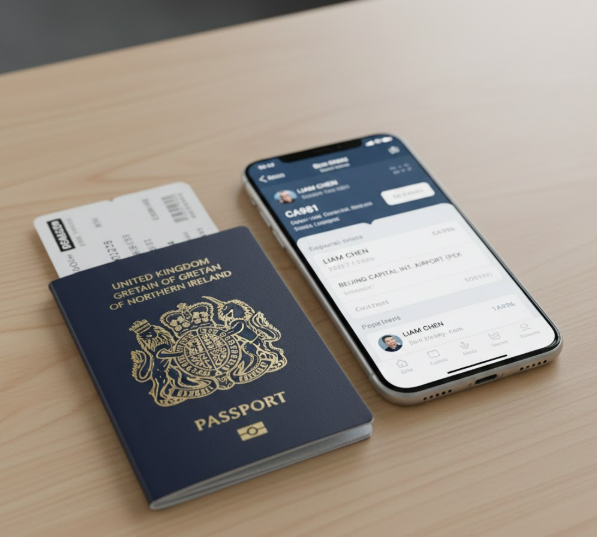
China visa-free travel for Britons allows eligible UK passport holders to enter mainland China without applying for a traditional visa, provided they meet specific conditions.
It does not mean:
- Unlimited stays
- Open-ended work rights
- Automatic entry without checks
Visa-free entry typically applies to short-term visits for tourism, business meetings, family visits, and certain transit scenarios.
Border officers still retain discretion to grant or deny entry.
The 7 Powerful Rules Britons Must Know

Rule #1: Stay Limits Are Strict
China visa-free travel for Britons usually permits short stays, often up to a defined number of days per entry.
Travelers must:
- Track entry and exit dates carefully
- Avoid overstaying even by a day
- Understand whether re-entry resets the clock
Overstaying can result in fines, exit bans, or future entry restrictions.
Rule #2: Mainland China Is Different From Hong Kong and Macau
Hong Kong and Macau have separate immigration systems.
China visa-free travel for Britons to mainland China does not automatically align with entry rules for Hong Kong or Macau.
Travelers planning multi-city trips should confirm each region’s entry rules separately.
Rule #3: Passport Validity Still Matters
Even under visa-free entry, your passport must meet minimum validity requirements.
Airlines may deny boarding if:
- Passport validity is insufficient
- Passport is damaged
- Blank pages are unavailable
Airlines verify documentation before boarding, not just at arrival.
Rule #4: Business vs Employment Is Not the Same

Visa-free travel allows short business visits such as meetings or conferences.
It does not permit:
- Paid employment
- Long-term assignments
- Formal work placements
Travelers attempting to use visa-free entry for employment risk serious consequences.
Rule #5: Transit Policies Can Differ
China operates several transit-without-visa policies separate from general visa-free entry.
Britons may qualify for transit exemptions in certain cities even beyond the standard visa-free framework.
Understanding the difference between:
- Transit without visa (TWOV)
- Full visa-free entry
is essential for complex itineraries.
Rule #6: Airlines Enforce Entry Rules Before Departure
Even though China visa-free travel for Britons removes embassy applications, airlines still verify eligibility at check-in.
This includes:
- Passport validity
- Return or onward ticket
- Proof of accommodation if required
Travelers should confirm eligibility before purchasing non-refundable tickets.
For route planning and multi-city simulations, travelers can use:
Rule #7: Policy Changes Can Be Sudden
China visa-free travel for Britons is subject to diplomatic and regulatory adjustments.
Travelers should monitor official updates from:
UK Foreign Travel Advice – China
Relying solely on social media or outdated blog posts is risky.
Why This Changes How Britons Book China Trips

Visa-free entry lowers psychological barriers. Travelers who previously avoided China due to paperwork now see it as a viable short-haul or long-haul break.
This shift increases:
- Last-minute booking activity
- Multi-city Asia itineraries
- Business-meets-leisure trips
However, flexible fare strategies become more important. Travelers should understand fare rules before booking:
How to Find Cheap Flights Without Risky Restrictions
Airlines, Routing, and Long-Haul Patterns
China visa-free travel for Britons affects not only direct UK-China flights but also routes through:
- Middle Eastern hubs
- European gateways
- Asian connecting cities
Each segment introduces additional document checks.
British travelers transiting through other countries must ensure entry compliance for each leg.
Is This a Long-Term Policy?
While policy timelines evolve, visa-free travel initiatives are typically introduced to encourage inbound demand and diplomatic goodwill.
Travelers should treat China visa-free travel for Britons as active but monitor changes regularly.
Common Booking Mistakes Already Happening
- Assuming unlimited entry frequency
- Ignoring stay limits
- Misunderstanding transit eligibility
- Booking non-refundable fares before checking compliance
Visa-free simplifies entry. It does not remove responsibility.
China Visa-Free Travel for Britons: The Practical Playbook
Part 1 explained the framework. This Part 2 is the execution layer: how to plan a trip that actually works under China visa-free travel for Britons, how to avoid airline check-in surprises, and how to book in a way that does not punish you financially if policy details shift or your itinerary changes.
Rule Zero: Treat Visa-Free Like “Pre-Check,” Not “No Rules”
Visa-free entry removes the embassy visit. It does not remove airline verification, border discretion, or documentation expectations. If you behave like visa-free means “show up and vibe,” you are choosing the most expensive learning method available.
The correct mindset for China visa-free travel for Britons is: “My paperwork is lighter, but my responsibility is not.”
1) Confirm Eligibility the Smart Way (Do Not Trust Random TikTok Comments)
Eligibility can be simple, but only if you verify using official or high-quality sources. Start with official guidance and then double-check practical application through your airline.
- Confirm what your UK passport qualifies for (ordinary passport vs other categories)
- Confirm your travel purpose matches allowed categories (tourism, business meetings, family visits, exchanges, transit)
- Confirm the maximum stay per entry and whether any cumulative limits apply
Use your own tool first for quick clarity: FlyFono Visa Requirements Checker.
Then cross-check with official sources:
2) The Stay Limit: How to Avoid the “Accidental Overstay” Trap
Overstays in China can be serious. Even when penalties start small, overstays can affect future entries and create administrative headaches you do not want on a holiday.
What travelers get wrong
- They count days incorrectly (especially with red-eye arrivals)
- They assume a late-night exit still counts as the next day
- They assume a “quick hop” out and back resets everything automatically
How to plan safely
- Build a buffer: plan to exit 1–2 days before your allowed limit
- Avoid tight end-dates with multi-stop domestic flights
- Do not place your international departure on your final eligible day
If you want a sanity check on pacing, route logic, and buffer days, run your itinerary through: FlyFono AI Trip Planner.
3) Mainland vs Hong Kong vs Macau: Plan Like They Are Different Countries (Because Functionally, They Are)
Hong Kong and Macau have separate immigration systems. Your mainland China plan should not assume identical rules or identical entry expectations.
If you are building a multi-stop trip, treat each segment as its own “entry environment”:
- Mainland entry rules
- Hong Kong entry rules
- Macau entry rules
This matters most when travelers try to “reset” their mainland stay by hopping to Hong Kong for a weekend. Sometimes it works. Sometimes it triggers questions. Sometimes your itinerary simply does not align with the allowed terms.
4) Airline Check-In Reality: What They Will Ask You For
Even with China visa-free travel for Britons, airlines still act as border gatekeepers. Your check-in experience depends on whether you appear low-risk and well-documented.
Documents airlines commonly check
- Passport validity (and condition)
- Return or onward ticket
- Address of first accommodation (sometimes asked, sometimes not)
- Purpose of visit (especially if you mention business)
What to keep ready (digital + printed)
- Hotel booking confirmations (first city at minimum)
- Return/onward flight confirmation
- A simple itinerary summary (cities + dates)
This is not about paranoia. It is about making your profile “easy to clear” in a 60-second check-in conversation.
5) Transit Without Visa vs Visa-Free Entry: Stop Mixing These Up
China has multiple entry frameworks that look similar in casual conversation but behave differently in practice. Many travelers confuse:
- Visa-free entry for eligible passport holders
- Transit-without-visa (TWOV) policies tied to specific routes and cities
If your itinerary is a true transit (for example, UK → China → third country), you may qualify under transit rules even if you are not using standard visa-free entry. The problem is that travelers often build routes that are “almost transit” but not actually transit according to the rules.
To avoid expensive surprises, confirm your route logic using a requirements tool first and then validate with your airline before booking non-refundable fares.
6) Booking Strategy: You Need Flexibility, Not Just Cheap Tickets
Visa-free reduces friction, which increases last-minute bookings. That is great until you buy the wrong fare type and discover that changing dates costs more than the ticket.
If you want a practical framework for fares (and how airlines structure “cheap” tickets to trap you later), use: How to Find Cheap Flights.
Simple rule for China trips
- If you are unsure about exact dates, do not buy the cheapest, most restrictive fare
- If you are planning multi-city China + Asia, avoid tight connections at the end of the trip
- If you are combining mainland + Hong Kong, build a buffer day before your international departure
7) Sample Itineraries That Fit Visa-Free Travel (Without Overcomplicating Your Life)
China visa-free travel for Britons makes short trips viable. But short trips only work if you keep routing realistic and avoid domestic flight dependence at the end.
Itinerary A: 5 Days, First-Time, Low-Risk
- Day 1: Arrive Shanghai, light evening
- Day 2–3: Shanghai city + day trip
- Day 4: High-speed rail to nearby city or second Shanghai day
- Day 5: Depart
Itinerary B: 7 Days, Two-City (Still Safe)
- Days 1–3: Beijing
- Day 4: High-speed rail to Shanghai
- Days 5–6: Shanghai
- Day 7: Depart
Itinerary C: Business + Leisure (Bleisure)
- 3–4 days for meetings in one city
- 2 days leisure extension
- 1 buffer day before departure
If you want to tailor these to your pace (fast vs relaxed) and see where you are overstuffing the trip, run them through: FlyFono AI Trip Planner.
8) What to Book in Advance (And What to Leave Flexible)
China can be easy or frustrating depending on how you handle pre-bookings.
Book in advance
- High-demand attractions and timed-entry sites
- Any long-distance high-speed rail on weekends
- Hotels for your first city (at minimum)
Keep flexible
- Domestic flights near the end of your trip
- Anything weather-dependent
- Non-essential day tours
For tours and tickets, travelers often use platforms like: Klook. Use it selectively: book only what is genuinely capacity-limited.
9) Connectivity: Do Not Arrive With Zero Data and a “Positive Attitude”
You need reliable data for maps, translation, transport bookings, and messaging. Airport Wi-Fi is not a plan.
Two common options travelers use:
- Airalo eSIM
- Saily eSIM
Buy data before departure. Your first hour after landing should not be spent hunting a SIM kiosk like it is 2008.
10) Luggage Logistics: The Underestimated Problem in Multi-City Trips
If you are doing multi-city China travel, luggage becomes friction. Early check-ins and late departures create dead hours.
Short-term luggage storage can help in major cities if you want to explore without dragging bags: Radical Storage.
11) “Can I Extend?”: The Question Everyone Asks Too Late
Most visa-free travelers assume extension is easy. In many countries, it is not.
The safe strategy is to plan as if you cannot extend. If you later discover a legitimate, formal extension pathway that applies to your situation, treat it as a bonus, not a plan.
If your trip needs certainty beyond the visa-free limit, you should plan for a traditional visa route instead of gambling on an extension.
12) The Pre-Departure Checklist That Prevents 90% of Problems
- Verify your eligibility (official source + tool cross-check)
- Confirm passport validity and condition
- Confirm return/onward ticket
- Save hotel confirmation for first city
- Keep a simple itinerary summary ready
- Have mobile data ready before landing
- Leave a buffer day before your final international flight
Final Takeaway
China visa-free travel for Britons is a major convenience upgrade, but it rewards travelers who plan like professionals. If you treat the rules as optional details, you will eventually pay for that attitude in either money, stress. Plan clean. Buffer dates. Keep documents ready. Book flexible where it matters. Then enjoy China without turning entry rules into your main tourist attraction.
Frequently Asked Questions
What is China visa-free travel for Britons?
China visa-free travel for Britons allows eligible UK passport holders to enter mainland China for short stays without applying for a traditional visa, provided they meet specific entry conditions.
How long can Britons stay in China visa-free?
The allowed stay is limited to a specific number of days per entry. Travelers must check official guidance before travel and should avoid staying until the final permitted day to reduce risk.
Does China visa-free travel for Britons apply to Hong Kong?
No. Hong Kong operates a separate immigration system. Entry rules for mainland China and Hong Kong are different and must be checked individually.
Can Britons work in China under visa-free entry?
No. Visa-free entry allows tourism, family visits, and short business meetings. It does not allow paid employment or long-term assignments.
Do Britons need a return ticket for visa-free entry to China?
In most cases, travelers should have proof of onward or return travel. Airlines may request this during check-in before departure.
Is transit through China included under visa-free rules?
Transit rules may differ from standard visa-free entry. Some cities allow transit without visa under specific routing conditions. Travelers must verify their exact itinerary.
What happens if a Briton overstays under visa-free travel?
Overstaying can lead to fines, exit complications, and potential future entry restrictions. Travelers should build buffer days into their plans.
Can visa-free entry be extended inside China?
Extension policies are not guaranteed. Travelers should assume that extension may not be available and plan within the permitted stay duration.
Does visa-free entry guarantee admission into China?
No. Visa-free travel allows entry consideration, but final admission is determined by border authorities.
Do children need separate eligibility under China visa-free travel for Britons?
Yes. Each traveler, including children, must meet eligibility requirements individually.
Can Britons enter China multiple times visa-free?
Multiple entries may be possible depending on policy conditions, but travelers should verify whether frequency limitations apply.
Is China visa-free travel for Britons permanent?
Visa policies can change. Travelers should always confirm current rules before departure.
Continue planning
Your most useful next steps
Move from reading to one clear travel decision.