
The Yuyuan Lantern Festival is one of Shanghai’s most visited seasonal events, drawing massive crowds for weeks around the Lunar New Year period. Unlike smaller lantern displays across China, this festival transforms the entire Yuyuan area into a large, multi-zone experience that combines traditional lantern art, historical architecture, and modern crowd control systems.
This guide explains how the Yuyuan Lantern Festival actually works on the ground: where the lantern zones are located, how tickets and entry rules function, and what visitors should know before planning a visit. The goal is simple—help you experience the festival without long queues, confusion, or wasted time.
This is not a photo gallery or history lesson. It is a planning guide.
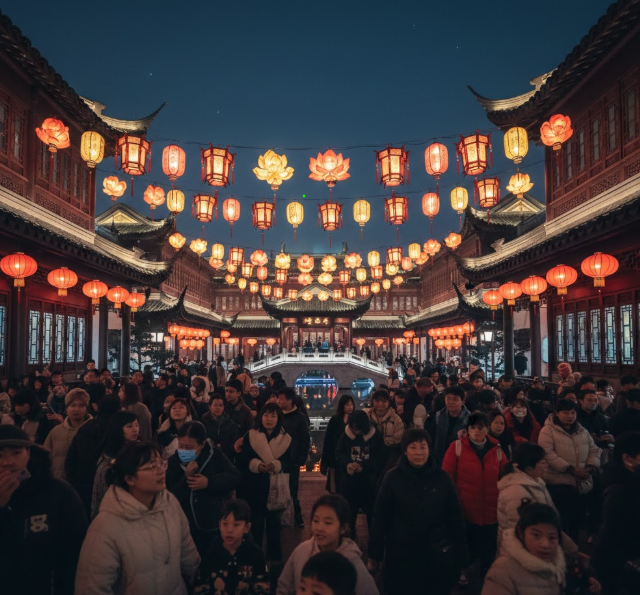
Table of Contents
What Is the Yuyuan Lantern Festival?
The Yuyuan Lantern Festival is an annual lantern exhibition held in and around Yuyuan Garden and the surrounding old town area of Shanghai. It is traditionally associated with the Lantern Festival that marks the end of Lunar New Year celebrations.
What makes the Yuyuan Lantern Festival unique is scale. Rather than being confined to a single park or square, lantern installations extend across multiple streets, courtyards, and plazas, creating several themed zones that visitors move through on foot.
Because of this layout, planning matters more here than at most lantern festivals.
Why the Festival Draws Such Large Crowds
The Yuyuan Lantern Festival attracts both domestic and international visitors for three main reasons:
- Its location in central Shanghai
- The integration of lantern art with historic architecture
- Limited nightly capacity due to crowd control
During peak evenings, entry queues can stretch for hours if visitors arrive unprepared. Understanding zones, ticket rules, and timing is essential.
How the Festival Area Is Structured
The Yuyuan Lantern Festival is divided into six primary lantern zones. Each zone has its own theme, layout, and crowd density patterns.
Unlike theme parks, these zones are not entered sequentially. Visitors can move between zones depending on entry points, crowd flow restrictions, and ticket type.
Knowing what each zone offers helps prioritize time and avoid congestion.
Zone 1: Yuyuan Garden Core Area
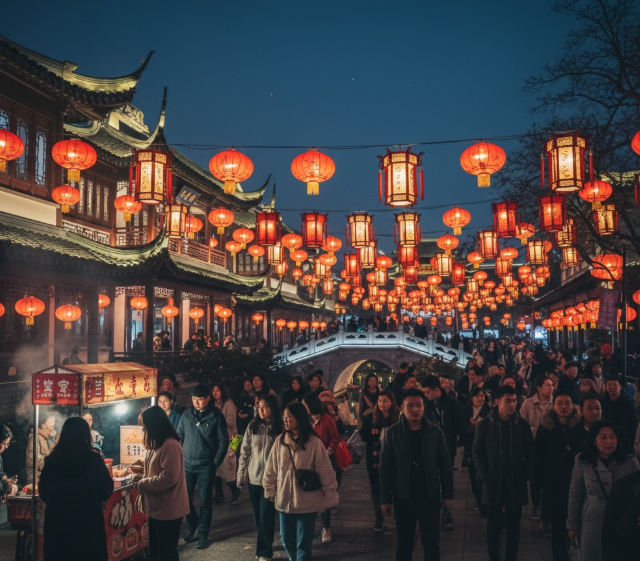
This is the most iconic and most crowded part of the Yuyuan Lantern Festival.
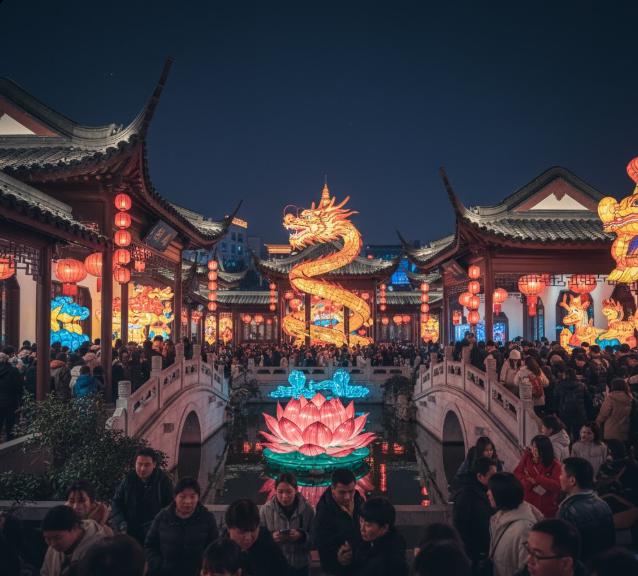
Located inside and immediately around Yuyuan Garden, this zone features large-scale lantern installations integrated with classical Chinese pavilions, bridges, and water features.
Key characteristics:
- Highest crowd density
- Strong visual impact
- Strict entry control during peak hours
Visitors should expect slower movement here, especially after sunset.
Zone 2: Jiuqu Bridge and Central Waterway
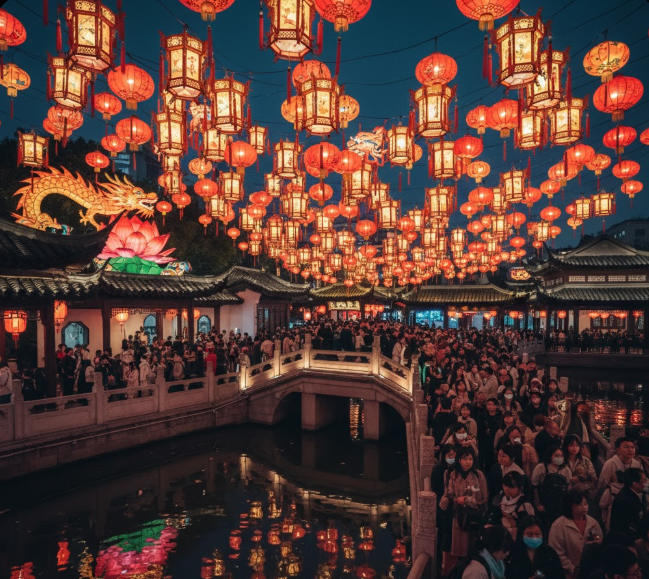
This zone focuses on lantern reflections along the winding bridge and surrounding water channels.
It is one of the most photographed areas of the Yuyuan Lantern Festival but also one of the narrowest.
Movement is often one-directional during busy periods. Security staff may pause entry temporarily to ease congestion.
This zone is best visited either early in the evening or later at night when crowds thin.
Zone 3: Old Town Commercial Streets
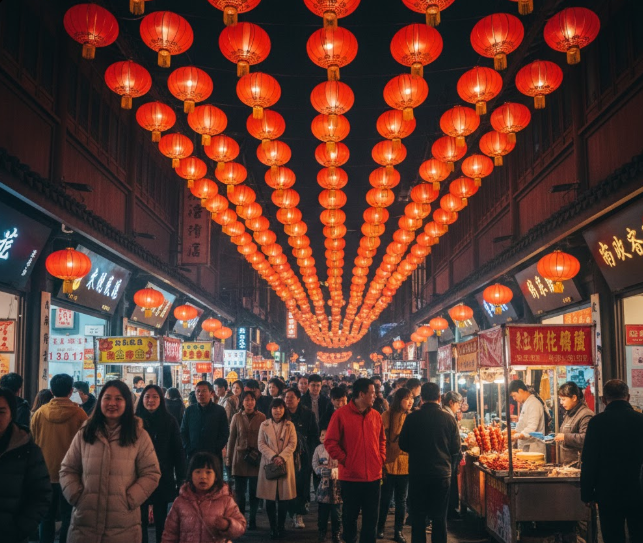
Lanterns in this zone are mounted above pedestrian streets lined with traditional shops and food vendors.
This area feels more open than the garden core and allows visitors to combine sightseeing with dining and shopping.
Because it serves as a transit area between zones, crowd flow here is continuous rather than static.
Visitors often underestimate how long they will spend in this zone due to frequent stops.
Zone 4: Themed Lantern Courtyards
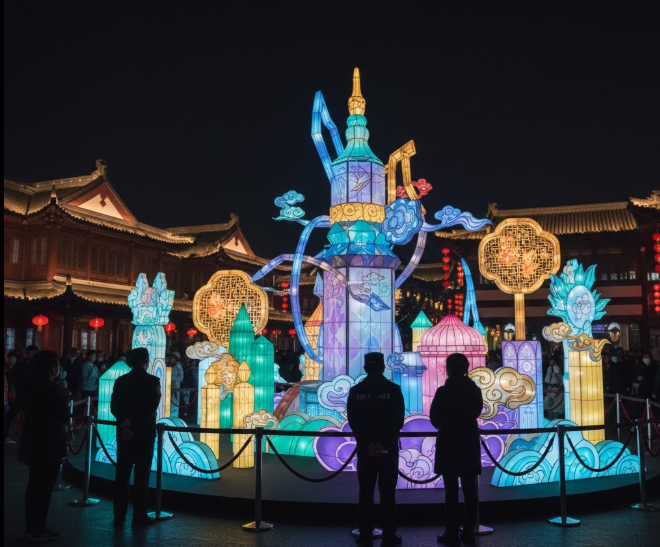
This zone showcases rotating themes such as mythology, folklore, or zodiac symbolism.
Lanterns are arranged in enclosed courtyards, which helps distribute crowds more evenly.
Compared to other zones, this area offers:
- Better viewing space
- Shorter dwell times
- Lower congestion
It is a good choice for visitors who want strong visuals without extreme crowd pressure.
Zone 5: Peripheral Viewing Areas
Not all lantern displays require entry into the central festival area.
Peripheral zones include open plazas and streets just outside the main ticketed sections. These areas still feature impressive installations but with lighter crowd control.
This zone is ideal for:
- Families with children
- Visitors avoiding long queues
- Short visits
Many visitors skip this zone unintentionally, which makes it one of the most underrated parts of the Yuyuan Lantern Festival.
Zone 6: Night-Only Highlight Displays
Some lantern installations are activated only after dark and are positioned in areas with restricted daytime access.
These displays are often revealed gradually during the festival period and are heavily promoted on social media.
Entry to these areas is often time-controlled, with staff limiting dwell time during peak nights.
How Tickets for the Yuyuan Lantern Festival Work
Ticketing for the Yuyuan Lantern Festival is more complex than many visitors expect.
There is no single universal ticket that guarantees unrestricted access to all zones at all times.
Ticket rules vary by:
- Date
- Time slot
- Entry gate
On peak days, tickets are often sold for specific entry windows, after which re-entry may not be allowed.
Free vs Ticketed Areas
Not all parts of the Yuyuan Lantern Festival require a ticket.
Free-access areas include:
- Peripheral viewing streets
- Commercial zones
- Select outdoor plazas
Ticketed areas generally include:
- Yuyuan Garden interior
- High-density courtyard zones
- Night-only feature displays
Understanding this distinction helps manage expectations.
Entry Times and Crowd Control Rules
Entry times are enforced strictly during busy periods.
Visitors arriving outside their ticketed time slot may be asked to wait or denied entry.
Security measures include:
- Bag checks
- One-way pedestrian routing
- Temporary entry suspensions
These measures are designed to maintain safety, not convenience.
For official visitor guidance, refer to:
Shanghai Municipal Government – Visitor Notices
Best Time of Day to Visit
The Yuyuan Lantern Festival changes character depending on timing.
General patterns:
- Late afternoon: lower crowds, limited lighting
- Early evening: peak congestion
- Late night: improved flow, full illumination
Visitors seeking photos should aim for late evening rather than early nightfall.
If you are coordinating this visit as part of a broader Shanghai trip, you can map timing and transit options using the FlyFono AI Trip Planner .
Why Planning Matters More Here Than Other Festivals
Unlike open-air festivals with unlimited access, the Yuyuan Lantern Festival operates within a dense urban environment.
Crowd management decisions can change in real time based on safety assessments.
Visitors who arrive without a plan often spend more time waiting than viewing lanterns.
How to Buy Tickets Without Getting Stuck in Long Queues
For the Yuyuan Lantern Festival, ticket strategy matters almost as much as arrival time. Many visitors assume tickets can be purchased easily on-site, but during peak nights this often leads to long waits or sold-out time slots.
Tickets are typically released in batches and linked to specific entry windows. Once a time slot reaches capacity, entry is paused even if you already have a ticket.
The most reliable approach is:
- Purchase tickets in advance whenever possible
- Select later evening entry windows if available
- Avoid peak holiday nights if your schedule is flexible
Visitors who arrive without tickets during peak hours often spend more time waiting than viewing lanterns.
Best Entry Gates by Lantern Zone
The Yuyuan Lantern Festival uses multiple access points, but not all gates serve every zone equally well.
Choosing the right entry gate can significantly reduce congestion.
- Garden Core Zones: Use designated garden gates and arrive before your time slot
- Commercial Street Zones: Side street entrances often move faster
- Peripheral Zones: Open-access entry with minimal checks
Security staff may redirect visitors depending on crowd pressure, so flexibility is essential.
How Crowd Control Actually Works at the Festival
Crowd control at the Yuyuan Lantern Festival is dynamic.
Organizers monitor:
- Pedestrian density
- Movement speed
- Bottleneck areas
When density exceeds safety thresholds, entry is temporarily suspended and one-way routing is enforced.
This can happen suddenly, even on nights that appear calm at first.
Common Mistakes Visitors Make
Most negative experiences at the Yuyuan Lantern Festival come from avoidable mistakes.
The most common include:
- Arriving during peak evening hours without tickets
- Trying to visit all zones in one night
- Ignoring posted entry windows
- Underestimating walking and waiting time
The festival rewards pacing and planning, not speed.
How Long You Actually Need at the Festival
Despite its size, most visitors do not need an entire evening to enjoy the Yuyuan Lantern Festival.
Typical time requirements:
- Peripheral zones only: 45–60 minutes
- Core zones with tickets: 90–120 minutes
- Full experience across zones: 2–3 hours
Trying to stretch beyond this often leads to fatigue and diminishing enjoyment.
Is It Worth Visiting on Weekends or Holidays?
Weekend and holiday nights offer the most complete lighting displays but also the heaviest crowds.
If possible:
- Choose weekday evenings
- Arrive late rather than early
- Focus on fewer zones
Visitors with limited time may find weekday visits more enjoyable overall.
Food, Restrooms, and Practical Tips
Food stalls and restaurants around Yuyuan become extremely busy during festival nights.
Practical tips:
- Eat before entering high-density zones
- Carry water but expect bag checks
- Use restrooms before entering ticketed areas
Leaving and re-entering ticketed zones is often restricted during peak hours.
Combining the Festival With Other Shanghai Attractions
The Yuyuan Lantern Festival works best as part of a broader evening plan.
Popular combinations include:
- Late dinner after the festival
- Bund river walk
- Night river cruise
Spacing activities reduces crowd fatigue and improves flow.
You can map out a realistic evening schedule using the FlyFono AI Trip Planner to avoid rushed transitions.
Frequently Asked Questions
What is the Yuyuan Lantern Festival?
The Yuyuan Lantern Festival is a large-scale annual lantern exhibition held around Yuyuan Garden and Shanghai’s Old Town, featuring themed lantern zones, night illuminations, and controlled entry areas.
Where is the Yuyuan Lantern Festival located?
The festival takes place in and around Yuyuan Garden, Shanghai Old Town, including nearby streets, courtyards, and plazas.
Do I need a ticket for the Yuyuan Lantern Festival?
Not all areas require tickets. Some peripheral zones are free to enter, while high-density areas such as Yuyuan Garden and select night displays require timed-entry tickets.
Can I buy tickets on-site?
On-site tickets may be available on quieter days, but during peak evenings tickets often sell out. Buying tickets in advance is strongly recommended to avoid long queues.
Are tickets time-specific?
Yes. Many tickets are sold with specific entry time windows. Entry outside your assigned time slot may be delayed or denied during busy periods.
How many lantern zones are there at the festival?
The Yuyuan Lantern Festival is typically organized into six main lantern zones, each with different themes, layouts, and crowd levels.
Can I visit all lantern zones in one night?
It is possible, but not recommended on busy nights. Most visitors have a better experience focusing on selected zones rather than trying to see everything.
What is the best time of day to visit the Yuyuan Lantern Festival?
Late evening usually offers the best balance between full illumination and manageable crowds. Early evening tends to be the most congested.
Is the festival very crowded?
Yes. The Yuyuan Lantern Festival is one of Shanghai’s busiest seasonal events. Crowd control measures such as one-way routing and temporary entry pauses are common.
Is the Yuyuan Lantern Festival suitable for children?
Yes, but families should prioritize peripheral and courtyard zones, which are less crowded and easier to navigate with children.
Can I re-enter after leaving a ticketed area?
Re-entry is often restricted during peak hours. Always check the specific conditions printed on your ticket.
How long does a typical visit take?
Most visitors spend:
45–60 minutes in free-access areas
90–120 minutes in ticketed core zones
A full visit across multiple zones usually takes 2–3 hours.
Is photography allowed at the Yuyuan Lantern Festival?
Yes. Photography is allowed, but tripods, drones, and professional equipment may be restricted in crowded areas.
Are food and restrooms available inside the festival area?
Food vendors and restaurants are available nearby, but queues can be long. Restrooms are limited inside ticketed zones, so plan ahead.
Does the festival change during the event period?
Yes. Some lantern displays rotate or are introduced gradually, especially night-only highlight installations.
Is it better to visit on a weekday or weekend?
Weekdays are generally less crowded and easier to manage. Weekends and holidays offer fuller displays but much heavier congestion.
What is the biggest mistake visitors make?
Arriving during peak evening hours without tickets and underestimating waiting times between zones.
Is the Yuyuan Lantern Festival worth visiting if I have limited time in Shanghai?
Yes, but only with planning. Visiting selected zones and avoiding peak hours makes the experience much more enjoyable.
Where can I find official updates or crowd notices?
Official updates and visitor notices are published by Shanghai municipal authorities and local tourism channels.
Official Visitor Information
For real-time updates and crowd notices, refer to official Shanghai visitor channels:
Shanghai Municipal Government – Visitor Information
Final Takeaway
The Yuyuan Lantern Festival is visually spectacular but operationally complex.
Visitors who understand zones, entry rules, and timing enjoy the festival smoothly. Those who arrive without a plan often face queues and frustration.
Plan selectively, pace your visit, and treat the festival as a curated experience rather than a checklist.