
Tokyo vs Seoul: The Sassy, Definitive Guide on Where to Go
Listen up, global rovers and couch potatoes pretending to plan a trip. You’ve narrowed your next great adventure down to two heavyweights: Tokyo and Seoul. Bravo. You have excellent taste, or perhaps you just follow whatever is trending on TikTok. Either way, you now face a crippling dilemma.
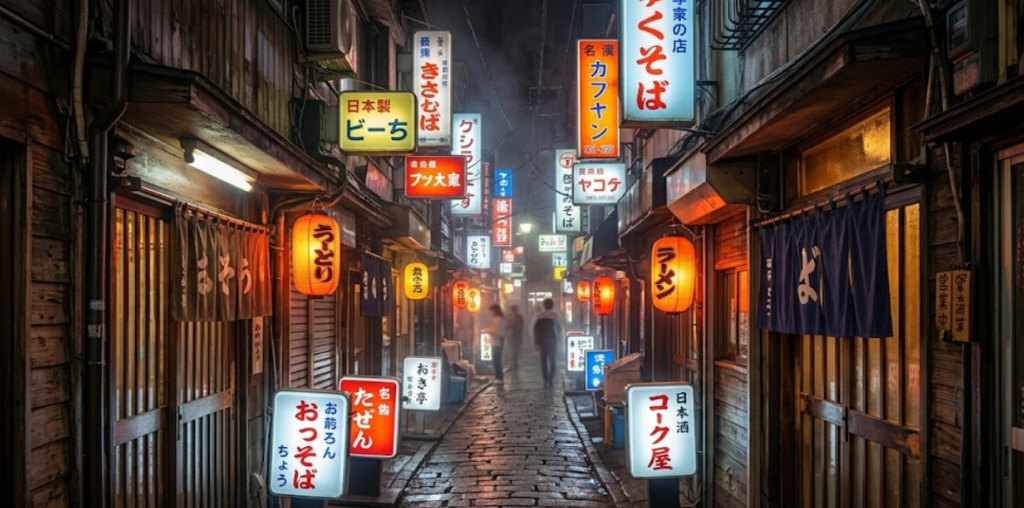
This isn’t just a “both are nice” scenario. This is a battle for your time, your hard-earned money, and your sanity. We’re not here to give you a diplomatic, beige comparison. We’re here to throw down the facts with a healthy dose of sarcasm and a sprinkle of sass. This is the Tokyo vs Seoul smackdown.
In this corner: Tokyo, the polished, polite, slightly manicured behemoth. And in this corner: Seoul, the punchy, high-energy, spice-loving, hyper-digital challenger.
One will feed you Michelin-star ramen; the other will set your mouth on fire with tteokbokki. One has flawless, whispered trains; the other has trains that are almost as polite, but also a guy next to you loudly watching a drama with no headphones.
Let’s be real, you’re going to use an AI Trip Planner to actually figure out the logistics because you’re lazy. But before you do, you need to know which giant is getting your initial commitment.
Table of Contents
First Things First: The Visa Hurdles (Because Governments Love Paperwork)
Before you start arguing about which city has better skincare or tastier street food, you need to make sure they’ll actually let your scruffy face across the border.
Don’t just assume your passport is your golden ticket. It might be, if you’re from the EU or the US, but let’s not tempt fate. Nothing says “world-class traveler” like getting deported before you’ve even had a convenience store egg salad sandwich.
Japan and South Korea are generally pretty chill with tourism, but their rules can change faster than a K-Pop idol’s hair color. Do yourself a massive, stress-reducing favor and check the official requirements.

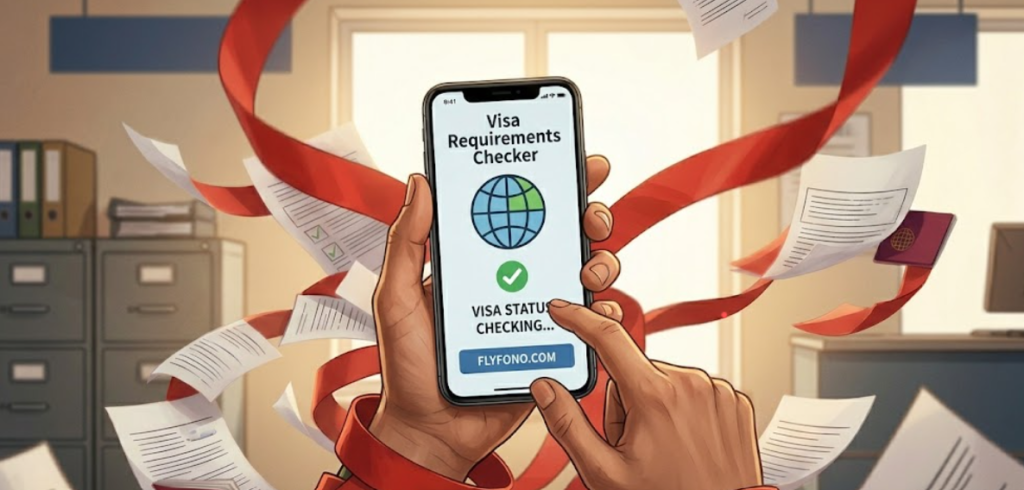
Yes, this is an actual advertisement for sanity. Check your requirements on our Visa Requirements Checker because we have zero desire to receive your complaints when you get stuck in immigration purgatory.
Tokyo vs Seoul: The Aesthetic Vibe and Your Public Breakdown
Let’s talk atmosphere. When comparing Tokyo vs Seoul, you need to accept that one is a well-rehearsed performance, and the other is a raw, electric concert that might or might not have sound issues.
Tokyo: The Master Class in Polite Obsession
Tokyo is overwhelming, but it’s an organized overwhelming. It’s like a massive bento box where everything has its precise compartment. The trains arrive on the exact second. People line up in perfectly straight queues (which is terrifyingly civilized, frankly). The city whispers. Even in Shinjuku, the world’s busiest station, there is a low-key hum.
You will feel very, very large and very, very loud. Your mere existence will probably be a disruption. But it’s also undeniably beautiful. You have the towering skyscrapers of Shinjuku and the absolute insanity of Shibuya Crossing, juxtaposed with quiet, ancient temples like Senso-ji, nestled right next to a Pachinko parlor (sensory overload).
The cleanliness is suspicious. How is there no trash on the ground, but also zero trash cans? It’s a national magic trick. Tokyo doesn’t just work; it operates with a meticulous perfection that makes you want to straighten your tie even if you’re wearing a t-shirt.
Seoul: The City of “Right Now!”
Seoul is Tokyo’s punchier, slightly younger (at least spiritually) sibling that drank too much cold brew and is obsessed with the newest gadget. The keyword here is Pali-Pali (Hurry, Hurry!). Everything is fast. Digital payment? Done. Food delivery? Done. Wi-Fi that makes your home connection look like a carrier pigeon? Done.
Seoul is less sanitized. You’ve got the ultra-modern, slick Gwanghwamun area, but then you take a two-minute walk and you’re in a maze-like pojangmacha (street food stall) area smelling of grilled meat and kimchi. It feels more rugged, more alive. The architecture is a mashup of centuries-old palaces (Gyeongbokgung is stunning) and futuristic, Zaha Hadid masterpieces (DDP).
And let’s be honest: Seoul runs on caffeine and spite. You will never see so many people, from 70-year-old grandmothers to 20-year-old students, look so high-fashion, high-energy, and completely unfazed by life simultaneously.
The Verdict: Tokyo is a meticulously directed film. Seoul is a live broadcast that’s either a smash hit or a glorious disaster, but you can’t look away.
The Great Culinary Debacle: Food Coma or Flavor Panic?
This is where the friendship ends. Let’s talk food in the context of Tokyo vs Seoul.
Tokyo: A Love Letter to Perfectionism
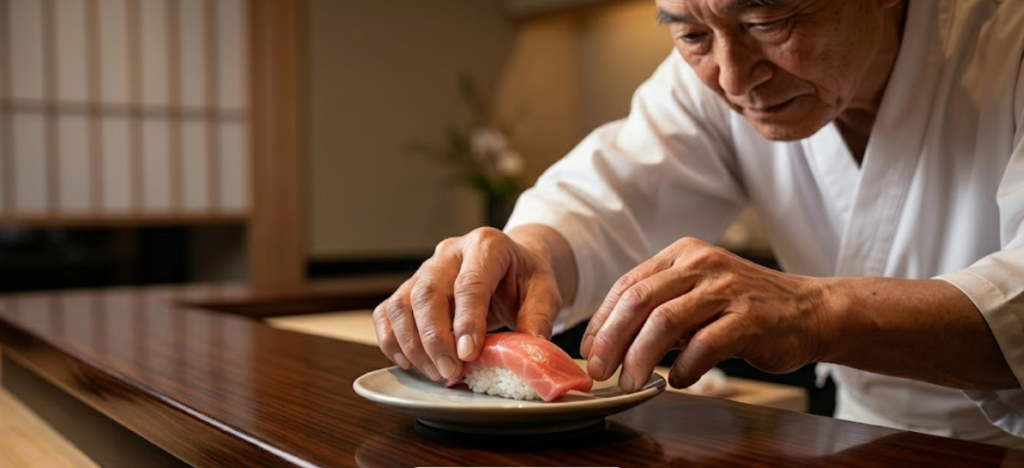
Japanese food is an obsession with the essence of the ingredient. You get the sense that a chef has spent ten years mastering how to cut one piece of tuna correctly. It’s subtle, it’s precise, and it is overwhelmingly delicious. You’re looking at world-class sushi, ramen that takes 72 hours to make (the broth, not the eating), tonkatsu (the greatest thing to ever happen to pork), and yakitori.
The attention to detail will ruin all other food for you forever. Even the convenience store food (specifically FamilyMart’s Famichiki) has a cult following for a reason. And the presentation? They make a humble rice ball look like a work of art you shouldn’t eat.
Seoul: Setting Your Soul on Fire (Literally)
Seoul food is the opposite. It is aggressive, communal, and often aims for flavor saturation. They want spice. They want fermented funk (in the best way). They want savory, sweet, and fiery, sometimes all in the same bite.
You haven’t lived until you’ve sat around a hot plate, grilled your own samgyeopsal (pork belly), wrapped it in a perilla leaf with three garlic cloves and raw onion, and washed it down with soju. It’s glorious. Korean fried chicken is a religious experience (sorry, Colonel Sanders). Then you have the street food scenes (Gwangjang Market) where your mouth will either be happy or scream for water from the tteokbokki (spicy rice cakes).
Also, Korea is the king of desserts you can’t finish. Have you seen the mountain of shaved ice that is Bingsu? It requires a permit.
The Verdict: For food, it’s simple: Do you want a subtle symphony of flavor (Tokyo) or do you want a loud, spice-fueled rock concert that you’ll feel tomorrow (Seoul)? We can’t choose for you, but one involves a higher chance of needing a milk-based beverage.
Need to book your travel now that you’re drooling?
Wait, you still have so much more to read. But if you’re already making decisions, remember: we got links.
- Need a place to crash after a food coma? We’ve got you covered for Hotels.
- Flights? Get a head start on booking them: Flights.
- Trains? (Essential for both cities): Trains.
Now, back to our scheduled programming.
Transportation: Your First Battle in navigating Tokyo vs Seoul
If you think navigating the NYC subway is hard, both these cities will humble you into a state of weeping paralysis. You absolutely cannot master transportation in Tokyo vs Seoul without a mental collapse.
Tokyo: The 3D Puzzle of DOOM
Tokyo has the most extensive, efficient, and clean railway system on planet Earth. And you will hate it. Why? Because it’s operated by multiple different companies (JR East, Tokyo Metro, Toei Subway, and others), each with its own confusing fare system.
Imagine needing four different tickets to cross the city because you switched lines at the wrong station. That’s your future. You must, and we cannot stress this enough, get a Suica or Pasmo card (digital or physical) immediately. The trains are silent, packed like sardines, and punctual to the nanosecond. If you make eye contact on a Tokyo train, you have broken a sacred law.
Seoul: The Digital Revolution
Seoul’s subway (all unified under one system) is, dare we say, slightly superior in ease of use compared to Tokyo. It’s all one network. The standard T-money card works everywhere. The stations have clearer signage. Also, Seoul has excellent, cheap buses that Tokyo seems to have less of.
The best part? Many Seoul stations are massive underground malls where you can get a whole new outfit, a phone, and a meal while walking between two lines. However, be prepared: people will shove you. It’s not mean; it’s just the Pali-Pali culture. If they’re in your way, they expect the same.
The Verdict: For absolute efficiency, it’s Tokyo. For slightly less initial confusion and easier transfers, it’s Seoul. Both cities will try to consume your soul if you don’t use a mapping app.
Cost: How to Go Broke comparing Tokyo vs Seoul
You’re asking about money. Good. Your bank account is about to be ravaged. But which one will do it more gently? The Tokyo vs Seoul cost comparison is tricky because it depends on how much you love luxury vs street food.
Tokyo: Where Your Yen Disappears into Thin Air
Tokyo is generally more expensive. Specifically, accommodation and transportation (especially those multi-company rides) can bleed you dry faster. A standard decent hotel room is small and pricy. High-quality sushi meals? That’s rent money for a month.
But—and this is a big “but”—Tokyo also has incredible value options. You can eat a 1,000 yen (about $7 USD) bowl of Michelin-recommended ramen that is perfection. Convenience store (conbini) food is cheap, delicious, and a valid dinner choice (we’ve all done it). Also, Japanese customer service is so god-tier (with NO TIPPING) that you actually feel like you’re getting more than your money’s worth.
Seoul: Where Your Won (Wants) Can Get Out of Control
Seoul is generally cheaper for the basics. Food (especially street food and non-upscale dining) is significantly less. Transportation (taxis, subway) is also far more affordable. A typical casual lunch will set you back about 6,000–9,000 KRW ($5–7).
But you know what Seoul does? It tempts you. You will spend $10 on a single Bingsu (Korean shaved ice dessert). You will drop $150 in the Olive Young (the makeup and skincare store on every single street corner, we swear) buying things you didn’t know you needed. You will spend hundreds on a K-Pop concert ticket or an experience like having your colors analyzed or renting a traditional Hanbok. It is a city that nickel-and-dimes you to death with irresistible, trend-driven shopping.
The Verdict: If you are a broke student living on ramyeon (not ramen), Seoul is your champion. If you have a budget and want to experience luxury (or very precise, high-end simple experiences), Tokyo wins.
Social Culture and Social Gaffes: How to Embarrass Yourself
This section is vital, you uncultured swine. You are a guest. Try not to offend the locals while deciding between Tokyo vs Seoul.
Tokyo: The Etiquette Olympics
Japanese culture is built on Wa (harmony) and a rigid, almost terrifying social politeness. You do not talk loudly on trains. You do not eat while walking. You line up perfectly. You use two hands when giving or receiving money or credit cards. You bow. It is exhaustive.
The hardest part? The “No.” Japanese people are so polite that they will rarely say “no” directly to a request. They will say “it’s a little difficult” or suck their teeth. If you hear this, you stop. You have offended them by asking. Good job. Also, tattoos are still quite taboo and are sometimes forbidden in public onsen (bathhouses). If you look like a walking doodle, book a private one.
Seoul: The Dynamic Hustle
Seoul feels more kinetic, more outspoken. The culture is faster, the people more upfront. They might not have the extreme Wa of Japan, but they have Jeong—a feeling of close connection, even with strangers. You’ll see old people holding hands, young people supporting each other when drunk, and people sharing communal pots of food.
But there are different rules. Respecting elders is huge (it’s a Confucian culture). You always use formal language (the yo endings) with people you don’t know, and you let the older person pour the soju for the younger person (but they pour with one hand while holding their own elbow, it’s complicated). Also, don’t leave your chopsticks sticking vertically out of your rice—it’s a bad omen (death ritual thing, you get it).
The Verdict: Tokyo requires you to learn a martial art of polite inaction. Seoul requires you to join the dynamic energy and show respect to everyone (but especially older people).
Nightlife: Where to Regret Your Life Choices
This is where the fun (and the massive hangovers) happen in the grand debate of Tokyo vs Seoul.
Tokyo: Organized Chaos, But Make it Polite
Tokyo’s nightlife is legendary, vast, and layered. You have areas like Shinjuku, which features Golden Gai—six narrow alleys with over 200 tiny bars, some only seating four or five people. It’s intimate, grungy, and spectacular.
Then you have Shibuya and Roppongi, which are full of massive, multi-story nightclubs. There’s also izakayas (Japanese pubs) where you can drink beer and eat cheap, amazing food until the early hours. One thing you must master: nomihodai (all-you-can-drink) deals. Your wallet (and liver) will thank/hate you. Just don’t miss the last train, or you’re paying $80 for a 15-minute taxi ride, you rookie.
[IMAGE 3 PLACEHOLDER: The neon glow of Shinjuku’s Golden Gai narrow alleys.]
Seoul: The Never-Ending Soju Cycle
Seoul nightlife is aggressive. It’s often a cycle of rounds (called cha). Round 1: Food and initial drinks. Round 2: A bar or pub. Round 3: A nightclub or karaoke room (Noraebang). Round 4: Soup to sober up (like hangover soup, haejang-guk).
The common theme? Soju. Soju is life, soju is death. It’s cheap, potent, and tastes like a slightly sweet, high-proof spirit that should be illegal. You will see people of all ages absolutely wasted. Koreans take drinking very seriously. Hongdae is for the university crowd (lots of busking and cheap bars), while Itaewon is more global and diverse, and Gangnam (yes, that one) is for the fancy clubs and people trying too hard.
The best part about Seoul? Food (and transport, until late) is available all night. You can get full-service food delivered to your hotel at 4 a.m.
The Verdict: For intimate, quirky bars and massive production clubs, Tokyo wins. For unstoppable, multi-stage drinking and soju-fueled madness, Seoul is your undisputed champion. Both will make you feel 100 years old the next day.
A Crucial Break: Don’t Ruin Your Whole Trip over Logistics
Look, comparing Tokyo vs Seoul is stressful. What if you make the wrong choice? What if you get lost on the subway and cry? What if you run out of money because you bought too many keychains?
Stop worrying. Or worry productively. We’re here to help (mostly to get you to use our links, let’s be real).
Got a Major Issue?
If you’re in a panic and need advice (not the “is my crush ghosting me?” kind, the “I got lost and am crying” kind), contact our actual human team: Contact. We might even reply.
Wait, Did you actually read the Visa section?
Seriously, are you sure? Do it again. Just double check. You don’t want to get turned away at the gate. Visa Requirements Checker. We promise it takes five seconds.
When to Go: Your Battle against the Elements
Both cities have four distinct seasons. Comparing Tokyo vs Seoul in this arena is a matter of deciding which version of nature you can tolerate.
Tokyo: The Sweaty Humidity
Tokyo’s springs (cherry blossoms—Sakura—late March/early April) are iconic, crowded, and expensive. It is beautiful, but good luck finding a picture without 500 other tourists in it. Summers (July–August) are absolute misery. Think 35°C (95°F) with 95% humidity. You will just sweat. It’s an unavoidable, soul-crushing experience.
Autumn (mid-October/November) is arguably better than spring. The fall foliage is stunning, the temperatures are crisp, and the crowds are slightly more manageable. Winters (December–February) are dry, cold, and often sunny. Snow is rare in Tokyo proper, but it’s a great, less-crowded time to visit (and the winter illuminations are incredible).
Seoul: The Extremes
Seoul also has stunning springs (cherry blossoms, just slightly later than Tokyo, around mid-April). The cherry blossoms here are often framed against ancient city walls or palaces, which is objectively cooler. Summers (July–August) are equally hot and humid, but perhaps slightly punchier because it’s also monsoon season (jangma). When it rains, it pours.
Autumn (September–November) is, once again, the superior choice. The colors (crimson maple leaves and yellow ginkgo trees) are insane, the weather is perfect, and the food festivals are in full swing. Winters (December–February) are cold. Brutally cold. Like, -15°C (5°F) with a wind chill that makes your face hurt. If you’re a fan of snow and dramatic scenery, go for it.
The Verdict: For classic spring beauty (with extreme crowds), Tokyo. For extreme (and stunning) autumn colors and truly freezing dramatic winters, Seoul. Don’t go to either in August unless you have a strange kink for humidity.
Final Decision Time: Tokyo vs Seoul – Which City Gets Your Unpaid Debts?
Alright, you’ve read thousands of words. Your eyes hurt. You are confused. Let’s break it down one more time to help you settle the Tokyo vs Seoul debate forever.
You should go to Tokyo if:
- You crave perfection: You want efficiency, organization, cleanliness, and a city where everything works flawlessly.
- You worship detail: You appreciate a chef who spent ten years learning how to master rice, or craftsmanship you can feel in every corner.
- You want the original sensory overload: You want the quintessential “Asian metropolis” experience with neon, anime, and crowds that move like school of fish.
- You don’t mind subtle polite rule-following: You’re okay with quiet trains and a million social protocols if it means a calm and predictable trip.
- You have the budget (or know how to optimize it): You’re willing to pay for certain high-end experiences, but are okay with conbini meals to save cash.
You should go to Seoul if:
- You are fueled by energy and trends: You want high-speed Wi-Fi, the newest K-Pop fashion, and a city that feels like it never sleeps.
- You live for bold, spicy flavors (and street food): You want to set your mouth on fire and drink soju from a communal pot at 3 a.m.
- You want history you can feel: You appreciate palaces and temples smack-dab in the middle of futuristic business districts.
- You’re on a relative budget: You want lower costs for food, drink, and transportation, even if you spend it all on shopping.
- You like a dynamic (and chaotic) vibe: You don’t mind people bustling and are okay with a less sanitized (but still clean) city.
The Ultimate Final Verdict: In the epic clash of Tokyo vs Seoul, there is no loser. Only you, because you have to choose.
If you are a high-strung perfectionist who values quiet and incredible craftsmanship, Tokyo will feel like home. If you are a trend-obsessed extrovert (or just really love spice and dynamic energy), Seoul will call to you.
Both cities are magnificent, frustrating, complex, and will leave you breathless. Now, close this tab, pick one, and go book your trip. We’ve already given you the affiliate links, what are you waiting for?
Before You Close the Tab (You Forgot to Click Our Links)
- Seriously, just Flights. Just do it.
- No? You’re going to stay home? Okay, fine. Use our AI Trip Planner for the imaginary trip: AI Trip Planner.