
7 Essential Things Chinese Tourists Must Know Before Visiting Thailand (Safety, Scams & Costs)
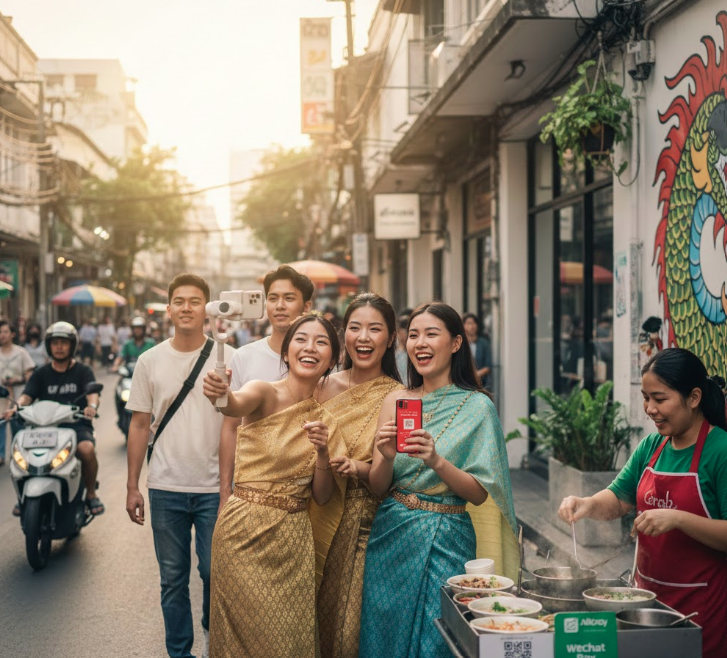
Safety: Thailand is generally safe, but scams and traffic risks exist.
Language: English is basic outside hotels. Translation apps help a lot.
Transport: Grab and Bolt are safer than street taxis.
Payments: Alipay works in many places, but cash is still needed.
Food: Chinese food is widely available if you miss home.
Thailand has long been one of the most popular international destinations for Chinese tourists. Even travelers who have never been abroad often choose Thailand as their first overseas trip. Short flight times, warm weather, tropical scenery, and food that feels partially familiar make the country attractive and easy to consider.
However, popularity does not mean simplicity. Many Chinese tourists arrive in Thailand with expectations shaped by social media, tour advertisements, or second-hand stories. Some expect Thailand to feel as orderly and predictable as Japan. Others expect it to be extremely cheap and effortless. Both assumptions often lead to disappointment.
This article is written as a practical Thailand travel guide for Chinese tourists. It focuses on what matters most to Chinese travelers: safety, scams, visa rules, cultural differences, and realistic expectations. It avoids exaggeration and marketing language. If you are asking is Thailand safe for Chinese tourists or whether Thailand suits your travel style, this guide is designed to give you clear answers.
Table of Contents
Recent Incidents
Over the past year, Thailand has faced heightened scrutiny among Chinese travelers due to a series of widely circulated incidents, including reports related to the alleged kidnapping of a Chinese celebrity, scam operations targeting foreigners, and sensational online narratives suggesting that Thailand has become unsafe. These stories spread rapidly across Chinese social media platforms, short-video apps, and online forums, often stripped of nuance or updated context. In several cases, initial reports were later clarified or corrected, but the follow-up information rarely traveled as far or as fast as the original headlines.
This pattern is not unique to Thailand, yet it has had a disproportionate impact on perception because Thailand is such a common first-time overseas destination. From an objective standpoint, these incidents were isolated cases rather than indicators of a systemic breakdown in safety. Thai law enforcement responded with visible investigations, arrests, and public briefings, and cooperation with international authorities where relevant. However, the speed and emotional framing of modern media meant that fear often spread faster than facts. For many Chinese readers, the question shifted quickly from understanding individual cases to a broader concern: is Thailand safe for Chinese tourists at all.
This is precisely why a grounded Thailand travel guide for Chinese tourists is necessary. The reality on the ground has not changed as dramatically as online narratives suggest. Tourist infrastructure remains intact, major destinations continue to operate normally, and millions of visitors enter and leave Thailand each year without incident. Scams, particularly those involving call centers or fraudulent schemes, are not new phenomena and are not limited to Thailand; similar issues exist across Southeast Asia and beyond.
What changed was the visibility of these cases, amplified by algorithms that favor emotionally charged content. For travelers, the real risk lies not in the country itself, but in misunderstanding what kind of risks exist and how to manage them. Thailand is not a zero-risk environment, but neither is it a high-risk destination when compared objectively with other popular tourist countries.
The most common problems faced by visitors remain financial or logistical rather than violent or life-threatening. Taxi overcharging, rental disputes, and misleading tour offers account for the majority of negative experiences, not random attacks or kidnappings. Understanding this distinction is essential.
This Thailand travel guide for Chinese tourists does not dismiss recent incidents, nor does it exaggerate them. Instead, it places them in proper context so travelers can make decisions based on proportion, preparation, and reality rather than fear. Media narratives thrive on extremes, but travel decisions should be based on patterns, not outliers. When viewed through that lens, Thailand remains a destination where awareness matters more than avoidance.
1. Is Thailand Safe for Chinese Tourists? A Realistic Overview
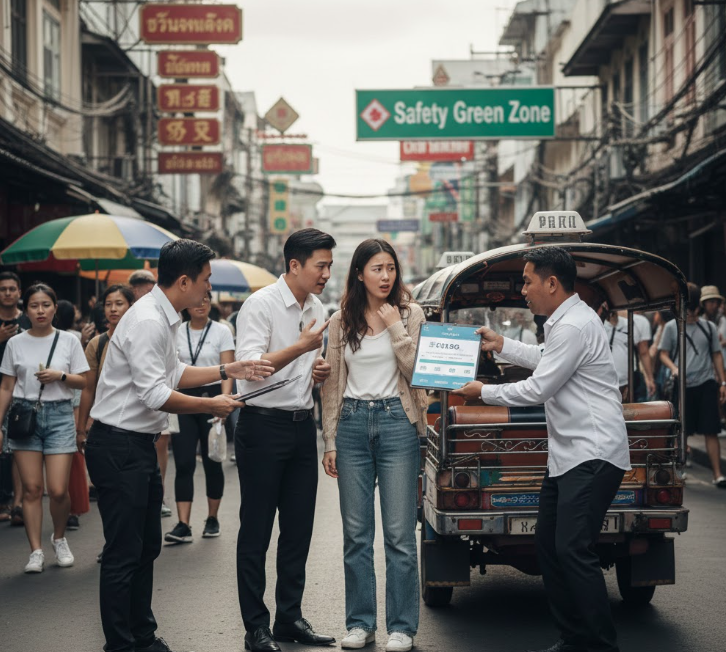
Safety is the first concern for most Chinese travelers going abroad. Searches such as is Thailand safe for Chinese tourists or Thailand safety for Chinese travelers reflect genuine concern rather than curiosity.
The honest answer is that Thailand is generally safe for Chinese tourists, but it operates very differently from countries like Japan, South Korea, or Singapore. Thailand is not a rule-heavy or tightly controlled environment. Laws exist, but enforcement can be inconsistent, especially in tourist areas.
Violent crime involving tourists is rare. Most problems Chinese tourists face are not physical threats, but financial or logistical issues. These commonly include:
- Taxi drivers overcharging or refusing to use meters
- Rental disputes involving jet skis or motorbikes
- Pickpocketing in crowded tourist zones
- Tour, shopping, or gem scams
Thailand has a dedicated Tourism Police force that operates in major destinations such as Bangkok, Phuket, Pattaya, and Chiang Mai. Emergency medical care is reliable, and private hospitals in tourist cities meet international standards.
The biggest real safety risk in Thailand is traffic. Road safety standards are lower than what many Chinese travelers are used to in major Chinese cities. Motorbike accidents are common, especially among tourists. Chinese visitors who avoid renting scooters and instead rely on taxis or ride-hailing apps significantly reduce their risk.
For a broader perspective on safety beyond nationality, you may also find this useful: Is Thailand Safe for Tourists?
2. Thailand Is Not One Experience: City Choice Matters
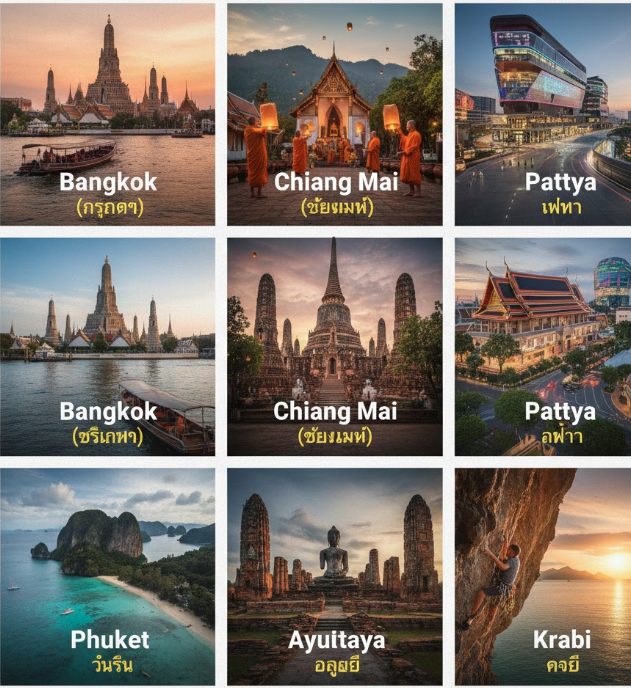
Many first-time visitors assume Thailand offers a single, uniform experience. In reality, the experience varies significantly depending on where you go.
Bangkok is chaotic, fast-paced, and overwhelming for some travelers. It offers world-class shopping, food, and transport, but also traffic congestion and sensory overload. Travelers passing through briefly may want to plan carefully, especially during short stopovers. This guide can help: What to Do in Bangkok During a Transit.
Phuket, Krabi, and Khao Lak offer very different beach experiences. Phuket is busy and commercial, Krabi is scenic and relaxed, and Khao Lak is quiet and resort-oriented. Choosing the wrong destination often leads travelers to think Thailand itself is the problem. A detailed comparison is available here: Phuket vs Krabi vs Khao Lak.
Pattaya and Hua Hin attract very different types of visitors. Pattaya is loud, crowded, and nightlife-focused. Hua Hin is calmer and more family-oriented. Chinese tourists traveling with children or older family members should be careful with this choice. See: Hua Hin vs Pattaya.
Chiang Mai appeals to travelers interested in culture, mountains, and festivals. Events like the lantern festival attract global attention, but also heavy crowds. Timing matters. If you are planning around festival travel, this guide is relevant: Chiang Mai Lantern Festival 2026.
3. Visa Rules and Entry Expectations for Chinese Citizens
Visa policy is a major source of confusion. Thailand has simplified entry rules for Chinese passport holders in recent years, but policies change depending on diplomatic and tourism strategies.
Depending on the period, Chinese tourists may enter Thailand under visa-free access or visa-on-arrival. Regardless of the scheme, travelers should prepare:
- A passport valid for at least six months
- A confirmed return or onward flight ticket
- Hotel booking confirmation or accommodation details
- Proof of sufficient funds
Immigration officers may ask basic questions about where you are staying and how long you plan to remain. These questions are routine. Problems usually arise when travelers cannot clearly explain their itinerary.
Travelers planning multi-country trips often compare Thailand with nearby destinations. If you are weighing regional options, these comparisons may help frame expectations:
4. Cultural Differences That Surprise Chinese Tourists
Cultural misunderstandings often affect the travel experience more than scams or costs. Thailand places strong emphasis on politeness, calm behavior, and respect.
Some cultural points that Chinese tourists should be aware of:
- Do not touch anyone’s head, even children
- Dress modestly when visiting temples
- Avoid loud public arguments or confrontations
- Show respect toward the Thai royal family
Thai service culture is friendly but indirect. Staff may avoid saying “no” directly, which can confuse travelers who expect clear refusals or instructions.
5. Who Thailand Is Best For (And Who May Be Disappointed)
Thailand works extremely well for some Chinese travelers and poorly for others.
Thailand is well suited for:
- First-time international travelers who want flexibility
- Couples and honeymooners seeking beaches and resorts
- Travelers interested in food, markets, and culture
For couples, Thailand can be an excellent romantic destination when planned correctly. This guide explores that angle in detail: Thailand for Honeymoon.
Thailand may disappoint travelers who expect strict order, zero negotiation, or perfectly enforced rules at all times.
Families traveling with children should plan more carefully, especially regarding city choice and hotel location. For family-focused planning, see: Bangkok and Pattaya With Kids.
This Thailand travel guide for Chinese tourists is designed to answer the most common concerns raised before visiting Thailand. Unlike generic travel blogs, this Thailand travel guide for Chinese tourists focuses on safety awareness, cultural differences, and practical preparation. If you are comparing destinations or planning your first international trip, using a reliable Thailand travel guide for Chinese tourists helps avoid common mistakes and unrealistic expectations.
6. Timing Matters More Than Most People Realize
The time of year dramatically affects your experience. Weather, crowds, prices, and even safety perception change by season.
Peak season brings better weather but higher prices and heavier crowds. Off-season travel offers lower costs but comes with rain and occasional disruptions.
Choosing the wrong month often leads travelers to blame Thailand itself. A clear seasonal breakdown is available here: Best Time to Visit Thailand.
7. Flights and Regional Access: Thailand as a Hub
Thailand is also a major regional flight hub. Many Chinese travelers combine Thailand with nearby destinations or use it as a stopover.
If you are planning onward travel within Southeast Asia, this guide may help optimize routing and costs: Cheap Flights From Thailand.
Part 1 Conclusion: Thailand is safe for Chinese tourists who travel with awareness and realistic expectations. The country rewards good planning and punishes assumptions.
Thailand Travel Guide for Chinese Tourists – Language, Payments, Transport & FAQs
8. Language Barrier in Thailand: What Chinese Tourists Should Expect
The language barrier is one of the most underestimated challenges for Chinese tourists visiting Thailand. While Thailand is very welcoming to tourists, English proficiency varies widely.
In hotels, shopping malls, airports, and major tourist attractions, basic English communication is usually possible. Outside these areas, English skills drop sharply. Taxi drivers, street food vendors, and small shop owners often speak little to no English.
This does not mean communication is difficult. Thai people are used to tourists and rely heavily on gestures, calculators, menus with pictures, and simple phrases. Politeness matters more than perfect language.
Chinese language support exists in some places, especially in areas with heavy Chinese tourism, but travelers should not assume Chinese will be widely spoken.
Best Translation Apps for Chinese Tourists
Translation apps make travel in Thailand significantly easier. These are the most practical options:
- Google Translate: The most versatile option. Supports Thai, offline downloads, and camera translation for menus and signs.
- Baidu Translate: Familiar interface for Chinese users and reliable basic translations.
- Offline language packs: Always download Thai language packs before arrival to avoid data issues.
Using camera translation for menus is especially helpful in local restaurants.
9. Getting Around Thailand: Grab vs Bolt vs Traditional Taxis
Transport is closely linked to safety and stress levels. For Chinese tourists, app-based transport is strongly recommended.
Grab
- Most reliable and widely available
- Slightly more expensive
- English and Chinese-friendly interface
- Clear pickup points and route tracking
Bolt
- Usually cheaper than Grab
- Good coverage in Bangkok and major cities
- Smaller driver network in some destinations
Street Taxis
Metered taxis can be fine, but disputes happen more often when travelers look unsure. If the driver refuses the meter, exit and use an app instead.
For first-time visitors, Grab and Bolt reduce scams, language problems, and negotiation stress.
10. Payments in Thailand: Alipay, WeChat Pay, and Cash Reality
Thailand is not fully cashless, but payment options have improved significantly for Chinese tourists.
Alipay is widely accepted in:
- Shopping malls
- Duty-free shops
- Tourist attractions
- Chain restaurants and cafés
WeChat Pay is accepted in fewer places than Alipay but still works in major tourist zones.
However, cash is still essential for:
- Street food
- Local taxis
- Markets
- Small shops
ATMs are widely available. Avoid exchanging all money at the airport, as city exchange rates are usually better.
11. VAT Refunds in Thailand: Simple Explanation for Chinese Tourists
Many Chinese tourists are unaware that Thailand offers VAT refunds for tourists. The process is simple but must be followed correctly.
How VAT Refunds Work
- Shop at stores displaying “VAT Refund for Tourists”
- Minimum spend usually applies per day per store
- Ask for the VAT refund form at purchase
- Keep receipts and forms together
At the Airport
- Arrive early
- Present goods, receipts, and passport
- Refunds are processed after immigration
Refund amounts are smaller than expected due to administrative fees. Do not plan shopping solely for VAT savings.
12. Missing Home? Chinese Food in Thailand
Chinese tourists worried about food comfort will be pleasantly surprised. Chinese food is easy to find in Thailand.
Major cities such as Bangkok, Phuket, and Chiang Mai have strong Chinese communities. You can find:
- Cantonese restaurants
- Hotpot chains
- Teochew-style food
- Chinese bakeries
Hotel breakfasts often include rice, noodles, soups, and mild dishes suitable for Chinese tastes.
While flavors may be adapted slightly, most travelers find Chinese food options comforting after several days of Thai cuisine.
13. Why Thailand Feels Familiar: Thai–Chinese Ancestry
Many visitors are surprised by how familiar Thailand feels culturally. One reason is historical migration.
A large portion of Thailand’s population has Chinese ancestry, especially in Bangkok and southern Thailand. Over generations, Chinese communities integrated deeply into Thai society.
This shared heritage explains:
- Food similarities
- Business culture
- Comfort with Chinese tourists
- Acceptance of Chinese payment platforms
This cultural closeness makes Thailand easier to navigate than many first-time visitors expect.
Thailand is safe and rewarding for Chinese tourists who arrive with awareness and realistic expectations. Language barriers, transport, and payments are manageable with basic preparation.
Thailand rewards flexibility and patience. Travelers who plan well often leave with far better experiences than expected.
This Thailand travel guide for Chinese tourists is intended to provide clarity where online discussions often create confusion. Unlike generic travel articles, this Thailand travel guide for Chinese tourists focuses on realistic expectations, safety awareness, and practical preparation rather than hype or fear.
Whether you are planning your first overseas trip or comparing Thailand with other destinations in Asia, using a reliable Thailand travel guide for Chinese tourists helps you understand what risks are real, what concerns are exaggerated, and how to travel confidently. As travel conditions and policies evolve, a well-structured Thailand travel guide for Chinese tourists remains the most effective way to avoid common mistakes, manage expectations, and enjoy Thailand for what it truly offers.
For many travelers, confusion comes from mixing entertainment-driven content with serious planning advice. This is why a structured Thailand travel guide for Chinese tourists matters. A reliable Thailand travel guide for Chinese tourists does not rely on isolated incidents or viral clips, but instead explains how Thailand actually functions for visitors on a day-to-day level. From understanding safety concerns to navigating transport, payments, and cultural expectations, a practical Thailand travel guide for Chinese tourists helps turn uncertainty into preparation and preparation into a smoother travel experience.
When planning an overseas trip, especially to a country that is frequently discussed online, travelers benefit from grounded information rather than extremes. This Thailand travel guide for Chinese tourists is written with that purpose in mind. Instead of promoting Thailand as perfect or portraying it as dangerous, this Thailand travel guide for Chinese tourists explains what first-time visitors should realistically expect. By using a clear and balanced Thailand travel guide for Chinese tourists, readers can evaluate risks accurately, plan confidently, and decide whether Thailand aligns with their travel preferences.
How Thailand Is Actively Working to Rebuild Confidence Among Chinese Tourists
In response to growing concern and heightened sensitivity among Chinese travelers, the Thai government has taken concrete and visible steps to restore confidence and reinforce its long-standing relationship with the Chinese tourism market. These actions go far beyond public statements or marketing slogans.
Thailand understands that Chinese tourists are not only a major source of visitor numbers, but also a key pillar of its tourism economy, and this awareness is reflected in policy, enforcement, and infrastructure decisions. One of the most noticeable measures has been the strengthening of tourist police presence in areas frequented by Chinese visitors, including airports, major shopping districts, beach destinations, and cultural attractions.
Authorities have also intensified crackdowns on scam operations, particularly those targeting foreigners, with coordinated efforts between local police, cybercrime units, and regional partners. At the same time, Thailand has expanded Chinese-language support across multiple touchpoints. Airports now feature clearer Chinese signage, many attractions provide Chinese-language materials, and tourism staff in high-traffic areas receive basic Mandarin training. Payment convenience has also been a priority. Wider acceptance of Alipay across malls, attractions, and large retailers reflects a deliberate effort to reduce friction for Chinese tourists accustomed to cashless payments.
Visa facilitation policies and simplified entry procedures have further signaled Thailand’s intent to remain accessible and welcoming. In addition, Thailand has worked closely with airlines to increase direct flight capacity from major Chinese cities, recognizing that convenience and connectivity strongly influence destination choice. Beyond logistics, Thailand has also engaged in targeted communication efforts aimed at correcting misinformation and providing reassurance without denying real issues.
This approach is deliberate. Over-defensiveness erodes trust, while transparency builds it. From a traveler’s perspective, these actions matter more than headlines. They demonstrate that Thailand is not ignoring concerns, but actively addressing them. Any serious Thailand travel guide for Chinese tourists must acknowledge this context. Tourism is not static, and destinations that fail to respond to perception shifts lose relevance quickly.
Thailand’s response shows adaptability and recognition of responsibility. It is also important to understand that Thailand’s relationship with Chinese travelers is not purely transactional. Cultural, historical, and economic ties run deep, shaping how policies are prioritized. While no destination can eliminate risk entirely, Thailand’s recent actions indicate a clear intent to reduce uncertainty, improve visitor experience, and maintain its position as a preferred destination for Chinese tourists. For travelers evaluating whether to proceed with a trip, this matters.
It suggests that concerns are being taken seriously at an institutional level rather than ignored or dismissed. This Thailand travel guide for Chinese tourists is built on that reality: not blind optimism, but observable effort. Awareness combined with preparation remains the most reliable approach, and Thailand’s current direction supports that mindset rather than undermines it.
Pingback: Thailand Alternatives in 2026: Brutal Truth About Where Travelers Go Instead - FlyFono