
Inbound tourism to Australia is officially “back” according to arrival numbers, airline capacity, and government headlines. Flights are full again. Visas are flowing. International interest has returned.
But there is a problem that the topline data does not explain.
Visitors are arriving — and then skipping Australia’s major cities.
Sydney, Melbourne, and Brisbane are no longer automatic stops for inbound tourists the way they were pre-pandemic. Instead, travelers are landing, moving through quickly, and heading elsewhere. Regional, coastal, and nature-driven destinations are winning attention, time, and spend.
This is not a collapse of inbound tourism to Australia. It is a redistribution — and cities are on the losing side of it.
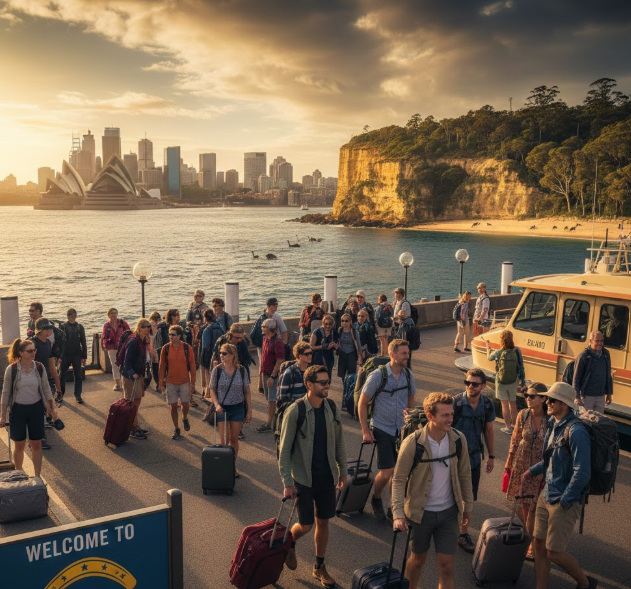
Table of Contents
Inbound Tourism to Australia: Recovery vs Reality
On paper, inbound tourism to Australia looks healthy again. International arrivals have recovered steadily, airline routes from Asia, Europe, and North America have returned, and accommodation demand is rising.
But recovery headlines hide a structural shift in traveler behavior.
Inbound tourists are no longer building trips around cities first. Cities are becoming gateways, not destinations.
This matters because city tourism depends on length of stay, discretionary spend, dining, events, and repeat visits. Gateways generate footfall, not value.
Reason 1: Australian Cities Are Failing the Value Equation
The single biggest reason visitors are avoiding major cities is simple: value.
Australia’s cities have become expensive without becoming meaningfully better.
For inbound travelers comparing destinations globally, Sydney and Melbourne now compete directly with Tokyo, Seoul, Singapore, Barcelona, and New York — cities that offer denser experiences at similar or lower perceived cost.
Accommodation prices in central areas are high. Dining costs have surged. Transport is not cheap. Attractions often feel incremental rather than iconic.
Inbound tourism to Australia is no longer cheap travel. That alone would be acceptable — if value matched price.
In many city cases, it does not.
Reason 2: Cities Feel Familiar, Regions Feel Unique
Modern travelers are not chasing skylines. They are chasing differentiation.
For a visitor flying 10–20 hours to Australia, a city experience must justify the distance. Increasingly, Australian cities feel familiar rather than distinct.
Glass towers, global retail brands, similar food precincts — these are not bad, but they are not rare.
Regional Australia, by contrast, offers what cities cannot replicate:
- Coastlines and wildlife
- Road trips and wide-open spaces
- Nature-first experiences
- Low-density travel
This is why inbound tourism to Australia is drifting toward regions, even as city arrivals remain numerically stable.
Reason 3: Time-Poor Travelers Are Optimizing Routes
Inbound travelers today are time-poor, not budget-poor.
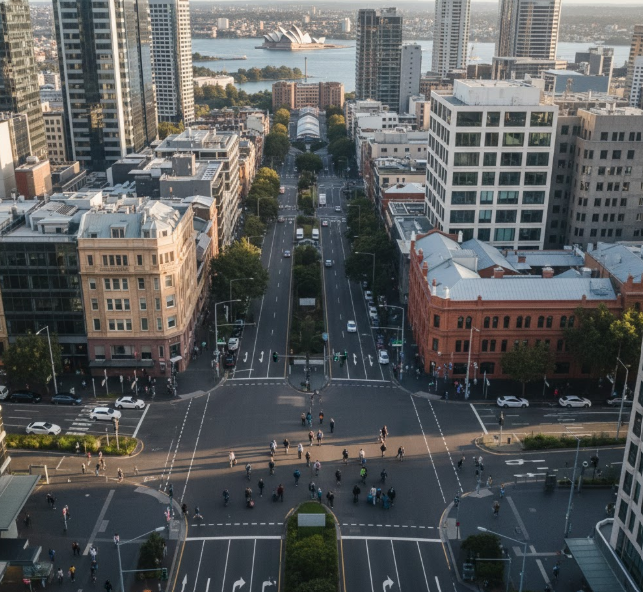
Instead of multi-city hopping, travelers are choosing one anchor experience and building around it. That anchor is increasingly not a city.
Visitors now land, rest briefly, and move on.
For example:
- Land in Sydney → drive north or south along the coast
- Land in Brisbane → head straight to beaches or hinterlands
- Land in Melbourne → exit toward regional Victoria
Cities have become logistical necessities rather than emotional highlights.
Reason 4: Australia’s Cities Struggle With “First-Trip Wow”
First impressions matter enormously for inbound tourism to Australia.
Many first-time visitors report that cities feel “nice” but not “unmissable.” That is a dangerous middle ground.
Nice does not justify long-haul travel.
Iconic experiences — reef, wildlife, outback, coastal drives — do.
Tourism Australia’s own destination marketing has leaned heavily into nature, not urban culture, for a reason.
According to Tourism Research Australia, international visitors increasingly cite natural landscapes and unique experiences as primary motivators, not city sightseeing.
Reason 5: Cities Are Losing Share, Not Arrivals
This distinction is critical.
Inbound tourism to Australia is not shrinking. Cities are losing share of the itinerary.
Visitors still arrive through cities. They just do not stay long.
Hotel nights shift outward. Dining spend shifts outward. Tour bookings shift outward.
From an industry perspective, this is far more dangerous than a headline decline. It erodes profitability while masking the issue behind stable arrival numbers.
City-by-City Reality Check
Sydney remains Australia’s most recognizable city, but it suffers from the strongest value mismatch.
High accommodation costs, congestion, and limited new experiences have reduced dwell time. Many visitors now treat Sydney as a photo stop, not a base.
Melbourne performs better for culture-driven travelers, but it lacks clear “only-in-Australia” hooks for international audiences. Food and arts are strong, but globally replicable.
Brisbane benefits from proximity to nature, but the city itself is rarely the reason people come. It is the launchpad, not the destination.
Where the Demand Is Actually Going
Inbound tourism to Australia is flowing toward:
- Coastal road trips
- Wildlife-focused regions
- Low-density beach towns
- Experience-first itineraries
Travelers want stories, not skylines.
This aligns with global travel behavior tracked by the UN World Tourism Organization, which shows strong post-pandemic preference for nature-led and uncrowded destinations.
Why This Shift Is Permanent, Not Temporary
This is not a post-pandemic blip.
Remote work flexibility, longer stays, and experience-led travel have structurally changed how people plan trips.
Cities that do not clearly justify their cost and time will continue to be compressed in itineraries.
Inbound tourism to Australia will keep growing — but growth will favor regions unless cities fundamentally rethink their value proposition.
Planning Tools Are Reinforcing This Behavior
Modern travel planning tools encourage optimization.
Travelers now visualize entire routes, costs, and time allocations before booking. City-heavy itineraries often lose when compared side by side with regional loops.
Tools like FlyFono’s AI Trip Planner make these trade-offs obvious, pushing travelers toward experience-dense routes rather than city stacking.
What This Means Going Forward
For tourism operators, hotels, and planners, this trend is a warning.
Inbound tourism to Australia will not automatically translate into city tourism recovery.
Cities must earn their place again — not assume it.
Where Inbound Tourism to Australia Is Actually Going
While Australia’s major cities debate recovery strategies, inbound tourism to Australia is quietly voting with wallets and itineraries.
International visitors are not cancelling trips. They are redirecting them.
The biggest winners are not cities with skylines, convention centers, or shopping precincts. They are destinations offering emotional payoff per travel hour.
This includes:
- Coastal regions
- Nature-first destinations
- Self-drive itineraries
- Wildlife and reef experiences
In other words, places that feel unreplicable anywhere else in the world.

The Coastal Advantage: Why Shorelines Are Winning
Coastal Australia has always been attractive, but it is now outperforming cities decisively in terms of dwell time and spend.
For inbound travelers, coastlines solve multiple problems at once:
- They justify long-haul flights emotionally
- They allow slower, experience-led travel
- They reduce congestion and crowd fatigue
- They photograph and remember well
Destinations linked to reef, beach, and marine life consistently outperform cities in satisfaction metrics.
This is why regions connected to the :contentReference[oaicite:0]{index=0} continue to draw international visitors even when airfare costs rise.
Tourists are not price-blind, but they are value-driven. A reef experience feels worth the distance. A city break often does not.
Road Trips Are Replacing City Hopping
One of the clearest behavioral changes in inbound tourism to Australia is how itineraries are structured.
Pre-pandemic travel favored city hopping: fly in, fly out, repeat.
Post-pandemic travel favors loops.
Visitors now prefer:
- Landing in one city
- Renting a car
- Driving through regions
- Returning via a different airport or region
This model compresses city stays to one or two nights while expanding regional nights significantly.
From a revenue perspective, this is devastating for city hotels and extremely positive for regional operators.
Wildlife and “Only-in-Australia” Experiences Are the Core Driver

Australia’s competitive advantage has never been urban culture. It has always been geography and biodiversity.
Inbound tourism to Australia performs best when it leans into what cannot be copied.
International visitors consistently rank the following as trip highlights:
- Native wildlife encounters
- Marine life and reef snorkeling
- National parks and landscapes
- Low-density outdoor experiences
No Australian city delivers this at scale.
Regions do.
This explains why even short regional detours often outperform extended city stays in traveler satisfaction surveys.
The Cost Comparison That Cities Do Not Want Highlighted
Another uncomfortable truth: cities are no longer the “safe” budget option.
For many inbound visitors, a week in a major Australian city now costs as much as — or more than — a week in a regional loop.
Consider this comparison from the traveler’s perspective:
- City hotel rates vs regional lodges
- Restaurant dining vs local produce and cafes
- Paid attractions vs natural experiences
Regions often win on perceived value even when absolute costs are similar.
This is why inbound tourism to Australia increasingly bypasses cities rather than treating them as trip centers.
What This Shift Means for Airlines
Airlines benefit from inbound tourism recovery regardless of where visitors stay.
But route performance is starting to reflect traveler behavior.
Flights feeding regional gateways, secondary airports, and domestic connectors are performing better than expected, while city-centric demand plateaus.
This suggests future growth will favor network breadth over city concentration.
What This Means for Hotels (Especially City Hotels)
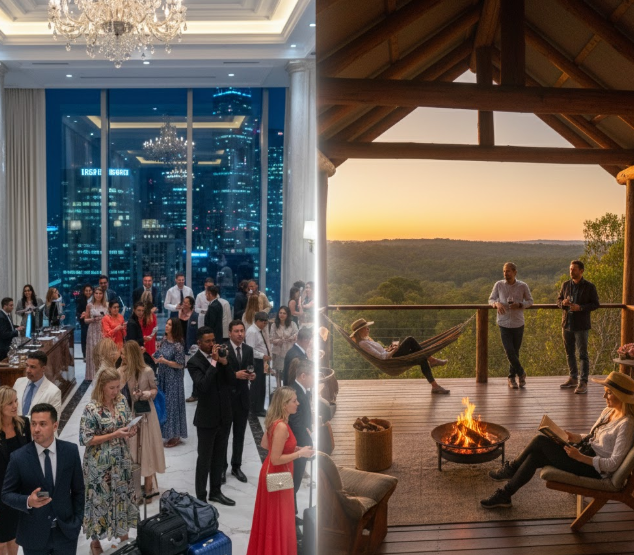
City hotels face a structural challenge, not a cyclical one.
Inbound tourism to Australia is no longer guaranteed to fill city inventory simply because visitors arrive.
City hotels are now competing with regions on:
- Experience density
- Perceived uniqueness
- Emotional payoff
This is a losing comparison unless cities radically rethink their offer.
Simply lowering rates will not fix the problem. Value perception must change.
Tourism Boards Are Quietly Shifting Strategy

Destination marketing organizations are already responding — quietly.
Campaigns increasingly spotlight regions, landscapes, and outdoor experiences, while cities appear mainly as entry points.
This is not accidental.
According to trend analysis published by the UN World Tourism Organization, international travelers now prioritize uncrowded, experience-rich destinations over urban sightseeing.
Australia fits this global trend perfectly — except at the city level.
Why This Matters for Australia’s Tourism Economy
From a macro perspective, inbound tourism to Australia looks fine.
From a micro perspective, revenue distribution is changing rapidly.
Cities risk becoming low-margin transit points rather than high-margin destinations.
Regions gain longer stays, higher satisfaction, and repeat visitation.
This is a fundamental reshaping of the tourism economy.
How Planning Tools Are Reinforcing Regional Choices
Modern planning behavior favors optimization.
Travelers now compare routes, costs, and experience density before booking.
Tools like FlyFono’s AI Trip Planner make it obvious when a regional loop offers more value than a city-heavy itinerary.
Similarly, access to fare optimization tools such as cheap flight strategies reduces the penalty of flying into secondary gateways.
Once travelers see the comparison visually, cities often lose.
Can Cities Reverse the Trend?
Yes — but not by doing what they are currently doing.
Cities must stop competing with other global cities and start competing with regions.
This means:
- Creating genuinely unique urban experiences
- Bundling city stays with regional access
- Reducing friction and cost perception
- Extending dwell time through storytelling, not discounts
Without this shift, inbound tourism to Australia will continue to grow around cities, not within them.
The Bottom Line on Inbound Tourism to Australia
Inbound tourism to Australia is not broken.
It is evolving.
Visitors are no longer impressed by cities alone. They want meaning, space, and stories worth traveling for.
Regions deliver that naturally. Cities must work harder.
The destinations that adapt will win the next decade of tourism growth. The ones that assume demand will return by default will continue to lose share quietly.
This shift is already underway.
Why is inbound tourism to Australia avoiding major cities?
Inbound tourism to Australia is shifting away from major cities because visitors perceive better value, uniqueness, and emotional payoff in regional and nature-based destinations compared to expensive, familiar urban experiences.
Is inbound tourism to Australia actually recovering or just changing shape?
Inbound tourism to Australia is recovering in arrival numbers, but travel behavior has changed. Visitors still enter through cities, yet spend fewer nights there and redirect time and money to regional areas.
Which Australian cities are being skipped the most by inbound tourists?
Sydney, Melbourne, and Brisbane are seeing shorter stays from inbound tourists. These cities are increasingly used as gateways rather than primary destinations within international itineraries.
Where are inbound tourists going instead of Australian cities?
Inbound tourists are choosing coastal regions, wildlife areas, reef destinations, and self-drive routes that offer experiences unavailable in other countries, such as marine life, wide-open landscapes, and low-density travel.
Are Australian cities too expensive for inbound tourists?
For many international visitors, Australian cities no longer deliver strong value for money. High hotel prices, dining costs, and limited “only-in-Australia” experiences push travelers toward regional alternatives.
Does this trend affect airlines and airports in Australia?
Airlines benefit from inbound tourism recovery overall, but route demand is shifting toward regional connections and secondary gateways rather than long city stays.
Can Australian cities reverse this inbound tourism decline?
Yes, but only by redefining their role. Cities must offer unique experiences, better value perception, and stronger integration with regional travel instead of relying on traditional urban sightseeing.
Is this shift away from cities temporary or permanent?
The shift appears structural. Changes in traveler preferences toward slower, experience-led travel suggest inbound tourism to Australia will continue favoring regions unless cities adapt.
What does this mean for hotels in major Australian cities?
City hotels face reduced length of stay and lower discretionary spending from inbound tourists. Competing on price alone will not solve the problem; value and experience differentiation are required.
How can travelers plan better routes that avoid city overload?
Modern planning tools allow travelers to compare city-centric itineraries with regional loops, making it easier to choose experience-dense routes instead of stacking city stops.