
EU Entry Exit System: 9 Critical Border Changes That Could Seriously Disrupt Your Trip
The EU Entry Exit System is not a minor administrative tweak.
It is a complete structural rewrite of how Europe tracks you when you enter and leave the Schengen Area.
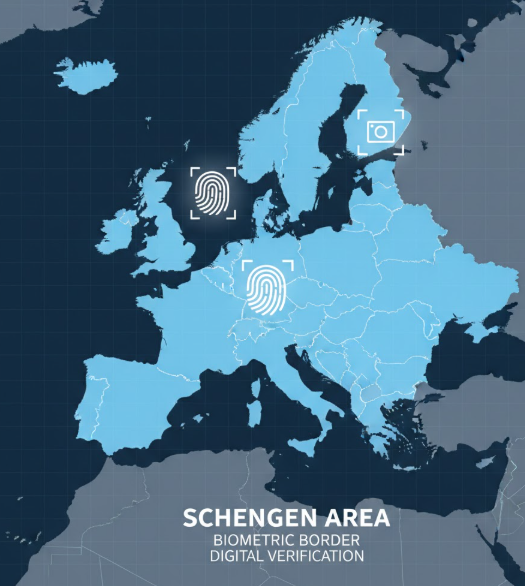
Biometric fingerprints. Facial scans. Automated overstay detection. Centralized digital tracking across 27+ countries.
And if you think this will feel like the old passport stamp routine — it will not.
If you are a UK traveler hopping to Spain. An American flying into Paris. An Indian visiting Italy on a Schengen visa. A frequent flyer running business routes into Frankfurt.
The EU Entry Exit System now sits between you and the border.
Table of Contents
What Is the EU Entry Exit System — Really?
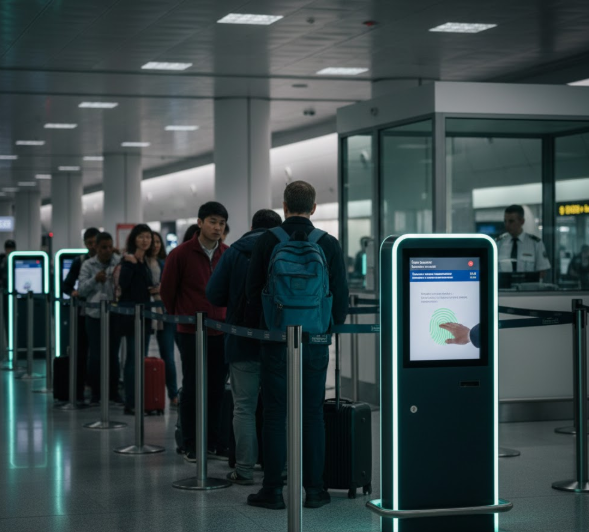
Officially, the EU Entry Exit System (EES) is a digital border management system designed to replace passport stamping with biometric tracking.
Unofficially? It is Europe tightening precision control over short-stay travel.
Instead of ink stamps, the EU Entry Exit System will:
- Scan your passport electronically
- Capture your fingerprints
- Take a biometric facial image
- Log your entry digitally
- Automatically calculate your allowed stay
- Record your exit across the Schengen network
Your travel record will live in a centralized database.
You can review the official European Commission documentation here: European Commission – Entry/Exit System .
This is not speculation. It is approved EU policy.
Why the EU Entry Exit System Exists (And Why It Matters)
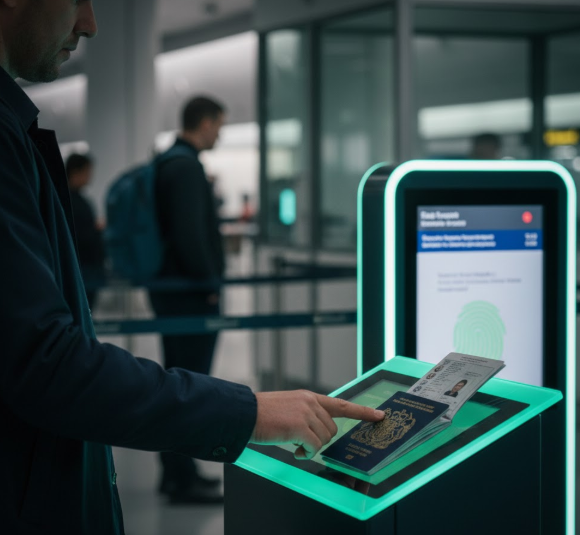
The EU Entry Exit System has three official objectives:
- Eliminate overstay ambiguity
- Strengthen identity verification
- Modernize Schengen border infrastructure
Overstay calculation will no longer depend on passport stamps that can be:
- Faded
- Misread
- Missing
- Inconsistently applied
Under the EU Entry Exit System, the 90/180 rule becomes mathematical and automated.
You can verify your stay limits using the official calculator: EU Short Stay Calculator .
No discretion. No guesswork.
Who Is Affected by the EU Entry Exit System?
If you are not an EU citizen, this affects you.
The EU Entry Exit System applies to:
- UK passport holders
- US citizens
- Indian nationals on Schengen visas
- Australian travelers
- Canadian passport holders
- Visa-free short stay visitors
If you visit Europe for less than 90 days in any 180-day period — you are inside the system.
If you are unsure how the 90/180 rule works, read: Schengen 90/180 Rule Explained .
9 Critical Border Changes Under the EU Entry Exit System
1. Passport Stamps Are Disappearing
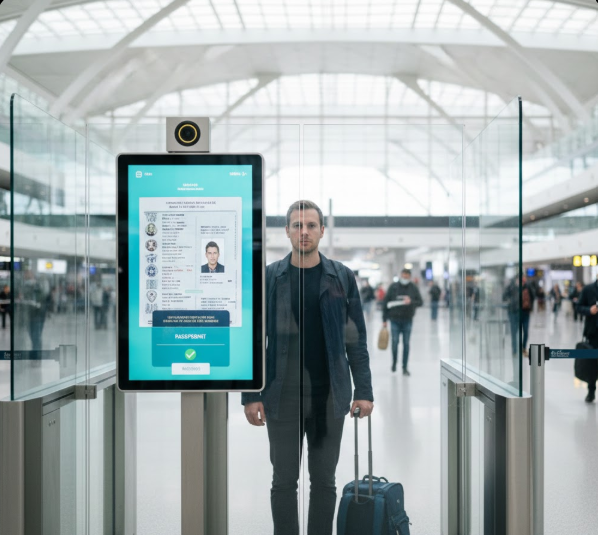
The era of physical stamps is ending.
The EU Entry Exit System replaces ink with database entries.
That means your passport no longer acts as proof of compliance.
The database does.
2. First-Time Biometric Capture Will Slow You Down
Your first entry after implementation will likely require:
- Fingerprint collection (typically four fingers)
- Facial biometric scan
- Digital verification process
This takes longer than stamping.
Expect queues during peak travel.
3. Automated Overstay Detection
Under the EU Entry Exit System, overstays are calculated in real time.
Example:
- You stay 89 days.
- You leave.
- You return 10 days later.
- The system calculates remaining allowance instantly.
No interpretation. Just math.
4. Data Shared Across Schengen States
Enter in Spain. Exit in Germany.
The EU Entry Exit System connects the entire Schengen network.
There is no “loophole hopping.”
5. Airport Congestion Risk During Rollout
This is where disruption becomes real.
Biometric systems require:
- Hardware reliability
- Border staff training
- Passenger compliance
- System synchronization
Large airports like Paris CDG, Frankfurt, Madrid, Rome, and Amsterdam will feel pressure first.
Early adoption phases always create friction.
6. Applies to Land and Sea Borders
The EU Entry Exit System covers:
- Airports
- Land crossings
- Ferry ports
- Cruise terminals
Driving from the UK to France? You are still biometrically registered.
7. Integration With ETIAS
The EU Entry Exit System connects with ETIAS — Europe’s upcoming travel authorization.
Official ETIAS overview: ETIAS Official Portal .
If you want a simplified explanation: ETIAS Explained for Travelers .
8. Digital Travel History Becomes Permanent
Your entries and exits are recorded digitally.
This strengthens enforcement consistency.
For background on Schengen cooperation: European Parliament – The Schengen Area .
9. Border Automation Will Increase — Eventually
After stabilization, repeat travelers may benefit from:
- Expanded e-gate access
- Faster biometric confirmation
- Reduced manual checks
But during rollout? Expect friction.
Will the EU Entry Exit System Seriously Delay Your Trip?
Let us be direct.
Yes — it can.
Not permanently.
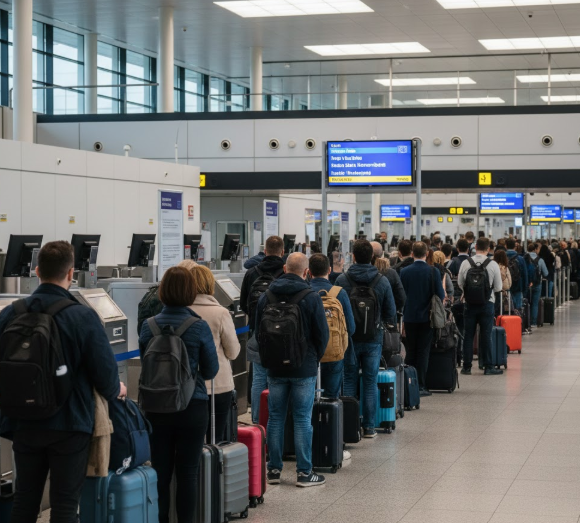
But during the first months of enforcement, delays are realistic.
Why?
- First-time biometric capture increases processing time
- Hardware deployment inconsistencies
- Peak tourism volume
- System synchronization challenges across 27+ countries
If rollout aligns with summer travel, queues may expand significantly.
What UK Travelers Need to Understand
The EU Entry Exit System hits UK travelers hardest because:
- Pre-Brexit entry was frictionless
- Post-Brexit travel already changed
- Frequent short trips are common
Add ETIAS on top of EES, and border compliance becomes multi-layered.
If you are traveling from the UK, read: All New UK to Europe Travel Rules .
How to Prepare for the EU Entry Exit System
Arrive Earlier Than Usual
Add 45–60 minutes buffer during early enforcement.
Track Your Days Meticulously
The system calculates automatically. You should too.
Expect First Entry to Be Slowest
Biometric capture is the bottleneck phase.
Do Not Assume “It Will Be Fine”
Prepared travelers move calmly. Unprepared travelers panic in queues.
Is the EU Entry Exit System Permanent?
Yes.
The EU Entry Exit System is a structural modernization of European border policy.
It is not temporary.
It is the new normal.
Bottom Line
The EU Entry Exit System is not a visa.
It is not a fee.
It is not a travel ban.
It is biometric border tracking with automated enforcement precision.
Initial disruption? Likely.
Permanent chaos? No.
Prepared travelers will adapt quickly.
Unprepared travelers will experience frustration.
Which Countries Are Implementing the EU Entry Exit System?
The EU Entry Exit System applies across the entire Schengen Area.
That means once it goes live, biometric registration will occur when entering any participating Schengen country.
Schengen countries include:
- France
- Germany
- Spain
- Italy
- Portugal
- Netherlands
- Belgium
- Austria
- Greece
- Sweden
- Denmark
- Finland
- Poland
- Czech Republic
- Hungary
- Slovakia
- Slovenia
- Estonia
- Latvia
- Lithuania
- Luxembourg
- Malta
- Croatia
- Liechtenstein
- Norway
- Iceland
- Switzerland
Full official Schengen list available here: European Parliament – Schengen Area Overview .
If you enter through Spain but exit through Germany, your record is shared automatically.
There is no “entry country loophole.”
How the EU Entry Exit System Works Step-by-Step at the Border
Here is what will likely happen under the EU Entry Exit System during your first post-rollout entry:
Step 1: Passport Scan
Your passport is electronically scanned and verified against EU databases.
Step 2: Biometric Capture
Four fingerprints are collected.
A facial image is taken.
Step 3: Database Registration
Your identity is logged.
Your entry date is recorded.
Your permitted stay window is calculated instantly.
Step 4: Future Entries Become Faster
On repeat visits, biometric data already exists in the system.
Identity confirmation should take less time.
In theory.
In practice, early phases may not feel seamless.
Will the EU Entry Exit System Affect Connecting Flights?
Yes — potentially.
If you enter Schengen via a transit hub (for example, Frankfurt or Paris) and connect onward within Europe, your biometric registration happens at your first Schengen entry point.
That means:
- Short layovers may become risky
- Missed connections could increase during rollout
- Travel insurance claims may spike
During early enforcement months, avoid ultra-tight Schengen entry connections.
This is especially relevant for UK travelers flying into continental hubs.
Does the EU Entry Exit System Replace ETIAS?
No.
The EU Entry Exit System and ETIAS are separate but connected.
- EES = Border biometric tracking system
- ETIAS = Pre-travel authorization for visa-free travelers
ETIAS is similar to the US ESTA system.
Official ETIAS details: ETIAS Official Portal .
You will need ETIAS approval before travel.
You will be biometrically logged when you arrive.
Two systems. One layered framework.
Full simplified guide here: ETIAS Explained Clearly .
What About Data Privacy?
This is where anxiety increases.
The EU Entry Exit System stores:
- Passport data
- Fingerprints
- Facial image
- Entry and exit history
The EU states that biometric data will be stored securely and accessed only by authorized authorities.
You can review the regulatory framework under EU law here: Regulation (EU) 2017/2226 Establishing the Entry/Exit System .
Critics argue:
- Centralized biometric databases increase cybersecurity risk
- Large-scale systems are vulnerable to breaches
- Interoperability creates broader data-sharing reach
Supporters argue:
- Modern borders require modern systems
- Biometrics reduce identity fraud
- Overstay enforcement becomes objective
Regardless of opinion, the system is happening.
Common Myths About the EU Entry Exit System
Myth 1: It Is a Visa
False. The EU Entry Exit System is not a visa.
Myth 2: You Must Pay a Fee at the Border
False. There is no EES fee.
Myth 3: It Only Applies to Visa Holders
False. It applies to visa-free short-stay travelers too.
Myth 4: It Will Block Most Travelers
False. It tracks. It does not restrict compliant visitors.
Myth 5: It Is Optional
Absolutely false.
Worst-Case Scenarios Travelers Should Consider
Let us talk realistically.
Scenario 1: System Glitches
Large-scale IT systems can malfunction.
Scenario 2: Peak Season Overload
Summer traffic combined with first-time biometric capture could cause extended queues.
Scenario 3: Miscalculated Stay
If your travel history is complex and overlaps multiple Schengen entries, you must calculate carefully.
Review: How the 90/180 Rule Actually Works .
Scenario 4: Border Officer Discretion + System Flag
If the database flags an issue, manual review will follow.
That means time.
How Frequent Travelers Should Adapt
If you travel to Europe multiple times per year:
- Track your days precisely
- Avoid last-minute airport arrivals
- Expect first biometric registration to take longer
- Monitor rollout announcements
This is especially critical for UK-based business travelers post-Brexit.
For full UK-specific changes: UK to Europe Travel Rule Breakdown .
Will the EU Entry Exit System Stabilize?
Yes.
All large border systems eventually stabilize.
The US ESTA system had friction early on.
Global Entry expansion faced delays.
Dubai’s biometric gates initially required manual supervision.
Then they normalized.
The EU Entry Exit System will likely follow the same curve.
Early friction.
Mid-term adaptation.
Long-term automation.
What This Means for Travel in 3 Years
Three years after full implementation:
- Biometric entry becomes standard
- Passport stamping becomes nostalgic
- Repeat travelers move faster
- Compliance becomes data-driven
The anxiety will fade.
But the precision will remain.
Final Disruptive Truth
The EU Entry Exit System is not chaos.
It is modernization.
It is not designed to stop tourists.
It is designed to remove ambiguity.
Will early months feel disruptive?
Yes.
Will it permanently damage European tourism?
Highly unlikely.
Prepared travelers will adapt immediately.
Unprepared travelers will complain loudly in airport queues.
EU Entry Exit System vs ETIAS: What Is the Real Difference?
Many travelers confuse the EU Entry Exit System with ETIAS. They are not the same thing.
One operates at the border. One operates before you even board your flight.
Here is the clear breakdown:
| Feature | EU Entry Exit System (EES) | ETIAS |
|---|---|---|
| Purpose | Biometric border tracking system | Pre-travel authorization for visa-free travelers |
| When It Applies | At the Schengen border | Before travel (online application) |
| Biometric Collection | Yes – fingerprints and facial image | No biometric capture during application |
| Passport Stamping | Replaces physical stamps with digital record | Does not affect stamping |
| Overstay Monitoring | Automatically calculates 90/180 rule | Does not track overstays |
| Fee Required | No border fee | Yes – small online authorization fee |
| Applies To | All non-EU short-stay travelers | Visa-free nationals only |
| Denial Risk | Entry may be denied if flagged at border | Travel may be denied before departure if application refused |
| System Type | Border enforcement infrastructure | Travel screening authorization |
In simple terms:
- ETIAS decides whether you can travel.
- EU Entry Exit System records what happens when you arrive.
You will likely interact with both systems once fully implemented.
Official ETIAS information: ETIAS Official Portal .
Official EU Entry Exit System documentation: European Commission – Entry/Exit System .
Why This Difference Matters
Travelers who misunderstand the distinction risk:
- Applying for ETIAS but ignoring 90/180 calculations
- Arriving at the airport without ETIAS approval
- Expecting passport stamping instead of biometric capture
- Underestimating border processing time
The EU Entry Exit System is about border precision.
ETIAS is about pre-screening.
Together, they represent the largest modernization of European short-stay travel rules in decades.
FAQ – EU Entry Exit System
Will the EU Entry Exit System cause long airport queues?
During the initial rollout phase, yes, longer queues are possible — especially at major airports such as Paris, Frankfurt, Amsterdam, Madrid, and Rome. First-time biometric capture takes longer than traditional passport stamping. Once your data is registered in the EU Entry Exit System, repeat entries should become faster.
How long will biometric registration take under the EU Entry Exit System?
The first registration typically involves passport scanning, fingerprint capture, and a facial biometric image. This may add several minutes per traveler. During peak travel seasons, this can multiply into longer border processing times.
Do UK travelers need to worry more about the EU Entry Exit System?
Yes. Since Brexit, UK passport holders are treated as non-EU nationals. This means full biometric registration under the EU Entry Exit System applies. Frequent short trips from the UK to Spain, France, or Italy will now be digitally tracked under the 90/180 rule.
Will the EU Entry Exit System affect short layovers in Schengen airports?
If you enter the Schengen Area during your connection, biometric registration occurs at your first entry airport. Tight layovers may become risky during early enforcement months. Travelers should avoid minimal connection times when entering Schengen.
What happens if the EU Entry Exit System shows I overstayed?
The system automatically calculates your permitted stay under the 90/180-day rule. If it flags an overstay, border authorities may deny entry or initiate further review. Always calculate your remaining days using the official EU calculator before travel.
Does the EU Entry Exit System store my fingerprints permanently?
The system stores biometric data according to EU regulation (Regulation EU 2017/2226). Data retention periods are defined under EU law and are intended for border security and migration control purposes.
Is the EU Entry Exit System the same as ETIAS?
No. The EU Entry Exit System records your biometric entry and exit at the border. ETIAS is a separate pre-travel authorization required for visa-free travelers before departure.
Will children be registered under the EU Entry Exit System?
Yes. Non-EU minors entering the Schengen Area under short-stay rules are included in the EU Entry Exit System framework.
Can I refuse biometric registration under the EU Entry Exit System?
No. Biometric registration is mandatory for non-EU short-stay travelers. Refusal may result in denied entry.
Will the EU Entry Exit System make travel to Europe more difficult?
It does not make compliant travel illegal or restricted. However, it makes overstays and identity inconsistencies easier to detect. For law-abiding travelers, the impact is mainly procedural rather than restrictive.
How should I prepare for the EU Entry Exit System?
Arrive earlier at airports during rollout months, monitor your 90/180-day allowance carefully, avoid tight layovers when entering Schengen, and stay updated through official EU sources.