
China Spring Festival travel is one of the most expensive and chaotic travel periods on the planet. Flights sell out fast, prices spike unpredictably, and crowds reach levels that even frequent travelers underestimate.
Yet every year, a large number of travelers still manage to fly cheaper, avoid the worst crowds, and book smarter. The difference is not luck. It is timing.
This guide breaks down how shifting your travel dates around China Spring Festival can dramatically reduce costs, backed by real booking behavior patterns, airline pricing logic, and crowd flow signals. No guesses. No generic advice.
For anyone planning China Spring Festival travel, understanding price timing matters more than choosing the destination itself.
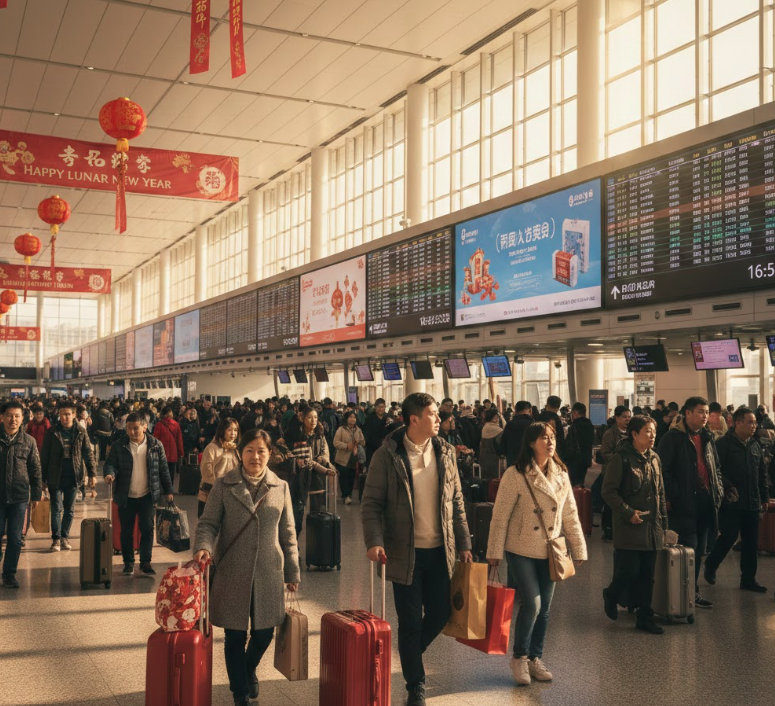
Table of Contents
Why China Spring Festival Travel Gets So Expensive
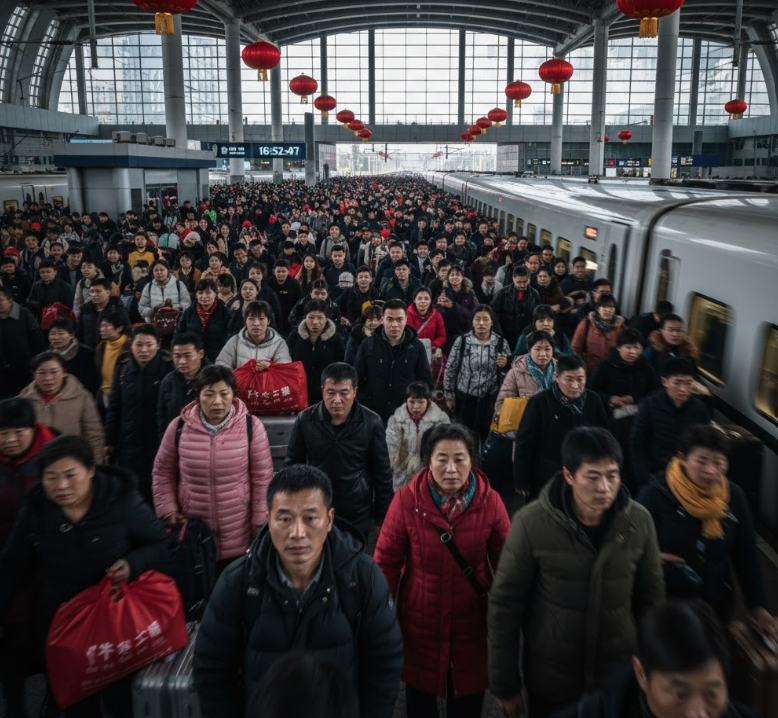
China Spring Festival, also known as Lunar New Year, triggers the largest annual human migration in the world. Hundreds of millions of people travel simultaneously to reunite with family, creating extreme pressure on flights, trains, hotels, and roads.
Airlines know this. Pricing systems react instantly.
During this period, airfare does not behave normally. Traditional “book early and save” logic often fails because:
- Demand is guaranteed, regardless of price
- Last-minute travelers have no alternatives
- Corporate and family travel overlaps
- Seat inventory is intentionally restricted
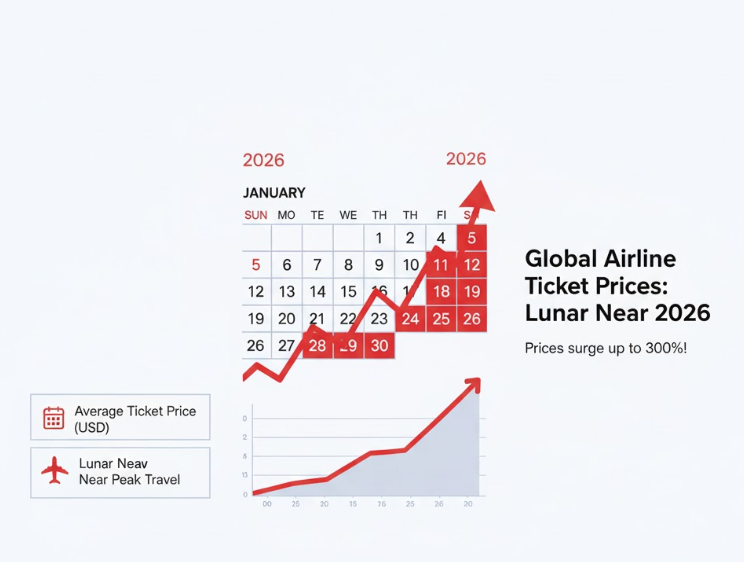
As a result, prices rise earlier, rise faster, and drop later than during any other travel season in China.
This is exactly why China Spring Festival travel behaves very differently from normal holiday travel periods.
The Mistake Most Travelers Make
The most common mistake is booking based on festival dates instead of travel behavior.
Many travelers assume they must fly exactly:
- 1–2 days before Lunar New Year
- Or immediately after public holidays end
This assumption is wrong.
Actual travel demand peaks and dips do not align perfectly with the holiday calendar. They follow work schedules, school closures, and regional travel habits.
Most overpayments during China Spring Festival travel happen because travelers follow public holiday dates instead of real demand patterns.
This is where smart date shifting makes a measurable difference.
How Airline Pricing Reacts During Spring Festival
To understand how to save money, you must understand how airlines price tickets during this period.
During China Spring Festival travel:
- Base fares increase weeks earlier than usual
- Low fare buckets disappear quickly
- Price drops happen suddenly, then vanish again
- Mid-week travel behaves very differently from weekends
Airlines also segment travelers aggressively. Family travelers, migrant workers, and international tourists all book at different times, creating short-lived pricing windows.
Airlines optimize revenue aggressively during China Spring Festival travel, leaving little margin for error if dates are fixed.
These windows are what you exploit.
Date Shift #1: Fly 4–6 Days Before the Festival Rush
The most expensive departure window usually starts 3 days before Lunar New Year.
However, booking signals consistently show that flying 4 to 6 days earlier often unlocks noticeably cheaper fares.
Why this works:
- Core family travelers have not started moving yet
- Business travel demand has already dropped
- Airlines still hold unsold inventory
This window is especially effective for international routes into China and major hubs like Shanghai, Beijing, Guangzhou, and Shenzhen.
Date Shift #2: Travel on Lunar New Year’s Eve or Day One
This sounds counterintuitive, but it works.
Lunar New Year’s Eve and the first day of the festival often see a temporary dip in travel demand.
Most people are already at their destination. Very few want to be in transit during reunion dinners and celebrations.
As a result:
- Some international flights see lower demand
- Red-eye and off-hour flights price more competitively
- Hotels in business districts may discount
This option is not ideal for everyone, but for flexible travelers, it can deliver real savings.
Date Shift #3: Delay Your Return by 2–3 Days After the Official Holiday
The biggest pricing trap happens on return flights.
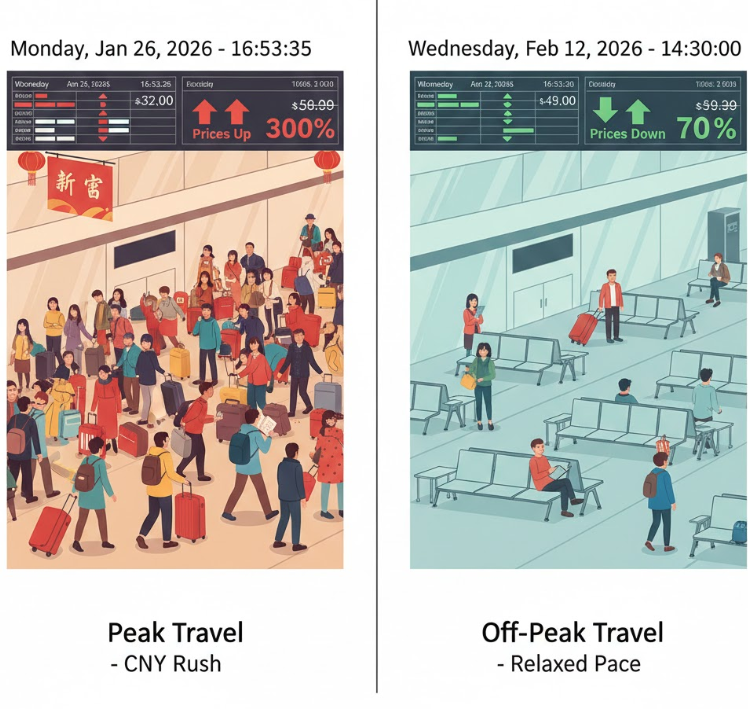
Most travelers aim to return immediately after the public holiday ends. This creates a massive surge in outbound demand from China.
If you delay your return by just 2 or 3 days, pricing behavior changes sharply.
Why:
- Family travel collapses after peak return days
- Airlines release remaining inventory
- Mid-week travel demand drops
This shift alone can reduce return flight prices by a significant margin.
A flexible approach to China Spring Festival travel consistently produces better pricing outcomes than early but rigid bookings.
Date Shift #4: Avoid the “School Return” Trap
Another hidden pricing spike occurs when schools reopen.
Families traveling with children time their return flights just before school resumes. This creates a second, smaller but intense demand wave.
Smart travelers avoid this entirely.
Booking signals show that flying either:
- Well before school resumes
- Or several days after
is consistently cheaper than trying to hit the “perfect” return date.
Date Shift #5: Choose Mid-Week Over Weekends
This rule matters more during Spring Festival than any other time.
Weekend flights during this period attract:
- Family groups
- Last-minute travelers
- Higher fare classes
Mid-week departures and returns often access leftover inventory that airlines are eager to sell.
Tuesday and Wednesday are consistently the weakest demand days.
Date Shift #6: Split Your Trip Instead of Round-Trip Booking
Round-trip pricing during China Spring Festival travel is often distorted.
Airlines bundle peak outbound and peak return pricing together, even when only one leg is expensive.
Booking two one-way tickets can:
- Unlock different fare buckets
- Allow mixing airlines
- Reduce total trip cost
This strategy works particularly well on regional Asia routes.
Date Shift #7: Monitor Price Signals Instead of Calendar Dates
The most advanced travelers do not book based on dates. They book based on signals.
Signals to watch:
- Sudden price drops that last under 24 hours
- Inventory reopening after sell-outs
- Route-specific dips caused by added capacity
Using an AI-based trip planner or flexible date tool allows you to track these movements instead of guessing.
This approach consistently outperforms manual date selection.
What This Means for Your Booking Strategy
China Spring Festival travel does not reward rigid planning.
It rewards flexibility, signal awareness, and timing.
Even shifting your trip by 24–72 hours can dramatically change pricing outcomes.
Which Routes Benefit Most From Smart Date Shifts
Not all routes behave the same during China Spring Festival travel. Some routes spike aggressively, while others show brief pricing relief if you shift dates intelligently.
International Routes With the Best Savings Potential
Booking data patterns show that international routes between China and the following regions respond best to date shifting:
- Southeast Asia (Thailand, Vietnam, Malaysia, Singapore)
- East Asia (Japan, South Korea)
- Australia and New Zealand
These routes often see added seasonal capacity, which creates short-lived price dips when demand does not fill aircraft evenly.
To compare flexible dates quickly, travelers should always check multi-day pricing grids instead of fixed calendars.
Use a flexible-date search tool like FlyFono’s Cheapest Flexible Flights to spot these pricing gaps before booking.
Domestic China Routes to Watch Carefully
Domestic routes within China behave differently.
Major trunk routes such as:
- Beijing ↔ Shanghai
- Guangzhou ↔ Chengdu
- Shenzhen ↔ Chongqing
rarely offer meaningful discounts during peak return days. However, flying one or two days earlier than the main return wave can still reduce costs.
Hotel Pricing During Spring Festival: What Most Travelers Miss
Flight prices get most of the attention, but hotels during China Spring Festival travel can quietly drain your budget if you are not careful.
City Centers vs Tourist Zones
During the festival:
- Business districts often see lower occupancy
- Tourist areas inflate prices sharply
This is because business travel drops, while leisure demand surges.
Travelers who stay slightly outside tourist cores and rely on metro access often pay significantly less.
For verified accommodation comparisons and brand-level insights, you can reference trusted platforms like:
Booking.com and Agoda, which show historical pricing patterns and availability changes in real time.
When Hotels Drop Prices Mid-Festival
Another overlooked window occurs mid-festival.
Once family reunions end and domestic travelers settle in, short-term hotel availability sometimes increases — especially in Tier-1 cities.
Monitoring prices daily instead of locking too early can unlock unexpected savings.
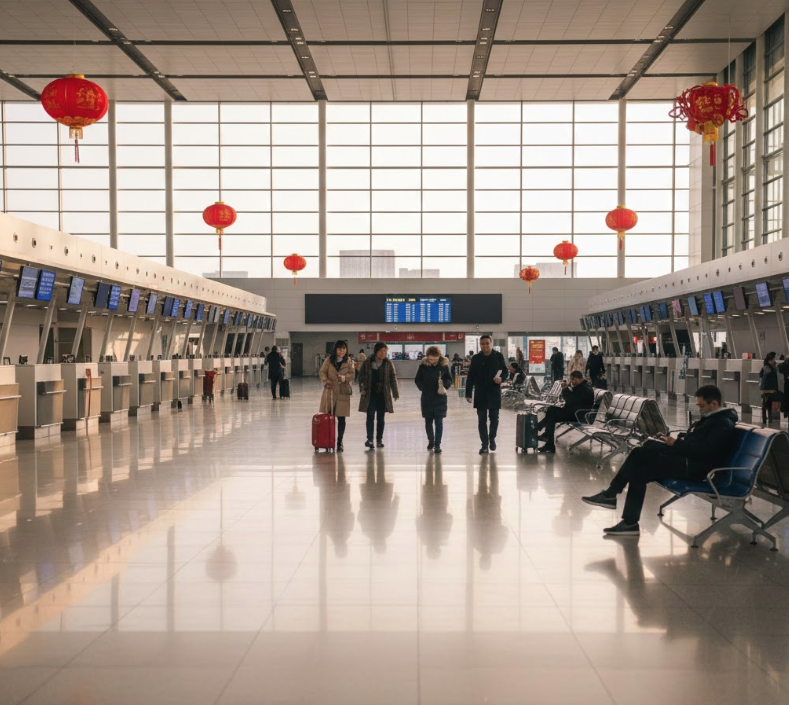
Avoiding Airport Chaos During Spring Festival
Price is only part of the problem. Operational stress during Spring Festival can ruin an otherwise well-planned trip.
Airports With the Worst Congestion
Based on historical congestion data and airline scheduling patterns, the most overwhelmed airports tend to be:
- Beijing Capital International Airport
- Shanghai Pudong International Airport
- Guangzhou Baiyun International Airport
Travelers should allow extra buffer time and avoid tight connections during peak days.
Official airport updates and live congestion advisories can be checked through authoritative sources such as:
Flightradar24 and Civil Aviation Administration of China.
Smart Booking Checklist for China Spring Festival Travel
Before booking, run through this checklist:
- Check prices across a 7–10 day range, not fixed dates
- Compare one-way vs round-trip pricing
- Monitor mid-week departures
- Track price drops for at least 72 hours
- Avoid school return dates where possible
For travelers who want faster validation without manual searching, AI-based tools can simplify this process.
Try the FlyFono AI Trip Planner to analyze date shifts, route behavior, and price signals in one step.
Final Takeaway
China Spring Festival travel does not have to destroy your budget.
Most travelers overpay because they follow the calendar instead of demand signals.
By shifting dates intelligently, monitoring price behavior, and using flexible planning tools, you can fly cheaper, avoid the worst crowds, and travel with far less stress.
The difference is not timing the festival. It is timing the market.
Frequently Asked Questions
What is China Spring Festival travel?
China Spring Festival travel refers to the massive movement of people before, during, and after Lunar New Year, when millions travel domestically and internationally to reunite with family or take holidays.
Why is China Spring Festival travel so expensive?
China Spring Festival travel is expensive because demand peaks simultaneously across flights, trains, and hotels. Airlines raise fares early, limit low-price inventory, and prioritize higher fare classes during this period.
When is the cheapest time to fly during China Spring Festival travel?
he cheapest flights are often found by flying:
4–6 days before the main rush
On Lunar New Year’s Eve or Day One
2–3 days after the official holiday ends
Shifting dates by even 24–72 hours can significantly reduce costs.
Is it cheaper to fly before or after Spring Festival?
It is usually cheaper to fly before the peak outbound rush or slightly after the main return wave. Flights immediately before and after the public holidays tend to be the most expensive.
Do flight prices drop closer to Spring Festival?
Sometimes. Airlines may briefly release lower fares if additional capacity does not sell as expected, but these drops are short-lived and unpredictable.
Are return flights more expensive than departure flights during Spring Festival?
Yes. Return flights are often more expensive because millions of travelers attempt to return at the same time after the holiday ends.
Does flying mid-week really save money during Spring Festival travel?
Yes. Mid-week flights, especially Tuesdays and Wednesdays, typically see lower demand and better pricing than weekend departures during Spring Festival.
Is booking one-way flights cheaper than round-trip tickets?
In many cases, yes. Booking two one-way tickets allows access to different fare buckets and airlines, which can reduce the total cost during China Spring Festival travel.
Which airports are most crowded during China Spring Festival travel?
The most congested airports usually include:
Beijing Capital International Airport
Shanghai Pudong International Airport
Guangzhou Baiyun International Airport
Extra buffer time is strongly recommended.
Is hotel accommodation more expensive during Spring Festival?
Hotels in tourist areas often raise prices sharply, while business districts may offer better value due to reduced corporate travel.
Can international travelers avoid the worst Spring Festival crowds?
Yes. International travelers who shift dates, fly mid-week, and avoid peak return days can significantly reduce crowd exposure.
How far in advance should I plan China Spring Festival travel?
Planning should begin several months in advance, but booking should wait until pricing patterns become clear. Flexibility is more important than booking early.
Is China Spring Festival a bad time to travel?
Not necessarily. It is challenging, but travelers who understand demand patterns and shift dates strategically can still travel efficiently and affordably.
What is the biggest mistake travelers make during Spring Festival travel?
The biggest mistake is booking based strictly on holiday dates instead of actual travel demand patterns and pricing signals.
How can I plan China Spring Festival travel more efficiently?
Using flexible-date search tools, monitoring price movements, and avoiding fixed travel dates helps travelers make better booking decisions.