
The practical takeaway
Japan cherry blossom forecast plays a decisive role in how much you pay for hotels in Tokyo and Kyoto. Unlike regular seasonal travel, cherry blossom season compresses demand into a short, unpredictable window, creating sudden price spikes, limited availability, and costly booking…
Japan cherry blossom forecast plays a decisive role in how much you pay for hotels in Tokyo and Kyoto. Unlike regular seasonal travel, cherry blossom season compresses demand into a short, unpredictable window, creating sudden price spikes, limited availability, and costly booking mistakes.
This guide explains how the Japan cherry blossom forecast works, how hotels react to forecast updates, and what travelers should do to secure accommodation without overpaying. The focus here is not sightseeing tips, but booking strategy.
If you plan to visit Japan during cherry blossom season, understanding the forecast is no longer optional. It directly affects pricing, cancellation policies, and room availability.
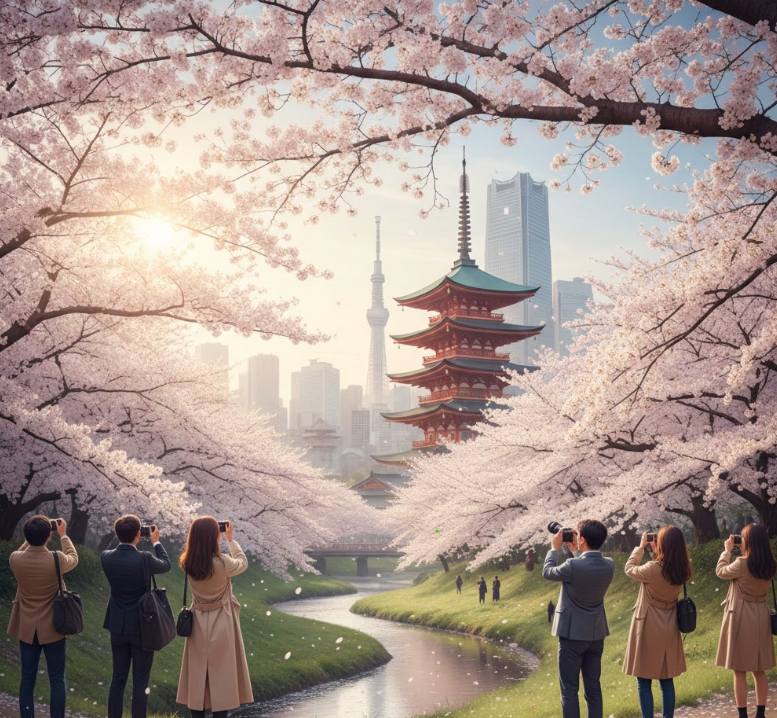
Table of Contents
What the Japan Cherry Blossom Forecast Actually Tells You
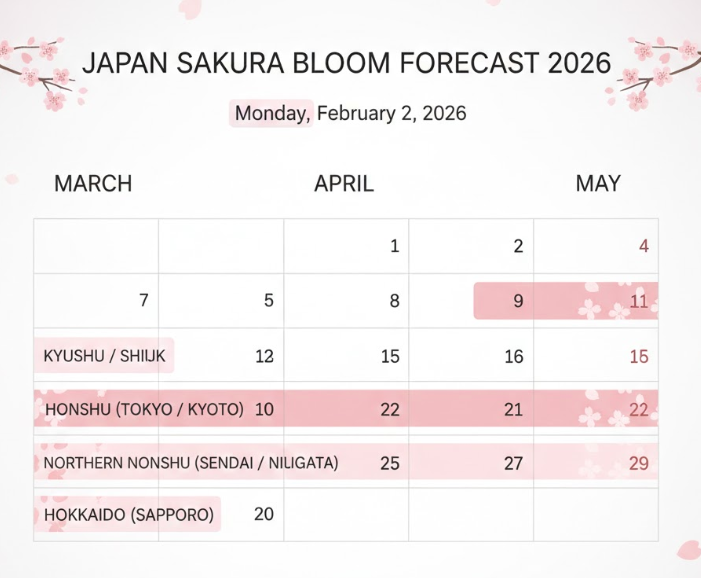
Japan cherry blossom forecast refers to official and semi-official predictions estimating when cherry trees will begin blooming and reach full bloom across different regions of Japan.
Forecasts are based on:
- Winter temperature patterns
- Early spring warming trends
- Historical bloom data by city
Tokyo and Kyoto are watched more closely than any other cities because they attract the highest concentration of international visitors during cherry blossom season.
Hotels, tour operators, and airlines track forecast updates closely. Travelers often do not.
Why Cherry Blossom Season Is Different From Normal Peak Travel
Japan cherry blossom forecast-driven travel behaves differently from summer or autumn peak seasons.
Instead of a long high season, cherry blossom demand peaks sharply over a 10 to 20 day window. If forecasts shift by even one week, hotel prices can move dramatically.
This creates a situation where:
- Hotels delay releasing inventory
- Flexible rates disappear quickly
- Mid-range hotels sell out before luxury ones
Understanding this dynamic is key to booking smart.
How Tokyo and Kyoto React Differently to the Forecast
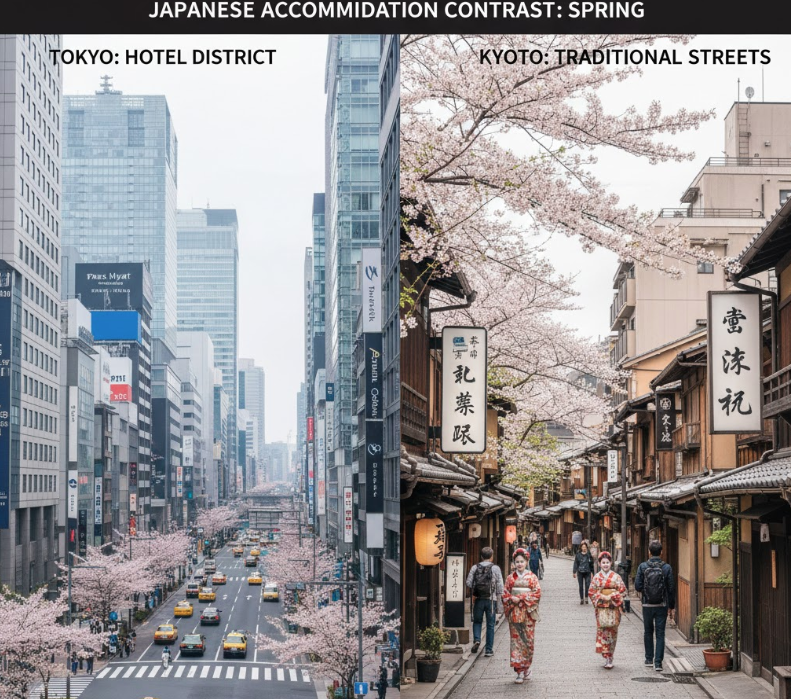
Although often grouped together, Tokyo and Kyoto behave very differently during cherry blossom season.
Tokyo Booking Behavior
Tokyo has a massive hotel supply across all price segments. When the Japan cherry blossom forecast shifts, Tokyo hotels adjust prices aggressively but continue releasing inventory in waves.
This means:
- Last-minute availability still exists
- Prices fluctuate more frequently
- Business hotels sell out before luxury properties
Kyoto Booking Behavior
Kyoto has limited hotel supply and far higher concentration of sightseeing demand.
Once the Japan cherry blossom forecast points to Kyoto peak bloom, availability dries up quickly. Prices rise and rarely come down.
Kyoto rewards early planners far more than Tokyo.
When Hotels Start Raising Prices (Earlier Than You Think)
Many travelers assume hotel prices rise only after bloom dates are confirmed. That assumption is wrong.
Hotels begin adjusting rates as soon as:
- Early forecast trends stabilize
- Search demand spikes from overseas markets
- Group bookings lock in blocks of rooms
By the time mainstream media publishes bloom dates, many affordable options are already gone.
This is why understanding the Japan cherry blossom forecast early matters more than waiting for certainty.
The Booking Window That Works Best
There is no single perfect booking date, but patterns repeat every year.
For Tokyo:
- Book early with free cancellation
- Monitor forecast updates
- Reprice or switch hotels if needed
For Kyoto:
- Secure accommodation as early as possible
- Do not wait for final bloom confirmation
- Accept slightly off-center locations if needed
Travelers who wait for “confirmed” bloom dates often pay the highest prices.
Why Flexible Cancellation Is More Important Than Price
During cherry blossom season, flexibility is insurance.
Hotels often raise non-refundable rates aggressively while keeping flexible inventory limited.
Smart travelers prioritize:
- Free cancellation deadlines
- No prepayment options
- Ability to switch dates or locations
This allows you to respond to changes in the Japan cherry blossom forecast without financial penalty.
Major booking platforms generally accepted by Japanese hotels include:
Booking.com and Agoda
Why Some Hotels Appear Available but Are Not
A common frustration during cherry blossom season is seeing hotels listed but unavailable.
This often happens because:
- Hotels hold rooms for domestic agencies
- Inventory is released in phases
- Minimum stay rules quietly apply
Kyoto properties are especially known for this practice.
Checking alternative dates or lengthening stay by one night can sometimes unlock availability.
To test different date combinations quickly, travelers can use the FlyFono AI Trip Planner to simulate booking scenarios around forecast shifts.
Why Location Matters More Than Hotel Category
During cherry blossom season, location beats star rating.
Hotels near major viewing areas command premiums and sell out first. Properties one or two transit stops away often remain available longer at reasonable prices.
In Tokyo, areas with strong transport access perform well even if they are not sightseeing hubs.
In Kyoto, proximity to train lines matters more than walking distance to temples.
How Forecast Updates Trigger Booking Surges
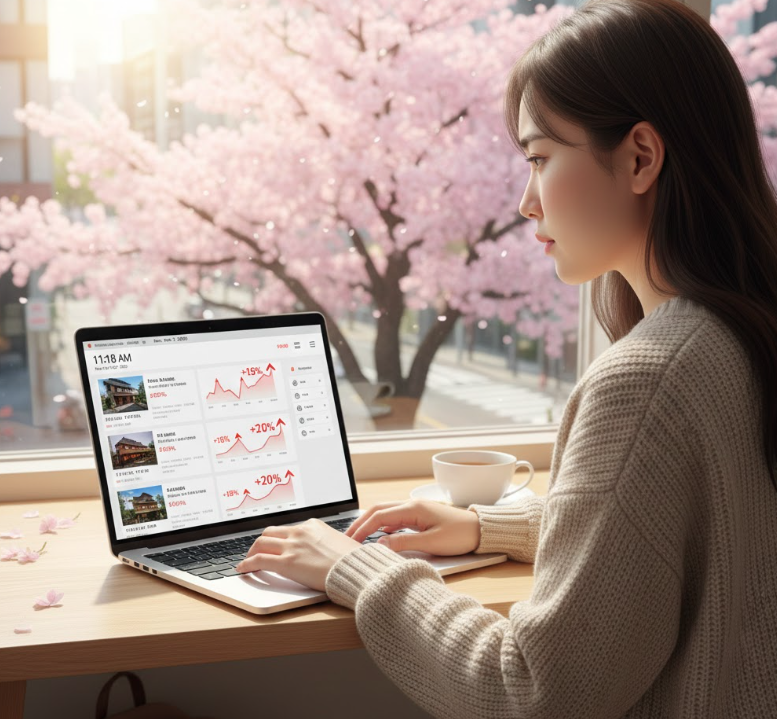
Japan cherry blossom forecast updates create immediate search spikes from international travelers.
These spikes trigger:
- Sudden price jumps
- Bulk room bookings
- Disappearance of flexible rates
Travelers who book just before forecast updates are often rewarded with better pricing.
Those who book just after updates usually pay more.
Why Waiting Rarely Saves Money
Some travelers hope prices will drop closer to arrival.
That strategy works in low season. It rarely works during cherry blossom season.
Once bloom windows are clear, hotels have no incentive to discount. Demand is guaranteed.
The Japan cherry blossom forecast creates certainty for hotels, not for travelers.
How to Hedge Your Booking When Bloom Dates Shift
The biggest challenge with the Japan cherry blossom forecast is uncertainty. Bloom dates can shift earlier or later based on weather patterns, sometimes by a full week.
Smart travelers hedge this risk instead of trying to predict it perfectly.
A practical hedging strategy involves:
- Booking one refundable hotel in Tokyo
- Booking one refundable hotel in Kyoto
- Holding both until bloom trends become clearer
This approach costs nothing extra if free cancellation is used correctly and protects you from forecast volatility.
Best Areas to Stay When Central Hotels Sell Out
When central areas fill up, knowing where to look next can save hundreds per night.
Tokyo: Smart Alternatives
If central Tokyo hotels spike after Japan cherry blossom forecast updates, consider areas with strong transport connectivity.
- Ueno and Asakusa (early bloom areas)
- Shinjuku outskirts near major stations
- Tokyo Bay business districts with direct rail links
Tokyo’s rail system makes distance far less painful than price increases.
Kyoto: Where Availability Still Exists
Kyoto is less forgiving, but options remain if you expand your search radius.
- Southern Kyoto near JR lines
- Otsu (15 minutes by train)
- Osaka as a base with early trains
These areas often remain bookable even after central Kyoto sells out completely.
Why Splitting Your Stay Can Lower Costs
Another underused strategy during cherry blossom season is splitting your stay.
Instead of booking one hotel for the entire trip:
- Stay centrally for peak bloom nights
- Move outward before or after peak dates
Hotels price peak nights aggressively. Non-peak nights often remain surprisingly reasonable.
The Japan cherry blossom forecast helps identify which nights deserve premium spending and which do not.
Common Booking Mistakes That Cost Travelers Money
Most travelers overpay not because prices are high, but because of poor timing and rigid booking choices.
The most expensive mistakes include:
- Waiting for “final” bloom confirmation
- Booking non-refundable rates too early
- Ignoring cancellation deadlines
- Assuming prices will drop later
Cherry blossom season rewards flexibility, not certainty.
How Long You Should Actually Stay
Contrary to popular belief, you do not need to stay the entire bloom window.
In Tokyo, early bloom and full bloom overlap closely. In Kyoto, peak bloom is shorter but more intense.
For most travelers:
- 3–4 nights in Tokyo is sufficient
- 2–3 nights in Kyoto captures the experience
Extending stays beyond peak days often adds cost without adding value.
How Hotels Really Decide Prices During Sakura Season
Hotels adjust prices based on:
- Forecast confidence
- Search demand spikes
- Group booking volume
Once the Japan cherry blossom forecast stabilizes, hotels shift from revenue optimization to yield maximization. Discounts disappear.
This explains why booking early with flexibility consistently outperforms last-minute strategies.
Why Media Bloom Headlines Are Usually Too Late
Mainstream cherry blossom headlines reach travelers after pricing decisions are already made.
Hotels and tour operators act on internal forecast data long before public announcements.
By the time bloom maps circulate widely, availability has already tightened.
Frequently Asked Questions
What is the Japan cherry blossom forecast?
The Japan cherry blossom forecast predicts when cherry trees will start blooming and reach full bloom across different regions of Japan. Travelers use it to plan trips, while hotels use it to adjust prices and availabili
How accurate is the Japan cherry blossom forecast?
The forecast is generally reliable for trends but not exact dates. Bloom timing can shift by several days due to temperature changes, which is why flexible bookings are important.
Why does the cherry blossom forecast affect hotel prices so much?
Because demand is concentrated into a short window. Once the Japan cherry blossom forecast stabilizes, hotels raise prices quickly as they expect guaranteed demand.
When should I book hotels based on the cherry blossom forecast?
The best strategy is to book early with free cancellation, then adjust dates or hotels as forecast updates become clearer. Waiting for final bloom confirmation usually costs more.
Is Tokyo or Kyoto more affected by cherry blossom demand?
Kyoto is more affected. It has fewer hotels and higher sightseeing concentration, so prices rise faster and availability disappears earlier than in Tokyo.
Do hotel prices drop after peak bloom ends?
Yes, but only after demand drops sharply. During peak bloom days, prices rarely decrease even at the last minute.
Should I book non-refundable hotel rates to save money?
Non-refundable rates are risky during cherry blossom season. Flexible cancellation is usually more valuable than small upfront savings.
How long should I stay during cherry blossom season?
Most travelers only need:
3–4 nights in Tokyo
2–3 nights in Kyoto
Staying longer during peak bloom often adds cost without adding experience.
Is it better to stay outside central Tokyo or Kyoto?
Yes. Hotels one or two train stops away often remain available longer and cost significantly less, especially in Tokyo.
Can I stay in Osaka instead of Kyoto for cherry blossom season?
Yes. Osaka is a practical alternative when Kyoto hotels sell out. Early trains make day trips to Kyoto easy.
Why do some hotels show “unavailable” even when rooms exist?
Hotels often release rooms in phases, hold inventory for domestic agencies, or apply minimum-stay rules during cherry blossom season.
Do cherry blossom forecasts change after I book?
Yes. Forecasts can shift earlier or later. That is why booking flexible rates and monitoring updates is essential.
Is it better to book directly with hotels or via booking platforms?
Booking platforms usually offer better cancellation flexibility, which is more important than loyalty perks during this season.
Does the cherry blossom forecast affect flights as well as hotels?
Hotel prices are affected more than flights. Airlines adjust less aggressively, but flight availability can tighten close to peak dates.
Are cherry blossom peak dates the same every year?
No. Bloom timing varies yearly based on winter and early spring temperatures, which is why forecasts matter.
What is the biggest mistake travelers make with cherry blossom bookings?
Waiting too long for confirmation and booking rigid, non-refundable hotels during peak bloom windows.
Is cherry blossom season worth the higher hotel prices?
For many travelers, yes. But smart planning using the Japan cherry blossom forecast helps reduce unnecessary overpaying.
Where can I check official cherry blossom updates?
Trusted sources include Japan Guide and national meteorological data, which track bloom trends across regions.
Useful Official Resources
For official bloom updates and historical data, travelers can refer to:
Japan Guide – Cherry Blossom Forecast
Final Takeaway
Japan cherry blossom forecast is not just a sightseeing tool. It is a pricing signal.
Travelers who understand how hotels react to forecast updates consistently secure better locations, better rates, and more flexibility.
The winning strategy is simple: book early, stay flexible, and let the forecast guide adjustments—not decisions.
Continue planning
Your most useful next steps
Move from reading to one clear travel decision.
Pingback: Best Time to Visit Japan: Seasons, Crowds and When to Book - FlyFono