
China Tourism 2026: Why Global Travelers Are Returning Fast
China tourism 2026 is no longer about “when will it reopen?” The question has flipped. The real conversation now is: why did travelers stay away for so long—and what finally brought them back?
After years of uncertainty, policy shifts, misinformation, and hesitation, China is quietly but decisively reclaiming its position as one of the world’s most visited destinations. International arrivals are rising, flight routes are back, visa barriers are easing, and travelers who once swore “maybe someday” are now booking tickets.
This is not hype. This is not propaganda. This is not a media-driven recovery narrative.
China tourism 2026 is growing because the fundamentals are finally aligned again.
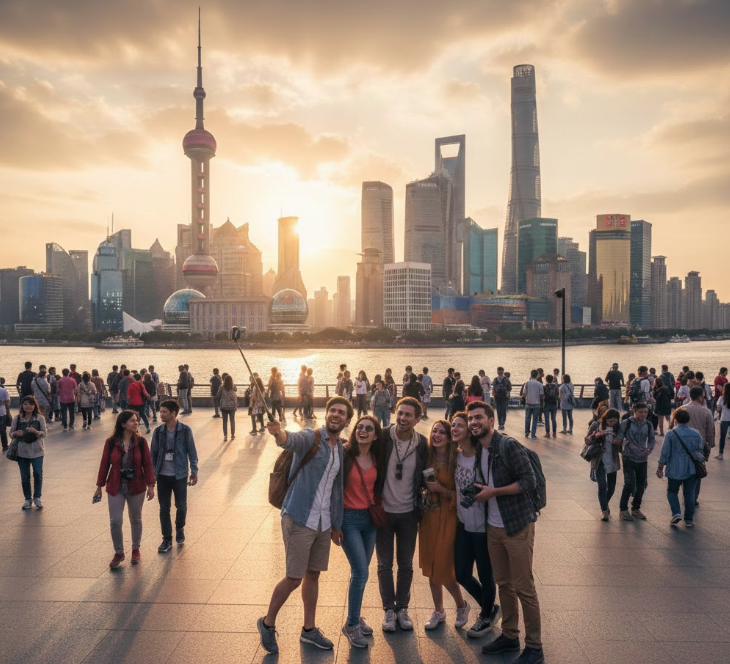
Table of Contents
What Changed for China Tourism in 2026?
To understand why China tourism 2026 is accelerating, you must first understand what held it back. For nearly half a decade, China travel was defined by three major obstacles:
- Complex visa processes
- Unpredictable travel restrictions
- Lack of reliable, on-ground information for foreigners
By late 2025 and into 2026, all three began to reverse.
Visa policies were simplified for dozens of nationalities. Transit visa exemptions expanded. Group tourism returned. Airlines restored routes that were previously suspended. Payment systems became more foreigner-friendly. Hotels adapted service standards back to international expectations.
China did not announce a “grand reopening.” It did something more effective.
It fixed the friction.
Visa Policies Driving China Tourism 2026
Visa friction was the single biggest psychological barrier to China travel. Tourists were not afraid of China—they were tired of paperwork, uncertainty, and last-minute rule changes.
In 2026, that narrative has shifted.
Several major improvements are now shaping China tourism 2026:
- Expanded visa-free transit stays (up to 144 hours in many cities)
- Simplified tourist visa documentation
- Faster processing times for short-stay travelers
- Clearer embassy guidelines with fewer “gray areas”
For leisure travelers, this means fewer forms, fewer surprises, and far less anxiety.
For families and first-time visitors, this matters more than price.
Current visa rules and application procedures are officially published by the Chinese Visa Information Service Center, providing clearer guidance for short-stay leisure travelers.
Flight Connectivity Is Fueling China Tourism 2026
No destination recovers without airlift. Period.
China tourism 2026 is benefiting from a massive restoration of international flight capacity, particularly from Asia-Pacific, the Middle East, and Europe.
Key hubs like Beijing, Shanghai, Guangzhou, Shenzhen, and Chengdu have regained direct connections that were missing for years. Airlines that once hesitated are now re-entering the market because demand is visible—not speculative.
More importantly, fares have stabilized.
Travelers are no longer seeing absurd pricing premiums just for entering China. Competitive fares are back, and that alone has reactivated millions of “wait and see” travelers.

Who Is Driving China Tourism 2026?
This comeback is not uniform. Different traveler segments are returning for different reasons.
1. Asian Leisure Travelers
Regional travelers from Southeast Asia, South Asia, Korea, and Japan are leading the recovery. Short-haul flights, cultural familiarity, and food-driven travel have made China an easy re-entry choice.
For these travelers, China tourism 2026 offers something nearby yet completely different.
2. Business + Leisure Travelers
China never stopped being economically relevant. What changed is that business travelers are once again extending trips for leisure.
Trade fairs, exhibitions, factory visits, and conferences are pulling people in. Cities like Shanghai and Guangzhou are seeing a strong rebound in blended travel—work during the week, sightseeing on weekends.
3. Curious First-Time Western Travelers
There is also a quieter trend: travelers who avoided China for years are now visiting precisely because it feels “unexplored” again.
While Europe struggles with overtourism, China tourism 2026 feels spacious, organized, and refreshingly undercrowded in many regions.
Why China Feels New Again to Tourists
This may sound counterintuitive, but the long pause actually reset expectations.
Hotels upgraded. Airports modernized. Digital infrastructure matured. Translation tools improved. High-speed rail expanded further.
Tourists arriving in 2026 are not comparing China to 2018. They are comparing it to today’s overcrowded global hotspots.
And China compares well.
Clean cities, efficient transport, competitive pricing, and deep cultural experiences are once again visible without chaos.
Digital Payments No Longer Block China Tourism 2026
One of the most frustrating barriers for foreigners used to be payments. Cashless systems that excluded foreign cards turned simple purchases into stress.
That has changed.
China tourism 2026 benefits from better integration of international cards, passport-linked payment apps, and hotel-assisted setups for visitors.
Tourists can now:
- Pay for transport without local bank accounts
- Book attractions digitally
- Use ride-hailing apps with English interfaces
This alone removes a massive psychological hurdle.
Is China Safe for Tourists in 2026?
Short answer: yes.
Long answer: China remains one of the safest large countries for tourists, particularly in urban areas. Violent crime against visitors is rare, public transport is heavily monitored, and cities are well-lit and organized.
The bigger challenge is not safety. It is understanding rules, norms, and digital systems.
That learning curve still exists, but it is far smoother than before.
According to the Ministry of Culture and Tourism of China, international tourism infrastructure and inbound travel services have been fully restored as part of China’s broader tourism normalization strategy.
Why China Tourism 2026 Is Not a “Rebound Bubble”
This is not revenge travel. This is not pent-up demand burning out quickly.
China tourism 2026 is built on structural changes:
- Policy normalization
- Restored airline economics
- Improved tourist infrastructure
- Lower relative crowd pressure compared to Europe
These are long-term drivers, not short-term spikes.
Tourism is returning to China not because travelers forgot the past—but because the present finally makes sense again.

What This Means for Travelers Planning 2026–2027 Trips
If you are considering China, timing matters.
Prices are still reasonable. Popular cities are busy but not overwhelmed. Secondary destinations remain undervalued. English-language services are improving rapidly as demand grows.
The “early returner” advantage is still available.
Once China tourism 2026 fully normalizes, that window will close.
Best Places Driving China Tourism 2026
China tourism 2026 is not being powered by one city or one attraction. It is a multi-destination rebound where travelers are mixing iconic cities with nature, culture, and family experiences.
What has changed is how tourists are planning their itineraries. Instead of rushing through five cities in ten days, travelers are slowing down and choosing fewer destinations with deeper experiences.
Major Cities Still Lead—but With Smarter Itineraries
Beijing and Shanghai remain the entry points for China tourism 2026, but travelers are no longer staying only in city centers.
Visitors are now:
- Spending fewer nights in crowded cores
- Exploring surrounding towns and suburbs
- Using high-speed rail for short regional hops
This shift makes travel more relaxed and reduces the feeling of being overwhelmed, which previously discouraged first-time visitors.
Nature and Scenic Travel Are Big Winners in China Tourism 2026
One of the strongest drivers of China tourism 2026 is nature-based travel.
After years of city-heavy itineraries in Europe and Southeast Asia, travelers want wide-open spaces, dramatic landscapes, and destinations that feel cinematic.
China delivers that at scale.
Mountain regions, national parks, and scenic areas are seeing strong growth—especially among travelers who want something visually striking but not overcrowded.
A prime example is Zhangjiajie, which has emerged as one of the most searched scenic destinations for China tourism 2026. Its unique sandstone pillars, glass bridges, and national park infrastructure make it ideal for both adventure and relaxed sightseeing.
If you are planning a nature-focused itinerary, this Zhangjiajie travel guide breaks down routes, seasons, and planning tips without unnecessary hype.
Family Travel Is Quietly Fueling China Tourism 2026
Family travel is one of the most underestimated contributors to China tourism 2026.
For years, families avoided China due to concerns about language barriers, payment systems, and child-friendly attractions. That perception is changing.
Why?
- Better hotel facilities for families
- Improved transport accessibility
- Theme parks and structured attractions
- Clearer travel information in English
Hong Kong continues to act as a soft entry point for families re-entering China travel. It combines familiar systems with easy access to mainland destinations.
Theme park travel, in particular, is drawing families back. Hong Kong Disneyland remains one of the most reliable, stress-free family experiences in the region.

For families planning a 2026 trip, this Hong Kong Disneyland tips guide is especially useful for avoiding crowds, planning budgets, and managing kids without exhaustion.
Food Tourism Is Rewriting China Tourism 2026
Food has always been part of China travel, but in 2026 it is becoming the main reason for visiting—not just a side benefit.
Travelers are planning trips around regional cuisines instead of landmarks.
This shift benefits:
- Sichuan for spice-focused food travel
- Guangdong for dim sum and Cantonese classics
- Xi’an for street food and historical dining
- Yunnan for ethnic and farm-to-table cuisine
Food-focused itineraries encourage longer stays, higher spending, and deeper cultural engagement—exactly the kind of tourism China tourism 2026 is targeting.

Cost Advantage Compared to Other Global Destinations
One reason China tourism 2026 is accelerating quietly is pricing.
Compared to Europe, Japan, and even parts of Southeast Asia, China still offers strong value for:
- Hotels
- Intercity transport
- Food and dining
- Attractions
High-speed rail tickets remain affordable. Domestic flights are competitively priced. Mid-range hotels offer better space and facilities than similarly priced options elsewhere.
This matters in a post-inflation travel environment.
Travelers are no longer chasing luxury for the sake of it. They want value, efficiency, and comfort—and China delivers that quietly but consistently.
What Travelers Still Need to Know Before Visiting China in 2026
China tourism 2026 is easier, but it is not friction-free.
Being realistic improves the experience.
Language Barriers Still Exist
Outside major cities, English usage remains limited. Translation apps are essential. Travelers who expect English everywhere will struggle.
Digital Systems Are Central
Everything—from transport to restaurant ordering—leans digital. Visitors must be comfortable using apps, QR codes, and mobile payments.
Travel Planning Matters More Than Spontaneity
China rewards planning. Tickets, transport, and attractions work best when booked in advance. Walk-in spontaneity is improving, but preparation still matters.
Why China Tourism 2026 Fits Long-Haul Travelers Better Than Short Trips
China is not ideal for rushed, three-day trips.
China tourism 2026 works best for travelers who can commit at least 7–10 days. The scale of the country demands time.
Those who rush tend to leave exhausted. Those who slow down leave impressed.
This is why China is increasingly appealing to:
- Long-haul travelers from Europe and Australia
- Remote workers combining travel with downtime
- Multi-generational family trips
Is China Tourism 2026 Suitable for First-Time Asia Travelers?
Honest answer: yes, but with preparation.
China is not the easiest first Asia destination, but it is far from the hardest. Travelers who do basic research, plan transport, and understand cultural norms generally have smooth trips.
For first-timers, combining China with Hong Kong or nearby Asian hubs reduces friction significantly.
What China Tourism 2026 Means for the Next Five Years
China tourism 2026 is not peaking. It is stabilizing.
This distinction matters.
Stabilization means:
- Gradual growth, not unsustainable spikes
- Improved services over time
- More international-standard experiences
- Less chaos than pre-2020 tourism booms
For travelers, this creates an ideal window.
China is open, functional, and improving—but not yet overwhelmed.
Who Should Visit China in 2026—and Who Should Wait
China tourism 2026 is ideal for:
- Curious travelers who enjoy cultural depth
- Families planning structured itineraries
- Nature and landscape lovers
- Food-focused travelers
China tourism 2026 may not suit:
- Travelers who want zero planning
- Those uncomfortable with digital systems
- Ultra-short city-break tourists
This is not a criticism. It is alignment.
Final Reality Check on China Tourism 2026
China tourism 2026 is not about proving anything.
It is about returning to relevance through functionality, value, and scale.
Travelers are coming back because travel finally works again.
Those who wait too long may find themselves paying more, navigating larger crowds, and missing the current balance.
China is not “back” in a dramatic way.
It is back in a practical one.
Frequently Asked Questions About China Tourism 2026
Is China open for tourists in 2026?
Yes. China is fully open for international tourists in 2026. Tourist visas are being issued normally, international flights have resumed across major hubs, and hotels, attractions, and transport systems are operating at full capacity.
Do tourists need a visa to visit China in 2026?
Most travelers still need a tourist visa to visit China in 2026. However, China has expanded visa-free transit policies and simplified short-stay tourist visa requirements for many nationalities, making entry easier than in previous years.
Is China safe for international tourists in 2026?
China is considered one of the safest countries for tourists in 2026. Violent crime rates are low, public transport is well monitored, and major cities have strong security infrastructure. Travelers should still follow local rules and cultural norms.
Is China expensive for tourists compared to other destinations?
No. China remains good value compared to Europe, Japan, and many popular Asian destinations. Hotels, food, public transport, and high-speed rail are generally affordable, especially outside top-tier city centers.
Can foreign tourists use credit cards and digital payments in China?
Yes. In 2026, China has improved access for foreign tourists to use international credit cards and digital payment systems. Visitors can now link foreign cards to major payment apps or rely on card payments in hotels, malls, and airports.
What are the best places to visit in China for first-time travelers?
First-time visitors to China in 2026 often choose Beijing, Shanghai, Hong Kong, and scenic destinations like Zhangjiajie. These locations offer good infrastructure, clear transport links, and traveler-friendly services.
Is China suitable for family travel in 2026?
Yes. China is increasingly suitable for family travel in 2026. Large cities offer family-friendly hotels, theme parks, clean public transport, and structured attractions, making travel with children more manageable than before.
How long should a first-time trip to China be?
A first-time trip to China in 2026 should ideally be at least 7 to 10 days. China is geographically large, and shorter trips often feel rushed. Longer stays allow travelers to experience cities, culture, and scenic regions more comfortably.
Is language a problem for tourists in China?
English is commonly spoken in major hotels, airports, and tourist attractions, but less so in smaller cities. Tourists are advised to use translation apps and plan transport and accommodation in advance.
Why are tourists returning to China in 2026?
Tourists are returning to China in 2026 due to easier visa policies, restored flight connectivity, better payment access for foreigners, competitive travel costs, and reduced overcrowding compared to other global destinations