
The practical takeaway
What Indians Can Eat in Thailand: The Ultimate Guide for Indian Taste Buds (2025) If you are wondering what Indians can eat in Thailand without giving up familiar flavours, this guide will save you a lot of trial and error. Thailand is…
What Indians Can Eat in Thailand: The Ultimate Guide for Indian Taste Buds (2025)
If you are wondering what Indians can eat in Thailand without giving up familiar flavours, this guide will save you a lot of trial and error. Thailand is full of food that suits Indian taste buds. You just need to know what to order, how to customise it, and where to find reliable options like 7-Eleven, halal stalls, and simple Thai dishes that feel close to home.
For travellers planning their first Thai holiday, you can also check our AI Trip Planner for Thailand to build a custom itinerary before choosing where and what to eat. Many first-time travellers search for what Indians can eat in Thailand because they worry about unfamiliar ingredients or hidden seafood in local dishes.
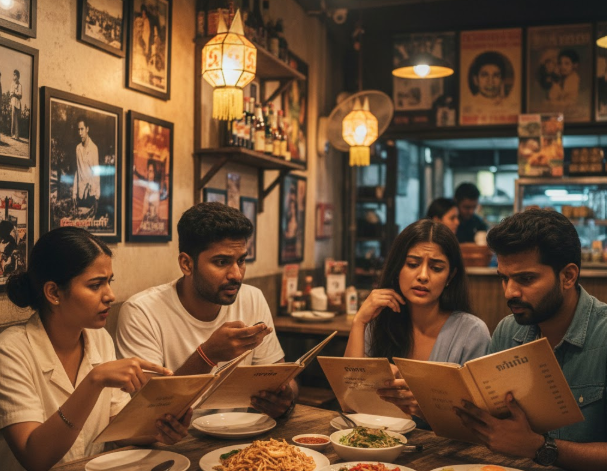
Table of Contents
- Why Indian Travellers Struggle With Thai Food
- Must-Know Phrases To Customise Thai Food
- Best Thai Dishes Indians Can Comfortably Eat
- 7-Eleven: The Real Saviour For Indian Travellers
- Mall Food Courts, Halal Counters, And Safe Options
- Vegetarian And Vegan Guide For Indians In Thailand
- Sample Day Of Eating In Thailand For Indians
- Budget Tips, Activity Bookings, And Practical Hacks
- Common Mistakes Indians Make With Thai Food
- Quick FAQs About What Indians Can Eat In Thailand
- Final Thoughts
Why Indian Travellers Struggle With Thai Food At First
Thailand is one of the easiest countries for Indians to visit, but many first-time visitors still panic about food. The problem is not a lack of options. The problem is that most travellers have no idea what is inside the dish, which sauces are used, and what to say if they want to avoid pork, seafood, or fish sauce.
Typical Thai cooking regularly uses:
- Fish sauce in stir-fries and soups
- Oyster sauce in noodles and gravies
- Shrimp paste in some curries and chili pastes
- Pork in broths, minced meat, and toppings
- Palm sugar to balance spice and sourness
If you eat meat but avoid pork and seafood, or if you prefer food closer to Indian flavours, you must be clear about it while ordering. Thailand is actually very manageable for Indian taste buds once you know the right phrases and the right dishes.
Must-Know Phrases To Customise Thai Food For Indian Taste Buds
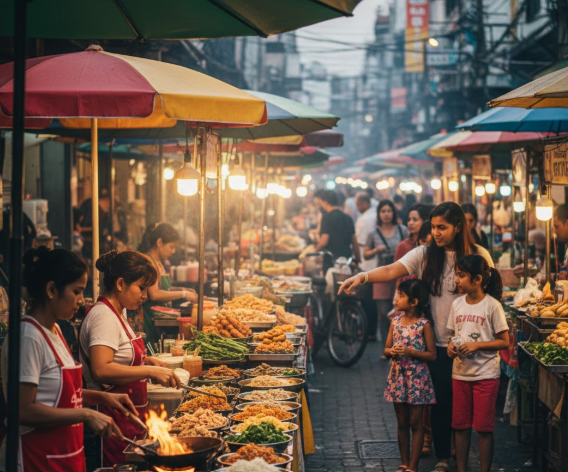
Before talking about what Indians can eat in Thailand, you need a few simple phrases that completely change your experience. These help you avoid fish sauce, shrimp, or pork, and adjust the spice level closer to what you like.
To avoid fish sauce and seafood
Show this on your phone or say it slowly:
- Mai sai nam pla (ไม่ใส่น้ำปลา) – Do not add fish sauce.
- Mai sai kung (ไม่ใส่กุ้ง) – Do not add shrimp.
- Mai sai hoy (ไม่ใส่หอย) – Do not add shellfish.
To avoid pork
- Mai kin moo (ไม่กินหมู) – I do not eat pork.
- Then add: chicken (gai), beef (neua), or just vegetables (jay).
To control spice level
- Phet nit noi (เผ็ดนิดหน่อย) – A little spicy.
- Phet maak (เผ็ดมาก) – Very spicy.
Learning and using these small phrases is more important than trying to remember complicated dish names. With this alone, most dishes in this guide become safe and enjoyable for Indian travellers. Understanding what Indians can eat in Thailand helps you pick dishes like pad krapow, pad Thai, and fried rice with full confidence.
Best Thai Dishes Indians Can Comfortably Eat
Now let us talk about the practical part: what Indians can eat in Thailand in a realistic, everyday way. These dishes are widely available, customizable, and loved by many Indian travellers who want strong flavours without too much seafood or pork.
1. Pad Krapow Kai (Chicken Basil Stir-Fry)
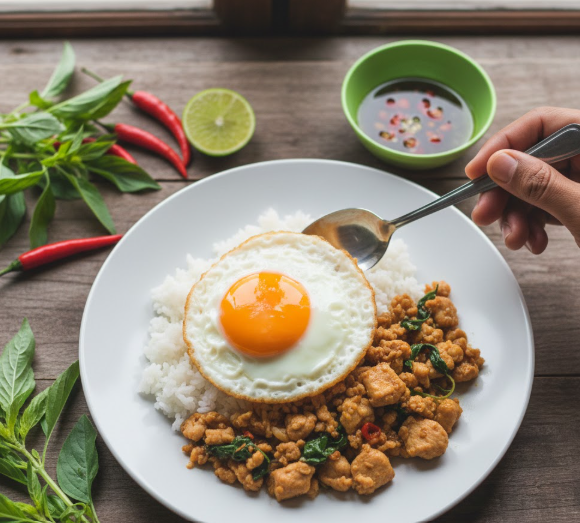
Pad krapow kai is minced chicken stir-fried with garlic, chilies, and Thai holy basil, served with rice. Many Indians describe it as “Thai style chicken keema with rice” and that is accurate enough.
Why Indians like it:
- Strong garlic and chili flavour
- Not sweet, more savoury and spicy
- Very satisfying with rice
How to order: “Pad krapow kai, no fish sauce, spicy.” Add a fried egg on top by saying kai dao.
2. Khao Phad (Thai Fried Rice)
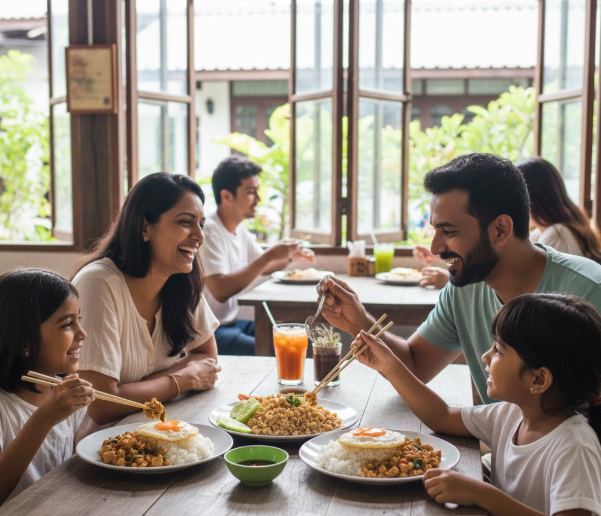
Khao phad is Thai fried rice with your choice of chicken, egg, or vegetables. It is one of the safest default options if you are unsure what to eat.
Why it works for Indians:
- Simple and familiar, similar to Indo-Chinese fried rice
- Easy to make without seafood or fish sauce if requested
- Children usually eat it happily
How to order: “Khao phad gai, no shrimp, no fish sauce.” For vegetarian, say “Khao phad jay, no egg” if you want strict veg.
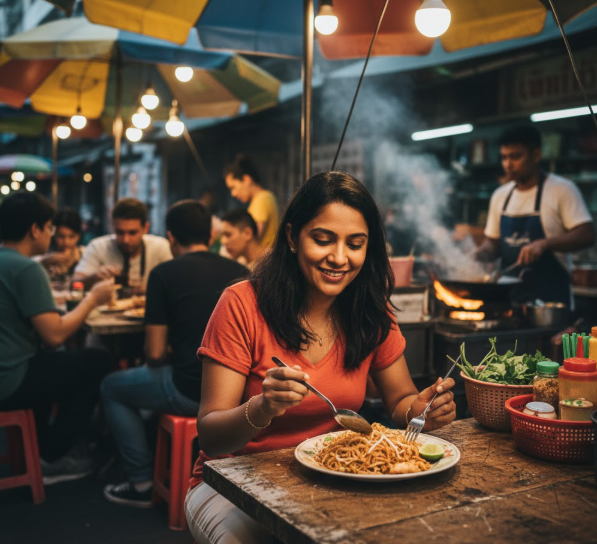
3. Pad Thai (Famous Stir-Fried Noodles)
Pad Thai is probably the most famous Thai dish. It is a stir-fried noodle dish with tamarind, peanuts, bean sprouts, egg, and sometimes shrimp or chicken.
Why Indians like it:
- Sweet, sour, and savoury mix, familiar to Indian street food vibes
- You can choose chicken instead of seafood
- Works well for those who prefer milder spice
How to order: “Pad Thai chicken, no shrimp, no fish sauce.” Add chili flakes on the side if you want more heat.
4. Pad See Ew (Soy Stir-Fried Flat Noodles)
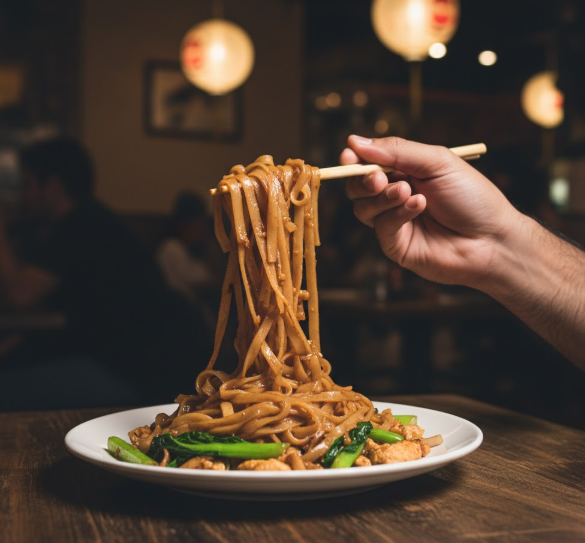
Pad see ew uses wide flat noodles stir-fried with soy sauce, egg, and usually chicken or beef, plus Chinese broccoli. It is slightly smoky and not naturally spicy.
Why Indians like it:
- Soft flat noodles similar to some Indian and Indo-Chinese dishes
- Mild flavour that you can adjust with chili and vinegar on the table
- Easy to eat, not overloaded with sauces
How to order: “Pad see ew chicken, no pork, no fish sauce.”
5. Rad Na (Flat Noodles With Gravy)
Rad na is a comforting noodle dish with flat noodles, mild gravy, and vegetables, usually with chicken or seafood. The gravy is thick and savoury.
Why it suits Indian taste buds:
- Feels like a mild gravy noodle dish similar to Indo-Chinese style
- Not too spicy by default
- Good option when you are tired of dry stir-fries
How to order: “Rad na chicken, no seafood, no fish sauce.”
6. Chicken Satay
Chicken satay is skewered grilled chicken served with a lightly sweet peanut sauce and cucumber relish. You will find it in night markets, mall food courts, and some 7-Elevens in ready-to-eat form.
Why Indians enjoy it:
- Feels like a lighter version of chicken tikka or kebab
- Peanut sauce gives a rich, nutty flavour
- Easy to eat as a snack with rice or bread
7. Khao Soi (Northern Thai Curry Noodles)
Khao soi is a must-try if you visit Chiang Mai or the north. It is a coconut-based curry broth with boiled and crispy noodles, usually with chicken, served with lime, pickle, and onion.
Why it is perfect for Indian taste buds:
- Rich, curry-style flavour, similar to Indian coconut curries
- Spicy, creamy, and very satisfying
- Easy to request chicken and avoid seafood
Vegetarian travellers should know that almost every major Thai dish mentioned in this guide can be made with tofu instead of meat. From pad krapow to pad Thai to fried rice, simply say “tofu jay” and “mai sai nam pla” to avoid fish sauce. Most restaurants understand this request clearly, especially in tourist cities.
7-Eleven: The Real Saviour For Indian Travellers In Thailand
If you ask frequent visitors what Indians can eat in Thailand . One of the easiest ways to understand what Indians can eat in Thailand is simply walking into a 7-Eleven and seeing how many ready meals suit the Indian palate.
What Indians Can Comfortably Eat From 7-Eleven
- Chicken sandwiches and burgers – Heated in a small oven, simple flavours, usually without seafood.
- Grilled chicken with rice – Clean, protein-heavy dish that works well for lunch or dinner.
- Mini chicken shawarma wraps – Very convenient when you want a quick, familiar snack.
- Microwave pasta (chicken, cheese, or tomato) – Comfort food, usually mild and kid-friendly.
- Ready meals: chicken tikka masala with veg biryani – Many 7-Elevens now sell this combo at around THB 69. It will not beat your favourite Indian restaurant, but it definitely hits the spot when you are exhausted and want something familiar.
- Yoghurt, milk, cereal, and bakery items – Ideal for breakfast if you are not in the mood for heavy food in the morning.
Another reason 7-Eleven is so useful for Indian travellers is that many classic Thai dishes are now available in ready-to-eat microwave versions. This includes:
- Pad Krapow Chicken
- Khao Pad (fried rice)
- Pad Thai
- Stir-fried noodles
- Grilled chicken with rice
These meals are usually mild, customisable with chili packets, and labelled clearly so you can check ingredients. If you are travelling with children or want something fast before a tour, these options are incredibly convenient. They reheat in 2 minutes, cost very little, and taste surprisingly close to restaurant versions.
Good news for vegetarians: most 7-Elevens also carry tofu versions of fried rice, noodles, salads, and microwave meals. This makes Thailand one of the easiest countries in Asia for vegetarian travellers who want quick food on the go.
If you are travelling across Southeast Asia, read our guide on finding the cheapest flexible flights so you can plan your food and budget more comfortably.
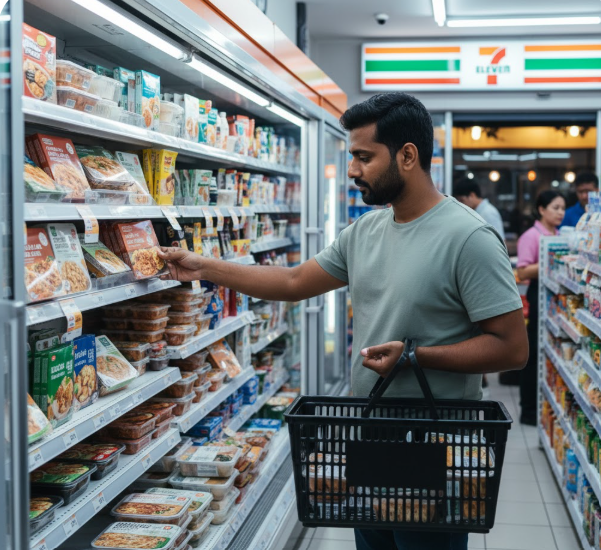
7-Eleven is not a replacement for Thai food, but it is an excellent backup. Late-night arrival, early-morning tours, long bus journeys, or fussy children – 7-Eleven will quietly save your holiday.
Mall Food Courts, Halal Counters, And Everyday Safe Options
Another big part of what Indians can eat in Thailand comes from mall food courts and halal corners. These are ideal if you want reliable hygiene, clear menus, and fixed prices.
Mall Food Courts
Places like MBK, Terminal 21, Central, Robinson, and Big C usually have large food courts. You will often find:
- Chicken rice plates
- Make-your-own stir-fry counters (choose chicken and vegetables, then request no fish sauce)
- Grilled chicken with sticky rice
- Simple noodle soups customised with chicken instead of pork
Halal Thai And Middle Eastern Food
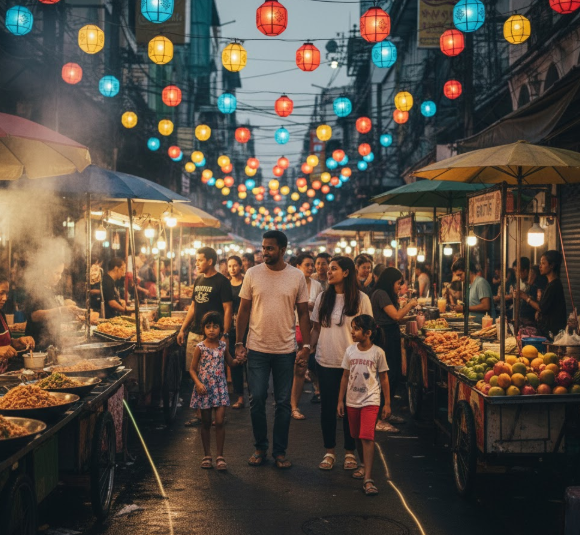
Muslim-friendly or halal food is widely available in many Thai cities. This is especially useful if you avoid pork completely. Look for the green halal symbol or Arabic script signage.
Typical halal options:
- Chicken biryani (Thai Muslim style, lighter but flavourful)
- Grilled or fried chicken with rice
- Halal tom yum, without pork
- Shawarma, kebabs, and rice plates
Vegetarian And Vegan Guide For Indians In Thailand
Vegetarians have a more complicated relationship with Thai food, but it is still manageable once you understand the system. The key is using the word “jay” correctly and insisting on no fish sauce. Vegetarian travellers often worry about what Indians can eat in Thailand, but tofu versions of almost all major dishes make it surprisingly manageable.
What “Jay” Means
Jay (เจ) is similar to vegan in Thai culture. It usually means:
- No meat
- No seafood
- No egg
- No fish sauce
However, do not blindly trust every stall to understand this perfectly. Always repeat “mai sai nam pla” (no fish sauce) just to be safe.
Roti Street Food in Thailand – A Reliable Snack for Indians
One thing many Indian travellers instantly fall in love with is the Thai roti street food stalls. These are similar to Indian-style rotis or parathas but cooked with more butter and topped with your choice of sweet or savoury toppings.
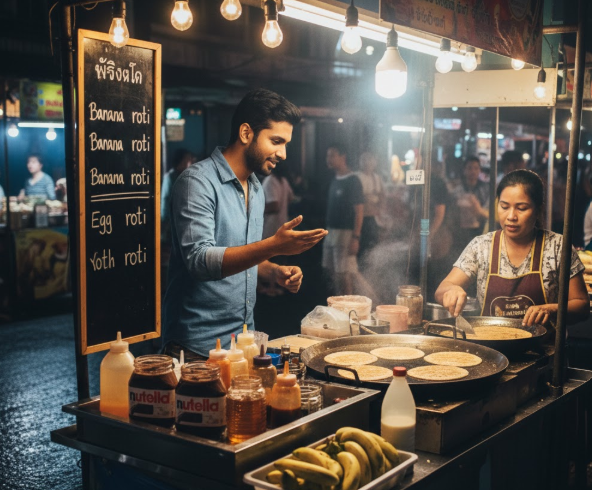
Popular roti options include:
- Banana roti – the most famous version, sweet and crispy
- Nutella roti – perfect dessert for kids and adults
- Honey and sugar roti – simple and comforting
- Egg roti – great if you want something less sweet
- Condensed milk drizzle – a local favourite
Many vendors also offer savoury versions like egg + cheese roti or roti with chicken fillings depending on the area. These stalls are usually open in night markets, near beaches, or outside 7-Elevens. Roti stalls are another answer to what Indians can eat in Thailand when they want something simple, sweet, and familiar.
Vegetarian visitors planning a longer trip can also check our guide to the cheapest branded hotels to find affordable stays near reliable vegetarian food options.
If you are vegetarian, roti is one of the easiest, safest, and most delicious street foods you can enjoy in Thailand. Just choose sweet toppings or egg-based versions.
Food courts and halal stalls also expand the options for what Indians can eat in Thailand, especially for those avoiding pork or beef.
Vegetarian Dishes Indians Can Eat In Thailand
- Pad Thai Jay – Vegetarian Pad Thai with tofu and vegetables.
- Vegetable fried rice – Ask for no egg if you are vegan.
- Stir-fried morning glory (phak boong) – A flavourful greens dish; request no fish sauce.
- Tofu pad krapow – Basil stir-fry with tofu instead of chicken, made jay style.
- Vegetable noodle soups – Ask for vegetable stock, no fish sauce, no meatballs.
- Fresh fruit, shakes, and juices – Widely available and safe.
- Western options – Pizza without meat, vegetarian pasta, salads, fries, sandwiches, and bakery items.
If you are a strict vegetarian, your best strategy is a mix of jay food stalls, Indian restaurants in major cities, Western cafés, and supermarket or 7-Eleven items like salads, bread, cheese, and microwave vegetarian meals.
Sample Day Of Eating In Thailand For Indian Travellers
To make this more practical, here is how a full day of eating can look for an Indian traveller in Bangkok, Phuket, Chiang Mai, or Pattaya.
Breakfast
- Option 1: Hotel breakfast – Egg station, bread, hash browns, fruits, yoghurt, cereal, and sometimes Indian items in larger hotels.
- Option 2: 7-Eleven – Sandwich, coffee, yoghurt, and a banana or pastry.
- Option 3: Café – Toast, omelette, coffee, and juice.
Lunch
- Pad krapow chicken with rice and fried egg, with no fish sauce.
- Or khao phad chicken fried rice, simple and filling.
Evening Snack
- Chicken satay from a market.
- 7-Eleven mini shawarma or pasta.
- Fresh fruit smoothie or boba tea.
Dinner
- Pad see ew chicken or rad na chicken in a small local restaurant.
- Or khao soi chicken if you are in Chiang Mai.
- Or Indian restaurant night if you are craving dal, roti, and paneer.
Budget Tips, Activity Bookings, And Practical Food Hacks
Food is only one part of your Thailand trip. If you combine smart eating with smart booking, you save a lot of money and avoid tourist traps.
Booking Activities, Transfers, And Day Trips
For temples, island tours, elephant sanctuaries, and city passes, it is usually cheaper and safer to book through a trusted platform instead of random street sellers. You can compare prices and book securely through activity sites such as:
- Klook – tours, SIM, tickets, and transfers
This helps you avoid last-minute haggling, miscommunication, or overcharging at the street level.
Staying Connected: eSIMs And Data
Having mobile data changes everything: you can translate menus, use Google Maps, read reviews of restaurants, and book rides easily. Instead of hunting for SIM counters at the airport after a long flight, many travellers now buy an eSIM in advance:
You activate it through an app, land in Thailand, and you are immediately online. Much easier for families and first-time travellers.
Travel Insurance And Luggage Storage
Food-related issues, delayed flights, and lost luggage are annoying but very real. A basic travel insurance policy is enough for most trips:
If you have long gaps between hotel check-out and your flight, you can drop your bags at secure storage points so that you can still explore and eat without dragging your luggage everywhere:
Planning Your Thailand Trip Faster
If you like planning in detail, you can also use an AI trip planner to build a custom Thailand itinerary with suggested areas to stay and realistic daily schedules. Combine that with this guide on what Indians can eat in Thailand and you will know exactly where you are going and what you will eat every day.
Common Mistakes Indians Make With Food In Thailand
Even smart travellers repeat the same mistakes. Avoid these and your trip becomes much smoother.
- Assuming everything is vegetarian if it looks like vegetables
Many curries and stir-fries use fish sauce, shrimp paste, or meat stock even if they look vegetarian. Always specify jay and no fish sauce. - Not mentioning “no fish sauce” and “no shrimp” for meat dishes
Even chicken dishes often use fish sauce. The default assumption is that you are fine with it unless you say otherwise. - Ordering the spiciest item on day one
Thai chili can be very strong. Start with moderate spice and move up; there is no prize for burning your mouth on day one. - Skipping local food completely
Surviving on only Indian restaurants and 7-Eleven is possible, but you will miss a big part of the Thai experience. Start with safe dishes like khao phad, pad see ew, and khao soi. - Not using basic Thai phrases
A few words like “mai sai nam pla” and “mai kin moo” change your entire eating experience. Screenshots of these phrases on your phone are enough.
Quick FAQs About What Indians Can Eat In Thailand
Is Thailand safe for Indian vegetarians?
Yes, but you need to be more careful than non-vegetarians. Use the word “jay,” insist on no fish sauce, and rely on a mix of jay food stalls, Indian restaurants, Western cafés, and supermarkets. Big cities like Bangkok, Phuket, and Chiang Mai are easier than very small towns.
Can I get Indian food easily in Thailand?
Yes. Popular tourist areas have plenty of Indian restaurants serving dal, roti, paneer, biryani, and more. They are more expensive than local Thai food, but very useful when you want a proper Indian meal after several days of experimenting.
Is 7-Eleven food safe for families and children?
In general, yes. 7-Eleven in Thailand has high turnover, good packaging, clear labelling, and proper heating. Choose simple items like sandwiches, grilled chicken with rice, pasta, yoghurt, and the chicken tikka masala with veg biryani pack for a familiar taste.
What if I do not eat beef or pork?
Then focus on chicken and vegetarian options. Say clearly that you do not eat pork or beef, and then order khao phad chicken, pad krapow chicken, chicken satay, grilled chicken with rice, or vegetarian dishes made jay style.
Will I get very sick from street food?
Not automatically. Many visitors eat Thai street food without issues. Use common sense: pick busy stalls, food cooked fresh in front of you, and avoid items that have been sitting out for a long time. If you have a sensitive stomach, start with mall food courts and hotel restaurants.
If you learn a few Thai phrases and recognise popular dishes, you will never struggle with what Indians can eat in Thailand during your trip.
Final Thoughts: Thailand Is Easier For Indians Than You Think
Once you understand what Indians can eat in Thailand and how to ask for it, the country becomes very easy and enjoyable for Indian travellers. Between Thai dishes like pad krapow, khao phad, pad Thai, rad na, pad see ew, chicken satay, and khao soi, plus safety nets like 7-Eleven meals, mall food courts, halal stalls, vegetarian jay options, and Indian restaurants, you will never run out of choices.
Use the basic Thai phrases, say clearly what you avoid, and start with the dishes in this guide. That is all you need to eat confidently in Thailand without sacrificing your Indian taste buds.
Many travellers still wonder what Indians can eat in Thailand, but the truth is that once you understand the basics, the choices are endless. From street markets to 7-Eleven meals, it quickly becomes clear what Indians can eat in Thailand without worrying about hidden ingredients.
With clear phrases and simple customisations, you discover what Indians can eat in Thailand in every major city. Whether you prefer spicy food, mild flavors, or vegetarian dishes, you will always find what Indians can eat in Thailand that suits your taste. Even tofu versions of popular meals expand what Indians can eat in Thailand, especially for vegetarians.
Families travelling with children often appreciate what Indians can eat in Thailand when looking for clean, reliable options. Food courts, halal stalls, and roti vendors further widen what Indians can eat in Thailand each day. As you explore more places, you build confidence in what Indians can eat in Thailand across different regions. By following this guide, you will never struggle with what Indians can eat in Thailand at any point in your trip.
When planning your trip, it helps to clearly understand what Indians can eat in Thailand so you can travel without hesitation. As you explore new cities, you will quickly realise what Indians can eat in Thailand varies from simple noodle shops to premium restaurants.
Even first-time visitors are surprised by what Indians can eat in Thailand when they see familiar flavours in Thai fried rice, pad Thai, and tofu dishes. Markets and local eateries also expand what Indians can eat in Thailand, especially for those avoiding pork or seafood.
With 7-Eleven meals available everywhere, daily life becomes easier because they offer what Indians can eat in Thailand at any hour. Vegetarian travellers gain confidence once they recognise what Indians can eat in Thailand using jay-style cooking.
Night markets show another side of what Indians can eat in Thailand with roti, satay, and grilled snacks. Halal areas add even more variety to what Indians can eat in Thailand regardless of dietary restrictions. As you move from region to region, you will notice how flexible what Indians can eat in Thailand truly is. With the right guidance, you will always know exactly what Indians can eat in Thailand on any day of your trip.
When planning your trip, it helps to clearly understand what Indians can eat in Thailand so you can travel without hesitation. As you explore new cities, you will quickly realise what Indians can eat in Thailand varies from simple noodle shops to premium restaurants.
Continue planning
Your most useful next steps
Move from reading to one clear travel decision.
Pingback: Indian Food in Thailand (2025): Where Indians Can Actually Find Real Desi Food — From Bangkok to Phuket & Even the Airports - FlyFono
Pingback: Chiang Mai Lantern Festival 2026: The Only Honest Guide You Need (Free vs Paid + Lamphun Free Event) - FlyFono
Pingback: Best Places to Visit in January 2026: 25 Incredible Destinations for Perfect Weather & Great Value - FlyFono
Pingback: Bangkok and Pattaya With Kids: 21 Smart & Honest Tips for a Stress-Free Family Trip - FlyFono
Pingback: Thailand Alternatives in 2026: Brutal Truth About Where Travelers Go Instead - FlyFono
Pingback: Thailand vs Cambodia (2026): Which Country Is Better to Visit? - FlyFono